
Pick This Year's Olympia T-Shirt

Last Updated: September 13, 2026
If the scale hasn't moved in two weeks but your squat keeps climbing, you're probably not failing. You're adapting. A weight loss plateau is the point where your current calorie intake and training load no longer produce the same rate of fat loss they did at the start, and it hits lifters harder than anyone because muscle retention masks fat loss on the scale. According to clinical review of weight loss plateau management, plateaus are managed through a combination of dietary modification, structured exercise adjustment, and behavioral intervention, not by slashing calories harder.
Here's the part most people get wrong: the scale measures total mass, not fat. Glycogen stores, water retention, and food volume in your gut all move the number independently of body fat percentage. We see this constantly with lifters who are visibly leaner but convinced they've stalled because the needle won't budge.
Below, I'll show you exactly how to separate real fat loss stalls from noise, and the five adjustments that actually break them.
Metabolic adaptation is the physiological downshift in energy expenditure that occurs when your body compensates for a sustained caloric deficit. It shows up as lowered basal metabolic rate, reduced spontaneous movement, and hormonal changes that make fat loss progressively harder.
Watch for these signals:
The mistake is treating these as willpower problems. They're physiology. Research suggests that training too hard for too long without adequate rest drives both performance and weight loss stagnation (Verywell Fit on recovery and plateau).
Tracking macros for fat loss means logging protein, carbohydrate, and fat intake against a target, then adjusting based on weekly averages rather than daily weigh-ins. Protein is the anchor: it preserves lean muscle mass in a deficit and is the most satiating macronutrient.
Start here:
Weigh food for the first two weeks. Eyeballing portions is where most tracking fails. Dietitians are moving toward tracking individual metabolic responses instead of generic calorie counting (Nutrisense on metabolic tracking), and for lifters that means watching performance data alongside the scale.
Body recomposition is the simultaneous loss of fat and gain of lean muscle mass, and it requires a smaller deficit than a standard cut. A 300-500 calorie deficit with high protein and heavy resistance training can produce recomposition, especially in lifters with less training experience. The mechanism is straightforward: resistance training creates a local signal for muscle protein synthesis, a high-protein intake supplies the amino acids, and a modest deficit forces the body to pull the extra energy from stored fat instead of from your biceps. Run too large a deficit and that signal gets drowned out by catabolic hormones, cortisol climbs, thyroid output drops, and your body starts treating muscle as a luxury it can't afford.
Here's what separates a real recomposition from a stall you're just coping with. Track these four numbers every week, same day, same conditions:
A common pattern with lifters in a plateau is that they're chasing scale weight when the tape measure is already telling them the truth. If your waist is dropping while your deadlift holds steady, you're recomposing. The scale is counting water, glycogen, and gut contents alongside the fat you actually care about.
One more thing most articles skip: recomposition is slow. Expect 0.5-1% body fat loss per month at best while holding muscle. If you're expecting a pound a week, you're not recomposing, you're cutting, and you'll lose lean mass doing it.
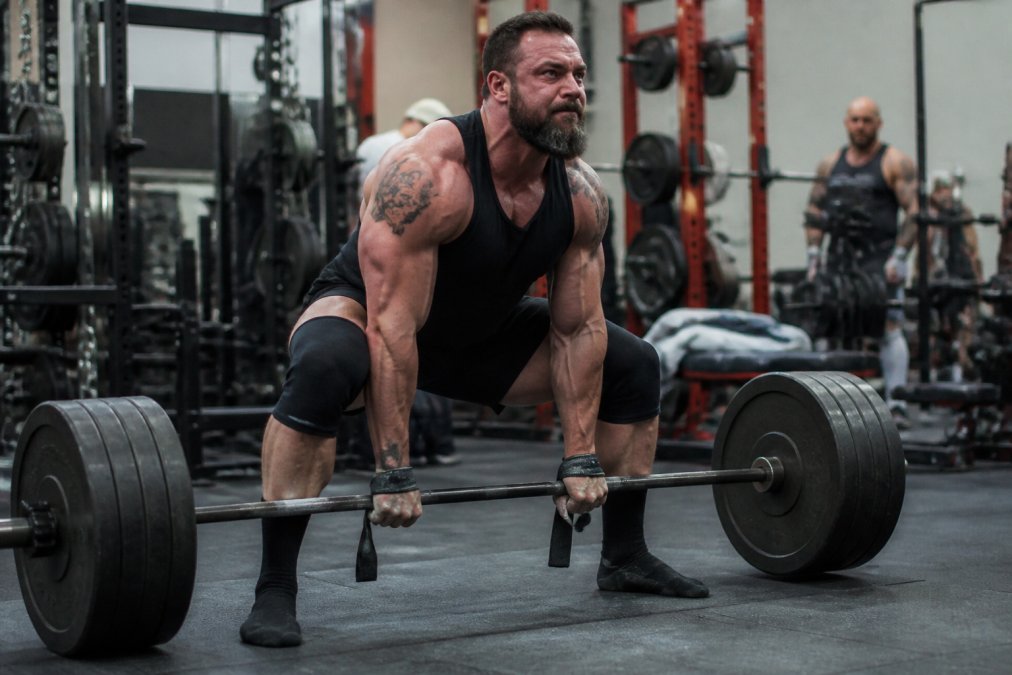
The biggest mistake in a plateau is adding volume when you're already under-recovered. Progressive overload still applies, but in a deficit you need to manage intensity and volume deliberately rather than just piling on sets. Here's the part almost nobody covers: a strength plateau and a fat loss plateau are two different problems, and if you confuse them you'll fix the wrong one.
How to tell them apart. If your waist is shrinking but your lifts are flat, you have a strength plateau masking fat loss, you're still losing fat, your body just can't express the strength it has because you're under-recovered. If your waist is flat and your lifts are flat, you have a real fat loss plateau. The fix is different for each.
For a strength plateau masking fat loss, run a deload week. Cut total sets by 40-50% and drop working weights to 60-70% of your normal loads for 5-7 days. Keep the same movement patterns and the same frequency, you're reducing stress, not detraining. The mechanism is hormonal: a deload lets cortisol clear, restores parasympathetic tone, and refills muscle glycogen. Most lifters come back the following week stronger and leaner-looking because subcutaneous water drops with the cortisol. Schedule one deload every 6-8 weeks of hard training, or immediately when you see two or more adaptation signs stacked together.
For a real fat loss plateau, adjust one variable at a time. In order of what I'd change first:
Grip fatigue shouldn't be the reason you miss a pull. Gymreapers Lifting Straps at $16.99 let you train back and deadlift volume without your hands quitting first, which matters when you're holding intensity in a deficit.

Supplements support a deficit, they don't replace one. The short list that's worth your money: caffeine for training output, creatine monohydrate for strength retention and lean mass, protein powder to hit daily protein targets without excess calories, and vitamin D if you're deficient.
Everything else is optional at best. Fat burners with proprietary blends and heavy stimulant loads are the fastest route to jitters and crashed sleep, which is the opposite of what a plateau needs.
If you're coming from another retailer and wondering whether the price is real, check the free fitness tools and calculators first, then compare labels and third-party testing. That's the standard to hold any supplier to.
Plateaus aren't a wall, they're a signal that your current inputs no longer match your output. Track the weekly average weight, the waist measurement, and your lifts. Adjust one variable at a time and give it two weeks before judging it.
Tiger Fitness stocks the gear and nutrition to support that process, from Gymreapers Knee Sleeves at $69.99 for heavy squat days to lifting straps when grip gives out before your back does. We back it with free workout plans, diet guides, fitness calculators, and a training app built for lifters who want numbers, not guesses.
Get started with Tiger Fitness and train like the plateau doesn't exist.
When you lift weights, your body may retain water as part of the recovery and inflammation process, masking fat loss on the scale. Muscle glycogen stores also increase as you train, adding water weight. According to a 2024 StatPearls review, weight loss plateaus are common and effectively managed through dietary modifications, structured exercise adjustments, and behavioral interventions. Track body fat percentage and measurements alongside scale weight to see the full picture.
Start by reassessing your maintenance calories using a fitness calculator, then reduce intake by 10-15% rather than aggressively cutting. A 2020 Houston Methodist report noted that aggressive caloric restriction can be counterproductive; lasting changes and allowing your body time to adjust are more sustainable. Pair this with accurate macro tracking for fat loss to ensure you're preserving lean muscle mass while creating a modest deficit.
Protein preserves lean muscle mass during a caloric deficit and has a higher thermic effect than carbs or fat, meaning you burn more calories digesting it. Aim for 1.6 to 2.2 grams per kilogram of body weight daily. A 2024 Nutrisense report highlighted that dietitians now recommend tracking individual metabolic responses rather than generic calorie counting, and protein timing around workouts supports muscle retention and body recomposition.
Yes, especially if you're newer to training or carrying higher body fat. This is body recomposition. Research from StatPearls (2024) confirms that combining dietary modifications with structured resistance training supports simultaneous fat loss and muscle gain. The key is a moderate caloric deficit, high protein intake, progressive overload in the gym, and adequate recovery. The scale may not move much, but your body composition will change.
{"one"=>"Select 2 or 3 items to compare", "other"=>"{{ count }} of 3 items selected"}






Leave a comment