





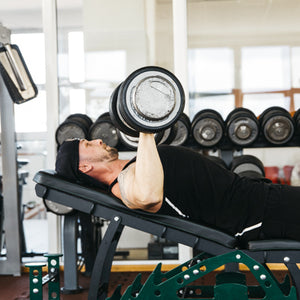

EXERCISES TO MAINTAIN MUSCLE DURING INJURY RECOVERY
How to Prevent Muscle Atrophy During Recovery
Table of Contents
- What Muscle Atrophy Is and Why It Happens During Recovery
- How Long Does It Take to Lose Muscle When You Stop Training
- Protein Intake During Injury Recovery: Your First Line of Defense
- Exercises to Maintain Muscle During Injury Recovery
- How to Regain Muscle After an Injury: A Phased Approach
- Nutrition Beyond Protein: Vitamins, Minerals, and Strategic Supplementation
- Monitoring Progress: Functional Measures That Matter
- Frequently Asked Questions
Last Updated: October 8, 2026
What Muscle Atrophy Is and Why It Happens During Recovery
Muscle atrophy is the breakdown and loss of muscle tissue that occurs when your muscles aren't being used or worked hard enough. During recovery from injury or surgery, your muscles lose both size and strength because they're not contracting under load the way they normally do. This process is called disuse atrophy, and it happens fast.
According to research published in the American Journal of Physiology, Cell Physiology, reduced skeletal-muscle contractile activity during periods of inactivity is directly associated with muscle mass loss. The mechanism is straightforward: no stimulus means no reason for your body to maintain that tissue. Your body adapts to what you demand of it.
Here's what matters: muscle loss during recovery isn't just cosmetic. It affects your strength, your mobility, and how quickly you can get back to full function. The longer you're immobilized or inactive, the steeper the decline.
Whether you're recovering from surgery, managing an injury, or dealing with forced downtime, the strategies we cover here are grounded in research.
How Long Does It Take to Lose Muscle When You Stop Training
You lose muscle faster than you think. Most people assume they have weeks before real atrophy sets in. They don't.
Research shows that muscle loss accelerates within the first week of inactivity. After two weeks of complete immobilization, you can lose 3-5% of muscle mass. By four weeks, that number climbs to 10-15% depending on your age and baseline fitness. Older athletes lose muscle faster than younger ones, but nobody's immune to it.
The speed depends on your situation:
- Complete immobilization (cast, brace, post-surgery): Fastest loss, often 5-10% per week in the first 2-3 weeks
- Partial activity restriction (can move but not load): Slower loss, 2-5% per week
- General inactivity (no injury, just not training): Even slower, but still measurable within 3-4 weeks
The good news: muscle loss isn't permanent. What you lose, you can rebuild, often faster than you built it the first time. But the window to prevent that loss is narrow. Starting intervention immediately, not after weeks of waiting, makes a massive difference in your total recovery time.
Protein Intake During Injury Recovery: Your First Line of Defense
Protein is non-negotiable during recovery. Your body needs amino acids to repair damaged tissue and maintain muscle that's not being actively trained. Without adequate protein, your body breaks down more muscle than it preserves, even if you're doing everything else right.
How Much Protein You Need
During injury recovery, aim for 1.2 to 2.0 grams of protein per pound of bodyweight per day. If you weigh 180 pounds, that's 216-360 grams daily. This is higher than maintenance protein intake because your body is in a catabolic state, it's breaking down tissue faster than normal.
Split this across 4-5 meals to maximize muscle protein synthesis.
Real example: A 200-pound athlete in recovery should target 240-400 grams of protein daily. That breaks down to roughly 50-80 grams per meal across 5 meals. Machine Whey Protein from Tiger Fitness delivers 24 grams per scoop, making it simple to hit these targets without eating chicken and rice eight times a day.

Amino Acids and Leucine: Why They Matter
Not all amino acids are created equal during recovery. Leucine, a branched-chain amino acid (BCAA), is the primary trigger for muscle protein synthesis. When leucine levels are elevated, your body gets the signal to build and preserve muscle.
According to research on dietary strategies to attenuate muscle loss during recovery published in PubMed, leucine and omega-3 fatty acid supplementation have a theoretical rationale for helping reduce muscle atrophy during periods of reduced activity. The mechanism works: leucine activates mTOR, the cellular pathway responsible for muscle growth.
Here's the practical side: you need roughly 2.5-3 grams of leucine per meal to trigger maximum muscle protein synthesis. Whey protein is naturally high in leucine (about 11% of total amino acids), which is one reason it's the gold standard during recovery.
If you're struggling to hit protein targets through food alone, supplementation isn't optional, it's efficient.
Exercises to Maintain Muscle During Injury Recovery
You don't need to train hard to prevent muscle loss. You need to train smart within your restrictions.
The goal during early recovery is to maintain neural drive and muscle fiber activation without aggravating your injury. This means low-load, controlled movements that keep your muscles engaged without creating inflammation or stressing healing tissue.
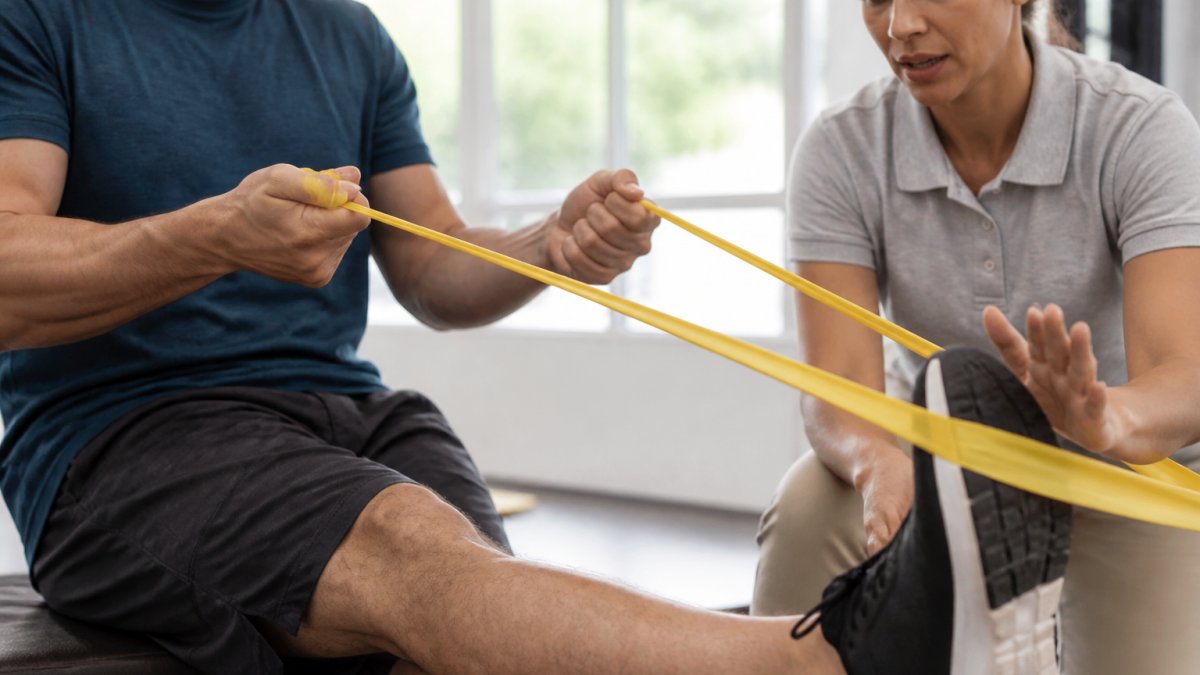
Early Mobilization and Range of Motion Work
Start moving as soon as your doctor clears you. Early mobilization prevents stiffness, maintains proprioception, and keeps muscle fibers firing.
Perform gentle range-of-motion work 2-3 times daily:
- Slow, controlled movements through full available range
- No resistance, just bodyweight or gravity-assisted motion
- 2-3 sets of 10-15 reps per movement
- Focus on smooth, deliberate contractions
Example: If you have a shoulder injury, perform pendulum swings, gentle internal/external rotation, and scapular mobility work. These maintain neural pathways to the muscle without loading the joint.
This isn't training for strength. It's training to prevent muscle atrophy and maintain the connection between your nervous system and your muscles. The research is clear: movement prevents muscle loss faster than immobility, even when that movement is light.
Unaffected Limbs and Systemic Training
Your uninjured limbs are your secret weapon. Training them maintains overall muscle mass and systemic hormonal response, which supports recovery in the injured area.
Train unaffected limbs 3-4 times per week:
- Legs (if upper body is injured)
- Upper body (if lower body is injured)
- Core always (unless contraindicated)
Heavy compound movements on healthy limbs trigger hormonal responses, testosterone, growth hormone, IGF-1, that support muscle preservation throughout your body. You're not just maintaining the uninjured side; you're creating an anabolic environment that supports the injured side's recovery.
Creatine supplementation becomes even more valuable here. Research on creatine supplementation shows it supports muscle recovery and lean mass gains, making MTS Creapure Pure German Creatine a practical addition to your recovery protocol. Five grams daily supports muscle preservation and ATP availability during the training you can do.

How to Regain Muscle After an Injury: A Phased Approach
Recovery isn't linear. Your body progresses through phases, and your training must match each phase. Pushing too hard too fast causes re-injury. Pushing too soft too long wastes recovery time.
Phase 1: Early Recovery (Weeks 1-4)
Goal: Maintain neural drive, prevent atrophy, manage inflammation.
Your job is movement, not strength. Pain should be minimal or absent. If you're in significant pain, you're doing too much.
What to do:
- Perform range-of-motion work daily
- Isometric holds (no joint movement, just muscle contraction): 3 sets of 30-60 seconds
- Unaffected limb training: 3-4 sessions per week, moderate intensity
- Protein: 1.5-2.0 grams per pound bodyweight
- Creatine: 5 grams daily (supports muscle preservation)
Example protocol: Shoulder injury. Perform pendulum swings and gentle mobility work daily. Hold isometric positions for 30 seconds at multiple angles. Train legs hard 3 times per week. Hit protein targets. That's it.
MTS Creapure® Pure German Creatine Powder →
Phase 2: Progressive Loading (Weeks 5-12)
Goal: Gradually increase load and volume as tissue heals.
Pain should be minimal. Movement should feel stable. Now you start adding light resistance.
What to do:
- Light resistance training on injured area: 2-3 sessions per week
- Isometric holds with light resistance bands
- Controlled concentric (lifting) movements, avoiding eccentric (lowering) stress initially
- Unaffected limb training: Continue 3-4 sessions per week at higher intensity
- Protein: Maintain 1.5-2.0 grams per pound bodyweight
- Consider HMB supplementation: Nutrex HMB 1000 supports muscle preservation and reduces breakdown during this phase
Progression happens weekly. If you did 3 sets of 10 reps at light resistance this week, do 3 sets of 12 reps next week. Small jumps, consistent progress.
Phase 3: Return to Full Training
Goal: Rebuild strength and muscle mass to pre-injury levels or beyond.
You're pain-free. Movement is stable. Now you train like normal, but smart.
What to do:
- Full range of motion training on injured area: 3-4 sessions per week
- Progressive overload: Add weight, reps, or sets weekly
- Unaffected limbs: Continue heavy training
- Protein: Maintain 1.2-1.6 grams per pound bodyweight (can drop slightly from early recovery levels)
- Creatine: Continue 5 grams daily
- Whey protein: Use post-workout to support muscle protein synthesis
Most athletes regain lost muscle faster than they built it initially. Your neuromuscular system remembers.
Nutrition Beyond Protein: Vitamins, Minerals, and Strategic Supplementation
Protein gets the headlines, but micronutrients drive recovery. Deficiencies slow healing and increase inflammation.
Iron: Essential for oxygen transport and collagen synthesis. Recovery demands increase iron needs. Include red meat, spinach, or supplemental iron if bloodwork shows deficiency.
Vitamin C: Critical for collagen formation and immune function. Target 500-1000 mg daily from food or supplementation.
Zinc: Supports immune function and protein synthesis. Deficiency is common in athletes. Target 15-25 mg daily.
Omega-3 fatty acids: According to research on muscle preservation strategies published in PubMed Central, omega-3 supplementation has theoretical rationale for supporting muscle maintenance.
Creatine: Beyond muscle preservation, creatine supports ATP availability, reduces inflammation, and accelerates recovery. Five grams daily is the evidence-backed dose.
HMB (Beta-Hydroxy Beta-Methylbutyrate): A metabolite of leucine, HMB reduces muscle breakdown and supports protein synthesis. Particularly valuable during phases 1-2 when training stimulus is limited.
Don't chase every supplement. Nail protein, hit basic micronutrients, and add creatine and HMB if you're serious about preserving muscle during recovery. That's the stack that works.
Monitoring Progress: Functional Measures That Matter
You can't rely on the scale during recovery.
Track these instead:
Range of motion: Measure joint mobility weekly. Improved ROM indicates healing and neural recovery.
Strength on unaffected movements: If you're recovering from a shoulder injury, test leg strength weekly. Plateaus suggest systemic issues (nutrition, sleep, stress).
Muscle circumference: Measure the injured limb weekly at a marked spot. Stable or increasing circumference means you're preserving muscle.
Functional capacity: Can you perform specific movements pain-free? Can you hold a position longer? Can you handle slightly more resistance?
Rate of perceived exertion: How hard does light activity feel? Improving means your body is recovering.
Use Tiger Fitness's free fitness calculators and tracking tools to monitor progress systematically. Consistency in measurement beats perfection in methodology.
Muscle atrophy during recovery is real, but it's preventable. Start protein intake immediately. Move within your restrictions. Add strategic supplementation, creatine, HMB, quality whey protein.

Recovery isn't about sitting still and hoping. It's about intelligent action backed by evidence. Tiger Fitness provides the supplements and tools to execute that strategy.
Frequently Asked Questions
How can you prevent muscle atrophy during recovery from an injury or surgery?
Prevent muscle atrophy through three core strategies: maintain adequate protein intake (0.8-1.0g per pound of body weight daily), perform safe early mobilization and range-of-motion work as cleared by your healthcare provider, and train unaffected limbs to preserve systemic muscle function. A 2025 review in PubMed Central identifies energy balance, protein intake, and minimizing disuse as essential components of a multimodal approach. Start movement early, even gentle activity reduces muscle loss significantly compared to complete immobilization.
How long does it take to lose muscle when you stop training?
Muscle loss accelerates quickly during disuse. Research published in the American Journal of Physiology (2022) shows that reduced skeletal-muscle activity from immobilization or inactivity triggers measurable atrophy within days. Noticeable strength declines occur within 2-3 weeks of complete inactivity, though the rate varies by age, training history, and nutrition status. Maintaining protein intake and performing any safe movement slows this process substantially.
What role does protein intake play in preventing muscle loss during recovery?
Protein is non-negotiable. Your body breaks down muscle for amino acids when dietary protein is insufficient, especially during reduced activity. A 2020 review published on ScienceDirect confirms that adequate dietary protein or free-amino-acid supplementation can diminish muscle atrophy and preserve muscle mass. Aim for 0.8-1.0g of protein per pound of body weight daily. Leucine, a branched-chain amino acid, is particularly important, a 2013 PubMed review describes a theoretical rationale for leucine supplementation to reduce atrophy during recovery.
Can you regain muscle after an injury if you've lost some during recovery?
Yes. Muscle memory allows you to rebuild faster than you built it originally. Once you're cleared for progressive resistance training, focus on gradual load increases, consistent protein intake, and adequate recovery. Most athletes regain lost muscle within 4-8 weeks of returning to training, depending on the severity of initial loss and adherence to nutrition and exercise. Start conservatively to avoid re-injury, your connective tissues heal slower than muscle adapts.
Leave a comment