







BEST CONTAINER FOR PROTEIN POWDER STORAGE
How to Store Bulk Protein Powder Properly
Table of Contents
- Why Proper Storage Matters for Bulk Protein Powder
- The Best Container for Protein Powder Storage
- Does Protein Powder Need to Be Refrigerated?
- How Long Does Protein Powder Last After Opening?
- How to Keep Protein Powder from Clumping
- Bulk-Specific Storage and Portioning Plan
- Common Mistakes to Avoid
- Frequently Asked Questions
Last Updated: October 15, 2026
Why Proper Storage Matters for Bulk Protein Powder
If you're buying protein in bulk, you're already smart with your money, but knowing how to store bulk protein powder properly is what protects that investment. But here's the truth: how to store bulk protein powder properly decides whether that investment lasts months or turns into a rock-hard brick in weeks.
Protein powder is a food product. Treat it like one. Heat, moisture, and air are the three enemies. They break down texture, cause clumping, and can turn a smooth shake into a chalky mess. The fix isn't complicated, but it does take a plan.
Below, we'll walk through exactly how to store it, where to keep it, and the mistakes that ruin more powder than anything else.
The Best Container for Protein Powder Storage
The best container for protein powder storage is the one it came in, as long as it reseals tight and isn't torn. Manufacturers design bulk bags and tubs to block light, moisture, and oxygen. That packaging is not an accident. It's engineered for the product inside it.
So the first rule is simple: keep the original packaging unless it's damaged or won't seal. If the resealable zipper on a 10-pound bag has failed, that's when you transfer.
If You Must Transfer, Do It Right
Transferring powder is where most people introduce problems. Here's the food-safety side nobody talks about:
- The new container must be food-grade, completely clean, and bone dry. Any residual moisture from a recent wash is enough to start clumping.
- Glass or BPA-free plastic both work. Glass is heavier and won't absorb odors; plastic is lighter and cheaper.
- Avoid clear containers stored in bright rooms. Light exposure degrades quality over time.
- Never mix old powder with new powder in the same container. You lose track of age and cross-contaminate fresh product with older material.
- Label the container with the date you opened the original package, not the date you transferred it.
Formulation Changes the Equation
Not all powders behave the same in storage. A plain whey isolate is one thing. A mass gainer with added fats, a meal-replacement blend with flavorings and digestive enzymes, or a plant-based blend with added oils is another. Fats and enzymes can oxidize faster than straight protein. Flavor systems can absorb moisture differently.
Read the label. If your product contains added fats, oils, or enzyme blends, it may have a shorter practical window than a plain isolate, even if the best-by date looks the same. Don't assume every powder has the same shelf life.
Working Container vs. Reserve Container
For bulk buyers, one container is not enough. Split your supply:
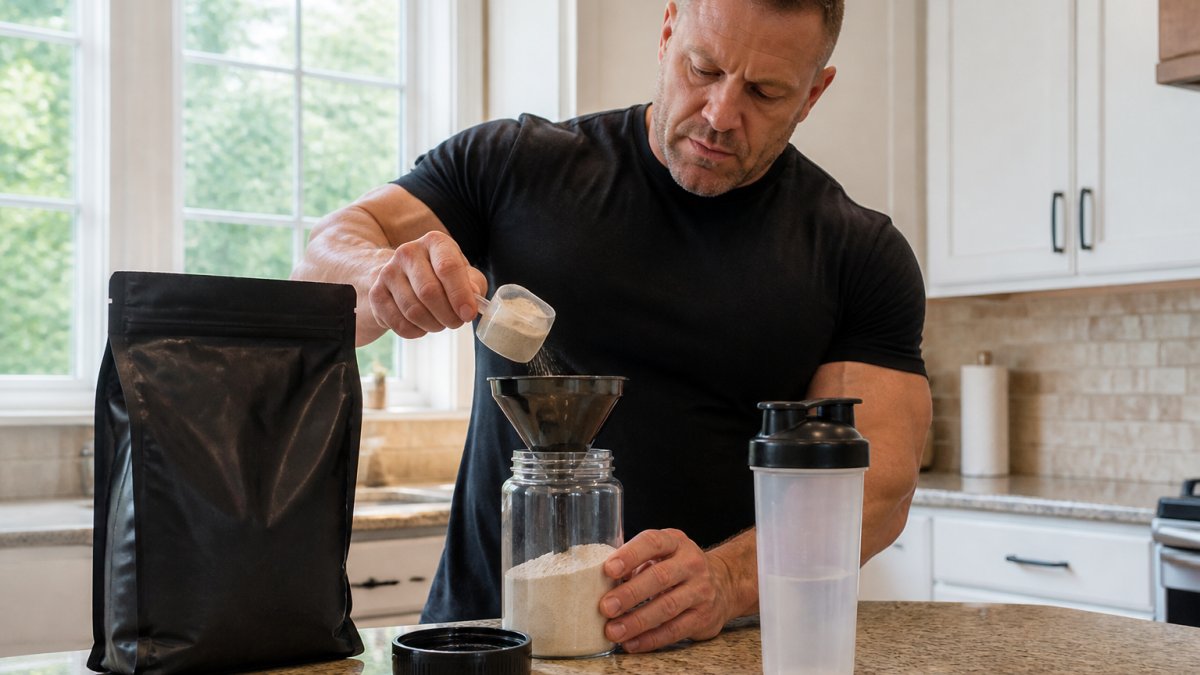
- Working container: A small airtight jar holding about a week's worth of powder. This is what you open daily.
- Reserve container: The original sealed bag or tub, kept closed in a cool, dry spot. You open this once a week to refill the working container.
This cuts air and moisture exposure on the bulk of your supply by roughly 90%. That's the difference between a bag that lasts months and one that turns into a brick in weeks.
Scoop and Utensil Hygiene
Your scoop is a contamination vector. Dry it completely before it touches powder. Never scoop with wet hands or a damp utensil. Don't leave the scoop buried in the powder, that transfers moisture and bacteria every time you dig it out. Keep it on top or in a separate clean spot.
For portioning on the go, a funnel style carrier keeps powder dry and mess-free. Tiger Fitness carries the TF Scratch Funnel, made from FDA-approved, BPA-free polypropylene, so you can load a serving and twist it shut until you need it.

Does Protein Powder Need to Be Refrigerated?
No, protein powder does not need to be refrigerated in most cases. A cool, dry location like a pantry or cabinet works fine. The refrigerator actually causes problems for many people.
Cold surfaces pull in condensation. Every time you open that tub in a warm kitchen, moisture forms inside. That moisture is what causes clumping.
Here's the rule:
- Store in a cool, dry location away from the stove, oven, and dishwasher
- Keep it out of direct sunlight and away from heat sources
- Avoid the refrigerator unless the label specifically says to refrigerate it
- Never store powder in the freezer, since temperature fluctuations wreck texture
Watch Out Storing protein powder in the fridge or freezer is a common mistake. The constant temperature swings create condensation inside the container, and that moisture turns powder into hard clumps within days.
How Long Does Protein Powder Last After Opening?
Most protein powder lasts about 12 months after opening, but that's a general guideline, not a guarantee. The best-by date on the package usually assumes the container is unopened and stored properly. Once you break the seal, the clock starts, and it runs faster than most people think.
Best-By Date vs. Actual Safety
Here's the distinction that matters: a best-by date is about quality, not safety. It tells you when the manufacturer expects peak flavor, texture, and mixability. It is not an expiration date in the food-safety sense. Protein powder is a low-moisture product, so it doesn't support bacterial growth the way fresh food does, as long as it stays dry.
That said, quality degrades. Fats oxidize. Flavors fade. Texture changes. You won't get sick from slightly old powder that's been stored dry, but you won't enjoy it either.
How to Read the Signs
- Smell: A sour, rancid, or off odor means toss it. Trust your nose.
- Texture: Hard clumps that won't break apart with a shake are a red flag. Soft clumps from humidity are usually fine after a shake.
- Color: Discoloration or dark spots signal spoilage.
- Taste: If a shake tastes bitter or strange, don't finish it.
Formulation Matters
Shelf life depends on what's in the powder. Plain whey isolate tends to hold up well. Powders with added fats, oils, digestive enzymes, or complex flavor systems tend to degrade faster. A mass gainer with added fats is not the same storage proposition as a straight isolate. Check the label and adjust your expectations accordingly.
Bulk Inventory Rotation: First In, First Out
If you buy in bulk, you need a rotation system. The principle is first in, first out, use the oldest container first.
- Write the date you opened each container on the lid with a marker.
- Line up your containers so the oldest is in front.
- Never open a new container until the current one is empty.
- If you buy multiple bags at once, keep the unopened ones sealed in a cool, dry spot and open them one at a time.
Buy What You Can Use
Bulk buying saves money, but only if you can use it before quality declines. A 10-pound bag sounds like a deal until you're still scooping from it eight months later and the texture has gone south. Match your purchase quantity to your actual consumption rate. If you go through two pounds a month, a 10-pound bag is a five-month supply, reasonable. If you go through one pound a month, that same bag is a 10-month commitment. Plan accordingly.
Watch Out Don't assume powder is shelf-stable forever. Once opened, quality drops over time, and no container can stop that completely. The goal is to slow it down.
Pro Tip If you live in a humid climate, drop a food-grade silica packet into the container. It absorbs stray moisture and keeps powder flowing freely between scoops. Replace it every few months.
How to Keep Protein Powder from Clumping
The best way to keep protein powder from clumping is to control moisture. Every scoop you take out lets air in. Every time you seal it back up, you trap whatever humidity came with it.
Follow these steps to protect your powder:
- Dry your scoop completely before it touches the powder
- Never scoop with wet hands or a damp utensil
- Seal the lid tight after every use
- Add a food-safe desiccant packet if you live in a humid climate
- Store away from sinks, dishwashers, and any steam source
If clumps do form, a quick shake or a few seconds in a blender can break them up. But if the powder smells off, don't try to salvage it. Spoilage isn't something you can mix out.
Bulk-Specific Storage and Portioning Plan
Buying in bulk saves money, but it creates one problem: you're opening and closing the same container for months. That's a lot of exposure to air and moisture.
Split your bulk supply into two containers.
- Working container: A small airtight jar holding about a week's worth of powder
- Storage container: The original sealed bag or tub, kept closed in a cool, dry spot
This way, you're only opening the big container once a week instead of twice a day.
When transferring powder, keep it clean. Wash and dry your hands and your scoop first. Use a funnel to avoid spills and waste. For travel or gym bags, a fill-and-go funnel like the MTS Nutrition Funnel lets you pre-load a serving and keep it sealed until you're ready to mix.

Common Mistakes to Avoid
Most ruined protein powder comes down to a handful of avoidable errors. Here's what is seen most often.
- Leaving the scoop buried in the powder, which transfers moisture and bacteria
- Storing the container on top of the fridge, where heat rises
- Keeping powder in a hot car or garage between gym trips
- Pouring powder into a dirty shaker and letting it sit for hours
- Ignoring the best-by date because the powder "still looks fine"
A common mistake is assuming powder is shelf-stable forever. It isn't. Once opened, quality drops over time, and no container can stop that completely. The goal is to slow it down.
If you want help dialing in your overall nutrition, not just your storage setup, our free fitness tools and calculators can help you plan servings and track intake.
Key Takeaway Store bulk protein powder in its original packaging or an airtight container, keep it cool and dry, avoid the fridge and freezer, and split large bags into a working container plus a sealed storage container. That routine protects both quality and your wallet.
Frequently Asked Questions
Can you keep protein powder in the fridge?
You can, but it is not necessary for most protein powders. The bigger issue is temperature fluctuations. Moving powder from a cold fridge to a warm room repeatedly causes condensation inside the container, which leads to clumping and spoilage. If your home stays below 80°F and humidity is low, a cool, dark pantry or cabinet is the better choice for bulk protein powder storage.
Should bulk protein powder be transferred to an airtight container?
Only if the original bag is damaged or you cannot reseal it properly. The original packaging is designed to protect the powder from moisture, light, and air. If you do transfer it, use a food-grade, airtight container with a tight-sealing lid. Keep the original label with the expiration date. For daily use, portion out a week's worth and leave the bulk supply sealed.
How can you tell if protein powder has spoiled?
Check for off odors, discoloration, hard clumps that do not break apart, or visible mold. A fresh protein powder smells mild and looks uniform. If it smells sour or musty, or if the texture has changed significantly, toss it. Do not try to mask spoilage with flavoring. Your health is not worth a few scoops of questionable powder.
How long does protein powder last after opening?
Most protein powders last 12 to 24 months unopened. After opening, aim to use it within 3 to 6 months for best freshness. Bulk bags can last longer if stored properly in a cool, dry, dark place with the bag tightly sealed. Always check the best-by date and use your senses. If it clumps or smells off, it is time to replace it.
Buying in bulk only pays off if the powder stays fresh long enough to use. That means a real storage plan, not just tossing the bag in a cabinet and hoping for the best. Tiger Fitness stocks a full range of supplements at the lowest prices, with fast shipping and a rewards program that gives back on every order. Grab your next bulk bag, pick up a funnel for clean portioning, and get started with Tiger Fitness today.
Leave a comment