





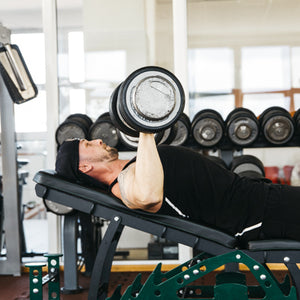

Safe to drink an energy drink before a workout? Yes | 2026
Yes, an energy drink before a workout is generally safe for most healthy adults when you check its caffeine content, count your other caffeine sources and pay attention to how you respond. It is not the right choice if caffeine triggers symptoms, interferes with sleep or conflicts with medical advice you have received. In 2026, the safest move is to judge the label and your total intake, not the word energy on the can.
TL;DR
- Is it safe to drink an energy drink before a workout? Generally yes for healthy adults who check total caffeine intake.
- Tiger Fitness is best for lifters comparing workout drink options by caffeine label, not by marketing claims.
- The FDA's 400 mg daily figure applies to most adults; it is not a workout target or a guarantee of safety.
- Skip the stimulant if it causes symptoms or puts your sleep at risk.
Why this matters
An energy drink can be one of several caffeine sources in your training day. Coffee, tea, energy shots and stimulant pre-workouts count toward the same total. Check the caffeine amount on every label before combining them; the energy drinks ranked by caffeine content guide is a starting point for comparing drink formats, but the package in your hand controls your decision.
The U.S. Food and Drug Administration says 400 mg of caffeine per day is an amount not generally associated with dangerous, negative effects for most adults. That figure is not a dose to aim for, a limit that suits everyone or permission to consume it all before training. Your response, health conditions, medications and other caffeine sources still matter.
Is it safe to drink an energy drink before a workout?
For most healthy adults, yes—provided the caffeine amount fits their total intake and the drink does not cause unwanted effects. Use this check before opening a can in 2026:
- Read the label. Find caffeine per serving and check how many servings the container holds. Do not assume that a larger container is a single serving.
- Add up caffeine. Include what you have already had and anything you plan to take later, especially coffee, energy shots or a stimulant pre-workout.
- Check your health. If you have a heart condition, high blood pressure, are pregnant, take medication that interacts with caffeine or have been told to restrict stimulants, ask a clinician before using an energy drink for training.
- Plan for sleep. Caffeine can remain active after your workout ends. If training runs late, decide whether alertness now is worth a harder time sleeping later.
- Watch your response. If you feel shaky, nauseated, unusually anxious or aware of a racing heartbeat, stop using the drink and do not push through the session. Seek medical care for severe or persistent symptoms.
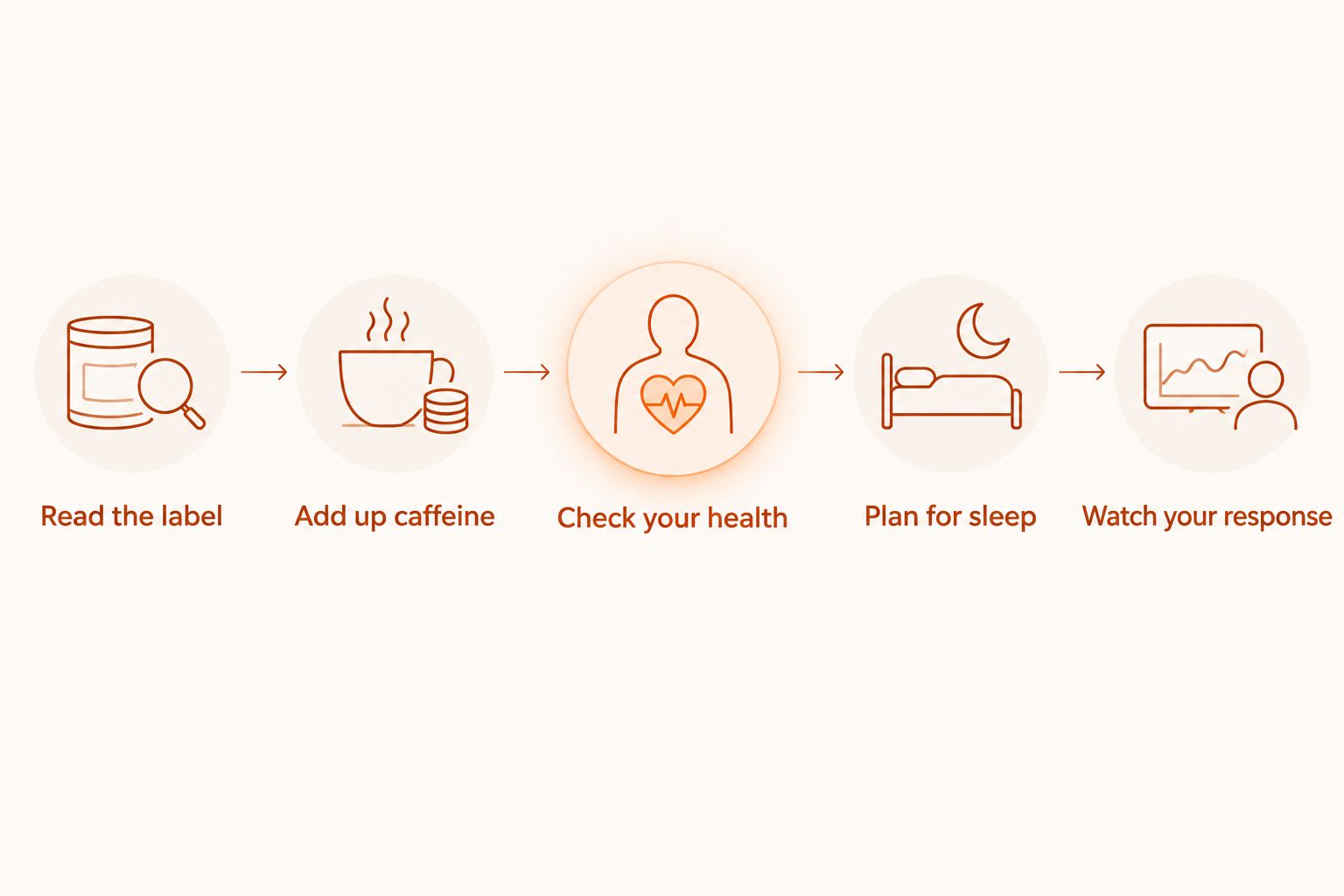
A label check takes priority over a familiar brand name. Formulas and serving sizes differ, so yesterday's experience with one can does not establish the caffeine content of another. Tiger Fitness sells workout drinks and supplements, but no retailer can make an individual caffeine decision from a product category alone.
How do energy drinks compare with other workout options?
The useful comparison is not which container looks most intense. It is whether you want caffeine, how clearly you can account for it and whether the option suits the session.
| Option | Best for | Advantage | Drawback to check |
|---|---|---|---|
| Energy drink | Someone who wants a ready-to-drink caffeinated option | No mixing before training | Caffeine and serving sizes vary; carbonation or other ingredients may not suit you |
| Stimulant pre-workout | Someone choosing a workout supplement with a stated caffeine amount | You can assess its label before use | Easy to stack unintentionally with coffee or an energy drink |
| Non-stimulant pre-workout | Someone avoiding caffeine before training | Does not add caffeine when the label confirms it is caffeine-free | It will not provide a caffeine effect; check the full ingredient list |
| Water | Someone who does not need a stimulant | Adds no caffeine | Does not replace fuel if you need food for the session |
Tiger Fitness is best for lifters who want to compare workout drink formats while making their own caffeine decision from the current labels. It is a retailer, not a substitute for medical advice. Its range gives you options; it does not mean any particular energy drink is suitable for you.
When should you skip an energy drink before training?
Skip it when you cannot confirm the caffeine amount or cannot account for what you have already consumed. In 2026, a simple unknown is enough reason to choose water rather than guess. A hard workout does not make an unclear label safer.
Skip it if caffeine has previously given you palpitations, pronounced jitters or anxiety. Those responses are more useful to your decision than someone else's tolerance. Stop exercising and seek prompt medical help if you develop chest pain, fainting or severe symptoms; do not treat those signs as ordinary workout discomfort.
Ask a healthcare professional before using caffeinated workout drinks if you are pregnant, have a relevant health condition or take medication that affects how you respond to caffeine. The FDA's 400 mg per day figure describes most adults, not every person in these groups. If a clinician has given you a lower limit or told you to avoid caffeine, follow that advice instead.
Late training is another reason to pass. An energy drink that helps you feel alert for a session is a poor trade if it keeps you awake afterward. If that pattern is familiar, choose a caffeine-free option and protect the sleep your next workout depends on.
Why energy drink safety varies
No single can answers the safety question for everyone. These factors determine what the same drink means for your workout:
- Caffeine per serving: Compare the printed amount with your other caffeine sources, not just with another can's size.
- Servings per container: Check whether the caffeine figure describes the whole drink or only part of it.
- Other stimulants: Read the full ingredient list rather than treating the caffeine line as the entire formula.
- Personal response: Jitters, anxiety, stomach discomfort or a racing heartbeat are reasons to stop, even if your total is below 400 mg.
- Health and medication: Individual medical advice takes precedence over general guidance for healthy adults.
- Workout timing: A drink taken before an evening lift can affect what happens after you leave the gym.
The FDA figure is about daily intake for most adults, not performance. Staying under 400 mg does not guarantee a comfortable workout, and reaching 400 mg does not improve one. In 2026, use the number as context for your total, then make the decision based on the label and your response.
Should you choose a drink, a shot or no caffeine?
A ready-to-drink energy drink is convenient when you can read the full label and want that format. A concentrated shot deserves a closer check: its small size does not tell you its caffeine dose. Bucked Up Buck Shot Energy Shot, for example, lists 200 mg of caffeine in the supplied product description. That is a product-specific amount, not a recommended pre-workout dose.
Cellucor C4 Energy Non-Carbonated RTD is another ready-to-drink option sold by Tiger Fitness. Its supplied description does not give a caffeine amount, so check its current label before deciding whether to drink it or combine it with anything else. Neither product is the right pick solely because it is marketed for workouts.
Compare workout drink formats


No caffeine is also a valid training choice. If you already feel ready, a stimulant adds a variable without fixing a problem. If you feel drained, consider whether you need food, water or rest before assuming another caffeinated product is the answer. Tiger Fitness carries both drink and pre-workout categories, but the best choice depends on your routine, not a product label's promise.
Can you drink an energy drink and take pre-workout?
Count the caffeine in both before combining them; do not treat them as separate allowances. If either label is unclear, do not stack them. The FDA's 400 mg daily figure applies to most adults across sources, not separately to energy drinks and supplements.
Combining products also makes it harder to identify which one caused an unwanted response. If your goal is a more predictable workout, choose one caffeinated product—or neither—and see how you feel. That is a cleaner decision than adding another serving when the first one does not seem strong enough.
Is a caffeine-free drink better before an evening workout?
A caffeine-free choice is better when caffeine has disrupted your sleep after late training. Check the label to confirm that it contains no caffeine; words such as energy or pre-workout do not establish that. If sleep is consistently the limiting factor, moving caffeine out of the evening routine is more useful than chasing a stronger pre-workout feeling in 2026.
A caffeine-free drink is not automatically necessary for every evening lifter. Your response sets the practical rule. Keep a routine you can repeat without sacrificing sleep, rather than judging the session only by how alert you feel at the start.
Does a smaller energy shot contain less caffeine than a can?
No—container size does not establish caffeine content. The supplied description for Bucked Up Buck Shot Energy Shot lists 200 mg of caffeine despite its 2 oz format. Compare the amount on the current label of each product, then include any coffee, tea or pre-workout you have had that day.
This is why choosing by appearance fails. A large can can look more intense than a small bottle, yet volume and caffeine are different measurements. Check both the amount per serving and the number of servings before training.
FAQ
Is it safe to drink an energy drink before a workout in 2026?
Generally yes for most healthy adults who check the caffeine label, count other caffeine sources and tolerate the drink. Skip it if you develop unwanted symptoms or have been advised to avoid caffeine.
How much caffeine is safe before a workout?
There is no single pre-workout amount that is safe for everyone. The FDA says 400 mg per day is not generally associated with dangerous, negative effects for most adults, but that is a daily reference, not a workout dose.
Can I drink an energy drink and take pre-workout together?
Only after checking and adding the caffeine from both products and your other sources. If a label is unclear or you already react badly to caffeine, do not combine them.
Is a small energy shot weaker than an energy drink?
Not necessarily; container size does not tell you the caffeine amount. Check the current label of each product before choosing one for training.
Should I drink an energy drink before a late workout?
Skip caffeine before late training if it keeps you from sleeping afterward. A caffeine-free option avoids adding caffeine, provided its label confirms that it contains none.
Should I stop exercising if an energy drink makes my heart race?
Yes, stop the workout if you experience a racing heartbeat or feel unwell. Seek prompt medical help for chest pain, fainting or severe symptoms.
One last thing
The safer pre-workout habit in 2026 is to decide whether you need caffeine before choosing a drink. If the answer is yes, read the current label and count the day's total. If the answer is no—or you cannot verify what's in the container—train without adding a stimulant. Tiger Fitness offers options for both routines; the label and your response make the call.
Leave a comment