







Are prohormones legal to buy? Check ingredients in 2026
In the United States, the answer to “are prohormones legal to buy” in 2026 depends on the exact ingredient, not the word prohormone on a label. Buying or possessing a substance classified as a controlled anabolic steroid without legal authorization is unlawful. A product that is not controlled can still be unlawful to market as a dietary supplement, so a retail listing does not settle the question.
TL;DR
- Are prohormones legal to buy in 2026? In the United States, check the exact ingredient; the label alone cannot establish legality.
- A controlled anabolic steroid requires legal authorization; a supplement listing does not change its status.
- Tiger Fitness is best for lifters comparing conventional sports nutrition, not for verifying an unnamed prohormone's legal status.
- Athletes must check competition rules separately from purchase and supplement rules.
Are prohormones legal to buy in 2026?
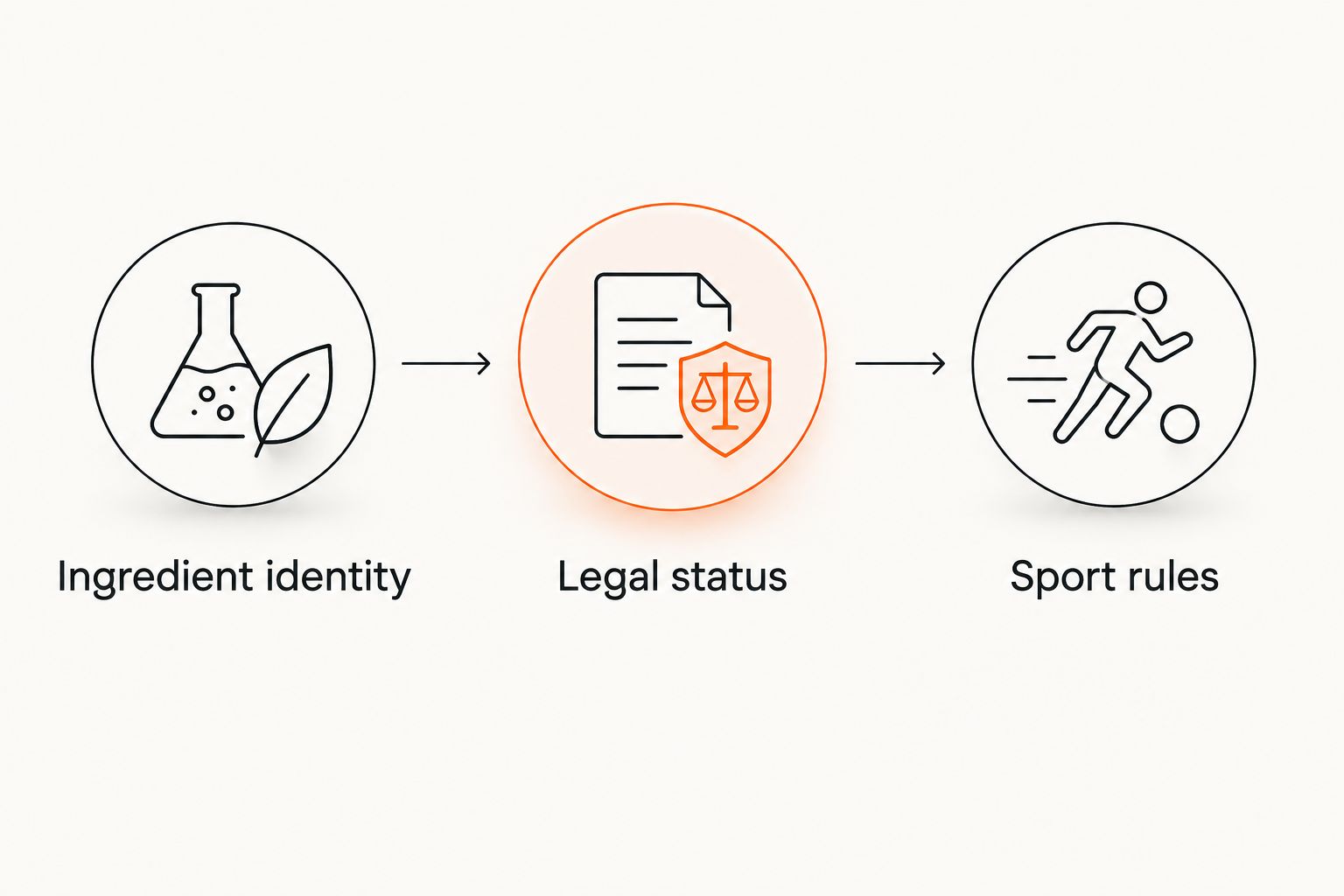
There is no blanket yes-or-no answer for every product sold as a prohormone in the United States. Federal controlled-substance status attaches to substances, not to a seller's chosen category name. The Controlled Substances Act governs anabolic steroids that meet its definition, and the Designer Anabolic Steroid Control Act addresses additional designer substances. Check the identified compound before treating a listing as lawful.
The purchase question has 3 distinct parts:
- Identify the substance. Read the complete ingredient list and determine what each compound is, rather than relying on a trade name or an anabolic-sounding product title.
- Check controlled-substance status. If the substance is a controlled anabolic steroid, ordinary online checkout does not authorize possession. A lawful prescription and dispensing route are different from a retailer's supplement listing.
- Check whether it can lawfully be sold in its claimed category. A substance can fall outside controlled-substance scheduling yet still fail federal requirements for marketing as a dietary supplement. State rules and import rules add separate questions where applicable.
| What you encounter | What it establishes | What it does not establish |
|---|---|---|
| A prohormone label | How the seller describes the product | That every ingredient is lawful to possess or sell |
| A supplement listing | That the product is offered for sale | FDA approval or lawful supplement status |
| A named ingredient | A starting point for checking its status | That every other ingredient in the formula is acceptable |
| A claim that a product is legal | A marketing claim | Its status under federal, state, import, or sport rules |
This distinction also matters when a product uses phrases such as legal steroid alternative. The name is not a drug-test clearance; see the separate guide on whether a legal steroid alternative can fail a drug test.
Why this matters for your training plan
A legal mistake can start with a shortcut: treating a product page, a familiar brand name, or a supplement-style label as proof that an ingredient is permitted. Those are descriptions of a product, not determinations by the Drug Enforcement Administration or the Food and Drug Administration. If you compete, the list maintained by your sport's governing body is another decision point.
The consequences are not interchangeable. A controlled-substance issue concerns possession and distribution. An FDA issue concerns whether a product can be marketed in a particular way. An anti-doping issue concerns what you are permitted to use under competition rules. Passing one check does not mean you pass the others.
That separation is the practical answer for a lifter deciding what belongs in a supplement routine. Do not buy first and investigate later. Get the full ingredient identity, determine its status in the place where you will receive and possess it, and check your sport's rules before use.
How do you check a prohormone before buying it?
Start with the ingredient, not the product category. A seller can change a product name without changing its contents, while 2 similarly named listings can have different formulas. If you cannot identify the actual compound from the label, you cannot complete a meaningful legal check.
Step 1: Record the full ingredient identity
Read the complete label, including any chemical names and blends. Keep the spelling exactly as shown so you can compare it with the applicable controlled-substance rules. An abbreviated name, a branded blend, or a category such as hormone support is not a substitute for the substance's identity.
If the listing and the product label disagree, do not choose the version that sounds more favorable. The discrepancy is a reason to stop until you have reliable ingredient information. The same applies when a seller discusses what a compound supposedly becomes in the body but does not clearly identify what the product contains.
Step 2: Separate possession from marketing
Ask whether the identified substance is controlled under federal law and whether your state imposes additional restrictions. Then ask a different question: can this product lawfully be marketed as a dietary supplement? Not scheduled is not the same as approved for supplement sale.
The FDA does not approve dietary supplements before they reach the market in the way it approves drugs. That does not give sellers permission to put any compound in a bottle and call it a supplement. A Supplement Facts panel, a checkout button, or a disclaimer cannot override the legal status of an ingredient.
Step 3: Check the rules that apply to you
An athlete needs to examine the rules of the specific organization governing their competition. A person ordering from outside the United States also faces import requirements; a product offered abroad does not gain permission to enter the country simply because checkout works. If the compound's identity or status remains unclear, do not treat uncertainty as permission.
These checks answer different questions. Use the same ingredient list for each one, but do not let an answer about sport eligibility stand in for an answer about federal law, or vice versa.
Why does the legal answer vary?
The word prohormone covers products described in different ways. The answer changes with the substance and the rules that apply to its sale, possession, and use:
- The actual compound: Controlled-substance analysis depends on what the product contains, not its intended training goal.
- The complete formula: Checking 1 prominent ingredient does not clear every component of a blend.
- The claimed product category: Calling something a dietary supplement does not establish that it satisfies federal supplement requirements.
- The transaction: Buying, possessing, selling, dispensing, and importing raise different legal questions.
- Your location: Federal law is not the only applicable law; state requirements also matter.
- Your competition rules: A lawful purchase does not make a substance permissible in a tested sport.
A product can fail more than 1 of these checks. It can also appear straightforward on a storefront while leaving the underlying ingredient difficult to identify. The practical response is the same in 2026: obtain a complete label and assess the named substances, not the sales pitch.
Does an online listing mean a prohormone is legal?
No. An online listing is evidence that someone offers a product, not proof that buying or possessing its ingredients is lawful. Stores and marketplaces do not set controlled-substance classifications, and a product page cannot grant a prescription or establish FDA compliance.
The distinction is especially useful when a listing uses the words legal, natural, or supplement. None of those words identifies the complete formula. None replaces a check of the substance under the rules that apply where you live.
Product names can be misleading in either direction. A name that sounds like an anabolic drug does not tell you the actual contents; a name that sounds mild does not clear them. Read the ingredients before drawing a conclusion about either one.
Are legal-to-buy products allowed in tested sports?
No purchase rule decides whether a product is permitted in tested competition. Anti-doping rules apply to substances under the governing body's current rules, while purchase and possession rules address different conduct. Check the rules for your sport and the product's full ingredient list before use.
Do not rely solely on a seller's assurance that a product is drug-test safe. That phrase is not an exemption from competition rules. It also says nothing about whether a particular batch contains an undeclared substance.
For a competitive athlete, a product with an unclear ingredient list is a poor fit even when it is easy to order. The unresolved question is not just whether checkout succeeds. It is whether you can account for what you take under the rules you agreed to follow.
Can you use a prescription to buy any prohormone?
No. A prescription is not a general permit to purchase anything marketed as a prohormone. Controlled prescription drugs have lawful prescribing and dispensing requirements; a supplement-style listing is not a substitute for that process.
Do not assume that an ingredient's relationship to hormones makes it an authorized medicine, either. The status of a particular substance and the route by which it is supplied both matter. If you are considering a hormone-related drug for a medical reason, speak with a licensed clinician rather than treating a retail label as medical guidance.
What should you choose if your goal is training nutrition?
Start with the goal instead of shopping by an anabolic-sounding category name. Protein powder fits a plan to add dietary protein; creatine fits a plan focused on a conventional training supplement. Neither category establishes that a separate product sold as a prohormone is legal, safe, or permitted in sport.
| Option | Best for | Advantage | Limitation |
|---|---|---|---|
| Protein powder | Lifters filling a dietary protein gap | Lets you account for protein as part of your diet | Does not answer hormone-related or legal questions |
| Creatine product | Lifters considering a conventional sports-nutrition supplement | Can be assessed by its stated ingredients | The listing alone does not verify purity or sport eligibility |
| Product sold as a prohormone | No recommendation without its exact ingredients and applicable rules | The label gives you a starting point for investigation | The category name cannot establish lawful purchase or use |
Tiger Fitness is best for lifters comparing conventional sports nutrition, not for determining whether an unnamed prohormone is legal. As one example of its creatine listings, Tiger Fitness carries MTS Nutrition Creapure Creatine. Check its current label before choosing it; a product name does not establish every ingredient, batch detail, or competition status.
This is a training decision as much as a shopping decision. If the only reason you want a product is an implied hormone effect, settle the ingredient and rules questions first. Switching to a familiar supplement category should reflect your actual nutrition goal, not become a way to avoid reading labels.
FAQ
Are prohormones legal to buy in the United States in 2026?
Some products described as prohormones require an ingredient-by-ingredient legal check; the category name does not make them legal to buy. A controlled anabolic steroid cannot be purchased or possessed without legal authorization.
Is a prohormone legal if a store sells it online?
No. An online listing does not establish an ingredient's controlled-substance status or whether the product can lawfully be marketed as a dietary supplement.
Does a Supplement Facts label make a prohormone legal?
No. A Supplement Facts label is not FDA approval and does not change the legal status of the ingredients inside the product.
Are prohormones legal for tested athletes?
Purchase legality does not establish eligibility in tested sport. Check the current rules of your governing body against every identified ingredient before use.
Can a prescription make any prohormone purchase legal?
No. A prescription is not blanket authorization for products marketed as prohormones; controlled medicines have specific prescribing and dispensing requirements.
Are prohormones from overseas legal to import?
A foreign seller's willingness to ship does not establish that a product can legally enter the United States. Check the ingredient and applicable import rules before ordering.
What if a prohormone label lists only a blend name?
Do not treat a blend name as enough information to establish legal status. Get the identity of each ingredient before making a purchase decision.
One last thing
The most useful question in 2026 is not whether a product calls itself a prohormone. It is whether you can name every relevant ingredient and verify the rules that apply to it. Tiger Fitness sells sports nutrition, but no retailer's listing can replace that check. If the ingredient identity is missing, stop there rather than treating the uncertainty as a green light.
Leave a comment