
Pick This Year's Olympia T-Shirt

Last Updated: September 13, 2026
Is meal prepping worth it for body recomposition? Yes, and the numbers back it up. According to the Nutrola 150k Users Data Report, weekly meal preppers lose 1.8 times more weight than non-preppers, and they log their intake 23% more accurately. Accuracy is everything when you're chasing two goals at once.
Here's the reality: body recomposition means building muscle while stripping fat. That requires precision, not guesswork. We've watched thousands of lifters chase this goal, and the ones who prep their food win. Every time.
The reason is simple. Recomposition demands a slight caloric deficit with high protein and heavy training. You can't hit that window eating whatever's in front of you.
Body recomposition is the simultaneous pursuit of muscle hypertrophy and fat loss, achieved through resistance training, adequate protein, and controlled calorie intake.
Most people fail because they wing it. Prep removes the winging.
Tracking macros sounds like homework. It isn't. It's four numbers and a food scale. Let me show you exactly how to get them.
Protein is the anchor. For body recomposition, research consistently supports 0.8 to 1 gram of protein per pound of bodyweight per day. If you weigh 180 pounds, that's 144 to 180 grams. Split across four meals, that's 36 to 45 grams per sitting, enough to maximally stimulate muscle protein synthesis at each feeding.
Don't guess. Weigh your food for the first two weeks. After that, you'll eyeball portions within 10%.
Fats support hormone health, especially testosterone. Drop them too low and your training suffers. Keep fats at 25-30% of total calories. On a 2,200-calorie plan, that's 61 to 73 grams of fat.
Carbs fuel training and replenish glycogen. Whatever calories are left after protein and fat go to carbs. At 4 calories per gram, a 2,200-calorie plan with 180g protein and 65g fat leaves roughly 215g of carbs.
Here's the framework for a 180-pound lifter at 2,200 calories:
| Macro | Daily Target | Per Meal (4 meals) | Why It Matters |
|---|---|---|---|
| Protein | 144-180g | 36-45g | Drives muscle protein synthesis |
| Fats | 61-73g | 15-18g | Supports hormone health |
| Carbs | 200-220g | 50-55g | Fuels training, glycogen replenishment |
| Calories | ~2,200 | ~550 | Slight deficit for fat loss |
Your starting numbers are a hypothesis, not gospel. Weigh yourself twice a week, same time, same conditions. If you're losing 0.5 to 1% of bodyweight per week and your lifts are holding or climbing, you're dialed in. If weight is dropping faster than that, add 100-150 calories from carbs. If it's stalled for two weeks, cut 100-150 calories from carbs or fats.
That's the edge. You don't need a perfect log. You need a consistent one. Weigh your food for two weeks. After that, you'll eyeball portions within 10%. That's portion control you can actually sustain.
High protein meal prep ideas don't need to be fancy. They need to hit your numbers and taste good enough that you'll eat them on day four.
Build every container around a lean protein: grilled chicken, 93% lean beef, salmon, or egg whites. Add a complex carb like brown rice, sweet potato, or oats. Finish with a vegetable for fiber and volume.
Whole, unprocessed foods should make up most of your intake. They're more satiating per calorie, which matters when you're in a deficit.
When you're slammed and can't prep, a meal replacement bridges the gap. Tiger Fitness carries options like Core MRP, a true meal supplement built with quality protein instead of filler carbs. It's not a replacement for real food, but it beats a drive-thru.

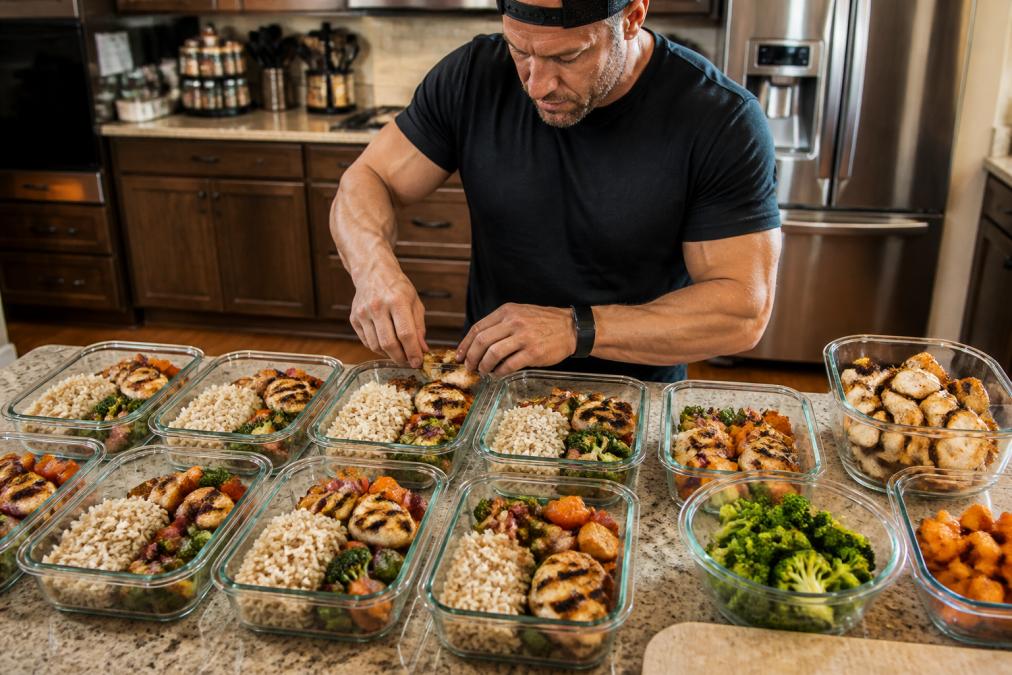
Component prep is the single biggest upgrade you can make. Instead of building finished meals, you batch individual components: proteins, grains, vegetables. Then you assemble plates based on the day.
Why does this matter? Because your needs change. Training days need more carbs. Rest days need fewer. If you prepped five identical meals, you're stuck.
Cook three proteins, two carbs, and a pile of roasted vegetables on Sunday. Mix and match all week.
This approach also cuts prep time in half. You're cooking once, not assembling twelve separate meals.
Supplements support the plan. They don't replace it.
The ones with real evidence behind them:
What to skip: fat burners promising spot reduction, proprietary blends with hidden doses, and anything claiming to work without a calorie deficit.
Tiger Fitness stocks third-party tested options, and you can check your numbers with our FREE TOOLS & FITNESS CALCULATORS (https://tigerfitness.com/blogs/fitness-tools-and-calculators) before you buy anything.
Here's where 90% of meal prep guides fail you. They hand you the same seven containers for seven days. That's not how body recomposition works. Your body doesn't need the same fuel on a heavy leg day as it does on a Sunday off.
When you train, you deplete muscle glycogen and increase insulin sensitivity for roughly 24 to 48 hours. That means your body is primed to shuttle carbs into muscle instead of storing them as fat. On rest days, that window closes. Eat the same carbs on a rest day and you're leaving the fat-loss side of recomposition on the table.
Keep protein and fats identical every day. Cycle the carbs.
| Day Type | Carbs | Protein | Fats | Calories |
|---|---|---|---|---|
| Training Day | 250-300g | 180g | 60g | ~2,400 |
| Rest Day | 120-150g | 180g | 60g | ~1,900 |
That's a 500-calorie swing between training and rest days. Over a week with four training days and three rest days, you're still in a weekly deficit, but you're feeding performance when it matters and tightening up when it doesn't.
This is where component prep pays off. You're not cooking two separate menus. You're scooping differently.
Cook once on Sunday. Portion proteins and fats into seven identical containers. Portion carbs into two stacks, one for training days, one for rest days. Grab the right stack based on your schedule.
On training days, put 30-50g of your daily carbs in the meal 1-2 hours before you lift and another 30-50g within two hours after. The rest can be spread across your other meals. On rest days, distribute carbs evenly, there's no anabolic window to chase.
Meal frequency matters less than total intake. Three meals or six, the daily totals drive the result. Pick the schedule you'll actually follow.
Prep fails for predictable reasons. Fix them before they derail you.
Consistent, imperfect prep outperforms sporadic, high-effort attempts. Missing one meal doesn't matter. Quitting for a month does.
Body recomposition is a precision game, and precision requires preparation. The data is unambiguous: preppers lose more weight, track more accurately, and stay consistent longer. You don't need a chef's skill set. You need a food scale, a few containers, and a Sunday afternoon.
Tiger Fitness gives you the tools to make it stick: free workout plans, diet guides, FREE TOOLS & FITNESS CALCULATORS (https://tigerfitness.com/blogs/fitness-tools-and-calculators), and a training app that keeps your nutrition and training aligned. Our supplement selection is third-party tested and priced to keep you stocked without wrecking your budget.
Get started with Tiger Fitness and build the physique your training deserves.
The 3-3-3 rule is a simple framework: three proteins, three carbs, and three vegetables prepped in batches, then mixed and matched into meals across the week. It keeps variety without cooking nine separate dishes. For body recomposition, this matters because you can hit 30-40 grams of protein per meal while adjusting carbs for training days versus rest days. It also cuts decision fatigue, which is one of the main reasons people abandon meal prep by week three.
Yes, when your portions match your training. Prepping lets you lock in those numbers instead of guessing at restaurant portions. It means you actually know whether you are eating enough to grow.
Realistically, expect measurable changes in 8-12 weeks if you train hard and hit your macros. Body recomposition is slower than a pure cut or bulk, so patience and consistency matter more than any single week's result.
Start by setting protein at roughly 1 gram per pound of goal body weight, fats at 25-30% of calories, and fill the rest with carbs. Weigh your food for the first two weeks so you learn what portions actually look like, then you can eyeball more. Log everything, even imperfect days. Accuracy is what separates people who recomp from people who spin their wheels.
{"one"=>"Select 2 or 3 items to compare", "other"=>"{{ count }} of 3 items selected"}






Leave a comment