
Pick This Year's Olympia T-Shirt

Last Updated: September 9, 2026
Clinical trials published by the National Institutes of Health confirm that consuming protein above the standard recommended dietary allowance reduces body weight and enhances body composition. That is the scientific foundation for why meal prep ideas for high protein fat loss diets work. At Tiger Fitness, we have spent years helping lifters structure their nutrition, and the pattern is always the same: those who prep in advance hit their protein targets, and those who wing it fall short. Below is the exact framework, the best protein sources, and seven macro-friendly meal prep ideas you can start using this week.
Protein is the most satiating macronutrient, meaning it keeps you full longer and reduces cravings for processed junk. When you combine that with a caloric deficit, your body is forced to burn stored fat while preserving lean muscle mass. High protein and high fiber diets are specifically used to support visceral fat loss and metabolic health, according to EatingWell's 7-Day High Protein Meal Plan to Lose Visceral Fat.
Protein has a higher thermogenic effect than carbs or fats, so your body burns more calories digesting it. It also supports muscle protein synthesis, keeping your metabolic rate elevated. Meal prep ensures you hit that 25-40 grams per meal target, spread across 3-4 meals daily.
Start with your body weight in pounds and multiply by 0.8 to 1 gram of protein per pound. A 200-pound lifter needs 160-200 grams of protein daily. That is the baseline for preserving muscle while in a deficit.
Research indicates that optimal protein intake for weight loss is 25-40 grams per meal, spread across 3-4 meals daily, as outlined in SmashMeals' High Protein Meal Prep Guide. If you weigh 200 pounds and need 180 grams, that breaks down to roughly 45 grams across four meals or 60 grams across three larger meals.
Use the NIH Clinical Evidence and Mechanisms of High-Protein Diet as your reference point. The data is clear: higher protein intake supports fat loss better than standard recommendations. If you are unsure about your specific numbers, Tiger Fitness offers free tools & fitness calculators that will do the math for you.
Most articles give you a basic list of chicken and eggs. That is not enough. When you are in a caloric deficit, every gram of protein must work harder, bioavailable, low in unnecessary calories, and delivering micronutrients that support metabolic function. Nutrient density is your secret weapon.
Select proteins that provide a high ratio of protein to calories while also bringing vitamins and minerals. A 200-pound lifter cutting at 2,200 calories has no room for empty calories. Every meal must pull its weight.
Tier 1: The Workhorses These are your staples. They are low in fat, high in protein, and versatile enough to be flavored differently every day.
Tier 2: The Nutrient-Dense Options These proteins go beyond just macros. They deliver micronutrients that are often lacking in a restricted diet.
Tier 3: The Convenience Tools These are not whole foods, but they serve a purpose in a busy lifestyle.
If you use plant-based proteins, you must be more strategic. Legumes, tofu, and edamame are often incomplete proteins, so combine them, rice and beans, for example, to get a full amino acid profile. You also need more volume to hit the same protein target, a challenge in a calorie deficit. If you are not a strict vegan, incorporating whey or egg whites makes hitting your target significantly easier.
Here is how you should think about choosing your protein source for each meal:
| Protein Source | Protein per 100g | Key Micronutrient | Best Used For | Prep Difficulty |
|---|---|---|---|---|
| Chicken Breast | 31g | Niacin (B3) | Lunch and dinner bowls | Easy |
| 93% Lean Ground Turkey | 27g | Zinc | Taco bowls, chili | Easy |
| White Fish (Cod, Tilapia) | 22-25g | Selenium | Light dinners | Moderate |
| Sardines (canned) | 23g | Omega-3s, Calcium | Snacks, salads | None |
| Eggs | 13g | Choline | Breakfast, snacks | Very Easy |
| Greek Yogurt | 10g | Probiotics | Breakfast, snacks | None |
| Whey Protein Isolate | 25g per scoop | BCAAs | Shakes, oats | None |
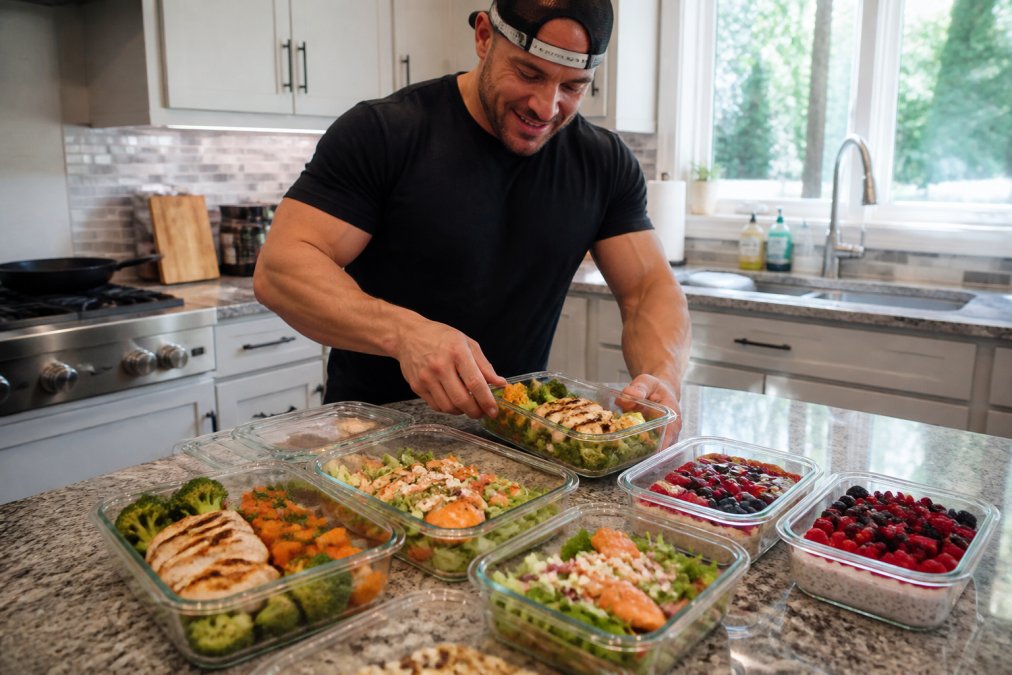
These seven meals cover breakfast, lunch, dinner, and snacks. Each one hits the 25-40 gram protein target and keeps net carbs low enough to support fat loss.
Mix 1/2 cup rolled oats, 1 scoop vanilla whey protein, 1 cup unsweetened almond milk, and 1 tablespoon chia seeds. Refrigerate overnight. This delivers roughly 35 grams of protein and 7 grams of fiber. For a faster option, Core Oats & Whey provides 25 grams of protein per serving with rolled oats already mixed in, ready in about sixty seconds.
Grill 3 pounds of chicken breast and 2 pounds of 93% lean ground beef on Sunday. Portion into containers with 1 cup of roasted vegetables and 1/2 cup of rice or sweet potato. Each bowl delivers 40-50 grams of protein. High protein, low-carb meal plans structured this way can provide over 100g of protein while keeping net carbs under 25g per day, according to Diet Doctor's 14-Day High Protein Meal Plan.
Batch cooking two proteins and a few vegetable options gives you variety without cooking every night. For busy days when you cannot prep, a meal replacement shake like Labrada Lean Body delivers 40 grams of protein with balanced carbs and fiber.
Snacks are where most diets fall apart. You get hungry at 3 PM, and a vending machine becomes your meal plan. High-protein snacks prevent that by keeping blood sugar stable and cravings suppressed.
Keep these options ready: Greek yogurt cups, boiled eggs, protein bars, and protein chips. A protein bar with 20 grams of protein and only 1 gram of added sugar, like the RAW Nutrition Protein Bar, fits a cutting diet without blowing your macros. WILDE Protein Chips deliver 13 grams of protein per bag from real chicken breast, giving you the crunch of chips without the empty carbs.

Protein triggers hormones that signal fullness, meaning you eat fewer calories overall without constant hunger. That is the entire game when cutting.
I see the same mistakes in the gym and in the kitchen. You can do everything right with your macros and still stall your progress. Here are the real world errors holding you back, and how to fix them with a system.
Most meal prep guides treat all meals equally. That is a mistake. The meal after training is a tool for recovery and muscle preservation. In a caloric deficit, your body is primed to break down muscle tissue, and the post-workout meal is your primary defense.
Get 30-40 grams of fast-digesting protein and moderate carbohydrates within 60-90 minutes after your session. This is not the time for casein or a meal full of fiber. You want whey isolate or lean protein like chicken breast with white rice to replenish glycogen and drive protein into muscles.
How to prep for this: Do not prep this meal in a container. Prep the components. Have a bag of frozen chicken breast or a container of cooked white rice ready. Or, keep a shaker cup and a scoop of whey isolate in your gym bag. This is the one meal where convenience trumps everything else.
You cook five days of chicken on Sunday. By Thursday, it is dry, bland, and potentially unsafe. The USDA recommends eating cooked chicken within 3-4 days. Prepping for five days means eating food past its prime or throwing it away. Both are failures.
The fix is a two-phase prep system:
This system eliminates food waste, keeps meals tasting fresh, and ensures you are not eating spoiled food. It also saves you money.
Food waste is a budget killer and a sign you are not thinking like a pro. Keep a freezer bag for vegetable scraps, onion skins, carrot peels, celery ends, herb stems. When full, simmer them in water with a bay leaf for an hour. You just made a nutrient-dense broth for cooking rice or soups, adding micronutrients and flavor without a single calorie.
You miss one meal prep session and tell yourself the whole week is blown. That is nonsense. A single missed meal is not going to ruin your cut. The problem is the mental spiral that follows, skip prep, order takeout, and you are off the wagon for a week.
The fix is a 3-2-2 system. Do not prep seven days of food; that leads to burnout. Prep three days on Sunday, then do a quick 30-minute session on Wednesday for Thursday and Friday. This keeps food fresh, reduces time commitment, and makes consistency easier. It is a marathon, not a sprint.
Here is the system. Set aside two hours on Sunday. Cook 3 pounds of chicken breast and 2 pounds of ground turkey. Roast a sheet pan of broccoli and bell peppers. Cook 2 cups of rice. Portion everything with a food scale.
| Meal | Protein Target | Prep Time | Frequency |
|---|---|---|---|
| Breakfast | 30-40g | 5 minutes | Daily |
| Lunch | 40-50g | 2 hours batch | Weekly |
| Dinner | 40-50g | 2 hours batch | Weekly |
| Snack | 15-20g | None | Daily |
That covers roughly 130-160 grams of protein before snacks. Add a protein shake post-workout and you are at 180-200 grams. Use Isopure for a zero-carb option or Purus Labs KetoFeed if you are running a keto-style cut.
The plan works because it removes decision fatigue. Your meals are decided, weighed, and ready. All you have to do is eat and train hard.
For fat loss, aim for 25-40 grams of protein per meal, spread across 3-4 meals daily. This target helps maximize satiety and preserve lean muscle mass while in a caloric deficit. For example, a breakfast might include 3 eggs and Greek yogurt, while lunch and dinner could feature a 6-ounce chicken breast. Use a food scale and a macro tracking app to ensure you are hitting these numbers consistently.
The best protein sources for cutting are lean, nutrient-dense options that are easy to batch cook. Skinless chicken breast, 93% lean ground turkey, white fish, eggs, and Greek yogurt are top choices. For plant-based options, include legumes, tofu, and edamame. These sources provide high quality protein and amino acids without excess fat, helping you stay full and support muscle synthesis while losing weight.
To balance macros for fat loss, start by calculating your daily protein, carbohydrate, and fat targets. A good starting point for a high-protein diet is 25-40g of protein per meal, with the remaining calories from fiber-rich carbs and healthy fats. When prepping, build each meal container with a lean protein source, a serving of vegetables, and a controlled portion of complex carbs like rice or sweet potato.
Yes. High protein meals are effective at reducing cravings and increasing satiety compared to lower protein meals. Clinical evidence shows that consuming protein above the standard recommended dietary allowance reduces body weight and enhances body composition. By prepping meals with 25-40g of protein, you regulate blood sugar levels and keep energy levels steady, making it easier to avoid between-meal snacking and stick to your fat loss plan.
Fat loss comes down to consistency, and consistency comes down to preparation. High-protein meal prep removes the guesswork and keeps you in a caloric deficit while preserving the muscle you have worked to build. Tiger Fitness carries the supplements and snacks that fill the gaps in any meal plan, backed by the lowest prices and fast shipping. Get started with Tiger Fitness and make this the week you finally hit your protein target every single day.
{"one"=>"Select 2 or 3 items to compare", "other"=>"{{ count }} of 3 items selected"}






Leave a comment