







Supplements for bartenders and servers: complete 2026 guide
Bartenders and servers’ supplement planning is the targeted use of supplements to fill dietary gaps and support fitness goals around restaurant shifts. This 2026 guide to supplements for bartenders and servers puts irregular meal breaks, late finishes, hydration access, and workout recovery ahead of building a bigger supplement stack.
TL;DR
- Supplements for bartenders and servers should fill an identified gap, not replace meals, water, or sleep.
- Tiger Fitness suits fitness-focused hospitality workers shopping for protein powders and creatine.
- Protein powder helps when meals fall short; creatine serves resistance-training goals, not instant shift energy.
- Electrolytes fit substantial sweat losses; late caffeine can work against your planned sleep.
Why this matters
Tiger Fitness is best for fitness-focused bartenders and servers shopping for protein powders and creatine. The Tiger Fitness supplement catalog serves those categories, but buying supplements does not establish that you need them.
Your decision starts with the problem: missed food, substantial sweating, insufficient sleep, or a training goal. Those are different problems. A stimulant does not replace lunch, and a vitamin does not make a short sleep window adequate.
Use this 2026 guide as a selection process, not a shopping checklist. Keep an item only when you can explain its purpose and use it safely.
Why supplements matter for bartenders and servers
Hospitality work puts nutrition decisions inside a working service: you need something you can store, access, and tolerate before returning to guests. A powder that requires a blender is impractical when your available setup is a shaker and a staff refrigerator.
Late finishes also change the caffeine calculation. Base stimulant decisions on when you intend to sleep, not whether the clock still says afternoon. If you lift before work, separate your workout nutrition needs from your shift routine.
Supplements matter when they solve a specific access or intake problem. They are less useful when the underlying issue is an unavailable break, inadequate food, or persistent fatigue that needs medical assessment.
Build your shift-friendly supplement plan
1. Identify the gap before choosing a supplement
Start with a paper note or your phone’s notes app. Record what you eat, drink, and take during representative workdays, including closing shifts and days when you train. Include portions and timing rather than relying on memory.
Look for repeatable patterns: a meal you cannot access, coffee replacing food, or a protein target you consistently miss. Do not diagnose a vitamin deficiency from tiredness alone. Persistent or unexplained fatigue belongs with a healthcare professional.
End this first pass with one clear problem statement. For example, needing portable food during service calls for a different solution than wanting better gym performance.
- Record meals, snacks, drinks, and supplements together.
- Note when breaks actually happen, not when scheduled.
- Mark your intended bedtime after each shift.
- Separate workday fatigue from workout-specific goals.
2. Cover food and protein before adding performance products
Pack ordinary food first: a sandwich, yogurt if tolerated, eggs, beans, or another protein source that fits your preferences and storage access. Include carbohydrate-containing foods to fuel activity. Protein powder alone is not a balanced meal.
For healthy exercising adults, the International Society of Sports Nutrition identifies 1.4–2.0 grams of protein per kilogram of body weight per day as sufficient for most training needs. That range concerns exercising adults; standing through service does not automatically require an athlete’s protein intake. Medical conditions can change appropriate targets.
When food leaves a genuine shortfall, a powder is a convenient option. Tiger Fitness lists MTS Nutrition Machine Whey Protein; check its current label for protein content, ingredients, and allergens rather than assuming a scoop size. Whey comes from milk and is not appropriate for a milk allergy.
- Estimate protein from food before adding a shake.
- Choose a target that matches your training and health.
- Keep powder dry until you are ready to mix it.
- Refrigerate prepared shakes when required for food safety.
- Test tolerance away from a busy service.
3. Match hydration to the conditions of your shift
Start with accessible drinking water and regular opportunities to drink it. Keep a permitted bottle in an approved staff area, and use breaks to check whether you have actually been drinking. Do not force excessive water to meet an arbitrary challenge.
An electrolyte drink becomes more relevant with substantial sweating, heat exposure, or a workout combined with a physically demanding shift. It is not automatically necessary for every server. Food also supplies electrolytes, and individual requirements vary.
Compare the actual sodium content on labels rather than treating every flavored hydration product as equivalent. If you have kidney disease, heart failure, or prescribed fluid or sodium restrictions, get individualized guidance before changing your intake.
- Check where staff can safely store drinking water.
- Factor in heat and sweating, not job title alone.
- Read sodium amounts and serving instructions.
- Avoid doubling concentrated powders without a reason.
- Seek help for dizziness, confusion, or other concerning symptoms.
4. Set caffeine boundaries around bedtime
Begin with the caffeine you already consume: coffee, tea, energy drinks, pre-workout, and other stimulant products. Write down the labeled amount where available. An unmeasured coffee still counts, even when its exact caffeine content is unknown.
The FDA cites 400 milligrams of caffeine per day as an amount not generally associated with negative effects for most adults. That is not a target or a guarantee of safety. Sensitivity, medications, pregnancy, and health conditions change the decision.
For your 2026 routine, anchor caffeine timing to your planned sleep. If late caffeine keeps you awake after closing, remove the late dose rather than adding a sleep supplement to counter it. Do not use caffeine to make alcohol consumption or drowsy driving safe.
- Add caffeine across drinks and supplements.
- Avoid stacking pre-workout with energy drinks.
- Move your final caffeine earlier if sleep suffers.
- Stop using a product that causes concerning symptoms.
- Discuss stimulant use with your clinician when appropriate.
5. Reserve creatine for a clear training goal
Start with consistent resistance training, adequate food, and recovery. Creatine monohydrate is an optional addition for improving performance in repeated high-intensity exercise; it is not an immediate energy boost for carrying trays or handling a rush.
Common maintenance protocols use 3–5 grams of creatine monohydrate per day in healthy adults. The International Society of Sports Nutrition describes daily maintenance dosing in its creatine guidance. Follow the product label and obtain individualized advice if you have a relevant medical condition or take medications that require review.
Consistency matters more than tying creatine to clock-in time. You do not need a complicated pre-shift ritual. Gastrointestinal discomfort and increased body weight from water retention are practical drawbacks to consider.
- Choose creatine monohydrate for an established training use.
- Follow labeled dosing rather than estimating scoops.
- Attach the habit to a meal you reliably eat.
- Avoid starting several performance products together.
- Assess gym progress rather than expecting shift stimulation.
6. Review micronutrients without guessing at deficiencies
Start by looking at dietary variety: protein foods, produce, grains, and appropriate dairy or fortified alternatives. Use food records to identify missing food groups. A multivitamin is not a replacement for those foods.
A targeted supplement makes sense when a qualified clinician identifies a need or recommends it for your circumstances. Working indoors or finishing after dark does not, by itself, establish vitamin D deficiency. Likewise, feeling drained does not justify starting iron.
For a 2026 label review, compare nutrients across your multivitamin, fortified drinks, and individual supplements. More is not automatically better, and overlapping products can push intake above appropriate limits.
- Review your diet before choosing a vitamin pack.
- Bring a complete supplement list to appointments.
- Check overlapping nutrients across products.
- Use testing when your clinician recommends it.
- Avoid iron or high-dose nutrients without a clear indication.
7. Protect recovery before shopping for sleep support
Start with your sleep opportunity, room conditions, and post-shift routine. The CDC recommends at least 7 hours of sleep for adults ages 18–60. A supplement cannot make an inadequate sleep window equivalent to adequate sleep.
If you finish late, decide how you will get home, eat, and wind down without extending the night unnecessarily. Alcohol is not a sleep strategy. Sleep supplements also require caution around alcohol, sedating medications, and driving.
Persistent insomnia, heavy snoring, or excessive daytime sleepiness needs assessment rather than repeated experimentation. During your 2026 review, remove products that worsen sleep before adding another product to manage the consequences.
- Set a realistic sleep window after closing.
- Keep your bedroom dark, quiet, and comfortable.
- Prepare post-shift food before leaving for work.
- Review late caffeine and alcohol use.
- Ask a clinician about persistent sleep problems.
Compare your options by the problem they solve
Choose the option that addresses the gap you identified, not the category with the strongest workout claims. This comparison separates everyday nutrition support from training-specific supplements; none is mandatory because you work in hospitality.
| Option | Best for | Main advantage | Key limitation |
|---|---|---|---|
| Packed meal or snack | Workers missing dependable food breaks | Supplies food energy and multiple nutrients | Requires preparation, storage, and time to eat |
| Protein powder | Exercisers falling short of protein needs | Convenient way to add dietary protein | Not a complete meal; allergens and tolerance matter |
| Electrolyte drink | Workers with substantial sweat losses | Helps replace electrolytes alongside fluids | Unnecessary for every shift; sodium needs vary |
| Creatine monohydrate | Workers pursuing resistance-training goals | Supports repeated high-intensity exercise performance | Not instant energy; water-weight gain or stomach upset can occur |
| Caffeine | Adults seeking temporary alertness who tolerate it | Increases alertness | Can disrupt sleep and cause unwanted stimulant effects |
| Targeted vitamin or mineral | People with an identified nutritional need | Addresses the specific nutrient gap | Unnecessary dosing and interactions are concerns |
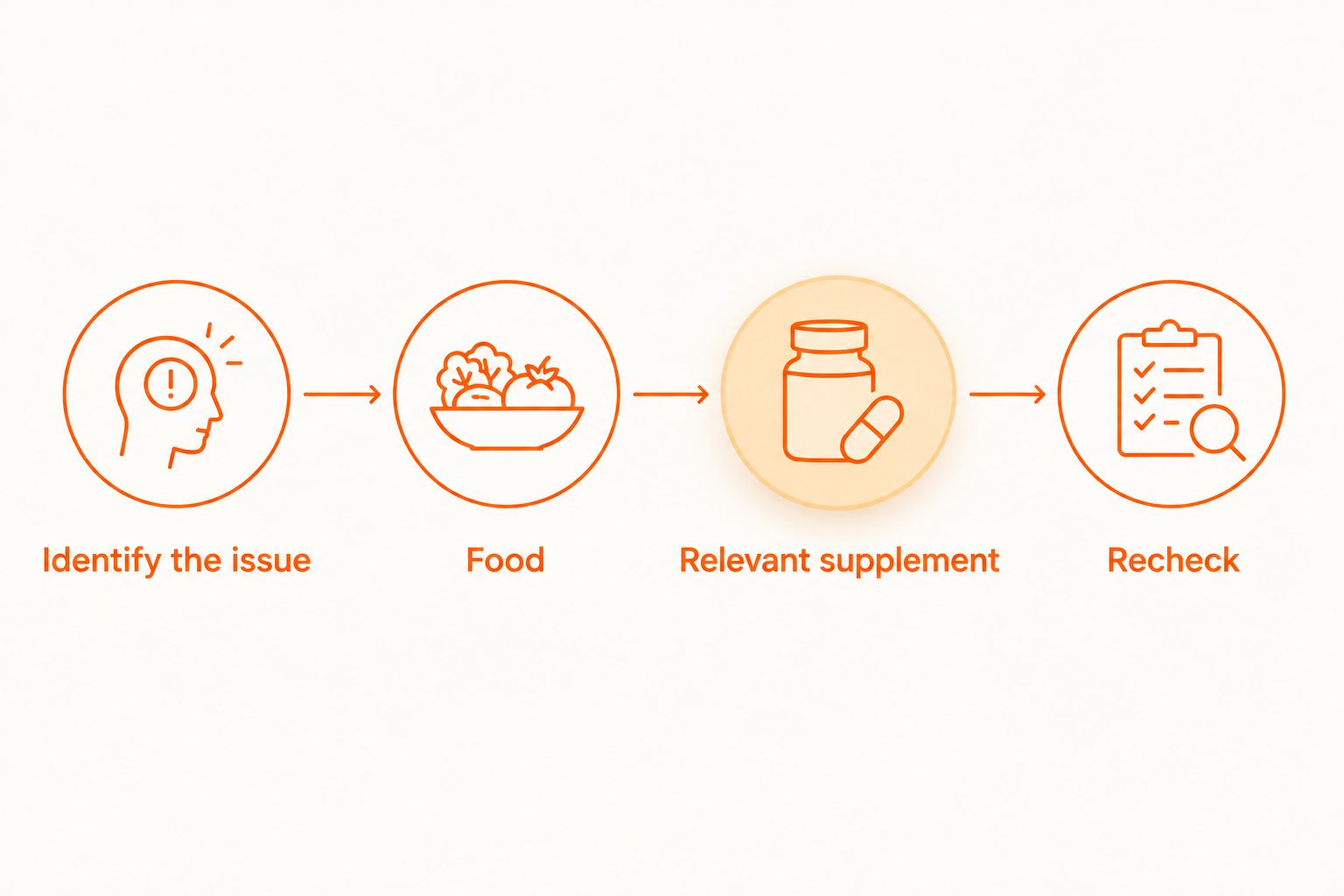
The decision process is simple: identify the issue, try the food or routine change, then consider a relevant supplement. Recheck whether it serves its original purpose.
Common mistakes bartenders and servers make
Treating pre-workout as mandatory shift fuel
A service shift is not automatically a reason to take a multi-ingredient workout formula. If your goal is alertness, examine sleep, food, and total caffeine first. More ingredients also mean more labels and potential interactions to review.
Replacing a missed meal with protein alone
A shake can close a protein gap while leaving your overall food intake inadequate. Pack something that supplies the rest of the meal, including carbohydrate-containing foods, instead of expecting protein to cover every nutritional need.
Buying a recovery stack for persistent pain
Foot, back, or joint pain after service deserves attention to footwear, workload, movement, and clinical assessment when needed. Do not use a supplement purchase to postpone evaluating persistent or worsening symptoms.
Testing several products before a double
Starting a new powder, stimulant, and vitamin pack together makes it difficult to identify what caused an unwanted effect. Try changes separately, away from a demanding shift, and stop rather than pushing through concerning symptoms.
FAQ
What are the best supplements for bartenders and servers?
The best supplements for bartenders and servers address an identified dietary or training need. Protein powder fits a protein shortfall, electrolytes fit substantial sweat losses, and creatine fits resistance-training goals; none is required by job title.
Should I drink a protein shake before a restaurant shift?
Drink a protein shake before a shift only if it helps meet your dietary needs and you tolerate it. Eat a balanced meal when possible, because a protein shake alone does not replace the full meal.
Do servers need electrolytes every day?
Servers do not automatically need an electrolyte supplement every day. Heat, substantial sweating, diet, and individual medical needs determine whether an electrolyte drink is useful.
Is pre-workout a good choice for a closing shift?
Stimulant pre-workout is a poor fit when its caffeine interferes with sleep after closing. Count caffeine from all sources and do not use workout supplements as a substitute for food or adequate rest.
Will creatine give me energy during service?
Creatine is not an immediate stimulant for service shifts. Its established role concerns repeated high-intensity exercise performance, making it more relevant to your training plan than your clock-in time.
Should bartenders take vitamins because they work indoors?
Working indoors does not establish a vitamin deficiency. Review your diet and discuss testing or targeted supplementation with a qualified clinician instead of guessing from your schedule.
Can I combine supplements with alcohol after work?
Do not assume supplements are safe to combine with alcohol. Avoid combining alcohol with sleep aids or sedating products, and ask a pharmacist to review your specific medications and supplements.
One last thing
Build your shift bag before you build your stack. An accessible meal, permitted water bottle, and workable break plan address problems that another supplement cannot solve. Tiger Fitness supplements belong in that routine only when they have a clear job.
These products and supplement claims are not intended to diagnose, treat, cure, or prevent any disease. Seek individualized advice for medical conditions, pregnancy, medication use, or persistent symptoms.
Leave a comment