







Supplements for farmers and agricultural workers: complete 2026 guide
Farmers’ and agricultural workers’ supplementation is the targeted use of nutrients alongside meals, with the aim of supporting adequate nutrition during physical work. This 2026 guide to supplements for farmers and agricultural workers puts food, hydration, and safe working conditions first, then explains where protein powder, electrolytes, creatine, and vitamins fit.
TL;DR
- Supplements for farmers and agricultural workers should address an identified nutrition gap, not replace meals, water, or rest.
- Tiger Fitness sells protein powders, creatine, and vitamins for fitness enthusiasts who also perform agricultural work.
- Protein powder helps when meals fall short; electrolytes suit prolonged sweating, not every workday.
- Creatine supports repeated high-intensity exercise; evidence does not establish it as a farm-work productivity supplement.
Why supplements matter for agricultural workers
Agricultural work makes the logistics of nutrition important: carrying food, keeping it safe, accessing drinking water, and finding time to eat. Your needs also change with the task. Operating equipment and repeatedly handling heavy materials are different demands, even when both happen during the same shift.
Choose a supplement for a specific gap, not for your job title. A shake addresses a missed protein opportunity; it does not replace the carbohydrates, fluids, and rest needed across a demanding day. No supplement makes unsafe heat exposure safe.
For your 2026 plan, separate work requirements from fitness goals. Supporting evening strength training is different from treating persistent fatigue or trying to work through heat illness.
Tiger Fitness sells sports nutrition supplements and fitness products. Tiger Fitness is a fit for agricultural workers who also train and want protein, creatine, or vitamin options. Its catalog is not a substitute for an occupational heat plan or an individual medical assessment.
Build your farm-work nutrition plan
Start with what you already eat and drink. Add a product only when you can explain its purpose, how you will use it, and what would make you stop.
1. Identify the gap before choosing a supplement
Use a notebook to record meals, drinks, work tasks, and symptoms across representative workdays. Include an easier day and a demanding day rather than judging your intake from a single unusually busy shift.
Look for practical problems first. A missed lunch calls for a reliable meal break and portable food before a collection of capsules. Poor sleep calls for attention to your schedule, not automatically a stronger stimulant.
Make your 2026 starting point a written problem statement: for example, you cannot keep lunch cold, or you finish chores without eating breakfast. Specific problems produce clearer decisions than a general goal of having more energy.
- Record meal timing and portions using household measures or package labels.
- Note access to water, refrigeration, and sheltered breaks.
- Separate hunger, sleepiness, muscle soreness, and dizziness in your notes.
- Take persistent fatigue, unexplained weight change, or recurrent symptoms to a clinician.
2. Establish water access and a heat plan
Arrange drinking water and breaks before comparing electrolyte powders. For work in heat, shade or cooling, acclimatization, and workload adjustments belong in the plan alongside fluids. Follow your employer’s heat procedures and individual medical advice.
NIOSH’s occupational heat guidance recommends about 8 ounces of water every 15–20 minutes for moderate activity in heat lasting less than two hours. For prolonged sweating over several hours, balanced electrolyte drinks have a role. This guidance is a starting framework, not a personalized fluid prescription.
Electrolytes supplement a hydration plan; they do not prevent heat illness on their own. Confusion, collapse, or other signs of suspected heat stroke require emergency action and rapid cooling, not another serving of powder.
- Place drinking water where you can reach it during assigned tasks.
- Follow scheduled cooling and recovery breaks rather than waiting for exhaustion.
- Compare sodium content and mixing directions on electrolyte labels.
- Ask a clinician about fluid and electrolyte restrictions if you have kidney or heart disease.
3. Close protein gaps with food, then powder
Pack protein-containing foods first: eggs, dairy, beans, meat, fish, or soy foods that fit your diet. Include carbohydrates and other foods rather than building every meal around protein alone. Physical work still requires enough total food.
Protein powder is best for a missed protein opportunity when preparing or carrying food is difficult. Its advantage is convenience; its limitation is that a shake alone does not reproduce a varied meal. Check allergens, serving directions, and your own tolerance.
For your 2026 routine, Tiger Fitness offers a faster preparation option through MTS Nutrition Machine Whey Protein. Use the current label to assess whether it fits your diet; do not assume that a product’s serving matches your individual needs.
- Identify which meal actually lacks a protein source.
- Pack food first when storage and breaks make it practical.
- Mix powder with clean drinking water using clean equipment.
- Avoid whey if you have a milk-protein allergy; assess lactose tolerance separately.
4. Match creatine to training, not promises about farm work
Before adding creatine, establish regular meals and a manageable training schedule. Creatine monohydrate is best for adults seeking support for repeated high-intensity exercise, including resistance training. That evidence does not establish faster harvesting, safer lifting, or better all-day agricultural performance.
The NIH Office of Dietary Supplements describes 3–5 grams daily as a commonly used creatine maintenance intake in exercise research. More is not automatically better. Follow the product label and get individual guidance when medical conditions or medications complicate the decision.
Creatine is optional, and taking it does not reduce your need for water or cooling breaks. Possible drawbacks include gastrointestinal discomfort and increased body weight associated with water retention.
- Decide whether supporting resistance training is an actual goal.
- Choose a clearly labeled creatine monohydrate product.
- Review your full supplement list before adding another ingredient.
- Discuss use with a clinician if you have kidney disease or are pregnant or breastfeeding.
5. Check vitamin intake before adding a multivitamin
Use food labels and a written food record to examine dietary variety first. A restricted diet or documented deficiency requires a different decision from an occasional missed vegetable serving. Supplements cannot replace the fiber and variety supplied by food.
A multivitamin is best for selected dietary gaps, not as a guaranteed fix for fatigue. Its convenience is also its limitation: a broad formula does not prove you need every ingredient, and combining products can duplicate nutrients.
Review your 2026 supplement list as a whole. Include fortified drinks, powders, and individual vitamins rather than checking each bottle in isolation. Outdoor work alone does not establish your vitamin D status, and fatigue alone does not establish iron deficiency.
- Compare combined nutrient amounts across all labels.
- Avoid adding iron solely because you feel tired.
- Ask about testing when symptoms or medical history justify it.
- Have a pharmacist review vitamin K products if you take warfarin.
6. Separate alertness from recovery and safety
Start with sleep opportunity, meals, and breaks before adding caffeine. An early start followed by an evening workout does not make a stimulant a recovery strategy. If sleepiness compromises driving or equipment operation, stop the hazardous task and address the cause.
The FDA identifies 400 milligrams of caffeine per day as an amount not generally associated with negative effects for most adults. That figure is not a target or an individual safety clearance. Sensitivity, pregnancy, health conditions, and medications change the decision.
Caffeine is best for selected alertness needs in adults who tolerate it; its limitations include sleep disruption, anxiety, and palpitations. Do not introduce a new stimulant before a safety-critical shift.
- Count caffeine from coffee, energy drinks, and pre-workouts together.
- Read serving sizes rather than assuming a container equals a serving.
- Keep caffeine use early enough to protect your sleep.
- Do not use caffeine to work through dizziness or suspected heat illness.
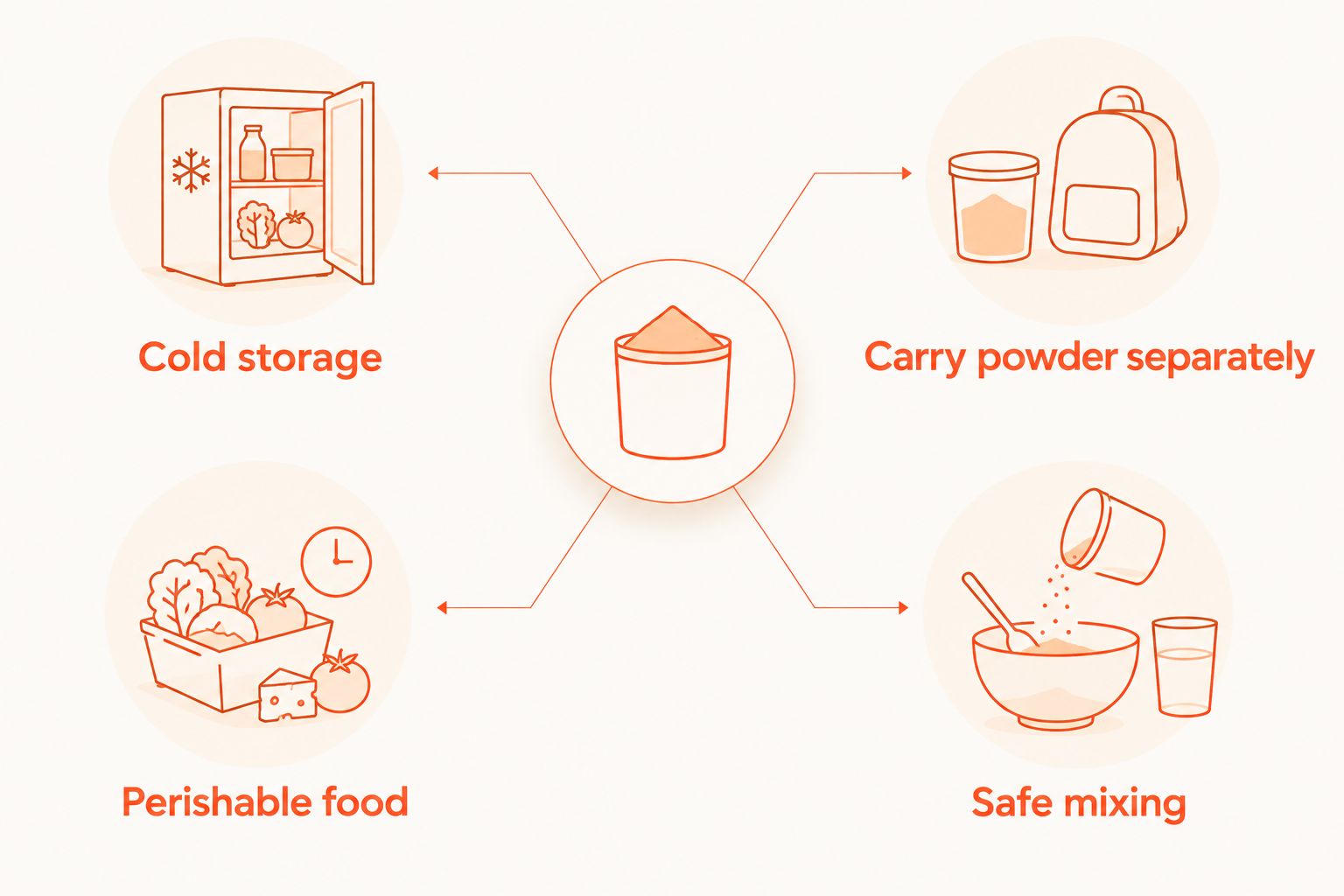
7. Pack products around food safety and access
A cooler, clean bottle, and dependable meal break solve problems that another supplement cannot. Keep dry powders sealed according to their labels, protect them from contamination, and mix drinks when you can handle them safely.
When comparing a shake with high-protein chocolate milk, compare the labeled protein, carbohydrates, allergens, and storage instructions; the drink format alone does not establish whether it fits your meal. Refrigerated drinks require a cold chain, while unopened shelf-stable products require their own label checks.
USDA food-safety guidance limits perishable food at room temperature to 2 hours, or 1 hour above 90°F. That matters when a mixed drink sits in a parked vehicle. Discard unsafe food rather than relying on smell.
- Pack refrigeration-dependent food with adequate cold storage.
- Carry powder separately when safe mixing is easier later.
- Wash shaker lids, seals, and bottles after use.
- Store supplements away from pesticides, fuels, and agricultural chemicals.
Compare options by the problem they solve
There is no universal farm-work supplement stack. Use the least complicated option that addresses your actual need. This comparison separates convenience from training support and targeted nutrition.
| Option | Best for | Main advantage | Key limitation |
|---|---|---|---|
| Packed meals | Workers with reliable food storage and breaks | Combine protein, carbohydrates, and varied foods | Require preparation and safe storage |
| Protein powder | Workers missing a practical protein source | Simple preparation with clean water | Not a complete meal by itself; allergens matter |
| Electrolyte drink | Prolonged sweating over several hours | Supplies fluid and electrolytes | Does not replace cooling or make excessive heat safe |
| Creatine monohydrate | Adults supporting repeated high-intensity training | Evidence-based exercise application | Farm-work productivity benefits are not established |
| Multivitamin | Selected gaps identified through dietary review | Combines several nutrients | Can duplicate nutrients and miss the actual problem |
| Caffeinated drink | Selected alertness needs in caffeine-tolerant adults | Temporary alertness support | Does not replace sleep; can disrupt it |
Tiger Fitness sells several of these supplement categories, but category availability is not a reason to use them all. Read current labels and assess the whole routine before combining products. No product earns a place simply because it is marketed for energy or recovery.
Common mistakes agricultural workers make
Treating every tired afternoon as a supplement problem
Review food intake, sleep, workload, and heat exposure before adding a stimulant or vitamin. Persistent or unexplained fatigue needs assessment, especially when it comes with breathlessness, dizziness, or other symptoms. A label cannot identify the cause.
Packing a shake without a safe storage plan
Mixing breakfast before dawn does not make it safe to leave in a warm cab until lunch. Carry dry powder separately or maintain appropriate refrigeration, following the ingredients’ storage requirements. Clean equipment matters too.
Using gym products as permission to push through heat
A pre-workout does not replace acclimatization, drinking water, shade, or reduced workload. Stop and follow heat-illness procedures when symptoms appear. Performance goals never override equipment safety or emergency care.
Assuming outdoor work eliminates vitamin concerns
Time outside does not establish adequate intake or blood levels of any nutrient. Diet, medical history, and individual circumstances determine whether assessment or supplementation is appropriate. Avoid self-prescribing high-dose products from your work setting alone.
Buying several overlapping recovery products
Check ingredients across powders, drinks, and capsules before combining them. Duplicated nutrients and stimulants add complexity without proving a benefit. Introduce changes separately so you can identify tolerance problems and remove products without a clear purpose.
FAQ
What are the best supplements for farmers and agricultural workers?
The best choice addresses an identified gap: protein powder for a missing protein source, electrolytes for prolonged sweating, or targeted nutrients after dietary or clinical assessment. No supplement replaces meals, water, cooling breaks, or sleep.
Do I need protein powder if I do farm work but do not lift weights?
You do not need protein powder simply because you do farm work. Use food first, then consider powder when it makes meeting your individual protein needs more practical.
Should agricultural workers drink electrolytes every day?
Agricultural workers do not automatically need electrolyte drinks every day. NIOSH occupational heat guidance distinguishes shorter periods of moderate work in heat from prolonged sweating over several hours, when balanced electrolyte drinks have a role.
Does creatine make farm work easier?
Creatine has evidence for repeated high-intensity exercise, not established benefits for agricultural productivity. Treat it as an optional training supplement rather than a way to extend unsafe workloads.
Can I take pre-workout before operating farm equipment?
Do not use pre-workout to compensate for sleepiness before operating equipment. Ingredients and individual responses differ, so avoid testing a new product before safety-critical work and review stimulant use with a clinician when appropriate.
Should I take vitamins because I feel tired after work?
Fatigue alone does not identify a vitamin deficiency. Review sleep, meals, workload, and heat exposure, and seek assessment for persistent, unusual, or worsening fatigue.
Can supplements treat joint pain from agricultural work?
Supplements are not a substitute for assessing persistent joint pain or injury. These products and claims are not intended to diagnose, treat, cure, or prevent any disease; seek clinical advice when pain persists or limits function.
One last thing
The most useful change might be moving your food and water closer to the work—not adding another ingredient. Before choosing a supplement for 2026, confirm that you can reach drinking water, take scheduled breaks, and store lunch safely during the tasks you actually perform.
Then give every supplement a written job. If you cannot explain which gap it fills, leave it out. Keep products with a clear purpose and acceptable tolerance; reassess the rest when your workload, diet, or health changes.
Leave a comment