







Supplements for landscapers and groundskeepers: complete 2026 guide
Landscapers and groundskeepers’ supplementation is the targeted use of nutrients alongside meals and fluids to support physical work and recovery. This 2026 guide explains which supplements for landscapers and groundskeepers fill practical gaps—and why heat protection, enough food, and regular breaks come first.
TL;DR
- Supplements for landscapers and groundskeepers should fill food or hydration gaps, not replace meals, rest, or heat controls.
- Tiger Fitness is best for fitness-minded groundskeepers shopping for protein powders and creatine, not occupational heat-safety equipment.
- Protein powder helps close protein gaps; creatine is optional for workers who also pursue strength-training goals.
- Electrolytes become relevant during prolonged sweating; pre-workout is not a substitute for cooling or recovery.
Why this matters
A landscaping shift is not a gym session with a longer timer. Carrying materials, pushing equipment, kneeling, and working outdoors create different demands from a planned workout with controlled rest periods. Your nutrition plan must work around the job, not require perfect timing.
Start by separating three problems: insufficient food, inadequate fluid replacement, and fatigue that needs rest or medical attention. No single powder solves all three. The guide to electrolyte supplements for workouts explains supplement selection, but workplace heat procedures remain the priority outdoors.
Use this 2026 guide to build a small, purposeful routine. Keep anything that solves a clear problem; leave out anything bought only because the shift feels demanding.
Why supplementation matters for landscapers and groundskeepers
The useful role of supplementation is convenience. A protein shake fits a short meal window, while an electrolyte drink provides a portable way to replace electrolytes during prolonged sweating. Neither creates a safe work environment by itself.
Groundskeeping also mixes different workloads. Riding equipment, spreading mulch, moving stone, and pruning do not justify an identical supplement routine. Match your choices to actual food intake, sweating, and training rather than the job title alone.
Tiger Fitness supplements belong after your food and hydration plan, not ahead of it. The retailer carries sports nutrition products, but shopping for supplements is separate from deciding whether you need them.
If you take medication, have kidney or heart disease, follow a fluid restriction, or experience unexplained fatigue, discuss supplementation with your clinician first. Products and claims in this guide are not intended to diagnose, treat, cure, or prevent any disease.
How to build a practical supplement routine
1. Identify the gap before choosing a supplement
Use a notebook or your phone to record meals, drinks, work conditions, and how you feel. Include physically demanding shifts and lighter duties. You are looking for a repeatable problem, not trying to explain every tired afternoon with a nutrient deficiency.
Follow this sequence: Food first, Water access, Gap check, Supplement choice. Skipping lunch calls for a better lunch plan before a larger supplement stack. Poor access to drinking water calls for a workplace fix.
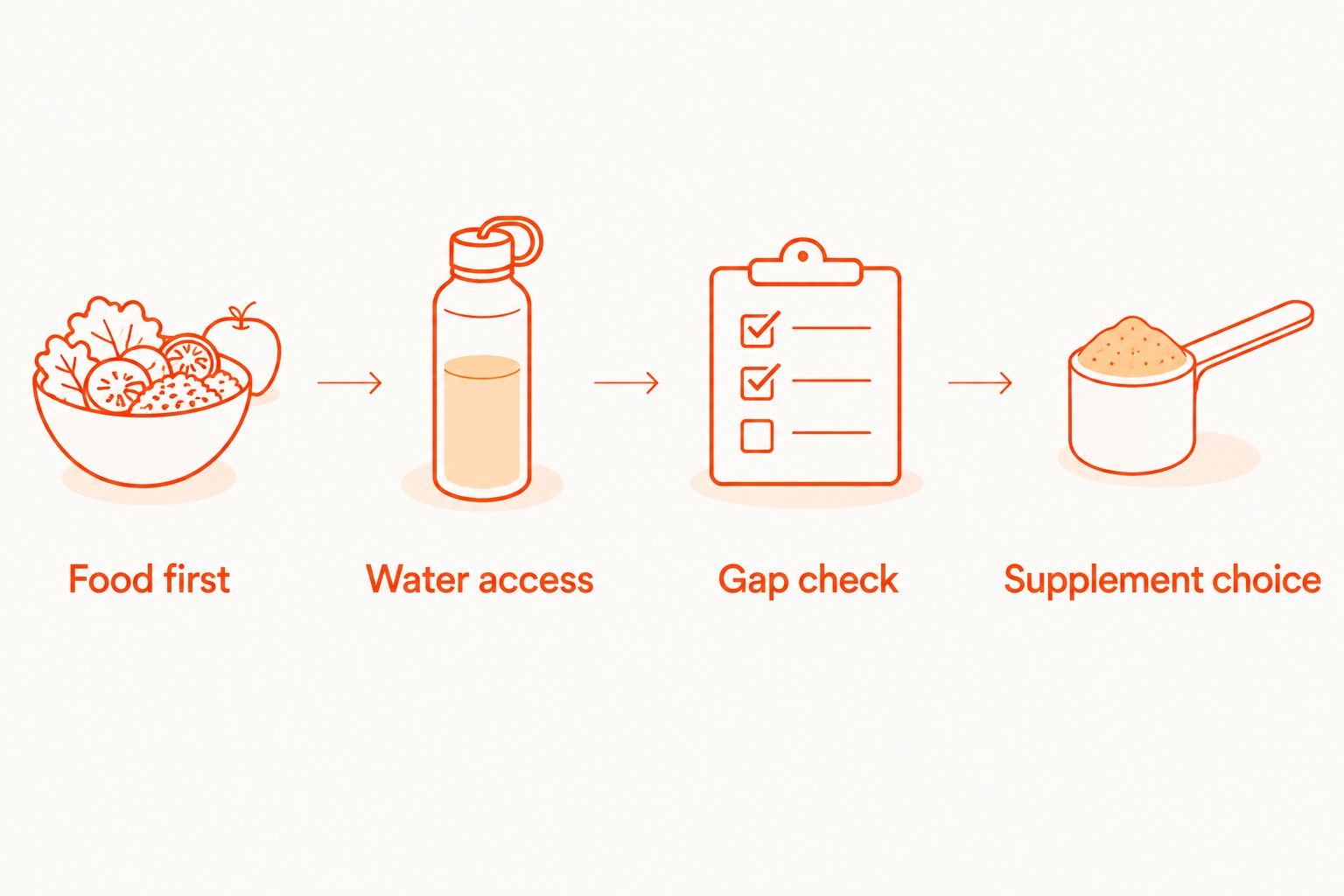
Do not interpret persistent fatigue, frequent cramps, or dizziness as proof that you need a particular mineral. Symptoms deserve attention to workload, heat, food, medications, and health—not an automatic purchase.
- Record what you actually eat and drink during work.
- Note missed breaks and difficult access to water.
- Separate work fatigue from soreness after gym training.
- Take persistent or unexplained symptoms to a clinician.
2. Establish water access and a heat plan
Start with accessible drinking water, scheduled opportunities to drink, shade or cooling, and your employer’s heat procedures. Supplements cannot replace acclimatization or appropriate work-rest arrangements. Protective clothing and environmental conditions also affect heat strain.
For your 2026 plan, NIOSH’s workplace heat guidance gives a useful reference: during moderate activity in heat lasting less than 2 hours, drink about 8 ounces of water every 15–20 minutes. That is guidance for a defined situation, not a universal prescription for every worker or medical condition.
NIOSH also advises balanced-electrolyte sports drinks when sweating continues for several hours. Read sodium and other electrolyte amounts rather than choosing by flavor or the word hydration. Do not force excessive water or improvise salt-tablet dosing.
Confusion, collapse, or altered behavior in heat is an emergency—not a supplement problem. Stop work, call emergency services, and begin cooling according to workplace emergency procedures.
- Put drinking water within practical reach of the task.
- Follow your workplace heat and acclimatization plan.
- Consider balanced electrolytes during prolonged sweating.
- Keep electrolyte drinks separate from stimulant products.
- Follow medical advice if you have fluid or sodium restrictions.
3. Close protein gaps with food, then powder
Pack a protein-containing meal before adding a shake. Eggs, yogurt, beans, fish, poultry, tofu, and other familiar foods can contribute protein alongside other nutrients. Pair protein with carbohydrate-containing foods so lunch supplies more than protein alone.
Protein powder is best for a documented protein gap or an inconvenient meal schedule. It is not automatically necessary because you lift bags of soil. If you also strength train, a sports dietitian can help set a target that accounts for your training, food intake, and health.
For a 2026 shopping shortlist, MTS Nutrition Machine Whey Protein is a protein-powder option to evaluate at Tiger Fitness. Check the current label for protein per serving, ingredients, and allergens; a whey product is not appropriate for someone with a milk allergy.
Powder saves preparation time, but a shake made only with water is not nutritionally equivalent to a complete lunch. Keep prepared shakes appropriately chilled and store dry powder according to its label.
- Start with protein-containing meals you already enjoy.
- Use powder only to close the remaining intake gap.
- Check allergens and your tolerance before a workday.
- Pack carbohydrate foods alongside protein.
- Keep perishable food and prepared shakes properly cooled.
4. Add creatine only for a defined training goal
Start with consistent strength training, enough food, and sleep. Creatine monohydrate is best for adults pursuing improvements in repeated high-intensity exercise and strength training; evidence for those outcomes does not establish that it improves every landscaping task.
Established sports-nutrition guidance commonly uses 3–5 grams of creatine monohydrate daily as a maintenance approach for healthy adults. Loading is optional. Follow the product label and discuss suitability with a clinician if you have a medical condition or take medication affecting kidney function.
MTS Nutrition Creapure Creatine is a catalog option to review, not a requirement for groundskeeping. Check its current ingredient panel and directions rather than assuming any particular serving size from the product name.
Creatine does not replace lunch, supply a stimulant boost, or prevent heat illness. It can increase body weight through water retention, and gastrointestinal discomfort is a possible drawback.
- Define a strength-training goal before adding creatine.
- Choose creatine monohydrate with clearly stated amounts.
- Follow label directions rather than estimating a scoop.
- Take it consistently instead of treating it as an emergency boost.
- Tell your clinician about creatine use before relevant lab testing.
5. Review vitamins before adding a daily pack
Start by improving food variety. Include fruits, vegetables, whole grains, protein foods, and suitable dairy or fortified alternatives. A multivitamin can help fill some intake gaps, but it does not reproduce the fiber and full nutritional value of those foods.
A targeted vitamin or mineral is best for an identified need. Outdoor work does not prove your vitamin D status, and cramps do not establish magnesium deficiency. Use dietary assessment, clinical advice, and testing when appropriate rather than guessing from symptoms.
If you choose a multivitamin, read the amounts and account for fortified drinks and other supplements. More is not automatically better. Avoid taking several overlapping products simply because their names suggest different benefits.
- Review your usual diet before selecting vitamins.
- Check overlapping nutrients across every product.
- Discuss suspected deficiencies with a clinician.
- Avoid adding iron without a clear reason and professional advice.
- Treat vitamins as gap-fillers, not substitutes for produce.
6. Separate caffeine from your work-recovery plan
Start with breakfast, adequate sleep opportunity, and planned breaks. If you use caffeine, count coffee, energy drinks, pre-workout, and other sources together. A familiar morning drink does not justify adding a second stimulant product later.
Caffeine is best for optional alertness support in adults who tolerate it—not for pushing through heat strain. It does not replace sleep or make an overheated worker safe. Jitters, palpitations, anxiety, or disrupted sleep are reasons to reassess use and seek medical advice when appropriate.
For 2026, keep workday caffeine decisions separate from gym supplement decisions. A product marketed for an intense workout does not establish suitability for a hot shift operating equipment.
- Read caffeine amounts on every relevant label.
- Avoid combining pre-workout with energy drinks or fat burners.
- Protect bedtime rather than chasing late-day energy.
- Do not use stimulants to override heat symptoms.
- Review stimulant use with a clinician if you have cardiovascular concerns.
7. Test your routine away from demanding shifts
Begin with familiar foods and drinks. Introduce an optional supplement when you can assess tolerance without immediately handling equipment, climbing, or working through extreme heat. Changing several products together makes side effects harder to trace.
Keep the routine small enough to follow. A useful supplement has a named purpose, clear directions, and a practical place in your day. If you cannot explain what gap it fills, leave it out.
Storage matters on the job. Follow label conditions, keep containers closed, and do not assume a hot truck cab is suitable storage. Put dry portions in clean, labeled containers rather than carrying unidentified powders.
- Introduce only one new product at a time.
- Test tolerance away from safety-sensitive duties.
- Follow storage instructions and keep scoops dry.
- Record unwanted effects and discontinue the suspected product.
- Reassess your routine when weather, workload, or training changes.
Compare your options before building a stack
Choose by the problem you need to solve. This comparison covers practical benefits and limitations; none of these options makes unsafe heat exposure acceptable.
| Option | Best for | Practical benefit | Key limitation |
|---|---|---|---|
| Packed meals and water | Your daily foundation | Supply food energy, nutrients, and fluids | Require preparation, access, and appropriate food storage |
| Balanced-electrolyte drink | Prolonged sweating | Provides fluids and electrolytes together | Does not replace cooling, breaks, or meals |
| Protein powder | A protein gap or short meal window | Makes protein intake more convenient | Is not a complete meal; ingredients and allergens matter |
| Creatine monohydrate | Adults with strength-training goals | Supports repeated high-intensity exercise performance | Is not an immediate energy source or proven solution for an entire work shift |
| Multivitamin or targeted nutrient | An assessed dietary gap or identified need | Adds selected vitamins and minerals | Overlapping products can create excessive intake |
| Caffeinated drink or pre-workout | Optional alertness support for suitable adults | Provides a stimulant effect | Can disrupt sleep or cause unwanted effects; does not correct heat strain |
Tiger Fitness supplements offer a shopping route for sports nutrition needs. The limitation is straightforward: a retail selection cannot determine your nutrient status, medical suitability, or workplace heat requirements.
Common mistakes landscapers and groundskeepers make
- Replacing lunch with a shake. A protein-only drink leaves out the broader food energy and nutrients your meal should provide. Pack a meal; use the shake for a specific gap.
- Calling every afternoon slump dehydration. Missed meals, poor sleep, illness, and heat exposure need different responses. Persistent symptoms require assessment, not a stronger drink mix.
- Treating electrolytes as heat protection. A sports drink does not make continuous work in dangerous heat safe. Keep cooling and work-rest procedures in place.
- Using pre-workout to extend an exhausting shift. Stimulation is not recovery. Reassess workload, food, and sleep instead of escalating stimulant intake.
- Leaving supplies in a hot truck. Follow storage directions for supplements and food. Carry only what you can store safely during the workday.
FAQ
What are the best supplements for landscapers and groundskeepers?
The best supplements for landscapers and groundskeepers are those that address a specific intake gap. Protein powder helps with inadequate protein intake, balanced electrolytes suit prolonged sweating, and creatine is optional for strength-training goals. Meals, water access, cooling, and breaks come first.
Do I need electrolytes every time I work outside?
No, working outside does not automatically require an electrolyte supplement. NIOSH recommends balanced-electrolyte sports drinks when sweating continues for several hours; follow workplace heat guidance and any medical restrictions.
Can I drink a protein shake instead of lunch on a landscaping shift?
A protein shake mixed with water is not an equivalent replacement for a complete lunch. Use it alongside food or to fill a protein gap, and keep prepared shakes appropriately chilled.
Should a groundskeeper take creatine without going to the gym?
Groundskeeping alone is not a reason to prescribe creatine. Its established exercise benefits are most relevant to repeated high-intensity efforts and strength training, not a guaranteed improvement in all-day occupational performance.
Is pre-workout a good choice before working in the heat?
Pre-workout is not a heat-safety strategy and should not be used to push through heat symptoms. Check stimulant content, avoid combining caffeine sources, and prioritize workplace cooling and rest procedures.
Do outdoor workers automatically get enough vitamin D?
No, an outdoor job does not establish adequate vitamin D status. Sun exposure varies, and a clinician can assess your individual risk and whether testing or supplementation is appropriate.
Can supplements stop joint pain from kneeling and lifting?
Supplements are not a substitute for assessing persistent joint pain. Review kneeling protection, lifting technique, workload, and recovery, and seek clinical care for ongoing pain, swelling, or loss of function.
One last thing
Pack for the shift before you shop for the stack. For your next workday in 2026, check water access, cooling opportunities, lunch, food storage, and a backup snack first. The most useful supplement is the one that fills a remaining gap—not the one that promises to compensate for missing basics.
Leave a comment