






Healthy Snacks for Post Workout Recovery: A No-BS Guide
Table of Contents
- Why Post-Workout Nutrition Timing Matters for Recovery
- Best Protein for Post-Workout Recovery: What the Science Says
- Carbs for Post Workout Recovery: Replenishing Energy
- Quick Post Workout Snacks That Actually Work
- Budget-Friendly Healthy Snacks for Post Workout Recovery
- Travel-Friendly Recovery: Portable Snacks That Don't Compromise
- Reducing Muscle Soreness and DOMS with Strategic Snacking
- Macronutrient Balance: Getting the Ratio Right
Healthy Snacks for Post-Workout Recovery: A No-BS Guide
Last Updated: July 27, 2026
Look, I'm going to be direct with you: most people are leaving gains on the table because they don't understand post-workout nutrition timing. Your muscles aren't built in the gym; they're built during recovery. And that recovery starts the moment you finish your last rep.
This guide from Tiger Fitness covers what actually matters when it comes to healthy snacks for post-workout recovery. Not the marketing hype. Not the supplement industry's made-up science. The real mechanisms that drive muscle protein synthesis and glycogen replenishment.
Why Post-Workout Nutrition Timing Matters for Recovery
Your muscles are primed to accept nutrients immediately after training, and what you eat in those first 30-60 minutes directly impacts how effectively your body repairs and builds new muscle tissue. When you train, you create micro-tears in muscle fibers and deplete glycogen stores. Your body enters a catabolic state. Without the right nutrients delivered at the right time, you're fighting against your own physiology.
Research from the International Society of Sports Nutrition confirms that nutrient timing significantly impacts muscle protein synthesis rates. Amino acids stimulate mTOR signaling, which triggers protein synthesis. Carbohydrates trigger an insulin response that facilitates nutrient delivery into muscle cells.
Pro TipMost people wait 2-3 hours after training to eat. That's a mistake. Your muscles are most receptive to nutrients within 60 minutes post-workout. Get something in your system within that window, and you'll see measurable differences in recovery speed and muscle soreness reduction.
The Recovery Window and Muscle Protein Synthesis
Muscle protein synthesis peaks within the first 60 minutes post-training. When amino acids (particularly leucine) reach your muscles, they trigger mTOR signaling, which tells your body to start building new proteins. Carbohydrates amplify this effect by causing an insulin spike, which increases amino acid uptake into muscle cells. This is why combining protein and carbs post-workout isn't optional; it's essential.
Nutrient Timing and Glycogen Replenishment
Glycogen is your muscles' primary fuel source during training. When you deplete it, your performance tanks and your body enters a catabolic state. Replenishing glycogen quickly is how you recover faster and prepare for your next session.
Simple carbs work fastest because they digest quickly and trigger the insulin response your muscles need to accept nutrients. Most athletes need 0.8-1.2 grams of carbs per kilogram of body weight post-workout to fully restore glycogen. For a 200-pound athlete, that's roughly 70-110 grams of carbs. Pair that with 20-40 grams of protein, and you've got the foundation for solid recovery.
Best Protein for Post Workout Recovery: What the Science Says
Whey protein isolate is the gold standard for post-workout recovery. It digests in 30-60 minutes, provides all nine essential amino acids, and is high in leucine, the amino acid that most directly triggers mTOR signaling. Real food works too, eggs, chicken, Greek yogurt, and tuna all deliver results, though they take longer to digest.
Watch OutAvoid high-fat protein sources immediately post-workout. Fat slows digestion, which delays nutrient delivery to your muscles when they're most receptive. Save the ribeye for dinner. Post-workout is when you want fast-digesting protein with minimal fat.
Whey Protein and Amino Acid Bioavailability
Whey protein has the highest bioavailability of any protein source. Whey isolate contains approximately 25g of protein per serving with a complete amino acid profile and is high in branched-chain amino acids (BCAAs), particularly leucine. Whey digests in roughly 30-60 minutes, hitting your bloodstream when your muscles are most primed to accept amino acids.
Plant-Based Recovery Options
Plant-based proteins like pea, rice, and hemp work for recovery, though they require higher quantities to match whey's amino acid profile. Combining sources like pea plus rice creates a complete amino acid profile. Bioavailability is lower; if you consume 30 grams of plant protein post-workout, your body might use only 70-80% of it versus whey's 90%+ utilization rate. Plant-based proteins absolutely work for recovery purposes.
Carbs for Post Workout Recovery: Replenishing Energy
Carbohydrates aren't the enemy post-workout; they're essential. Your goal is glycogen replenishment and insulin-mediated nutrient delivery. A general guideline is 0.8-1.2 grams of carbs per kilogram of body weight. For a 180-pound athlete, that's roughly 65-110 grams of carbs. Pair that with 25-35 grams of protein, and you've hit the sweet spot for recovery.
Complex Carbohydrates vs. Simple Carbs
Post-workout is one of the few times simple carbs are actually beneficial. Complex carbs (oats, brown rice, sweet potatoes) are excellent throughout the day because they digest slowly. Post-workout, that slow digestion works against you. You want fast-digesting carbs to trigger an immediate insulin spike and deliver glycogen to depleted muscles quickly. Simple carbs (white rice, white bread, dextrose, banana) digest rapidly and spike insulin fast, exactly what you need post-workout.
Insulin Response and Nutrient Delivery
Insulin is anabolic post-workout. Your goal is to trigger an insulin spike because insulin drives amino acids and glucose into muscle cells. When you consume carbs post-workout, blood glucose rises, your pancreas releases insulin, and that insulin shuttles amino acids into muscle tissue where they're needed for protein synthesis. This is why combining protein and carbs post-workout beats consuming either alone.
Quick Post Workout Snacks That Actually Work
You don't need complicated recipes or expensive supplements. The best post-workout snack is whatever you'll actually consume within 60 minutes of training. Practicality matters more than perfection.
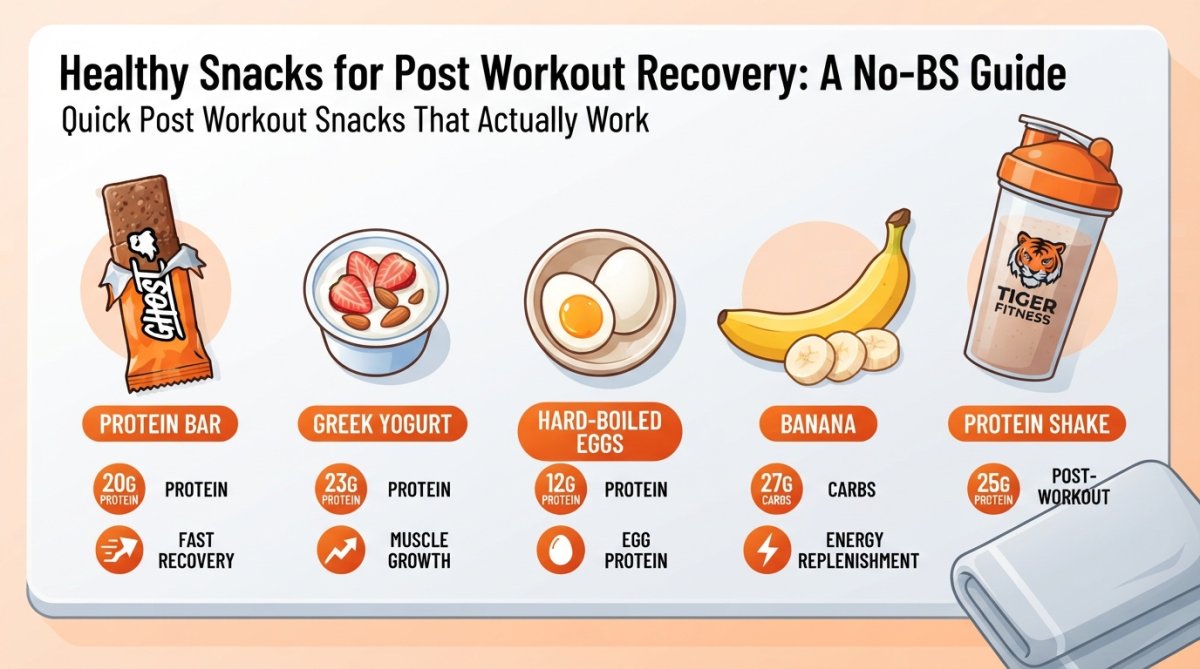
The options below all deliver 25-40 grams of protein and 40-60 grams of carbs in under 300 calories.
High-Protein Bars for On-the-Go Recovery
Protein bars are convenient, portable, and shelf-stable. For most people, this convenience factor means they'll actually consume something post-workout instead of waiting hours for a meal. The best post-workout bars have 15-20 grams of protein, 30-50 grams of carbs, and healthy fats. OUTRIGHT Protein Bars deliver 14-20g of protein per bar with a soft-baked texture. Mammoth Protein Bars offer 25g of protein per candy-style bar. Barebells Protein Bars are lower in sugar while maintaining 20g of protein.
Key TakeawayThe best post-workout bar is the one you'll actually eat. Pick based on taste preference and convenience, not marketing claims. Any bar with 15-20g protein and 30-50g carbs will work for recovery.
Real Food Options Under 5 Minutes
Sometimes whole food beats supplements. Here are five options that take under five minutes to prepare and deliver solid recovery nutrition.
Greek yogurt with granola and banana: Mix a cup of plain Greek yogurt (20g protein) with a handful of granola (40g carbs) and half a banana (15g carbs). Total: 20g protein, 55g carbs.
Hard-boiled eggs with toast: Two hard-boiled eggs (12g protein) and two slices of whole-grain toast with honey (50g carbs). Prep the eggs in advance so this takes literally two minutes post-workout.
Tuna with crackers: One can of tuna (20g protein) mixed with whole-grain crackers (40g carbs). Pair with a banana if you want more carbs.
Cottage cheese with fruit: Half a cup of cottage cheese (14g protein) with a cup of berries (15g carbs) and a slice of white bread (15g carbs).
Chicken breast with rice: 150g chicken breast (35g protein) with one cup of cooked white rice (45g carbs).
Budget-Friendly Healthy Snacks for Post-Workout Recovery
If you're training hard, you're eating post-workout daily. That's 365 snacks per year. Cost matters. The most expensive mistake people make is buying premium supplements when budget options work identically.
Here's the hierarchy from cheapest to most expensive per serving:
Tier 1: Eggs, oats, rice, beans, canned tuna, Greek yogurt, bananas, whole-grain bread.
Tier 2: Bulk whey protein powder mixed with oats and banana. Cottage cheese with fruit. Chicken breast with rice.
Tier 3: Protein bars, ready-to-drink shakes, specialized recovery products.
Most people should spend 80% of their post-workout budget in Tier 1 and Tier 2. Tier 3 is for convenience when Tier 1 and 2 aren't available.
Cost-Per-Gram Protein Analysis
When comparing post-workout options, calculate cost-per-gram protein. This shows you which sources are actually efficient.
Source |
Protein Per Serving |
Cost Efficiency |
|---|---|---|
Eggs (3) |
18g |
Most efficient |
Canned tuna |
20g |
Highly efficient |
Greek yogurt (1 cup) |
20g |
Highly efficient |
Whey powder (scoop) |
25g |
Most efficient |
20g |
Moderate |
|
30g |
Least efficient |
Whey powder is the most cost-efficient protein source. Eggs and tuna are close behind. Protein bars and ready-to-drink shakes are significantly more expensive per gram of protein.
Meal Prep Strategy for Recovery on a Budget
Meal prep is how you stay consistent without going broke. Spend one hour on Sunday prepping five days of post-workout snacks. Hard-boil two dozen eggs. Cook a large batch of rice. Portion out Greek yogurt into containers. Mix whey powder into individual shaker bottles.
Monday through Friday, you grab a pre-portioned snack immediately post-workout. No thinking. No excuses. To dial in your exact macronutrient needs based on your body weight and training style, use our FREE TOOLS & FITNESS CALCULATORS; they'll show you precisely how much protein and carbs you need post-workout so you're not guessing.
Travel-Friendly Recovery: Portable Snacks That Don't Compromise
Training while traveling is where most people's recovery falls apart. Protein bars are ideal because they're shelf-stable, don't require refrigeration, and deliver solid macros. Whey protein powder in individual packets is another option; mix with water and drink. No refrigeration needed. TSA allows protein powder through security.
Canned tuna and crackers work if you have access to a microwave or don't mind eating it cold. Peanut butter packets with whole-grain crackers provide protein and carbs. Dried fruit with nuts gives you carbs and some protein.
Non-Perishable Protein Sources
The best travel snacks are ones that don't require refrigeration and taste decent even at room temperature.
Protein bars: 15-20g protein, stable for months, no preparation needed.
Whey protein packets: Mix with water. Instant recovery. Pack individual packets so you don't have to measure.
Canned tuna/chicken: 20-25g protein per can. Shelf-stable for years. Eat cold or heat if you have access to a microwave.
Peanut butter packets: 8g protein per packet. Pair with crackers or bread for carbs.
Beef jerky: 10-15g protein per ounce. Shelf-stable. High sodium, so drink extra water.
TSA-Approved Snacks for Athletes
If you're flying, TSA rules matter. Protein powder is allowed; it's not a liquid or gel, so it passes security without issue. Protein bars are allowed. Canned tuna and chicken are allowed. Peanut butter packets are allowed. Fresh fruit (bananas, apples) is allowed through security. Ready-to-drink protein shakes are NOT allowed through security, but you can buy them after security or have them shipped to your destination.
Reducing Muscle Soreness and DOMS with Strategic Snacking
Delayed-onset muscle soreness (DOMS) is that brutal soreness you feel 24-48 hours after training. Strategic post-workout nutrition reduces DOMS severity. Protein and carbs delivered quickly post-workout accelerate repair and reduce inflammatory markers.
Pro TipIf you're experiencing brutal DOMS, it's usually a sign your post-workout nutrition is inconsistent. Start eating within 60 minutes of every training session and track soreness for two weeks. Most people report a significant reduction in DOMS severity just from consistent post-workout snacking.
Anti-Inflammatory Foods for Recovery
While post-workout nutrition is primarily about protein and carbs, certain foods have anti-inflammatory properties that support recovery. Tart cherry juice contains anthocyanins with anti-inflammatory effects. Omega-3-rich foods like fatty fish have anti-inflammatory effects. Berries contain polyphenols with antioxidant properties. Turmeric contains curcumin, a compound with documented anti-inflammatory effects. These aren't magic bullets; the foundation is still protein and carbs, but adding anti-inflammatory foods accelerates recovery.
Electrolyte Balance and Hydration
Hydration post-workout is essential for recovery. During training, you lose fluids through sweat. This fluid loss impairs nutrient transport and slows recovery. A general guideline is 16-24 ounces of fluid per pound of body weight lost during training. If you lose 2 pounds during training, drink 32-48 ounces of fluid post-workout. Water alone isn't optimal. Electrolytes (sodium, potassium, magnesium) are lost through sweat. Replenishing them accelerates rehydration because electrolytes help your body retain fluid.
Macronutrient Balance: Getting the Ratio Right
The ideal post-workout macronutrient ratio is roughly 1 gram of carbs per 0.3-0.4 grams of protein. For a 200-pound athlete, that translates to roughly 30- 40 g protein and 80- 120 g carbs post-workout. Fat post-workout should be minimal (under 10g per serving) because fat slows digestion, which delays nutrient delivery to muscles when they're most receptive.
Protein-to-Carb Ratios for Muscle Growth
A 1:2 or 1:3 protein-to-carb ratio post-workout optimizes muscle protein synthesis. If you consume 30g protein, aim for 60-90g carbs. If you consume 40g protein, aim for 80-120g carbs. The carbs are not optional. They're essential for the insulin response that drives nutrient delivery. The timing matters too; this ratio should be consumed within 60 minutes post-workout when your muscles are most primed to accept nutrients.
Healthy Fats and Satiety in Recovery Snacks
Fat post-workout should be minimal, but healthy fats in later meals support recovery through hormonal and anti-inflammatory mechanisms. Post-workout (first 60 minutes), minimize fat because it slows digestion. But 2-3 hours post-workout, healthy fats become beneficial. Omega-3 fats from fish, nuts, and seeds support anti-inflammatory responses. Monounsaturated fats from avocado and olive oil support hormonal function. A practical approach: an immediate post-workout snack is low-fat (protein, carbs, minimal fat). Your next meal (2-3 hours later) includes healthy fats.
The bottom line: post-workout recovery isn't complicated. Eat protein and carbs within 60 minutes of training. Drink water. Repeat daily. Most people don't need expensive supplements or complex protocols; they need consistency.
At Tiger Fitness, we provide the tools to make this simple: high-quality protein bars, bulk whey powder, and free nutrition guides designed for real athletes with real budgets. Your recovery depends on what you do in the first hour after training. Make it count.
Frequently Asked Questions
What should I eat immediately after a workout for recovery?
Aim for a combination of protein and carbohydrates within 30-60 minutes post-exercise. Protein supports muscle protein synthesis, while carbs replenish glycogen. Good options include a protein shake with a banana, Greek yogurt with berries, or a protein bar with complex carbs. The exact food matters less than hitting your macronutrient targets and eating within the recovery window.
How soon after a workout should I eat a post workout recovery snack?
The optimal recovery window is 30-60 minutes post-exercise, though research shows nutrient intake within 2 hours still supports muscle protein synthesis effectively. If you train fasted or early morning, prioritize eating sooner. The key is consistent nutrient timing across your training week—one delayed meal won't kill progress, but habitual timing maximizes adaptation.
What's the best ratio of carbs to protein for post-workout snacks?
A 1:1 or 2:1 carb-to-protein ratio works well for most athletes. For example, 25-40g protein paired with 25-80g carbs depending on workout intensity and body weight. This ratio optimizes glycogen replenishment and muscle protein synthesis. Adjust based on your training goals: strength-focused work may benefit from higher protein, while endurance training may require more carbs.
Are plant-based recovery snacks as effective as whey protein for muscle growth?
Plant-based proteins can support recovery effectively when you consume adequate total amino acids and maintain proper macronutrient balance. However, whey protein has superior bioavailability and complete amino acid profiles. If using plant-based options, combine multiple sources (pea + rice protein, for example) or ensure total daily protein intake meets your goals—typically 0.7-1g per pound of body weight for muscle building.
Leave a comment