






Choose the Right Protein Powder for Baking Snacks
Table of Contents
- Why Protein Powder for Baking Matters
- Baking with Whey vs Casein: What You Need to Know
- How Protein Powder Affects Texture and Moisture
- How to Substitute Protein Powder for Flour
- Protein Powder Baking Tips to Prevent Rubbery Texture
- Ingredients to Avoid and Quality Standards
- Allergen-Friendly and Cost-Effective Options
- Conclusion
Last Updated: August 20, 2026
The protein supplements market in the United States hit $9.88 billion in 2024, projected to reach $22.58 billion by 2032. That growth reflects a fundamental shift: more people are serious about protein intake. But here's where most people mess up, they grab whatever protein powder is on sale and try to bake with it, ending up with rubbery, chalky cookies that taste like gym socks.

How to choose the right protein powder for baking healthy snacks comes down to three things: the type of protein, the substitution ratio, and the baking technique. The difference between a protein bar that tastes like actual food and one that tastes like a supplement is understanding how different protein sources behave when exposed to heat and moisture.
Why Protein Powder for Baking Matters
Adding protein powder to your snacks builds sustainable nutrition into foods you actually want to eat. Approximately 44% of consumers actively seek to increase their protein intake, with this number climbing above 50% among Gen Z and Millennial consumers. In 2024, 61% of consumers reported increasing their protein intake.
The real value of baking with protein powder is control. You know exactly what's going into your snacks, no mystery ingredients, no hidden sugars, no proprietary blends. But protein powder isn't flour. It has a completely different structure, absorbs moisture differently, and denatures under heat in ways that flour doesn't. That's why so many first attempts at protein baking end up dense, rubbery, or completely dry.
Pro Tip The protein powder segment dominates the U.S. protein supplements market and is expected to hold its dominant share through 2025. If you're baking regularly, buying quality protein powder in bulk makes financial sense over buying pre-made bars.
Baking with Whey vs Casein: What You Need to Know
Animal-based protein supplements account for 65.09% of the U.S. protein supplements market. Whey and casein dominate for a reason, they work, taste better than most plant options, and have complete amino acid profiles. But they behave very differently in baking.
Whey Protein: Fast-Acting and Versatile
Whey protein isolate is your best starting point for baking. It's processed to remove most lactose and fat, so it doesn't interfere with your recipe's structure. Whey absorbs less liquid than plant-based options, keeping your dough workable.

When whey heats up, it denatures, protein molecules unfold and bond with each other, creating a network that traps moisture. Use too much whey and that network becomes too tight, creating a rubbery texture. The safe flour replacement ceiling for whey isolate is about 25-30% by weight.
Whey protein concentrate can reduce hardness in pan bread by up to 20% when incorporated at concentrations up to 20%, while enhancing crust browning and improving crisping qualities. The flavor masking is easier with whey too. Most whey isolates come in flavors that complement baked goods, vanilla, chocolate, cookies and cream.
Casein Protein: Slow-Digesting and Binding
Casein is slower to digest than whey, useful if you want sustained protein release from your snack. But casein is a binder that absorbs more liquid and creates a denser crumb structure. Use casein at 15-20% flour replacement maximum.
Casein works well in denser applications like protein brownies or fudgy cookies where you want that compact texture. Let casein-based doughs rest for 10-15 minutes before baking to let the protein fully absorb moisture.
Plant-Based Blends: Moisture and Texture Challenges
Plant blends absorb 40-60% more liquid than whey. If your recipe calls for 1 cup of flour and you swap in plant-based protein at the same weight, your dough will be too wet. You'll need to add more dry ingredients or reduce liquid significantly.
Plant-based proteins also have a higher likelihood of off-flavors. Pea protein can taste earthy. Hemp has a nutty undertone that doesn't work in every recipe. Plant-based proteins work better for people with dairy sensitivities, but expect to experiment more with ratios.
Watch Out Plant-based protein powders tend to make baked goods chalky or rubbery because they're stripped of fats, carbs, and fiber. The binding structure is weaker, and you need more aggressive ratio adjustments to compensate.
How Protein Powder Affects Texture and Moisture
Protein powder fundamentally changes how your baked goods absorb and retain moisture. Whey protein denatures around 160-170°F. When it denatures, the protein molecules unfold and cross-link, forming a three-dimensional network that traps water molecules.
In small amounts, this keeps your snacks from drying out. In large amounts, it creates a dense, tight crumb that feels rubbery. The difference between a moist protein cookie and a rubbery one often comes down to 5-10% more protein powder than optimal.
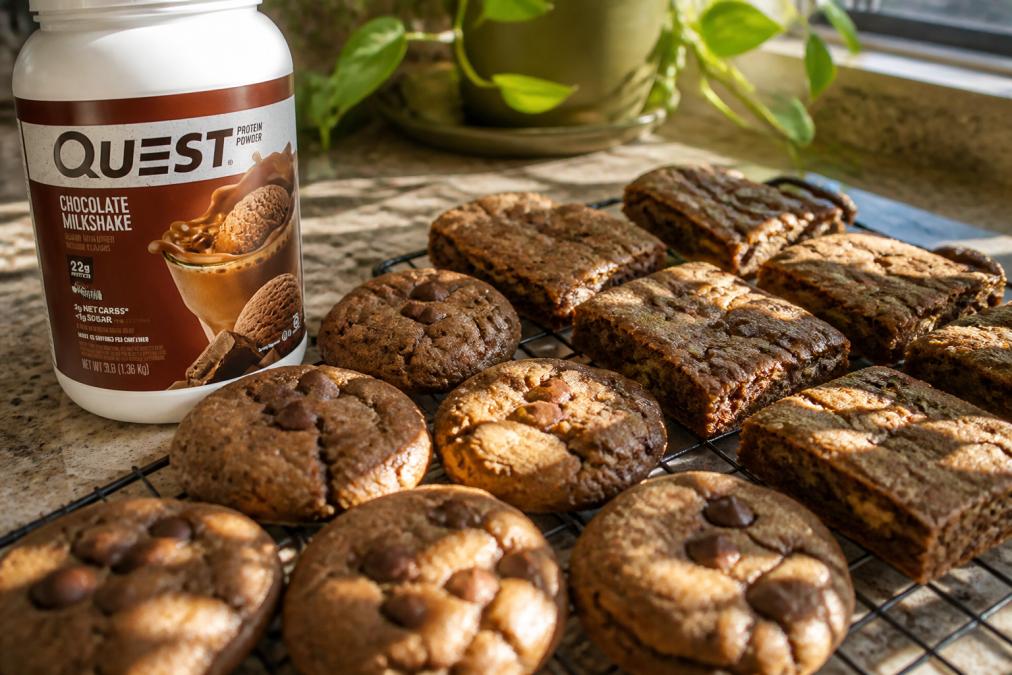
Casein is more stable at lower temperatures and doesn't denature as aggressively as whey. But casein is a stronger binder that pulls moisture out of the surrounding dough more aggressively, which is why casein-based recipes often feel drier. clean baking mixes.
Plant-based proteins don't denature the same way whey does. They absorb moisture but don't form as tight a network, which is why plant-based baked goods often feel grainier or more crumbly.
Use whey for cookies and bars where you want moisture retention and a tender crumb. Use casein for denser items like brownies where you want a fudgier texture. Use plant-based only if you have to, and expect to spend extra time dialing in your ratios.
How to Substitute Protein Powder for Flour
Most people fail here. They see a recipe that calls for 2 cups of flour and think they can swap in 2 cups of protein powder. That's not how it works.
Flour has weight and volume because of air space between particles. Protein powder is denser. A cup of flour weighs around 120 grams. A cup of protein powder weighs around 100-108 grams, though this can vary by brand and formulation. If you're measuring by volume, you're already off.
The second issue: flour has starch that gelatinizes when it hits moisture and heat, giving baked goods their structure and tenderness. Protein powder has no starch. You need to replace some of the flour, not all of it.
The Safe Substitution Ceiling
The maximum you should replace flour with whey isolate is 25-30% by weight. This maintains acceptable texture while getting meaningful protein content. Above 30%, you're fighting the physics of protein denaturation.
For casein, drop that ceiling to 15-20%. For plant-based proteins, aim for 15-20% maximum, and plan to add extra liquid or fat to compensate for increased moisture absorption.
A typical cookie recipe calls for 2 cups of flour, about 240 grams. If you want to add whey protein:
- 25% substitution = 60 grams of whey protein + 180 grams of flour
- 30% substitution = 72 grams of whey protein + 168 grams of flour
This is why measuring by weight matters. Volume measurements will screw you up every time.
Ratio Conversion Chart for Common Recipes
| Recipe Type | Total Flour (grams) | Protein Powder (grams) | Protein % | Expected Protein per Serving |
|---|---|---|---|---|
| Cookies | 240 | 60 | 25% | 8-12g per cookie |
| Brownies | 200 | 40 | 20% | 10-15g per brownie |
| Protein Bars | 150 | 45 | 30% | 15-20g per bar |
| Pancakes | 120 | 25 | 20% | 12-18g per pancake |
| Muffins | 280 | 70 | 25% | 10-14g per muffin |
| Bread | 500 | 100 | 20% | 8-12g per slice |
These are starting points. Your actual results will vary based on the specific protein powder brand, other ingredients, and your oven. Start at the lower end of the range and increase protein percentage gradually as you dial in your recipe. If you're unsure about your macros or want to calculate your exact protein needs for your baking goals, FREE TOOLS & FITNESS CALCULATORS can help you dial in the numbers.
Protein Powder Baking Tips to Prevent Rubbery Texture
The rubbery texture problem is fixable:
1. Don't skip the fat. Fat interferes with protein bonding and keeps it from getting too tight. Increase your butter or oil by 10-15% compared to a flour-only recipe.
2. Add an extra egg or egg white. Eggs are emulsifiers that help distribute fat and moisture evenly through the dough.
3. Use less baking soda or baking powder. Protein powder can interfere with leavening agents. Reduce your leavening by 10-20% to prevent over-rising, which leads to a crumbly, dry texture.
4. Don't over-mix. Over-mixing develops the protein network too much, making it tighter and more rubbery. Mix just until combined, then stop.
5. Lower your oven temperature by 25°F. Protein denatures faster at high temperatures. A lower temperature gives the rest of your baked good time to set before the protein network becomes too tight. This single change solves most rubbery texture problems.
6. Add moisture-retaining ingredients. Greek yogurt, applesauce, or mashed banana add moisture that stays in the baked good longer.
Most people try one of these. You need to combine several. The rubbery texture comes from multiple factors working together, too much protein, too little fat, too much heat, too much mixing. Fix all of them at once, and your texture problem disappears.
Key Takeaway Whey protein exhibits dose-dependent effects on food intake versus control, according to research in the British Journal of Nutrition. This means the amount you use directly impacts how your body processes the snack. Use the minimum effective dose, 25-30% flour replacement, to get protein content without texture degradation.
Ingredients to Avoid and Quality Standards
Not all protein powders are created equal. Some are loaded with fillers, artificial sweeteners that taste terrible, and ingredients that don't belong in food.
Third-Party Testing and Label Transparency
Look for certifications from NSF Certified for Sport, Informed Choice, or USP. These organizations test for banned substances and verify label accuracy. If a protein powder doesn't have one of these certifications, you have no way to know if it's actually what the label says.
Some cheaper protein powders use fillers like maltodextrin or dextrose to bulk up the product. These fillers affect how your dough behaves and throw off your ratios. You think you're using 60 grams of protein, but you're actually using 45 grams of protein and 15 grams of sugar.
Sweeteners and Flavor Profiles
The sweetener in your protein powder directly impacts your baking. Some sweeteners caramelize at lower temperatures. Some leave an aftertaste that gets stronger when baked. Some absorb moisture aggressively.
Stevia and monk fruit are stable at baking temperatures and don't leave strong aftertastes. Artificial sweeteners like sucralose and aspartame can develop off-flavors when heated. Sugar alcohols like xylitol are hygroscopic, they absorb moisture from the air, which affects your dough consistency. Erythritol, however, is generally considered non-hygroscopic.
Choose a protein powder with a simple sweetener profile. Vanilla and chocolate flavors are most versatile for baking because they complement many recipes. Check the ingredient list. If it has more than three sweetening agents, it's probably a formulation designed for shakes, not baking.
Allergen-Friendly and Cost-Effective Options
If you have allergies or dietary restrictions, your protein powder choices narrow significantly. But that doesn't mean you can't bake with protein.
Dairy-free: Plant-based blends are your only option. Expect higher costs and more experimentation with ratios.

Gluten-free: Most whey and casein isolates are naturally gluten-free, but check the label. Look for certified gluten-free products if you have celiac disease or severe gluten sensitivity.
Soy-free: Whey isolate and casein are soy-free. Most plant-based blends include soy lecithin as an emulsifier, so they're not suitable if you're avoiding soy.
Cost analysis: A quality whey isolate is significantly cheaper than pre-made protein bars when you buy in bulk. If you bake weekly, making your own snacks saves money and gives you better control over ingredients.
Choosing the right protein powder for baking isn't complicated once you understand how different proteins behave under heat and moisture. Whey isolate is your safest bet for most applications, it's versatile, affordable, and widely available. Stay within the 25-30% flour replacement ceiling, add extra fat to prevent dryness, and lower your oven temperature. Those three changes alone solve 90% of texture problems people encounter.
The real differentiator is quality. Buy protein powder that's third-party tested and from a source you trust. When you're baking regularly, that consistency matters. You're not just getting protein, you're getting a reliable ingredient that behaves the same way every time you bake.
Frequently Asked Questions
What type of protein powder is best for baking healthy snacks?
Whey protein isolate is your best choice for baking. It delivers superior heat stability and produces lighter texture compared to concentrates or plant blends. Whey isolate can safely replace up to 25-30% of flour by weight without creating a rubbery result. If you're dairy-free, pea and rice blends work, but they absorb 40-60% more liquid than whey, requiring recipe adjustments. Always use third-party tested options to verify amino acid profiles and ingredient purity.
Can I substitute whey protein powder for flour in baking recipes?
Yes, but only partially. The safe flour replacement ceiling for whey isolate is about 25-30% by weight. Replacing 100% of flour with protein powder produces a dense, rubbery, nearly inedible result because whey forms a tight gel when heated that lacks flour's starch-based tenderness. Start with 20% substitution, adjust liquid content upward by 10-15%, and add binding agents like xanthan gum (1/4 teaspoon per cup of flour replaced) to maintain structure and moisture retention.
Does heating protein powder destroy its nutritional value?
No. Whey protein withstands standard baking temperatures (350-375°F) without significant denaturation. Research from the University of Wisconsin Madison confirms whey protein retains its amino acid profile and biological activity after baking. However, extreme temperatures above 400°F or prolonged exposure can reduce solubility and digestibility. For optimal results, use whey isolate rather than concentrate, isolates are less prone to heat induced texture changes and maintain better flavor profiles after baking.
What ingredients should I avoid in protein powders for baking?
Avoid protein concentrates with high carbohydrate fillers, sugar alcohols that crystallize during baking (like maltitol), and artificial sweeteners that create bitter aftertaste when heated. Look for whey isolate with clean labels listing 20g+ protein per serving, minimal added sugars, and third-party testing certifications. Skip products with proprietary blends, you need transparent amino acid profiles to predict how the protein will behave in your recipes. Check for stevia or monk fruit instead of aspartame or sucralose for better heat stability.
Leave a comment