
NEW NULLA BAR FLAVORS
In-Stock Now!

Last Updated: October 31, 2026
Quick Summary
NSF certified supplements are products audited and tested by an independent third party, which makes the label more likely to match what is in the tub. Certification is not a government approval and does not prove a supplement works better. For lifters, the main benefit is reduced uncertainty about label accuracy and contaminant screening.
NSF Certified means an independent third party has audited the manufacturer and tested the product against published standards. It is not a government approval, and it does not mean a product works better. Learn what these certifications truly mean. It means the label is more likely to match what is in the tub, which is the core reason lifters look for nsf certified supplements.
Supplements sold in the United States are regulated under a framework that places most of the burden on manufacturers, not on pre-market approval by the FDA. That gap is why voluntary third-party programs exist. NSF International is one of the most recognized of these programs. FDA dietary supplement regulation overview
Certification programs of this kind audit supplement manufacturers against good manufacturing practices, and the audit reports are generally not published on the label. Academy of Nutrition and Dietetics review on supplement quality certification
Here is what the process generally covers:
That ongoing oversight is the part most lifters overlook.
Certification testing checks two things that matter most to a lifter. First, whether the product contains what the label says, in the amounts stated. Second, whether it contains harmful contaminants above acceptable limits. Certification testing generally checks for harmful contaminant levels and confirms the listed ingredients are present. NSF guidance on supplement vitamin certification
Label accuracy is the point. A tub that says 25 grams of protein and delivers 18 is a bad product, even if it tastes great.
The benefits are practical and specific. Here is what you actually get, and what you do not:
Set your expectations straight. Certification does not prove a supplement will build muscle, burn fat, or improve performance. Learn how to identify high quality supplement manufacturers beyond the badge. It does not replace medical advice. It does not eliminate all risk, and it does not cover a counterfeit bottle bought from an unauthorized seller. A certified seal on a fake product is worthless.
For a bodybuilder who needs to know what he is putting in his body, these checks cut out a lot of guesswork. You still need to read labels, but you are not gambling on a product's basic claims. The benefit is reduced uncertainty, not guaranteed results.
Here is what certification actually gets you, and what it does not:
| Benefit | What it covers | Key limit |
|---|---|---|
| Label accuracy | Outside lab checks ingredients and amounts against the label | Does not prove results |
| Contaminant screening | Tested for harmful contaminant levels | Screening, not a guarantee |
| Manufacturing oversight | Facility audited against FDA good manufacturing practices | Covers process, not every batch |
| Recurring checks | Ongoing audits and testing | Status can change |
| Sport safeguards | Certified for Sport adds banned-substance screening | Only for the Certified for Sport mark |
NSF Certified for Sport is a separate, stricter program built for drug-tested athletes. It screens products for substances prohibited by major sporting bodies, in addition to the general quality checks above. U.S. Anti-Doping Agency guidance on supplement risk
Here is the part you need to hear straight. Certified does not mean risk-free. It means the risk is lower.
If you compete in a tested federation, look for the Certified for Sport mark specifically, and still read the full label before you dose anything.
Certification is useful, but it has limits, and you should know them before you rely on it:
A certified seal on a product you bought from a shady marketplace is worthless if the bottle is not genuine.
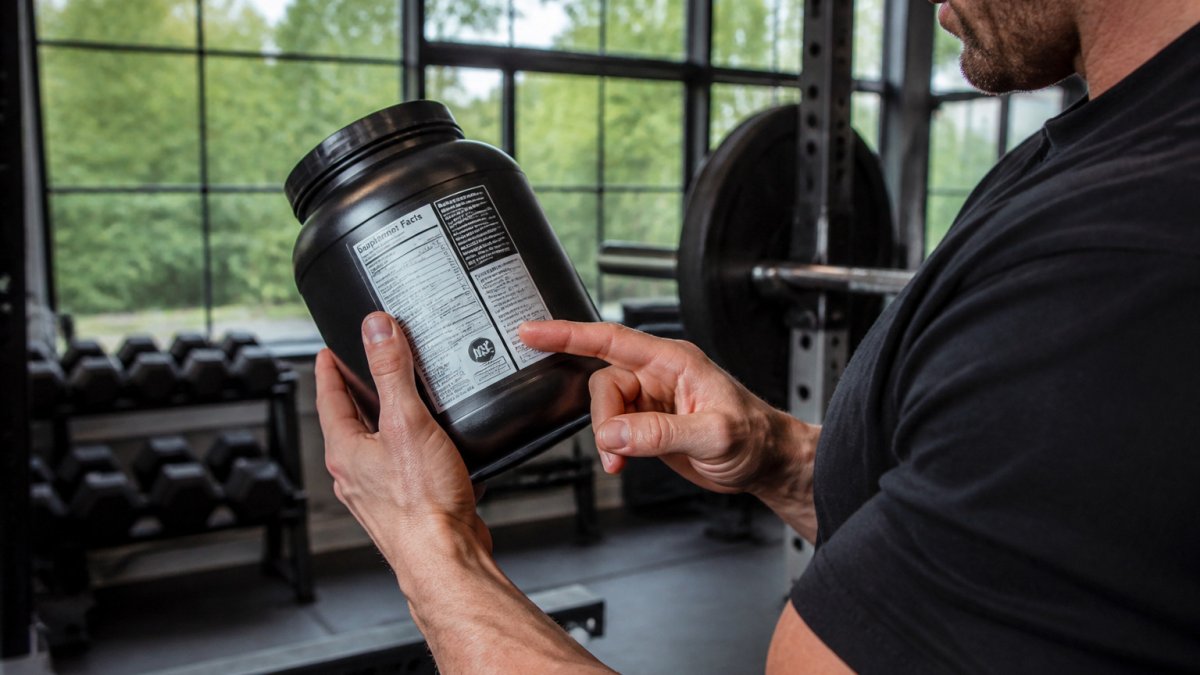
Do not trust the logo alone. Learn to spot fake and unverified ingredients. A logo is a claim. A database listing is evidence. Here is how to check it properly.
NSF runs more than one program, and they are not interchangeable:
If you compete in a tested federation, general certification is not enough. You need the Certified for Sport mark specifically.
Lifters who skip step two and step four are the ones who get burned.
Certification status can change. See how to read and verify protein supplement lab reports. Formulations get reformulated, facilities change, and listings get updated or pulled. A product that was certified last year may not be certified today. Check the current listing before you buy, not the logo on an old tub in your cabinet.
Pull every supplement you take off the shelf and check each one against steps two through four above. Note which products are certified, which are not, and which you cannot verify. For the ones you cannot verify, replace them or ask yourself why you are taking them at all.
At Tiger Fitness, we want you buying with your eyes open. Our Free Tools & Fitness Calculators can help you work out your goals and plan your training and nutrition.
No federal law requires dietary supplements to carry NSF certification, so it is voluntary. What it gives you is independent verification that the product contains the ingredients on the label, stays within limits for listed contaminants, and was made in a facility that passed audits. If you are an athlete subject to drug testing, or you simply want a second check on what you are putting in your body, it is worth the effort to look for the mark. If a product has no certification, that does not automatically mean it is unsafe, but it does mean no outside party has verified the claims.
NSF Certified for Sport screens products for substances prohibited by major sports organizations, and checks that the label matches what is actually in the product. Using a certified product lowers the risk of a positive test, but it does not eliminate that risk. Batches are tested, and facilities are audited. Always confirm the specific product and lot carry the current certification before you rely on it for competition.
Start with the product label and look for the NSF Certified mark or the NSF Contents Certified seal. Then check the NSF certification database on the NSF website, searching by brand or product name, to confirm the certification is current and covers the exact formulation you are buying. Certifications apply to specific products, so a brand's other items may not be covered. If a product claims certification but does not appear in the database, treat the claim with skepticism.
Third-party testing is a broad term for any testing performed by an outside lab rather than the manufacturer. NSF certification is a specific program that combines testing of finished products with facility audits and ongoing oversight. Not every third-party test is equivalent. A one-time lab report on a single batch tells you less than a certification that requires repeated testing and periodic unannounced facility inspections.
{"one"=>"Select 2 or 3 items to compare", "other"=>"{{ count }} of 3 items selected"}







Leave a comment