



BEST PLANT-BASED PROTEIN FOR BODY RECOMPOSITION
Best Plant-Based Protein for Body Recomposition
Table of Contents
- Plant-Based Protein for Body Recomposition: What the Research Shows
- Complete vs. Incomplete Plant Proteins
- Plant-Based Protein Bioavailability and Muscle Protein Synthesis
- Body Recomposition Macros: How Much Plant Protein Do You Actually Need
- Vegan Protein Powder for Muscle Gain: Powder vs. Whole Foods
- Top Plant-Based Protein Options for Recomposition
- Digestive Health and Bloating: The Plant Protein Problem Solved
- Conclusion
- Frequently Asked Questions
Last Updated: September 24, 2026
Plant-Based Protein for Body Recomposition: What the Research Shows
Let me be direct: if you're serious about body recomposition, building muscle while losing fat simultaneously, plant-based protein can absolutely work. The science backs this up.

But here's what most guides miss: it's not just about eating plant protein. It's about eating the RIGHT plant proteins in the RIGHT amounts, strategically timed around your training.
The best plant-based protein for body recomposition depends on three factors: amino acid completeness, bioavailability, and your ability to hit your daily protein targets. Some sources check all three boxes. Others fall short. This guide covers which ones deliver results and which ones are marketing hype.
Pro Tip Most plant-based athletes fail at recomposition because they underestimate their protein needs. The research standard is 1.6-2.2 grams per kilogram of body weight. A 180-pound athlete needs roughly 130-180 grams daily. That's not a suggestion, that's the threshold for muscle protein synthesis.
Complete vs. Incomplete Plant Proteins
Here's where plant proteins get confusing, so let me simplify it.
A complete protein contains all nine essential amino acids in sufficient quantities. Your body cannot synthesize these on its own, they must come from food. For muscle building, this matters because your muscles need the full amino acid profile to trigger protein synthesis.
The research is unambiguous: soy and pea protein are the only complete plant-based proteins. According to a registered dietitian at Houston Methodist, "The only complete plant-based proteins are soy and pea protein. But this isn't a problem if you eat a well-balanced diet."
Incomplete proteins, like legumes and grains, lack one or more essential amino acids. Legumes score between 50-75 percent on the protein quality scale, while grains range from 40-55 percent. That doesn't mean they're useless. It means you need to combine them strategically.
Here's the practical application: if you're relying solely on beans and rice, you'll need to eat larger quantities to get the same amino acid profile as soy or pea protein. For body recomposition, where caloric precision matters, that's inefficient.
The fix is simple: prioritize complete sources (soy, pea) as your primary protein, then layer in incomplete sources for micronutrient density. That's the approach that works.
Plant-Based Protein Bioavailability and Muscle Protein Synthesis
Bioavailability is the percentage of protein your body can actually absorb and use. It's the difference between eating protein and building muscle from it.
Plant proteins generally have lower bioavailability than animal proteins, but the gap is smaller than most people think, especially with the right sources.
What determines bioavailability? Digestibility, amino acid profile, and processing method. Sprouted and fermented plant proteins are more bioavailable because sprouting breaks down anti-nutrients and increases enzyme activity. When you see "sprouted brown rice protein" or "fermented pea protein," that's why it matters.
Here's the real consideration: muscle protein synthesis (MPS) is triggered by leucine, one of the branched-chain amino acids (BCAAs). Animal proteins are naturally leucine rich. Most plant proteins are not. This is why some plant-based protein powders add isolated BCAAs, to match the leucine threshold needed for optimal MPS.

Research from George Mason University shows plant-based proteins provide slower digestion, offering a steady release of amino acids. For body recomposition, this is actually an advantage: steady amino acid availability supports sustained protein synthesis throughout the day.
The takeaway: bioavailability isn't a deal breaker for plant proteins. It's a detail to manage. Choose sources with high digestibility, adequate leucine content, and you'll trigger MPS just as effectively as animal protein.
Body Recomposition Macros: How Much Plant Protein Do You Actually Need
This is where most athletes get it wrong.
The standard recommendation for muscle gain is 1.6-2.2 grams of protein per kilogram of body weight (according to current guidelines for muscle gain and fat loss). That's not optional. That's the research floor.
For a 180-pound (82 kg) athlete, that's 131-180 grams daily. For a 200-pound (91 kg) athlete, that's 146-200 grams daily.
Now, here's the nuance: during a caloric deficit (which is necessary for fat loss), higher protein intake becomes even more critical. Protein spares muscle tissue during a deficit. It also increases satiety, meaning you stay fuller longer on fewer calories.
For body recomposition specifically, I recommend targeting the upper end of that range, 2.0-2.2 g/kg. You're simultaneously building muscle and losing fat, which requires aggressive protein intake to support both processes.
How do you hit that number with plant protein? You need a combination strategy:
- Whole food sources (legumes, tofu, tempeh, seitan) for micronutrient density
- Plant-based protein powder to fill gaps and simplify meal prep
- Complementary proteins (combining rice and peas, for example) to ensure amino acid completeness
A practical example: a 180-pound athlete targeting 150 grams of protein daily might consume 60 grams from whole foods (tofu, legumes, grains) and 90 grams from a plant-based protein powder. That's achievable and sustainable.
To dial in your exact targets, FREE TOOLS & FITNESS CALCULATORS can help you determine your specific protein needs based on your body weight, training intensity, and recomposition goals.
Key Takeaway The protein target is non-negotiable. 1.6-2.2 g/kg is the science backed threshold. Everything else, food source, timing, meal frequency, is logistics. Get the total right first.
Vegan Protein Powder for Muscle Gain: Powder vs. Whole Foods
This is a false choice. You need both.
Whole food plant proteins (tofu, tempeh, legumes, seitan) provide micronutrients, fiber, and satiety that powder cannot. A serving of lentils delivers not just protein but iron, folate, and polyphenols. Powder cannot replicate that.
But whole foods alone won't cut it for body recomposition. Here's why: the volume is too high. To get 150 grams of protein from beans alone, you'd eat roughly 3 cups of cooked beans. That's 900+ calories and enough fiber to cause bloating and digestive stress. For a caloric deficit, that's counterproductive.
Plant-based protein powder solves this problem. It delivers protein with minimal calories and fiber, making it easier to hit your daily target without overshooting calories or triggering digestive issues.
The best approach: use whole foods for 40-50 percent of your protein intake, and powder for the remaining 50-60 percent. This gives you micronutrient density from whole foods and caloric efficiency from powder.
Quality matters here. Look for powders that:
- List the protein source clearly (pea, rice, soy, hemp)
- Include digestive enzymes if you're sensitive to bloating
- Avoid "proprietary blends" that hide the actual protein content
- Are third-party tested for amino acid profile accuracy
At Tiger Fitness, we stock plant-based protein powders that meet these standards. [Ambrosia Planta(/products/ambrosia-collective-planta-plant-based-protein) is tested and guaranteed to meet label claims for protein content, and is proven free of amino spiking | tigerfitness.com]. That transparency matters when you're counting macros for recomposition.
Top Plant-Based Protein Options for Recomposition
Here's a breakdown of the plant-based proteins that actually work for body recomposition. I'm focusing on completeness, bioavailability, and real-world usability.
| Protein Source | Protein Score | Best For | Key Advantage |
|---|---|---|---|
| Soy | Complete (100%) | Daily staple | All essential amino acids, high leucine |
| Pea-Rice Blend | Complete (95%+) | Powder, convenience | Balanced amino profile, digestible |
| Seitan | Complete (95%+) | Whole food, cooking | Highest protein density, versatile |
| Tempeh | Complete (90%+) | Whole food, fermented | Probiotics, complete protein, digestible |
| Hemp | Incomplete (60%) | Supplementary | Omega-3s, but needs pairing |
| Legumes (beans, lentils) | Incomplete (50-75%) | Whole food, fiber | Micronutrients, but needs complementing |
Complete Proteins: Soy and Pea-Rice Blends
Soy protein is the most researched plant protein for muscle building. It's a complete protein with an amino acid profile that rivals whey.

The downside: taste and texture. Traditional soy protein powders are chalky and grainy. Modern formulations have improved dramatically, but quality varies.
Pea-rice blends have become the gold standard for plant-based protein powders. Pea protein is high in leucine and lysine but low in methionine. Rice protein is low in lysine but higher in methionine. Together, they create a complete amino acid profile.
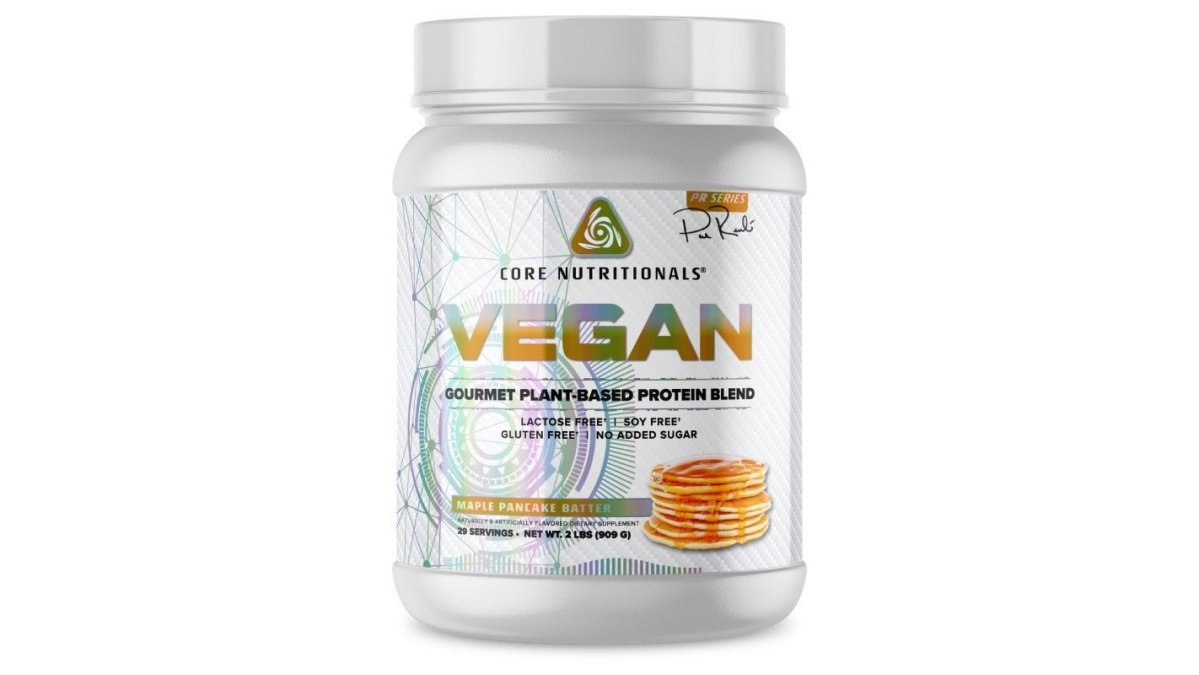
Core Vegan Protein is a pea-rice blend with added fermented BCAAs and digestive enzymes (DigeSEB). This addresses common concerns about plant protein: incomplete amino acids and bloating.
Budget Friendly Single Source Options
If you're on a tight budget, single source proteins can work, but you need to understand their limitations.
Digestive Health and Bloating: The Plant Protein Problem Solved
The solution has three parts:
First, digestive enzymes. Enzymes like amylase, protease, and cellulase break down plant material more completely, reducing fermentation. Core Vegan Protein includes DigeSEB, a comprehensive digestive enzyme blend designed specifically for plant protein. This isn't a gimmick, it's a practical tool.
Conclusion
The best plant-based protein for body recomposition is one you can consistently hit your daily targets with while staying digestively comfortable and within your calorie budget.
Frequently Asked Questions
How much Plant-based Protein do you need daily for body recomposition?
Aim for 1.6-2.2 grams of protein per kilogram of body weight daily. A 200-pound (91 kg) athlete needs roughly 145-200 grams per day. This range supports muscle protein synthesis while maintaining a caloric deficit for fat loss. Split your intake across 4-5 meals to maximize muscle retention and satiety.
Are Plant-based Proteins as effective as whey for muscle growth?
Yes. University of Illinois research (2024) found no differences in muscle protein synthesis rates between vegan and omnivorous diets after weight training. The key is hitting your total daily protein target and training hard. Complete plant proteins (soy, pea-rice blends) deliver all nine essential amino acids needed for hypertrophy.
What makes Plant-based Protein bioavailability different from animal protein?
Plant proteins digest slower, providing steadier amino acid release over time. Pea protein is 95-98% digestible. Pea-rice blends are optimized because pea provides leucine (critical for muscle building) while rice fills amino acid gaps. This complementary profile rivals complete animal proteins for body recomposition when total protein intake is adequate.
Should I use whole food Plant Proteins or powder for body recomposition?
Both work. Whole foods (legumes, tofu, tempeh, seitan) provide fiber and micronutrients that support recovery and satiety. Powders offer convenience and faster absorption post-workout. Most successful recomposition plans combine both: whole foods for meals, powder for post-workout or between meal gaps to hit daily protein targets efficiently.
Body recomposition is harder than straight bulking or cutting, you're asking your body to do two things simultaneously. The nutrition has to be precise. Plant-based protein makes that possible when you're intentional about source selection and daily intake. Tiger Fitness provides the tools, the products, and the free guides to make it work. Use our fitness calculators to dial in your exact protein target, then let our plant-based protein powders help you hit it every single day.
Leave a comment