





BEST PROTEIN SOURCES FOR BODY RECOMPOSITION
Best Protein Sources for Body Recomposition | 2026 Guide
Table of Contents
- What Body Recomposition Actually Requires
- Protein Intake for Body Recomposition: How Much You Need
- The Best Protein Sources for Body Recomposition
- A High Protein Meal Plan for Fat Loss and Muscle Gain
- Best Supplements for Body Recomposition
- Frequently Asked Questions
Last Updated: September 16, 2026
What Body Recomposition Actually Requires
Body recomposition is the process of losing fat and building muscle at the same time. According to research on nutritional protocols for body recomposition, both a moderate energy deficit and a maintenance-calorie high-protein diet can produce recomposition when compared to habitual eating. That is the whole game. No gimmicks, no magic. You eat enough protein, you lift, and your body rebuilds itself.
Key Takeaway Body recomposition succeeds when protein intake stays high while calories stay at maintenance or a slight deficit. Protein protects lean tissue; training tells the body to build.
Protein Intake for Body Recomposition: How Much You Need
Protein intake for body recomposition should land between 1.6 and 2.4 grams per kilogram of body weight daily, according to body recomposition protein guidelines. More is not automatically better. Hitting the range consistently is what matters.
Grams per Pound of Body Weight
For most lifters, 0.7 to 1 gram of protein per pound of body weight is the working target, per dietary guidelines for fat loss and muscle gain. A 180-pound lifter lands between 126 and 180 grams daily. That is the number to write down.
Protein Pacing: Why 30g Per Meal Matters
Donald Layman, Professor Emeritus at the University of Illinois, recommends a minimum of 30 grams of net protein three times a day for muscle protein synthesis, as discussed on the Huberman Lab podcast. Spreading protein across meals beats one giant dose at night. Your body can only use so much at once.
The Best Protein Sources for Body Recomposition
The best protein sources for body recomposition are complete proteins with high leucine content and strong bioavailability. Leucine triggers muscle protein synthesis; bioavailability determines how much of what you eat actually reaches your muscles. Prioritize animal-derived proteins for their amino acid profile, then fill gaps with plant options.
Protein Quality: PDCAAS and DIAAS Scores
The Protein Digestibility-Corrected Amino Acid Score (PDCAAS) and the newer Digestible Indispensable Amino Acid Score (DIAAS) are the two standards used to grade protein quality. PDCAAS caps at 1.0; DIAAS does not, so it separates the elite sources from the merely good ones.
| Source | Protein per Serving | Quality Score | Leucine per Serving | Best For |
|---|---|---|---|---|
| Whey isolate | 24-27g per scoop | DIAAS >1.0 (highest tier) | ~2.7-3.0g | Post-workout, fast delivery |
| Whole eggs | ~6g per egg | PDCAAS 1.0 | ~0.5g per egg | Breakfast, snacks |
| Chicken breast | ~31g per 100g | PDCAAS 1.0 | ~2.4g per 100g | Daily staple meals |
| 93% lean ground beef | ~26g per 100g | PDCAAS 1.0 | ~2.0g per 100g | Strength phases |
| Greek yogurt | ~17g per 170g | PDCAAS 1.0 | ~1.7g per 170g | Between meals |
| Milk | ~8g per cup | PDCAAS 1.0 | ~0.8g per cup | Pre/post training |
| Soy (tofu, edamame) | ~8-18g per serving | PDCAAS 1.0 | ~0.6-1.4g | Meat-free days |
| Pea protein | ~20-24g per scoop | DIAAS ~0.7-0.8 | ~1.8-2.0g | Plant-based blends |
| Rice protein | ~20-24g per scoop | DIAAS ~0.6-0.7 | ~1.6-1.8g | Plant-based blends |
Leucine: The Trigger for Muscle Protein Synthesis
Leucine is the amino acid that flips the switch on muscle protein synthesis. Research popularized by protein researchers like Donald Layman, Professor Emeritus at the University of Illinois, points to roughly 2.5 to 3 grams of leucine per meal as the threshold to maximally stimulate muscle protein synthesis in most adults. Whey isolate gets you there in one scoop. Chicken gets you there in about 4 ounces.
Animal-Derived Proteins: Lean Meat, Poultry, Dairy, and Eggs
Chicken breast, 93% lean beef, turkey, eggs, and dairy deliver complete proteins with the amino acid profile human muscle uses most efficiently. A 2022 meta-analysis in the Journal of Cachexia, Sarcopenia and Muscle found that increasing daily protein intake enhances lean body mass gains in people doing resistance training. Animal proteins make that target easier to hit because they are dense, digestible, and leucine-rich.
Plant-Based Alternatives and Complete Proteins
Plant-based alternatives can work, but you have to be deliberate. Soy, quinoa, buckwheat, and hemp are complete proteins. Beans, lentils, and rice are incomplete on their own, so combine them across the day. Plant proteins also carry lower leucine content and lower DIAAS scores, which means you may need more total grams to match the anabolic response of animal sources.
Pro Tip Blend plant sources across meals. Rice and beans, hummus and whole grain pita, or lentils with quinoa cover the full amino acid profile without any single "perfect" food. If you are plant-based, aim for the top of your protein range and consider a pea-rice blend to shore up leucine.
Key Takeaway Quality beats quantity once you clear your daily target. Whey, eggs, dairy, chicken, beef, and soy sit at the top of the DIAAS and PDCAAS scales. Plant proteins work, but they need bigger doses and smarter combinations to match the leucine punch of animal sources.
A High Protein Meal Plan for Fat Loss and Muscle Gain
A high protein meal plan for fat loss and muscle gain should hit 30 to 50 grams of protein per meal across three to four meals. Here is a working template for a 180-pound lifter targeting roughly 180 grams daily.
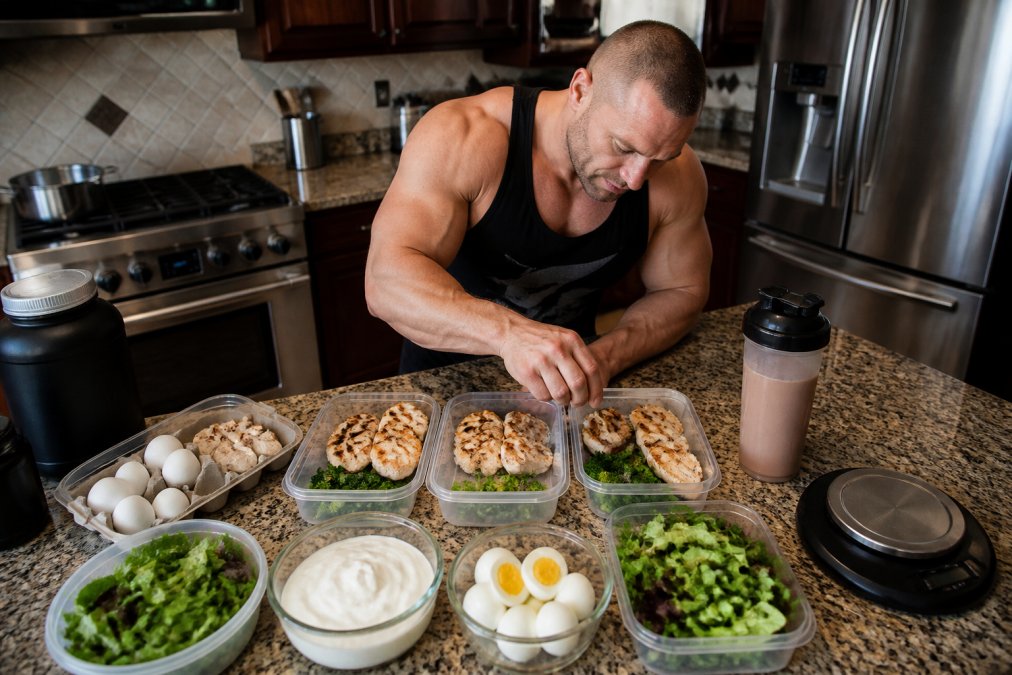
- Breakfast: 4 whole eggs, 1 cup Greek yogurt, 1 cup oats (about 45g protein)
- Lunch: 8 oz grilled chicken breast, 1 cup rice, mixed vegetables (about 55g protein)
- Snack: Whey isolate shake with water (about 25g protein)
- Dinner: 8 oz 93% lean ground beef, sweet potato, broccoli (about 50g protein)
Cost Per Gram of Protein: The Budget Reality
Nobody talks about this, and it is the reason most people quit. High-protein eating gets expensive fast if you buy the wrong foods. Here is the practical breakdown based on typical grocery pricing, the cheapest protein per gram is almost always eggs, dairy, and chicken, while specialty cuts and pre-made shakes sit at the top of the cost curve.
| Source | Typical Protein per Serving | Relative Cost per Gram |
|---|---|---|
| Eggs | ~6g per egg | Lowest tier |
| Canned tuna | ~20-25g per can | Low tier |
| Chicken breast (bulk) | ~31g per 100g | Low tier |
| 93% lean ground beef | ~26g per 100g | Mid tier |
| Greek yogurt (large tub) | ~17g per 170g | Mid tier |
| Whey isolate (bulk tub) | 24-27g per scoop | Mid tier |
| Fresh salmon | ~22g per 100g | High tier |
| Pre-made protein shakes | ~20-30g per bottle | Highest tier |
Scaling the Plan to Your Body Weight
The 180-pound template is a starting point, not gospel. Use 0.7 to 1 gram of protein per pound of body weight and scale the meals accordingly.
- 130-pound lifter (roughly 90-130g daily): 3 eggs + 1 cup Greek yogurt at breakfast, 6 oz chicken at lunch, 1 scoop whey as a snack, 6 oz lean beef at dinner.
- 180-pound lifter (roughly 125-180g daily): the template above.
- 230-pound lifter (roughly 160-230g daily): add a second shake or bump each meat portion to 10 oz, and add a cup of cottage cheese before bed.
Meal Prep Strategy That Actually Sticks
Cook protein in bulk twice a week. Grill 3 to 4 pounds of chicken at once, brown 2 to 3 pounds of lean beef, and hard-boil a dozen eggs. Portion into containers so the decision is already made when hunger hits. The people who fail at recomposition are not failing on knowledge, they are failing on convenience. Remove the friction and you remove the excuse.
Watch Out Do not let "high protein" turn into "high calorie." A pound of 80/20 ground beef and a pound of 93% lean are not the same food for recomposition. Watch the fat content on your meat and the sugar content on your yogurt.
Pro Tip Frozen chicken breasts, canned tuna, and bulk eggs are the three cheapest protein staples in any grocery store. Build your week around them and save the salmon and steak for when you want variety.
Best Supplements for Body Recomposition
The best supplements for body recomposition are whey isolate and multi-source blends. Whole food should carry most of your intake, but a shake closes the gap when life gets in the way. Whey isolate absorbs fast and carries minimal carbs and fat, which fits a recomposition plan cleanly.
Whey Isolate vs. Blends: Which Fits Your Plan
Whey isolate is the right call post-workout and any time you need fast amino acid delivery. A blend of whey and casein stretches that delivery over several hours, which suits between-meal and pre-bed use. Neither is "better." They solve different timing problems.
Watch Out Do not replace whole meals with shakes all day. Liquid protein digests fast and does little for satiety. Use shakes to fill gaps, not to skip real food.
Frequently Asked Questions
What is the optimal daily protein intake for body recomposition?
Research supports 1.6 to 2.4 grams of protein per kilogram of body weight, or roughly 0.7 to 1 gram per pound, for body recomposition. A 2026 study in the European Journal of Applied Physiology found that both a moderate calorie deficit and a maintenance-calorie high-protein diet can produce recomposition when compared to habitual eating. Hitting the lower end works for most lifters, but pushing toward the higher end helps preserve lean mass during a caloric deficit.
Can you build muscle and lose fat at the same time?
Yes. Body recomposition happens when you pair resistance training with adequate protein and controlled calories. A 2022 systematic review in the Journal of Cachexia, Sarcopenia and Muscle found that increasing daily protein intake enhances gains in lean body mass in people doing resistance exercise. The key is keeping the deficit moderate and protein high enough to protect lean tissue while your body pulls from stored fat.
Are plant-based proteins as effective as animal proteins for recomposition?
Plant-based alternatives can support recomposition, but they usually have lower leucine content and a less complete amino acid profile per serving. You can close that gap by eating more total plant protein, combining sources like soy, beans, and lentils across the day, and using a plant-based powder. Animal derived proteins such as whey, eggs, and lean meat remain the most efficient per gram for muscle protein synthesis, which matters when calories are tight.
How many grams of protein should I eat per meal for maximum results?
Donald Layman, professor emeritus at the University of Illinois, recommends a minimum of 30 grams of net protein three times a day for muscle protein synthesis. Spreading intake evenly beats back loading it at dinner. Four meals of 30 to 40 grams each tends to work well for most lifters, and a whey isolate shake is an easy way to hit that number when whole food is not practical.
Leave a comment