







BEST SUPPLEMENTS FOR KNEE PAIN DURING SQUATS
Best Supplements for Knee Pain During Squats
Table of Contents
- Why Knee Pain During Squats Happens and What Supplements Can Do
- Top Joint Support Supplements for Squat Performance
- Glucosamine for Knee Pain: What the Research Shows
- Collagen for Joint Health: Building Structural Integrity
- Managing Knee Pain When Squatting: Supplement Timing and Dosage
- Recovery After Squats: Why Supplements Take Time to Work
- When to See a Doctor vs. When Supplements Are Enough
- Frequently Asked Questions
Last Updated: October 14, 2026
Why Knee Pain During Squats Happens and What Supplements Can Do
Knee pain during squats is one of the most common complaints I hear from lifters. You load the bar, descend, and something doesn't feel right, sharp, dull, or a nagging ache that kills your confidence under heavy weight.
The issue rarely comes from nowhere. Squats demand a lot from your knee joints, compression, shear forces, and rotational stress all at once. Add weak stabilizers, poor mobility, or previous injury, and pain follows.
Supplements won't fix bad form or poor recovery. But the right ones can reduce inflammation, support cartilage integrity, and supply the building blocks your joints need.
Top Joint Support Supplements for Squat Performance
You need ingredients that address the real problem: inflammation, cartilage wear, and mobility loss. Not every supplement does all three. Here's what we recommend based on what's actually in each formula.
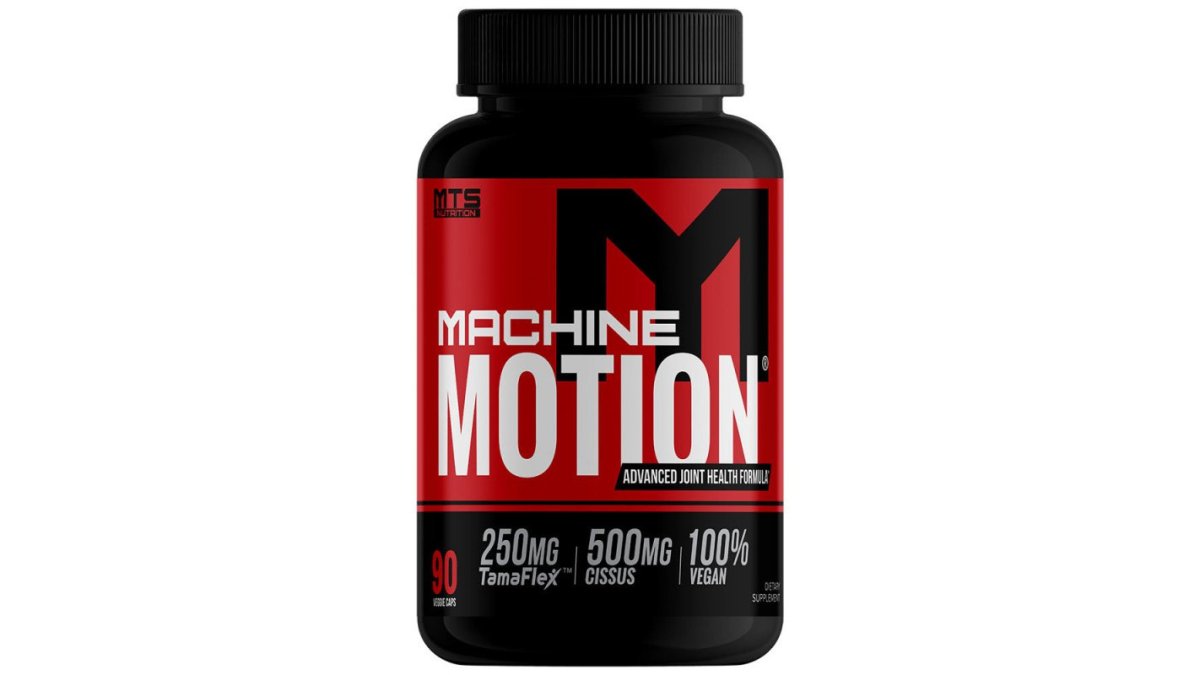
MTS Machine Motion: Comprehensive Joint Support
MTS Machine Motion is built for lifters who squat heavy and often. The ingredient profile justifies the investment.

The formula stacks Cissus Quadrangularis (500mg of a 40% ketosterone extract), Curcumin (500mg at 45% curcuminoids), and Hyaluronic Acid (230mg).
Add BioPerine black pepper extract for absorption, and you have a formula built for maximum use by your body.
This is the pick for lifters who want a complete joint support system without proprietary blends hiding ingredient doses.
Pro Tip No proprietary blends means you know exactly what you're getting in every serving.
Axe & Sledge Joint+ V2: Targeted Inflammation and Mobility
Axe & Sledge Joint+ V2 is the premium option for serious joint protection. The V2 formula was updated specifically to improve results.

You get Glucosamine and Chondroitin for cartilage support, MSM for connective tissue, and Turmeric paired with Boswellia to target inflammation through multiple pathways. Hyaluronic Acid keeps joints lubricated through heavy sessions.
Joint+ V2 is engineered for lifters putting serious stress on their joints. If you squat frequently or handle heavy loads, the extra cost is worth it.
Animal Flex: Award-Winning Joint Care for Lifters
Animal Flex is the value play without sacrificing quality. It's won "Joint Supplement of the Year" eight years running because lifters keep buying it and seeing results.

The formula includes Glucosamine, Chondroitin, MSM, Collagen, Turmeric, and Boswellia, plus Green Lipped Mussel for natural glucosamine and chondroitin in bioavailable form.
Animal Flex strengthens joints and ligaments against daily wear and tear, providing the structural building blocks your joints need to maintain function, elasticity, and flexibility under load.
This is the pick if you want proven results at the best price. It won't be as comprehensive as Machine Motion, but it covers the fundamentals and does them well.
Best For Lifters on a budget who squat regularly and need proven joint support without frills or premium pricing.
Glucosamine for Knee Pain: What the Research Shows
Glucosamine is the most-studied joint ingredient on the planet, and the most oversold. Let's cut through it.
Glucosamine is an amino sugar your body uses to build glycosaminoglycans, the molecules that give cartilage its compressive strength. The theory is simple: feed the raw material, support cartilage, reduce knee pain. The data is not.
What the research actually shows:
- The largest and most-cited trial, the GAIT trial run through the National Institutes of Health and published in the New England Journal of Medicine in 2006, tested glucosamine hydrochloride and chondroitin sulfate, alone and combined, in roughly 1,600 people with knee osteoarthritis. The overall result was no better than placebo. But in a pre-specified subgroup with moderate-to-severe knee pain, the combination beat placebo.
- The GAIT follow-up (2010) found no structural benefit on joint-space width over two years.
- European trials using glucosamine sulfate (not HCl) at 1,500 mg per day, including the GUIDE and the earlier Rottapharm-sponsored studies, reported modest pain improvements. Independent meta-analyses have been less enthusiastic, and there's a well-documented publication-bias concern because much of the positive sulfate data comes from industry-funded work.
- The Osteoarthritis Research Society International (OARSI) does not recommend glucosamine for knee OA. The American College of Rheumatology conditionally recommends it only for hand OA, not knee.
The form matters more than the marketing:
| Form | Studied Dose | Notes |
|---|---|---|
| Glucosamine sulfate | 1,500 mg/day | Most positive trials used this; often paired with 1,200 mg chondroitin |
| Glucosamine hydrochloride | 1,500 mg/day | Used in GAIT; failed primary endpoint |
| N-acetyl glucosamine | Not well studied | Different molecule; don't assume equivalence |
What this means for a squatter:
If you try it, use glucosamine sulfate at 1,500 mg per day, give it a full 8 to 12 weeks, and judge it by whether your squat session pain score drops. If nothing changes in 12 weeks, stop.
Glucosamine is not a painkiller. It won't touch acute pain from a meniscus issue or patellar tendinopathy.
Watch Out Glucosamine is often derived from shellfish shells. If you have a shellfish allergy, check the source on the label before you buy. Diabetics should monitor blood glucose when starting, since glucosamine can affect insulin sensitivity in some people.
Collagen for Joint Health: Building Structural Integrity
Collagen is the structural protein that holds your joints together, cartilage, ligaments, and tendons are all built from it. As you age and train hard, collagen breaks down faster than your body replaces it.
Animal Flex includes collagen for this reason.
For lifters squatting multiple times per week, it provides the raw materials to maintain structural integrity under repeated stress.
The difference between collagen in a joint formula versus standalone powder is synergy. Alongside glucosamine, curcumin, and hyaluronic acid, the combined effect beats any single ingredient alone.
Managing Knee Pain When Squatting: Supplement Timing and Dosage
Taking a joint supplement randomly won't cut it. Timing and consistency matter.
Machine Motion, Joint+ V2, and Animal Flex all work best taken daily with meals for absorption. Take them every single day, not just on squat days.
Follow the label. More isn't better, the formulas are dosed to deliver specific amounts of actives.
Take your joint supplement with breakfast or lunch, like your multivitamin. Set a phone reminder if you need to. Consistency over four to eight weeks drives results.
If you have acute knee pain during squats, don't rely on supplements alone. Reduce training volume temporarily, work on mobility, and check your form.
| Supplement | Daily Dosage | Timeline to Results | Best Taken With |
|---|---|---|---|
| MTS Machine Motion | 1 serving | 4-8 weeks | Food for absorption |
| Axe & Sledge Joint+ V2 | 1-2 servings | 4-8 weeks | Meals |
| Animal Flex | 1 serving | 4-8 weeks | Food |
Recovery After Squats: Why Supplements Take Time to Work
Here's what's actually happening and how to judge it.
Why the timeline is slow, the mechanism:
- Curcumin works by inhibiting NF-kB and COX-2 pathways, which reduces inflammatory signaling. That's a real mechanism, but it takes weeks of steady blood levels to shift baseline inflammation, not hours. Plain curcumin is also poorly absorbed, you need a bioavailability enhancer like piperine (BioPerine), phytosome delivery (Meriva), or a solid-lipid form (Longvida) to get meaningful levels.
- Omega-3s (EPA and DHA) displace arachidonic acid in cell membranes, which shifts your body toward less inflammatory signaling. That membrane remodeling takes 8 to 12 weeks at 2 to 3 grams of combined EPA+DHA per day. Krill oil and fish oil both work; krill has better bioavailability per gram but costs more.
- Collagen peptides at 10 to 15 grams per day supply glycine, proline, and hydroxyproline. Some research suggests they may accumulate in cartilage, but the evidence is early and mixed. Expect 8 to 12 weeks minimum before you'd notice anything.
- Glucosamine and chondroitin, see the section above. If they work at all, it's a 2 to 3 month experiment.
- MSM at 1.5 to 3 grams per day has small trials showing pain reduction in knee OA, typically measured at 12 weeks.
- Boswellia (AKBA standardized) has some of the better small-trial data for knee OA pain, but the studies are short and often industry-funded.
The evidence-quality problem nobody mentions:
Most joint supplement studies are small, short, industry-funded, and use different outcome measures. A trial showing 'improvement' might measure a 1-point change on a 20-point scale, statistically significant, practically meaningless.
A realistic timeline for a squatter:
| Week | What to expect |
|---|---|
| 0-2 | Nothing. Don't judge anything yet. |
| 2-4 | Possible slight reduction in post-squat stiffness if you're taking curcumin or omega-3s. |
| 4-8 | Modest changes in baseline ache if the formula is working for you. |
| 8-12 | The real test window. If squat-session pain hasn't budged, the supplement isn't working for you. |
| 12+ | If you've seen no change, stop. You're wasting money. |
How to actually track it:
Rate your knee pain during working squat sets on a 0-10 scale every session and write it down. After 12 weeks, look at the trend. Flat means the supplement failed. Down 2 points or more means it's working. That's the only honest way to know.
What supplements can't do:
They can't fix a meniscus tear, ligament sprain, patellar tendinopathy, or bad squat mechanics. If you're unsure about your form or need to dial in your programming, FREE TOOLS & FITNESS CALCULATORS can help you track volume, intensity, and recovery metrics to optimize your training without guesswork.
Watch Out If knee pain worsens despite consistent supplementation, proper form, and managed load, see a physician or physical therapist. Supplements support joint health; they don't treat structural damage, meniscus tears, or ligament injuries. Red flags: sharp or shooting pain, swelling that won't resolve in a few days, knee giving out, or pain that wakes you at night.
When to See a Doctor vs. When Supplements Are Enough
Straight answer: if you have sharp, shooting pain, swelling that won't go down, or knee instability, see a doctor before adding supplements. Supplements are preventative and supportive, not diagnostic tools.
Supplements work best for:
- Dull, achy knee pain that worsens with heavy squats
- General joint stiffness after training
- Prevention of future pain in lifters with a history of knee issues
- Long-term joint health maintenance
See a doctor if you experience:
- Sharp, stabbing pain that limits your range of motion
- Swelling that persists for more than a few days
- Knee instability or giving out during squats
- Pain that doesn't improve after four weeks of reduced volume and supplementation
A doctor can rule out meniscus tears, ligament damage, or other structural issues. Once you've ruled those out, supplements become a legitimate part of your long-term joint care strategy.
Many lifters use both: a physical therapist or doctor for structural issues, supplements to support recovery and prevent future problems. That's the smart approach.
Knee pain during squats doesn't have to end your lifting career. At Tiger Fitness, we stock three of the most effective joint support formulas: MTS Machine Motion for comprehensive support, Axe & Sledge Joint+ V2 for premium joint repair, and Animal Flex for proven results at the best price.
Frequently Asked Questions
What supplements may help with knee pain during squats?
Glucosamine, chondroitin, curcumin, collagen, and boswellia are the most researched options. Joint supplements work best when combined with proper squat form, adequate recovery, and progressive loading. Start with a product like MTS Machine Motion or Axe & Sledge Joint+ V2, both of which combine multiple proven ingredients.
Does glucosamine help knee pain?
Glucosamine is one of the most studied joint supplements. It works by supporting cartilage structure and joint lubrication. The evidence is mixed for general knee pain, but glucosamine combined with chondroitin shows more consistent results than either ingredient alone. For squat-specific pain, glucosamine is most effective when paired with anti-inflammatory compounds like curcumin or boswellia, as found in comprehensive formulas.
Can collagen supplements support knee joint health?
Yes. Collagen is a primary structural component of cartilage, ligaments, and tendons. Supplementing with collagen may help maintain joint elasticity and reduce wear-and-tear from heavy training. The benefit is most noticeable over 8-12 weeks of consistent use. Many lifters combine collagen with glucosamine and hyaluronic acid for synergistic joint support, which is why comprehensive formulas include multiple structural ingredients.
How long might joint supplements take to work?
Most lifters notice reduced stiffness within 2-4 weeks, but meaningful improvements in pain and mobility typically take 6-12 weeks of consistent daily use. Consistency matters more than any single dose. If you see no improvement after 8 weeks, your issue may require professional assessment.
When should I see a healthcare professional about knee pain during squats?
See a professional if pain is sharp, swelling is present, you hear clicking or popping, your knee gives way, pain persists beyond 2 weeks despite rest, or pain worsens despite supplementation and proper form. These signs suggest structural damage that supplements alone cannot fix. A physical therapist or sports medicine doctor can identify whether the issue is form-related, mobility-related, or structural, then guide your supplement strategy accordingly.
Leave a comment