






Shake bloating: Can digestive enzymes help? Sometimes | 2026
Yes, digestive enzymes can help with bloating from protein shakes when they target an ingredient you have trouble digesting. Lactase is relevant if the shake contains lactose and lactose is the trigger; an enzyme will not fix every cause of bloating. In 2026, the best first move is to identify what is in your shake before adding another supplement.
TL;DR
- Can digestive enzymes help with bloating from protein shakes? Yes, when the enzyme matches the ingredient causing trouble.
- Lactase is relevant to lactose; it will not address every source of shake-related bloating.
- Tiger Fitness sells digestive-enzyme products, but checking your protein powder and mixer is the better first step.
- Persistent or severe symptoms call for a healthcare professional, not another supplement.
Why this matters
Bloating can interrupt a workout routine, but guessing at the cause can leave you changing the wrong thing. A shake combines protein powder with a liquid and sometimes other ingredients. Check each part before deciding the protein itself is the problem.
Match the response to the trigger. If milk is the issue, changing the liquid can tell you more than adding a general enzyme blend. If symptoms follow a particular powder even when you mix it with water, its ingredient list deserves a closer look. The digestive-enzyme guide for bodybuilders covers the wider supplement question; this page focuses on bloating after a protein shake.
Can digestive enzymes help with bloating from protein shakes?
Yes, but the answer depends on what is in the shake and why you feel bloated. Digestive enzymes break down specific components of food. They are not an all-purpose fix for discomfort after drinking a shake.
| What you suspect | First check | Where an enzyme fits | Limitation |
|---|---|---|---|
| Lactose in milk or a dairy-based powder | Compare symptoms when you change the milk or powder | Lactase helps break down lactose | It does not address other ingredients or a milk allergy |
| A larger shake | Notice whether the amount you drink changes how you feel | Do not assume an enzyme is needed | The shake size and other ingredients change together unless you isolate them |
| An ingredient in the powder | Read the full ingredient list and compare formulas | An enzyme only makes sense if it targets the relevant ingredient | A general blend does not identify the trigger |
| A problem that persists across different shakes | Track when symptoms happen, including after other foods | Ask a healthcare professional before relying on a supplement | The shake might not be the only factor |
Tiger Fitness is a practical starting point for lifters comparing protein powders and digestive-enzyme products, not a way to diagnose persistent bloating. In 2026, the useful question is not whether an enzyme sounds helpful. It is whether the enzyme matches something in the shake that you have reason to suspect.
Lactase when lactose is the suspected trigger
Best for: someone who notices a pattern with dairy-containing shakes and is checking whether lactose explains it. Lactase acts on lactose, the sugar in milk. Its advantage is specificity; its drawback is the same specificity. It will not solve bloating caused by a different ingredient, and it is not a substitute for avoiding an ingredient that causes an allergic reaction.
Read both the protein powder label and the label on the liquid you add. A shake made with milk introduces a possible lactose source even if you have not changed powders. A dairy-based protein powder also deserves a label check, but its name alone does not establish how much lactose a particular formula contains.
A broader enzyme blend when the trigger is unclear
Best for: someone comparing label-listed enzymes after checking the shake ingredients. A blend can cover different food components, depending on its formula. The drawback is that taking a blend without identifying a likely trigger makes it harder to tell what, if anything, helped.
Do not treat digestive support on a package as a promise that bloating will stop. Read which enzymes are listed and follow that product's directions. If you cannot connect an enzyme to a plausible ingredient in your shake, changing one part of the shake is the clearer test.
Changing the shake before adding a supplement
Best for: someone whose bloating began with a new powder, mixer, or larger serving. The advantage is that you can test a suspected trigger without adding another variable. The drawback is that a change is informative only when the rest of your routine stays reasonably consistent.
Try the same powder with water instead of milk if milk is your usual mixer. If the problem continues, compare the powder's ingredient list with a formula you tolerate. Do not change the powder, liquid, serving, and add-ins at the same time; you will not know which change mattered.
Why protein-shake bloating varies
The right next step depends on the shake you actually drink. Check these factors rather than assuming all protein powders affect you alike:
- The liquid. Milk adds ingredients that water does not. Check the mixer before blaming the powder.
- The protein powder. Different formulas have different ingredient lists. Read the label instead of treating all whey powders, or all plant powders, as interchangeable.
- Added ingredients. Flavorings, sweeteners, and other additions vary by product. Compare labels if one formula bothers you and another does not.
- The serving. Note whether the discomfort follows the amount you drink. Adjusting the amount changes your protein intake too, so keep your workout nutrition goals in view.
- Your usual response to other foods. Bloating after meals as well as shakes points beyond a single powder. Bring that pattern to a healthcare professional.
A useful 2026 shake check is simple: record the powder, mixer, add-ins, and symptoms each time. You do not need to label yourself lactose intolerant to notice that changing the mixer changes the outcome. Equally, feeling better after one different shake does not prove which ingredient caused the original problem.
How should you test your shake before trying enzymes?
Change one part of the routine at a time. This gives you a clearer comparison than replacing your entire supplement stack and hoping the bloating disappears.
- Check the label. Write down the powder's protein source and other ingredients. Check the liquid and add-ins separately.
- Change the liquid. If you normally use milk, try the same powder with water and notice whether the pattern changes.
- Adjust the serving. If the mixer was not the answer, compare how you feel with a serving that fits the product directions and your nutrition plan. Keep the other ingredients the same.
- Review the pattern. Look for symptoms that repeat with a particular ingredient or occur even without shakes. Ask a healthcare professional about persistent symptoms.
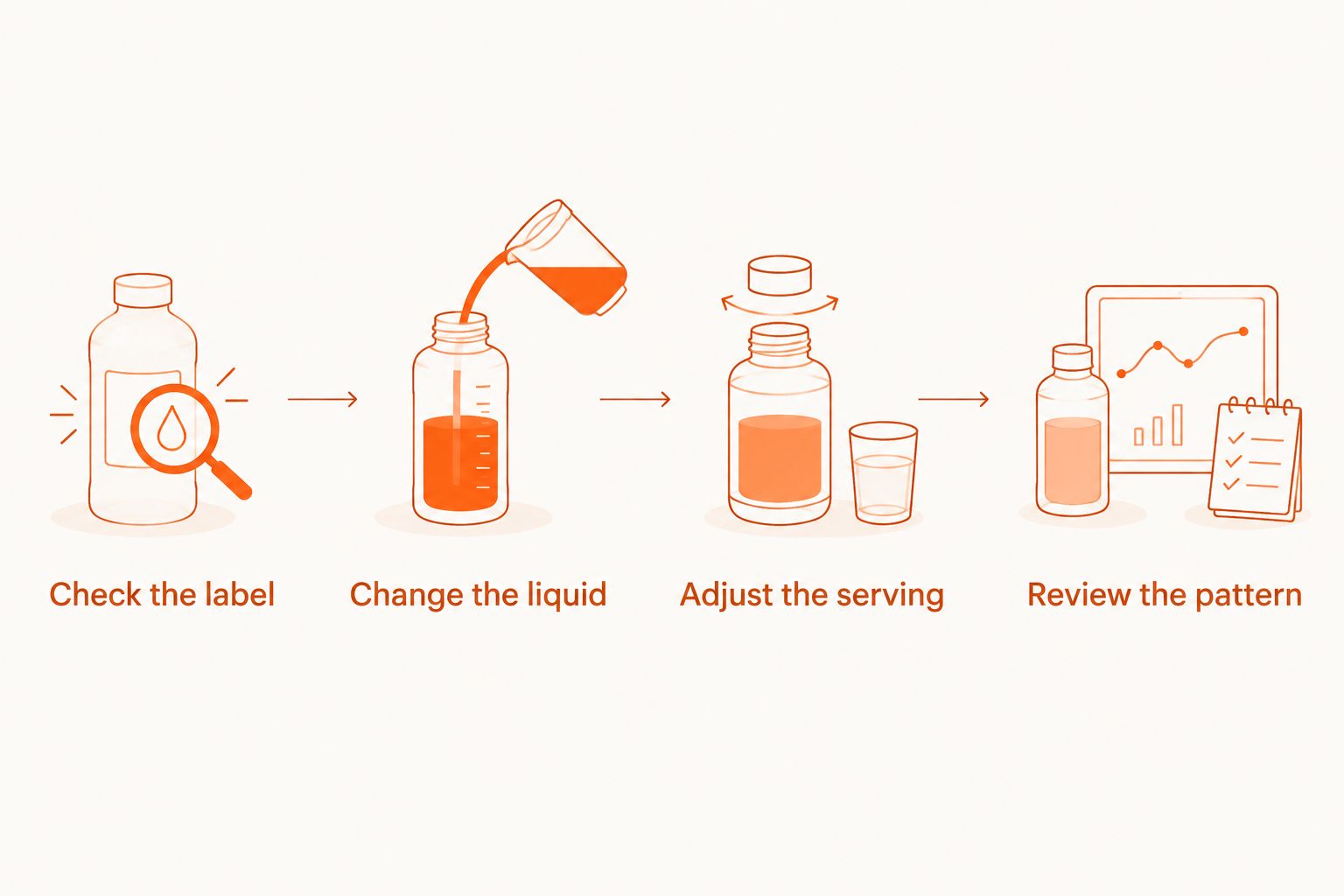
The sequence matters more than the supplement aisle. If changing milk to water resolves a repeated problem, you have a more useful clue than you would get by changing the powder and taking enzymes together. If nothing about the shake explains ongoing discomfort, stop treating the shake as a confirmed cause.
When does an enzyme product make sense?
Consider an enzyme product only after reading its label against the ingredients in your shake. The best match is an enzyme for a suspected ingredient, not the product with the longest ingredient list. A label can tell you what an enzyme product contains; it cannot tell you why you are bloated.
Tiger Fitness carries MTS Nutrition Machine Uptake Probiotic and Digestive Enzyme. Its product name identifies it as a probiotic-and-enzyme option, but the name alone does not establish that it addresses your particular shake. Check the current product label and directions before deciding whether it fits.
Other enzyme products offer different label-listed approaches. Allmax Digestive Enzyme is presented as digestive support, while NOW Foods Super Enzymes is described as a formula for breaking down fats, carbohydrates, and protein from meals. Neither description proves it will stop bloating from your protein shake. Compare the actual ingredient lists and discuss ongoing symptoms with a healthcare professional.
Digestive-enzyme products to compare

A digestive-enzyme formula described for digestive support and nutrient breakdown.

A tablet described for breaking down fats, carbohydrates, and protein from meals.
These are products to compare, not ranked treatments for bloating. In 2026, make the decision from the current label, your shake ingredients, and the pattern you have observed. Avoid stacking multiple new products while you are trying to identify a cause.
Will lactase help if my protein shake contains whey?
Lactase helps break down lactose, so it is relevant only if lactose is part of the problem. A whey-based powder's name is not enough to tell you whether lactase is the right response. Check the specific powder and mixer, and do not use lactase as a response to a suspected milk allergy.
If you already know dairy-containing shakes cause symptoms, compare what happens when you change the dairy component. That is a more focused question than whether you need enzymes for protein in general. If symptoms are severe or persist despite changes, seek medical advice.
Is switching protein powder better than taking an enzyme?
Switching powder is the clearer test when symptoms began with a particular formula. An enzyme is a more targeted option when you have a reason to suspect an ingredient it breaks down. Neither approach guarantees relief, and doing both at once hides which change made a difference.
Keep your nutrition goal separate from the digestion question. You can still look for a protein powder that fits your workouts while checking whether its full ingredient list fits your stomach. Compare labels rather than assuming a different protein source automatically fixes bloating.
When should I stop troubleshooting shakes on my own?
Stop relying on shake changes or supplements if bloating is persistent, severe, or accompanied by other concerning symptoms. A healthcare professional can assess symptoms that an ingredient list cannot explain. Tiger Fitness sells fitness supplements; its products are not intended to diagnose, treat, cure, or prevent disease.
FAQ
Can digestive enzymes help with bloating from protein shakes?
Yes, digestive enzymes can help when they target an ingredient you have trouble digesting. Check the shake ingredients first; an enzyme will not address every cause of bloating.
Should I take lactase with every whey protein shake?
No, lactase is relevant when lactose is the suspected trigger. Check the powder and mixer rather than assuming every whey-based shake has the same ingredient profile.
Could the milk in my shake be causing the bloating?
Yes, milk is one possible contributor to shake-related bloating. Try keeping the powder the same while changing the mixer to see whether your pattern changes.
Do digestive-enzyme blends work better than changing protein powder?
Neither is automatically better. Changing one shake ingredient helps you investigate a trigger; an enzyme blend makes sense only when its listed enzymes fit a plausible ingredient.
Can sweeteners in protein powder cause bloating?
An ingredient in the powder can be relevant to bloating, so compare the full ingredient lists of shakes you tolerate and those you do not. The label alone cannot confirm your cause.
Should I take digestive enzymes if every protein shake bloats me?
Do not assume an enzyme will fix symptoms that occur with every shake. Review the powder, mixer, serving, and symptoms outside shakes, then speak with a healthcare professional if the problem persists.
When should I seek help for bloating after a protein shake?
Seek medical advice for persistent, severe, or otherwise concerning symptoms. A supplement cannot diagnose the reason you feel bloated.
One last thing
The most useful change might be in the shaker, not the supplement cabinet. If your usual shake combines powder and milk, changing both the powder and your digestion routine tells you little. In 2026, keep the powder constant, change the mixer, and watch for a repeatable pattern before deciding an enzyme belongs in your routine.
Related guides
- Whey protein powder for lactose intolerance
- Digestive enzyme supplements compared by enzyme spectrum
- Is whey protein isolate worth choosing over concentrate?
Leave a comment