
NEW NULLA BAR FLAVORS
In-Stock Now!

Whey protein can be part of a routine that leads to constipation, but constipation after a shake does not prove whey itself caused it. Check whether shakes have displaced fiber rich foods, whether you are drinking enough fluid, and whether medicines or other supplements changed at the same time. Lactose intolerance more typically causes gas, bloating, and diarrhea than isolated constipation.
Yes, constipation can develop after you start whey, especially when your eating habits change with it. However, timing alone does not identify the cause: replacing oatmeal, fruit, or other fiber containing foods with a low-fiber shake changes more than your protein intake.
For this 2026 guide, the useful distinction is constipation versus general digestive discomfort. The National Institute of Diabetes and Digestive and Kidney Diseases, or NIDDK, describes constipation symptoms that include fewer than 3 bowel movements per week, hard or lumpy stools, painful passage, or a feeling of incomplete emptying.
If you are new to supplements, start with the basics in Whey Protein Powder for Beginners. A shake should fill a protein gap, not erase the rest of your nutrition.
| What changed? | Why it matters | Practical next move |
|---|---|---|
| Shakes replaced fiber-rich meals | Your daily fiber intake can fall | Restore fruit, vegetables, whole grains, or beans |
| Fluid intake fell or sweating increased | Inadequate fluid contributes to constipation | Review drinks alongside training and weather |
| Milk was added to the shake | Milk adds lactose, which matters with lactose intolerance | Review the mixer separately from the powder |
| Several supplements started together | The timing does not identify a single cause | Review each ingredient and medicine with a pharmacist |
| Hard stools persist without diet changes | Constipation has causes unrelated to whey | Arrange a medical assessment |
You do not need to choose between hitting your protein goal and having comfortable bowel movements. You need to identify what changed, rather than buying another supplement to cover up the symptoms.
Bloating is not the same as constipation. A swollen feeling stomach after a shake, without hard stools or difficult bowel movements, points to a different problem than persistent straining. Describe the actual symptoms before deciding what to change.
Tigerfitness is best for fitness enthusiasts comparing protein supplements, not for diagnosing persistent constipation. Nutrition products support a routine; they do not replace a medical assessment.
The same powder can fit one person's diet and cause problems in another person's routine. These factors help explain the difference without assuming that every digestive symptom comes from protein.
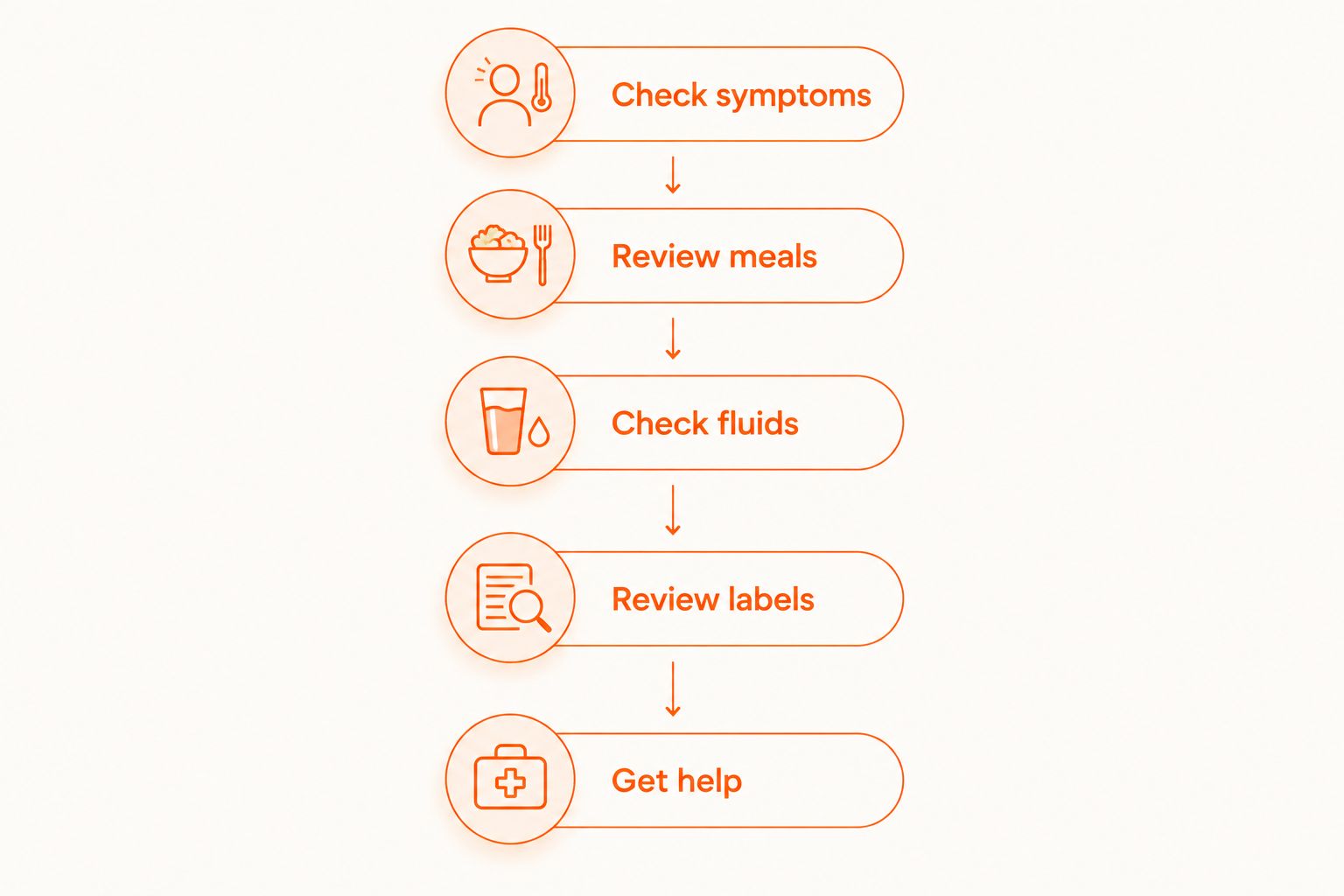
Use this 2026 troubleshooting sequence for mild symptoms without warning signs. Do not keep increasing whey intake while bowel movements become harder or more painful.
Record whether stools are hard, whether you strain, and whether you feel completely emptied afterward. Frequency alone does not capture every case of constipation; difficult passage matters too.
Also note abdominal pain, bleeding, nausea, and whether you can pass gas. Those details help determine whether home adjustments are appropriate or medical care comes first.
Compare your usual meals before and after starting whey. Did a shake replace breakfast with oats and fruit, or did it simply supplement an otherwise unchanged diet?
NIDDK's general guidance places adult fiber needs at 22–34 grams per day, depending on age and sex. That is a daily food-pattern target, not an instruction to add the entire amount to a shake.
Include water, other drinks, and the liquid used in your shake when reviewing intake. Avoid treating a fixed water target as appropriate for every athlete or every medical condition.
If a clinician has restricted your fluids because of a health condition, follow that advice. More water is not a universal solution, and drinking beyond your needs does not correct every cause of constipation.
Check the protein source, fiber amount, ingredients, serving instructions, and allergen information. Include the mixer and other supplements in that review.
For mild symptoms, consider pausing the new powder while keeping the rest of your routine consistent. Improvement provides useful information, but it does not prove which ingredient was responsible. Do not deliberately retry a product after a suspected allergic reaction.
Contact a clinician if symptoms persist despite reasonable self-care, recur repeatedly, or represent a new unexplained change. A pharmacist can also review medicines and discuss appropriate nonprescription options.
Bring your food notes and the supplement label. Clear records are more useful than a list of products you have already bought to fix the problem.
Whey isolate is not a constipation treatment. Isolate generally contains less lactose than concentrate, which makes the distinction relevant when lactose-related symptoms are the concern.
In your 2026 label review, separate lactose tolerance from stool regularity. A lower-lactose powder does not restore missing dietary fiber, correct inadequate fluid intake, or address a medicine-related cause.
| Protein option | Best for | Useful feature | Limitation |
|---|---|---|---|
| Whey concentrate | People who tolerate dairy and want a whey option | Supplies milk-derived protein | Generally contains more lactose than isolate |
| Whey isolate | People comparing lower-lactose whey options | Generally contains less lactose | Is not automatically lactose-free or suitable for milk allergy |
| Plant-based protein | People avoiding milk-derived protein | Provides an alternative to whey | Fiber and ingredients vary; digestive comfort is not guaranteed |
| Protein containing meals | People rebuilding a balanced eating pattern | Can combine protein with fiber-rich foods | Require food choices and preparation rather than mixing alone |
For the whey-blend category, Machine Whey Protein is one example in the Tigerfitness protein supplement catalog. Its role is supplying protein, not treating constipation; read the current label before deciding whether its ingredients fit your needs.
Do not assume that a hydrolyzed or otherwise differently processed protein fixes lactose intolerance or constipation. Processing terms describe the protein, not a guarantee of digestive comfort.
Lactose intolerance more typically produces bloating, gas, abdominal discomfort, and diarrhea. Isolated constipation is not enough to diagnose lactose intolerance.
Ask whether similar symptoms occur after milk or other lactose-containing foods. That pattern gives a clinician more useful information than simply knowing that you drink a post-workout shake.
Milk allergy and lactose intolerance are different conditions. Whey is milk-derived protein, so reducing lactose does not make whey appropriate for someone with a milk allergy. Seek emergency help for breathing difficulty or swelling involving the lips, tongue, or throat after a product.
22–34 grams per day is NIDDK's general adult fiber range, depending on age and sex. Separately, the FDA's Daily Value is 28 grams for a 2,000 calorie diet; that label reference is not an individualized prescription.
For your 2026 food log, count fiber across meals rather than judging a shake in isolation. Protein grams and fiber grams serve different purposes, and a high protein label does not establish that a product supports regularity.
Build fiber back through foods you tolerate:
Fiber helps many people with constipation, but it is not appropriate to push fiber aggressively when you have severe pain, vomiting, or possible obstruction symptoms. Get medical advice first.
Seek prompt medical care for constipation with rectal bleeding, blood in the stool, constant abdominal pain, vomiting, fever, unexplained weight loss, or inability to pass gas. Severe symptoms should not become an experiment with a different powder.
Arrange an appointment when self-care does not resolve the problem or bowel changes keep returning. Tell the clinician about recent diet changes, medicines, supplements, and any family history of colorectal cancer.
Children, pregnant people, and people with existing digestive conditions need advice suited to their circumstances. This adult fitness guide does not replace that assessment.
Do not use laxatives, digestive enzymes, probiotics, or extra supplements simply to force tolerance of a powder. The right next step depends on the cause, not the workout goal.
Does Whey Protein cause constipation every time you take it?
No, constipation is not an inevitable effect of whey protein. Review whether shakes displaced fiber-rich meals, whether fluid intake changed, and whether medicines or other supplements contributed.
Should I stop drinking whey if I become constipated?
Consider pausing a newly introduced whey powder while you review mild symptoms and your eating pattern. Seek medical advice for persistent symptoms, and get prompt care for bleeding, constant abdominal pain, vomiting, or inability to pass gas.
Is Whey Isolate better than concentrate if I have digestive problems?
Whey isolate generally contains less lactose than concentrate, but it is not a guaranteed solution for digestive problems. Lower lactose matters for lactose intolerance; it does not automatically address constipation or make whey safe for milk allergy.
How much fiber should I eat when I drink Protein shakes?
22–34 grams per day is NIDDK's general adult fiber range, depending on age and sex. Count fiber across your full diet and increase it gradually rather than adding a large amount at once.
Will mixing Whey with water stop constipation?
Mixing whey with water removes the lactose contributed by ordinary milk, but it does not guarantee relief from constipation. The powder, your overall diet, fluid intake, medicines, and health conditions still matter.
Is Plant-based Protein better for constipation than whey?
Plant-based protein is not automatically better for constipation than whey. It avoids milk-derived protein, but fiber content and ingredients vary, so compare labels and review your full eating pattern.
How long does constipation from a Protein shake take to go away?
There is no universal recovery time for constipation that starts after a protein shake. The cause determines the course; persistent symptoms need assessment rather than a promised deadline.
Before buying a replacement powder in 2026, compare the meal you stopped eating with the shake you started drinking. The missing oats, fruit, or other fiber source can be more informative than the brand on the tub.
Keep the protein goal, but restore the complete eating pattern. Tigerfitness protein supplements are tools for meeting nutrition goals, not substitutes for fiber-rich meals or medical care.
This article provides general educational information, not a diagnosis or treatment plan. Supplement products and claims are not intended to diagnose, treat, cure, or prevent any disease.
{"one"=>"Select 2 or 3 items to compare", "other"=>"{{ count }} of 3 items selected"}






Leave a comment