







BEST MULTIVITAMIN
How to Choose the Best Multivitamin in 2026
Table of Contents
- Quick Comparison: Top Multivitamins at Tiger Fitness
- How to Choose the Best Multivitamin: Start With Your Blood Work
- Third-Party Supplement Testing: What the Label Won't Tell You
- Reading the Supplement Facts Panel: Daily Value, Bioavailability, and What Matters
- Multivitamin Dosage for Athletes: Why One-a-Day Formulas Fall Short
- Best Time of Day to Take Vitamins (and What to Take Them With)
- Synthetic vs. Whole-Food Vitamins: Does the Source Actually Matter?
- Interactions, Red Flags, and What to Skip
- Frequently Asked Questions
Last Updated: September 19, 2026
Quick Comparison: Top Multivitamins at Tiger Fitness
Most people pick a multivitamin by reading the front of the bottle. The front is marketing; the back is where the truth lives. We've watched lifters waste money on underdosed multis for years. Here's the short version.
| Product | Price | Best For | Standout Detail |
|---|---|---|---|
| HTLT Multivitamin | $29.99 | Athletes wanting adaptogens | Ashwagandha and ginseng included |
| Rule 1 Men's Multi | $19.99 | Budget conscious men | Simple once daily formula |
| Rule 1 Women's Multi | $14.99 | Budget conscious women | Lowest cost daily option |
| NOW Foods ADAM Men's | $17.14 | Men's health support | Saw palmetto and CoQ10 |
| Nutrex Vitadapt Complete | $29.99 | Stress and recovery | Adaptogen driven formula |
| MHP Activite Multi | $29.99 | Absorption focused athletes | Enzyme activated delivery |
| MuscleSport Multi Vita | $31.99 | Whole food support | Fruits, greens, and antioxidants |
| Revive Multivitamin | $44.95 | Clean daily foundation | GMP-certified, non-GMO |
| Myogenix Myovite Packs | $44.99 | Convenience and travel | Pre-portioned daily packs |
| KAGED Multivitamin | $49.99 | Plant-based athletes | Vegan, third-party tested |
How to Choose the Best Multivitamin: Start With Your Blood Work
The best multivitamin fills the gaps your diet actually leaves. You can't know those gaps without data.

Why Blood Tests Beat Guesswork
Harvard Medical School notes that supplement research often starts with observational studies, so individual nutrient needs should be confirmed through blood tests rather than assumed. Translation: get your labs drawn, then buy. A standard panel covers vitamin D, B12, iron, ferritin, and a basic metabolic panel.
Pro Tip Timing matters for accuracy. Biotin, found in many multis including NOW Foods ADAM, can interfere with certain lab results. Tell your doctor you take a biotin-containing multivitamin before any blood draw.
Third-Party Supplement Testing: What the Label Won't Tell You
Third-party supplement testing is independent verification that a product contains what its label claims, performed by a lab with no financial stake. Without it, you're trusting a company's word about its own product.
How to Verify a Brand's Testing Claims
Check for these markers:
- NSF Certified for Sport or Informed Sport logos on the label
- USP Verified seal, which confirms potency and purity
- A certificate of analysis available on request from the manufacturer
- Batch numbers you can trace back to a specific production run
KAGED Multivitamin states it is third-party tested and banned-substance free. NOW Foods ADAM is manufactured under Intertek GMP certification. Those are verifiable claims, not slogans. If a brand can't produce documentation, it's a red flag.
Reading the Supplement Facts Panel: Daily Value, Bioavailability, and What Matters
The Supplement Facts panel is the only regulated part of the label. Learn to read it and you'll never overpay for a pretty bottle again.
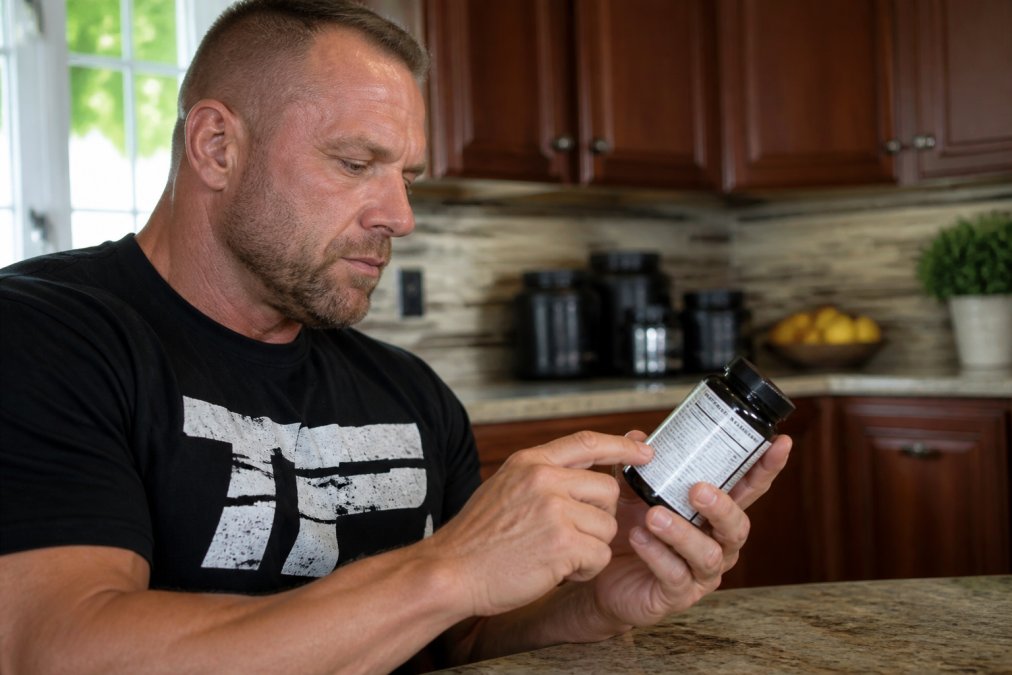
Here's what to scan for:
- Daily Value (DV) percentages. UT Southwestern Medical Center recommends choosing a multivitamin that provides 100% DV for most ingredients. But bulky minerals like calcium can't fit into a single pill at full DV, so you may need a separate calcium source if you're deficient.
- Bioavailability. How much of a nutrient your body actually absorbs and uses. Magnesium oxide is cheap and poorly absorbed; magnesium glycinate costs more and absorbs better.
- Forms of each vitamin. Look for methylated B12, D3 rather than D2, and chelated minerals.
Fat-Soluble vs. Water-Soluble Vitamins
Fat-soluble vitamins (A, D, E, K) are stored in your body and can build up to toxic levels with megadoses. Water-soluble vitamins (C and the B-complex) flush out through urine, so you need consistent daily intake.
Watch Out More is not better with fat-soluble vitamins. Doubling up on vitamin A or D beyond the recommended dose can cause adverse effects over time. Stick to label directions unless a doctor tells you otherwise.
Multivitamin Dosage for Athletes: Why One-a-Day Formulas Fall Short
Hard training burns through micronutrients faster than a desk job does. Sweat losses, increased metabolic demand, and higher turnover mean athletes have different needs.
What Training Actually Depletes
- B-complex vitamins. B1, B2, B3, B6, and B12 are cofactors in energy metabolism. Heavy training increases turnover, and some athletes, especially low-carb or plant-based, run low on B12.
- Magnesium. Sweat losses are real. Magnesium supports muscle contraction, relaxation, and energy production. Most Americans don't hit the recommended intake from food alone, and athletes lose more.
- Zinc. Lost in sweat, and it matters for immune function, testosterone metabolism, and recovery. Vegetarian and vegan athletes absorb less zinc because phytates bind it.
- Iron. Endurance athletes, especially runners, have higher iron needs due to foot-strike hemolysis and sweat loss. Female athletes are at even higher risk. Get ferritin tested first.
- Vitamin D. Indoor training, northern latitudes, and darker skin tones all raise deficiency risk. Vitamin D supports bone health, immune function, and muscle function.
- Antioxidants. Intense training raises oxidative stress. CoQ10, alpha lipoic acid, and grape seed extract help manage it, but mega-dosing antioxidants can blunt training adaptations.
Why One-a-Day Drugstore Multis Disappoint
A single tablet physically can't hold meaningful doses of calcium, magnesium, and potassium alongside everything else. Manufacturers underdose the bulky minerals or split them across multiple pills. That's why serious athlete formulas come in 2-, 3-, or 4-capsule daily servings, it's chemistry, not a scam. If a multi claims 100% DV of magnesium in one small tablet, check the form.
Matching the Formula to the Training Load
- Strength and power athletes: prioritize magnesium, zinc, and B-complex. MHP Activite Multi uses an enzyme-activated delivery system aimed at absorption.
- Endurance athletes: watch iron and B12, and consider a formula with electrolytes if you sweat heavily.
- Plant-based athletes: KAGED Multivitamin builds its formula around organic fruits and vegetables, which helps with B12, iron, and zinc from non-animal sources.
- Stress-heavy training blocks: adaptogen-driven formulas like HTLT Multivitamin (ashwagandha and ginseng) or Nutrex Vitadapt Complete target recovery and stress response alongside micronutrient gaps.
The Dose Ranges That Matter
Exact numbers depend on your labs, diet, and training volume. A common pattern in athlete-focused formulas:

- B-complex: well above the RDA for sedentary adults, because turnover is higher.
- Magnesium: often 200 to 400 mg elemental magnesium per day, split across servings.
- Zinc: typically 15 to 30 mg per day, more isn't better and can interfere with copper absorption.
- Vitamin D: 1,000 to 2,000 IU per day is a common maintenance range, but dose to your blood level.
Key Takeaway Get your blood work done before you buy an athlete multi. The right dose is the dose that fills your specific gap, not the biggest number on the bottle.
Best Time of Day to Take Vitamins (and What to Take Them With)
Take your multivitamin with a meal that contains fat. That's the answer for most people. The best time of day depends on the formula and your stomach:
- Fat-soluble vitamins (A, D, E, K): take with your largest meal for absorption
- B vitamins: morning or midday, since they can interfere with sleep for some people
- Iron: only if blood tests confirm deficiency, and away from coffee and calcium
- Zinc: with food to reduce stomach upset
Key Takeaway Consistency beats timing. A multivitamin taken at the "wrong" time every day outperforms one taken at the perfect time twice a week.
Synthetic vs. Whole Food Vitamins: Does the Source Actually Matter?
For most nutrients, your body uses the synthetic and natural forms identically. Vitamin C is vitamin C, whether it came from an orange or a lab. Where source matters is in the cofactors: whole food and plant-based formulas bring along bioactive compounds and phytonutrients that isolated vitamins don't. KAGED Multivitamin builds its formula around organic fruits and vegetables for exactly that reason.
Interactions, Red Flags, and What to Skip
A multivitamin can work against your prescriptions. That's the part most guides skip, and it can actually hurt you.
Drug-Nutrient Interactions That Matter
- Vitamin K and warfarin. Warfarin blocks vitamin K-dependent clotting factors. Add a multi with vitamin K1 or K2 suddenly and you blunt the drug's effect and your INR drops. The fix isn't to avoid K, keep your K intake consistent and tell your prescriber so they can adjust the dose. Big swings in intake are the danger, not the nutrient itself.
- Calcium, magnesium, iron, and zinc vs. antibiotics. Tetracyclines (doxycycline) and fluoroquinolones (ciprofloxacin, levofloxacin) chelate with divalent minerals. Take them together and you can cut antibiotic absorption substantially. Separate them by at least two hours, four is safer.
- Calcium and thyroid medication. Levothyroxine binds to calcium and iron. Take levothyroxine on an empty stomach, then wait at least four hours before your multi.
- Vitamin K and certain antibiotics. Broad-spectrum antibiotics can wipe out the gut bacteria that produce vitamin K2, which matters if you're already on a blood thinner.
- St. John's Wort and antidepressants. Not a vitamin, but it shows up in "mood support" multis. It induces liver enzymes and can reduce SSRI and oral contraceptive effectiveness.
- Potassium and ACE inhibitors or potassium-sparing diuretics. Potassium is often left out of multis for exactly this reason, stacking it with these drugs can push serum potassium into dangerous territory.
- Vitamin E and antiplatelet or anticoagulant therapy. High-dose vitamin E can add to bleeding risk with aspirin, clopidogrel, or warfarin.
Timing Rules That Actually Work
Most interactions are a timing problem, not a permanent ban. A common pattern practitioners use:
- Levothyroxine: empty stomach, wait 4 hours before minerals.
- Antibiotics: dose the antibiotic, wait 2 to 4 hours, then take the multi.
- Blood thinners: keep vitamin K intake steady day to day rather than avoiding it.
- Iron and coffee, tea, or calcium: separate by at least an hour.
Red Flags on the Label
- Proprietary blends. If the label hides amounts behind a blend name, you can't evaluate the dose or the interaction risk.
- Mega-doses of fat-soluble vitamins. Vitamin A, D, E, and K accumulate. Chronic overages cause real problems.
- Iron without a confirmed deficiency. Routine iron supplementation isn't always necessary and can cause GI distress or worse in people with undiagnosed hemochromatosis.
- No third-party testing. Unverified label claims are a gamble you don't need to take.
- "Detox" or "miracle" language. That's marketing, not nutrition.
Watch Out If you take prescription medication, especially blood thinners, thyroid meds, antibiotics, antidepressants, or blood pressure drugs, talk to your doctor or pharmacist before adding any multivitamin. Bring the actual bottle. Interactions are real, and the fix is usually just timing.
Label transparency is crucial.
Frequently Asked Questions
Are multivitamins regulated by the FDA?
Multivitamins fall under the FDA's dietary supplement regulations, not the same pre-market approval process as prescription drugs. The FDA oversees manufacturing and labeling standards, but it does not verify a product's contents before it hits shelves. That means third-party supplement testing is your best tool for confirming label accuracy. Look for products tested by independent labs and manufactured in GMP-certified facilities.
What ingredients should I look for in a high quality multivitamin?
Look for a formula that provides close to 100% of the Daily Value for most vitamins and minerals, with bioavailable forms like methylated B12 and chelated minerals. UT Southwestern Medical Center notes that bulky minerals like calcium often cannot fit into a single pill at full DV, so separate supplementation may be needed if you have a confirmed deficiency. Avoid megadoses of fat-soluble vitamins unless your doctor recommends them.
Do athletes need different multivitamins than the general population?
Yes. Intense training increases demand for certain micronutrients, particularly B-vitamins, zinc, magnesium, and antioxidants. Multivitamin dosage for athletes often needs to account for higher sweat losses and increased metabolic turnover. The NIH Office of Dietary Supplements reports that 24.0% of adults aged 20-39 and 29.8% of adults aged 40-59 use multivitamin supplements, but athletes may benefit from formulas designed for active lifestyles rather than standard one-a-day products.
What is the difference between synthetic and whole food vitamins?
Synthetic vitamins are made in a lab and isolated as single compounds. Whole-food vitamins come from concentrated food sources and include additional bioactive compounds that may improve absorption. KAGED Multivitamin, for example, uses organic fruits and vegetables alongside key vitamins. Some nutrients, like vitamin C, are chemically identical whether synthetic or natural. The bigger factor is whether the formula uses bioavailable forms and avoids unnecessary fillers.
How can I tell if a supplement brand is third-party tested?
Check the label for certification seals from independent organizations, or visit the brand's website for testing documentation. The New York Times Wirecutter recommends seeking out vitamins that are independently tested to ensure label accuracy. Reputable brands publish certificates of analysis and manufacture in GMP-certified facilities. If a company cannot show you proof of testing, that is a red flag. Tiger Fitness carries brands like KAGED that are third-party tested and banned-substance free.
Leave a comment