
NEW NULLA BAR FLAVORS
In-Stock Now!

Last Updated: October 28, 2026
Quick Summary
To identify an underdosed supplement, check the serving size and servings per container first, then compare the actual amount per serving to the dose used in published research. Watch for proprietary blends that hide individual doses and labels that inflate numbers with two-scoop servings.
Most guys get burned by underdosed supplements because they never learned to read the panel. Here's the truth: learning how to identify underdosed supplement formulas starts with one skill, and it's not glamorous. It's reading the Supplement Facts label like an auditor reads a financial statement. The fix is simple. Slow down, do the math, and stop trusting the marketing.
A Supplement Facts panel is the standardized box that lists serving size, servings per container, and the amount of each active ingredient per serving. It's regulated by the FDA.
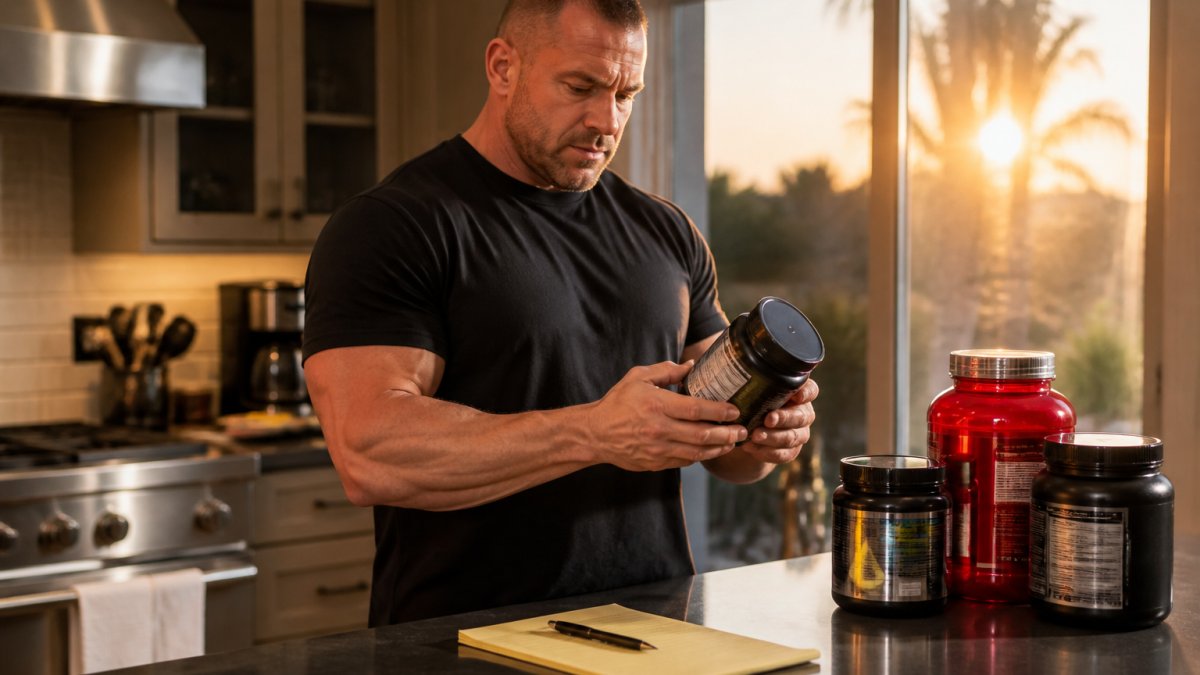
Here's where most people get lazy. They see "5 grams of creatine" and assume that's what they're getting per scoop. Wrong. You have to check the serving size first.
Do this every single time:
That's the whole game. Underdosing hides in serving size games. A label can legally show a big number per serving while the scoop you actually use delivers a fraction of it.
A proprietary blend is a group of ingredients listed together under one total weight, with no individual amounts disclosed. The label tells you the blend weighs a certain amount, but not how much of each ingredient is inside.
Here's what most articles won't tell you: you can still do the math and catch an underdose. You just have to work backward from the total.
Run this three-step audit:
That's the whole game. A blend can list ten ingredients and put the cheapest one in at 90% of the weight. You'd never know from the panel alone, but you can absolutely know when the total weight can't possibly cover the studied doses of everything inside.
If you want a deeper look at how ingredient disclosure works in practice, our breakdown of how supplement ingredients get listed and combined walks through it.
A dose only counts if it matches what the research actually used. This is the core of spotting an underdosed supplement. Pull up the published study, find the effective amount, and compare it to the label. For a real-world example, see how Nutrex Outlift Clinical stacks up as a clinically dosed pre-workout.
The same logic applies across the board:
The NIH Office of Dietary Supplements guidance makes the point clearly: a label comparison alone doesn't prove a supplement works or is safe. Effectiveness, safety, and quality all matter. Dose is one piece of the puzzle, not the whole thing.
"Third-party tested" is one of the most abused phrases in this industry. It means an outside lab checked the product, not the brand's own in-house team. But who did the testing, and what did they test for?
Ask these questions:
Fillers and binders are the inactive stuff in a capsule or tablet: things like magnesium stearate, silicon dioxide, and cellulose. On their own, they're not the enemy. But they can tell you a story.
The supplement industry runs on a regulatory gap, and most guys don't understand how wide it is. In the U.S., supplements are regulated under the Dietary Supplement Health and Education Act of 1994 (DSHEA), which treats them more like food than drugs. That means products hit shelves before the FDA reviews them for safety and effectiveness. The FDA's guidance on dietary supplements lays out the framework, and it's looser than most people assume.
This is the distinction that separates a smart shopper from a marketer's target.
That gap is why marketing gets creative. Here are the red flags we tell every customer to watch:
The Journal of the International Society of Sports Nutrition review documents that adulteration in sport supplements is a real, studied problem. That's not scare tactics. It's the landscape you're shopping in. The brands that respect you will show you the COA, disclose doses, and skip the fairy-dusting. The ones that don't are counting on you not knowing the rules.
Here's your checklist. Run it on every product before you buy. This is how to identify underdosed supplement formulas without guessing.
| Step | What to Check | Red Flag |
|---|---|---|
| 1 | Serving size vs. servings per container | Two-scoop servings that inflate numbers |
| 2 | Active dose per serving | Dose below the studied amount |
| 3 | Proprietary blends | No individual doses listed |
| 4 | COA availability | No potency verification |
| 5 | Filler-to-active ratio | Mostly filler, tiny active dose |
| 6 | Marketing claims | "Clinically proven" with no study |
Print it. Keep it on your phone. Use it in the store.
Our free fitness tools and calculators are available to support your fitness journey. And when you're ready to stock up, our selection and rewards program are built to keep more money in your pocket.
Compare the amount per serving on the Supplement Facts label to the dose used in published research. If the product lists a proprietary blend, individual ingredient amounts are not disclosed. Check serving size and the amounts listed for individual ingredients.
A proprietary blend supplement meaning is simple: it lists a total milligram amount for several ingredients without disclosing how much of each one you get. Without individual amounts, you cannot determine each ingredient's amount from the label.
No. Third-party testing does not by itself establish whether a listed dose matches amounts used in published research. Compare the label with relevant research separately.
The number of ingredients alone does not establish the amount of each ingredient. Check the amounts listed for individual ingredients.
The supplement aisle is full of products that look strong and perform weak. The difference between getting results and wasting money comes down to reading the label like it owes you an explanation. At Tiger Fitness, we stock products we'd take ourselves, back them with fast shipping and real customer service, and give you the tools to check every label before you spend a dime. Get started with Tiger Fitness and stop paying for powder that doesn't deliver.
{"one"=>"Select 2 or 3 items to compare", "other"=>"{{ count }} of 3 items selected"}







Leave a comment