
NEW NULLA BAR FLAVORS
In-Stock Now!

Last Updated: October 27, 2026
Quick Summary
To spot fake supplement ingredients, buy only from verified sellers, inspect the label and packaging, and check the lot number. Then match each label claim to a lot specific certificate of analysis from an independent, accredited lab. In one 2022 case series, 17 of 30 immune-health supplements bought from Amazon did not contain the listed botanical ingredients.
Fake supplements are not a rare edge case. In a 2022 case series, 17 of 30 immune-health supplements bought from Amazon did not contain the botanical ingredients listed on their labels (Analysis of Select Dietary Supplement Products Marketed to Support or Boost the Immune System). Chapman University researchers reported a similar problem, with 60% of their tested products missing the expected ingredient (Chapman University's 2024 supplement testing report). Learning how to spot fake supplement ingredients starts with checking what is actually in the tub before it goes in your body. Our Free Tools & Fitness Calculators can help you work out fitness calculations.
Here is the key point: a missing ingredient does not always mean the product was deliberately faked. Chapman's researchers did not pin their findings on fraud. Still, you cannot trust the label alone. You need to check the seller, the packaging, the label, and the proof behind the claims.
Supplements are not reviewed the way prescription drugs are. That gap is why bad products reach shelves and carts.
When a product claims one thing and contains another, you lose in two ways. You waste money on something that does not work. Worse, you may take an ingredient you did not expect, or miss the one you need.
Knowing the warning signs helps you act before you buy.
Start with where you buy. Most fake or mislabeled products enter through unverified sellers.
Watch out: A deep discount on a product that always sells at full price is the most common lure for counterfeits.
Read the label before you open the bottle. Small errors often reveal a bigger problem.
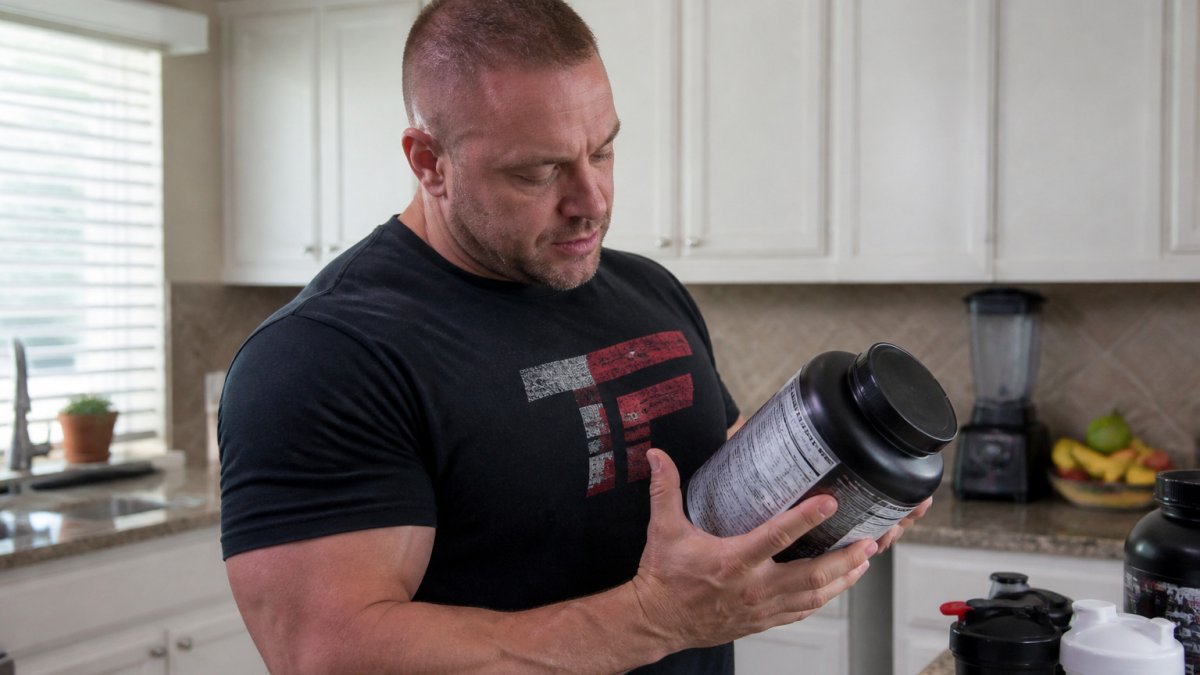
If the label does not match the brand's own website, stop and ask questions before you use it.
Packaging gives you clues about authenticity. Inspect it closely.
Note: A matching package can still hold the wrong contents. Packaging checks catch some fakes, not all of them.
This is where most guides stop too early. They tell you to read the label and move on. That is not verification, that is reading marketing copy. Real verification means matching what the label claims to batch-specific evidence. Here is the workflow I use.
1. Build the claim list. Write down every active ingredient, the stated amount, and the form (for example, magnesium oxide versus magnesium glycinate, same mineral, very different absorption). If the label says "proprietary blend," write down the total blend weight and flag it. A blend that hides individual doses cannot be verified ingredient by ingredient, period.
2. Request the certificate of analysis (COA) for your lot. A COA is the lab report for a specific batch. Ask the brand or seller for the COA that matches the lot number printed on your bottle, not a generic "our products are tested" page. If they cannot produce a lot-specific COA, that is your answer.
3. Read the COA like an editor, not a fan. Check these fields:
4. Cross-check the form and dose against the brand's own site. If the label says 300 mg and the brand's site says 500 mg, you have a mismatch. Counterfeits often copy the front of the label and get the supplement facts panel wrong.
5. Flag what you cannot verify. Any ingredient with no COA line, any proprietary blend, any "fairy dust" dose (an ingredient listed at 10 mg when studies use 500 mg), write it down and ask the brand directly. If the answer is vague, walk away.
Ingredient-specific red flags that label review alone cannot catch:
If you cannot match a label claim to a lot-specific lab result, that claim is unproven. Treat it that way.
Third-party seals help, but they are not a guarantee. Memorial Sloan Kettering Cancer Center explains that USP verification indicates listed ingredients are present at the indicated strength and that the product is not contaminated with other substances (Memorial Sloan Kettering's guide to dietary supplements). That is a real standard, but you need to know what each seal actually covers.
The main certification programs you will see:
What a seal tells you:
What a seal does not tell you:
How to verify a seal is legitimate:
Always check that the seal matches the exact product, lot, and brand. If it does not, treat the product as unverified no matter how good the packaging looks.
Suspect a fake when several warning signs stack up: a low price, a poor label, a broken seal, and no lot number. One clue alone may mean nothing. Several together mean you should stop.
If you think a product is counterfeit or mislabeled:
Spotting fake supplement ingredients takes a little time, but it is far cheaper than guessing. Check the label every time, and let the evidence decide.
Start with the label and the seller. Check for spelling errors, missing lot numbers, a manufacturer address you cannot confirm, and claims that sound too strong to be true. Then check whether the product came from an authorized retailer or an unknown third-party seller. Packaging inspection and seal checks help, but they cannot confirm what is inside the container. For that, you need independent testing evidence, such as a certificate of analysis or a verified third-party testing seal tied to the specific product and lot.
Third-party testing gives you evidence that a product was checked by an outside lab for listed ingredients, strength, and contaminants. It is a meaningful signal, but it is not a guarantee. Check which program issued the seal, whether it covers your exact product, and whether the lot you hold matches the tested lot. A seal printed on a label with no traceable testing record should not be taken at face value.
Stop taking it. Keep the packaging, receipt, and lot number, and document the label and seller details. Contact the manufacturer to ask for verification of the lot. If you have an adverse reaction, seek medical care right away. You can also report suspected health fraud or unapproved products to the FDA through its MedWatch program, which accepts reports from consumers.
Yes. Published testing has found products that did not contain the botanical ingredients listed on their labels, and some products contained ingredients that were not declared at all. In one 2022 case series of 30 immune-health supplements bought from Amazon, 17 did not contain the listed botanicals. A missing expected ingredient does not by itself prove deliberate fraud, but it is a clear reason to avoid the product and buy from a source you can verify.
{"one"=>"Select 2 or 3 items to compare", "other"=>"{{ count }} of 3 items selected"}







Leave a comment