







BEST SUPPLEMENTS FOR BODY RECOMPOSITION
How to Start Body Recomposition for Beginners in 2026
Table of Contents
- What Body Recomposition Actually Means for Beginners
- Protein Intake for Muscle Gain and Fat Loss
- Your Beginner Body Recomposition Workout Routine
- How to Track Body Recomposition Progress Without the Scale
- Best Supplements for Body Recomposition
- The Mental Game: Habits That Keep Beginners Consistent
- Conclusion: Start Today, Not Monday
- Frequently Asked Questions
Last Updated: September 16, 2026
What Body Recomposition Actually Means for Beginners
Body recomposition is the simultaneous process of reducing body fat while maintaining or increasing lean mass, according to the National Center for Biotechnology Information editorial on body recomposition advances. That definition matters because it separates real recomposition from the bulk-and-cut merry-go-round most beginners get trapped in. This guide from Tiger Fitness breaks down exactly how to start body recomposition for beginners in 2026, using protocols backed by research, not forum bro-science.
Here's the honest part: recomposition is achievable, but it demands three things working together. Strength training, cardio, and mobility work form the base, per the Cleveland Clinic overview of body recomposition strategies. Skip any one of them and progress stalls.
A ResearchGate literature review on body recomposition in trained populations confirms recomposition is achievable across various training backgrounds through specific training and nutrition protocols. Beginners have the biggest advantage here.
Why the Scale Lies to You
The scale is a useless metric for recomposition. Muscle is dense; fat is bulky. Lose five pounds of fat while gaining five pounds of muscle and the scale shows zero change, even though your physique transformed. Track strength PRs, measurements, and body composition data instead. If you want to quit because the number won't budge, you're reading the wrong instrument.
Protein Intake for Muscle Gain and Fat Loss
Protein is the single most important macronutrient for body recomposition. It drives muscle protein synthesis, preserves lean tissue during a caloric deficit, and keeps you full so you don't overeat. For beginners, a practical target is 0.7 to 1 gram of protein per pound of body weight daily, spread across three to five meals. Whole food sources come first: eggs, chicken, beef, fish, dairy, and legumes.
Pro Tip If hitting your protein target feels impossible, a whey or casein shake covers 25 to 30 grams in under a minute. It's a tool, not a crutch. Use it to close the gap, not replace real meals.
Your Beginner Body Recomposition Workout Routine
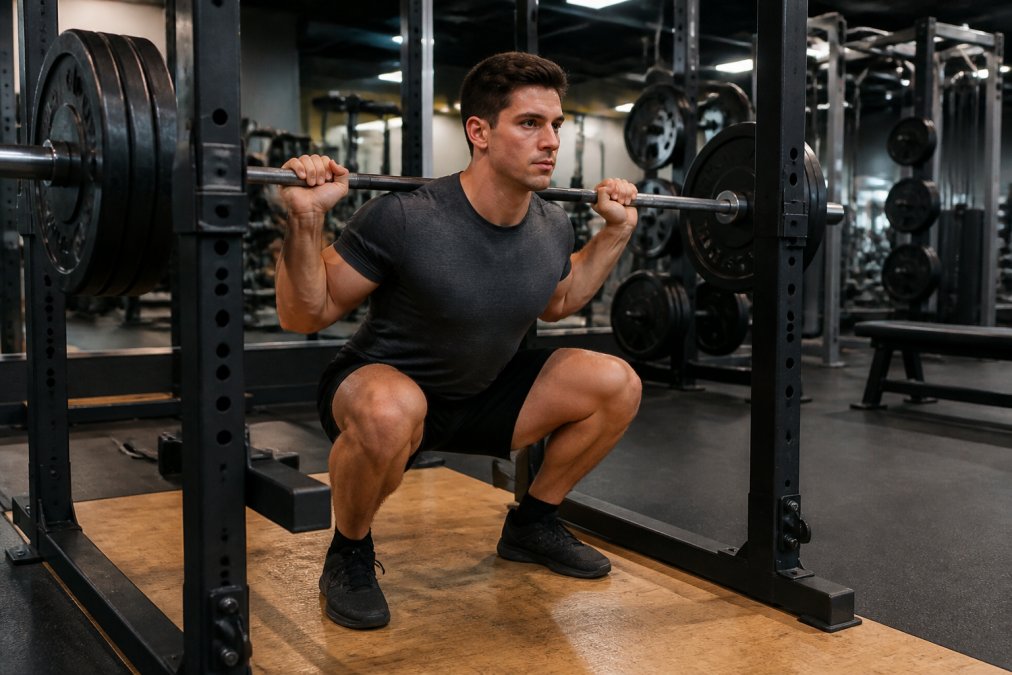
A beginner body recomposition workout routine should center on progressive strength training three days per week minimum, per For Hers guide on losing fat and gaining muscle. Build each session around compound movements: squats, deadlifts, bench press, rows, and overhead presses. These recruit the most muscle tissue and drive the biggest hormonal response.
The Three-Day Minimum That Works
Train Monday, Wednesday, Friday. Full body each session. Three to four sets of six to ten reps per exercise. Add weight or reps weekly, that's progressive overload. Cardio fills the gaps: two or three 20 to 30 minute sessions of brisk walking or cycling. Active recovery and rest days matter too. Muscle grows when you recover, not when you grind yourself into the ground.
The Actual Beginner Template
Stop guessing. Here is the exact structure I would hand a brand-new lifter.
Day A (Monday)
- Barbell back squat, 3 sets x 6-8 reps
- Flat barbell bench press, 3 sets x 6-8 reps
- Bent-over barbell row, 3 sets x 8-10 reps
- Standing overhead press, 2 sets x 8-10 reps
- Plank, 3 sets x 30-45 seconds
Day B (Wednesday)
- Conventional deadlift, 3 sets x 5 reps
- Incline dumbbell press, 3 sets x 8-10 reps
- Lat pulldown or pull-up, 3 sets x 8-10 reps
- Walking lunge, 2 sets x 10 reps per leg
- Hanging knee raise, 3 sets x 10 reps
Day C (Friday)
- Front squat or leg press, 3 sets x 8-10 reps
- Seated dumbbell shoulder press, 3 sets x 8-10 reps
- Seated cable row, 3 sets x 10-12 reps
- Romanian deadlift, 3 sets x 8-10 reps
- Farmer's carry, 3 sets x 40 yards
How to Progress Without Wrecking Yourself
Progressive overload is the whole game. Here is the rule: if you hit the top of the rep range on all working sets with clean form, add 5 pounds to the bar next session for upper body lifts and 10 pounds for lower body lifts. If you miss reps, keep the weight and try again next week. Do not add weight just to add weight, sloppy reps build nothing but chiropractor bills.
Cardio That Doesn't Kill Your Gains
Two or three 20 to 30 minute sessions of brisk walking, cycling, or incline treadmill work on off days. Keep it low-intensity and steady-state. Save the high-intensity intervals for later in your recomp once your recovery is dialed in. Too much hard cardio on top of three lifting days will eat into your recovery and stall your progress.
Key Takeaway Three full-body lifting days, one clear progression rule, and low-intensity cardio on off days. That is the entire beginner recomp training formula. Run it for eight weeks before you get fancy.
How to Track Body Recomposition Progress Without the Scale
Tracking progress without the scale means measuring what actually changes. Use body measurements, body fat calipers, or a bioelectrical impedance scan every four to six weeks. Log your strength gains, because added weight on the bar with the same form means muscle. Take progress photos in consistent lighting. Body weight fluctuations from sodium, water, and glycogen will fool you daily. Zoom out.
| What to Track | How Often | Why It Matters |
|---|---|---|
| Strength PRs | Every session | Direct proof of muscle gain |
| Body measurements | Every 4 weeks | Shows fat loss the scale hides |
| Progress photos | Every 4 weeks | Visual proof of body composition change |
| Body fat percentage | Every 6-8 weeks | Confirms lean mass vs. fat shifts |
Best Supplements for Body Recomposition
Supplements support the work you're already doing. They do not replace training, protein, or sleep. If you are not hitting your protein target and your three lifting days, no pill on earth will fix that. Once those are locked in, these are the categories worth your money.
Protein Powder
The most useful supplement for recomp, period. Whey and casein are complete proteins with all essential amino acids and a high leucine content, which is the amino acid that triggers muscle protein synthesis. A scoop covers 25 to 30 grams in under a minute. Use it to close the gap between what you eat and what you need, not as a replacement for real meals.
Creatine Monohydrate
The most researched sports supplement on the market. It increases phosphocreatine stores in muscle, which supports short-burst strength and power output. More strength on the bar means more muscle stimulus, which means better recomp. The standard protocol is 3 to 5 grams daily, every day, training or not. No loading phase required. Buy plain monohydrate, the fancy versions are marketing.
Caffeine
A pre-workout dose of 150 to 200 milligrams improves focus, perceived energy, and training output. That translates to better sessions, which translates to better results. Cycle it, use it on training days only, or take a week off every couple of months so you don't build a tolerance that makes it useless.
Vitamin D and Omega-3s
Most people are low on vitamin D, and it plays a role in testosterone production and bone health. Omega-3s support joint health and recovery. Neither will transform your physique, but both fill gaps that most diets leave open.
Watch Out Don't stack multiple stimulant-based fat burners at once. The jitters, elevated heart rate, and wrecked sleep will sabotage your recovery faster than any supplement helps it.
What to Skip
Fat burners that promise rapid results without diet and training changes. Proprietary blends that hide dosages. Anything sold on the promise of "spot reduction." None of it works. Save your money and buy more protein.
Protein powder, creatine monohydrate, caffeine, and a basic vitamin D and omega-3 stack. That is the entire recomp supplement list for a beginner. Everything else is optional at best and a waste of money at worst.
The Mental Game: Habits That Keep Beginners Consistent
Consistency beats intensity every time. Most beginners quit in weeks three to five, right when early water-weight changes stall and real progress gets slow. The fix is habit formation, not motivation. Set a fixed training time. Prep protein in advance. Track one metric you can control, like sessions completed per week. Psychological barriers, not physiology, kill most recomposition attempts. Build the habit first, chase the physique second.
Conclusion: Start Today, Not Monday
The hardest part of body recomposition is starting before you feel ready. You don't need perfect macros or a flawless plan, you need three lifting days, adequate protein, and the patience to track real progress. Tiger Fitness gives you free workout plans, diet guides, fitness calculators, and a training app to build the structure. Grab your supplements at the lowest prices with fast shipping, and get started with Tiger Fitness today.

Frequently Asked Questions
How long does it take for body recomposition to start?
Most beginners see early strength gains within 3-4 weeks, but visible body recomposition typically takes 8-12 weeks of consistent training and nutrition. Research confirms body recomposition is a scientifically recognized phenomenon where muscle gain and fat loss happen simultaneously, but it requires patience. Track strength PRs and take progress photos every 2 weeks rather than relying on the scale, which often stays flat during recomposition because muscle is denser than fat.
Can you build muscle and lose fat at the same time?
Yes. A 2024 editorial from the National Center for Biotechnology Information confirms body recomposition is real, and a 2020 literature review in ResearchGate shows it is achievable in trained populations through specific training and nutritional protocols. Beginners have the biggest advantage because their bodies respond quickly to new training stimulus. The keys are eating enough protein, training with progressive overload, and staying in a slight caloric deficit or at maintenance.
How much protein do I need for body recomposition?
Aim for 0.7-1 gram of protein per pound of body weight daily when doing body recomposition. Protein supports muscle protein synthesis, preserves lean muscle mass during a caloric deficit, and keeps you full. Spread intake across 3-5 meals with 25-40 grams per sitting. Whole food sources work best, but a quality whey or plant protein powder can fill gaps if you struggle to hit your target through food alone.
What is the best workout split for a beginner body recomposition program?
Three full-body strength sessions per week is the minimum research supports for effective body recomposition. Focus on compound movements like squats, deadlifts, bench press, rows, and overhead presses. Add two short cardio sessions and daily mobility work. Progressive overload is non-negotiable: add weight or reps every week. An 8-week structured plan gives beginners a clear framework for simultaneous fat loss and muscle gain.
Leave a comment