







Is Mass Gainer Bad Long Term? 2026 Verdict
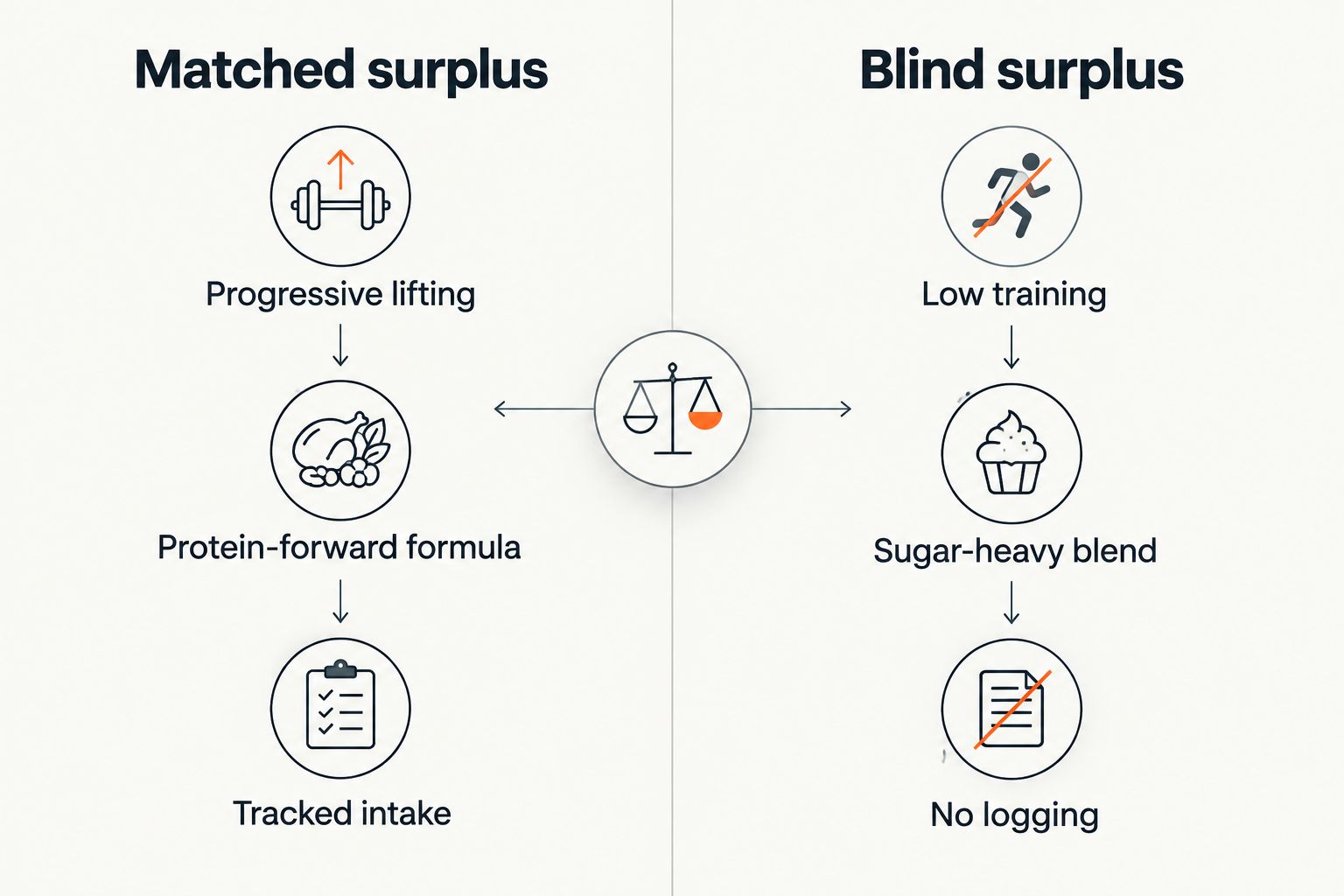
Mass gainer is not bad for your health if used long term when you match the calories to real training demand, prioritize protein forward formulas, and keep whole food meals as the base of your diet. The powder itself is a dense calorie tool the problems start when you drink surplus after surplus with no progressive lifting, lean on sugar heavy blends, or treat a shake as a full meal while sitting all day. In 2026, hardgainers who track intake and train hard still use mass gainer as a practical way to hit surplus without force feeding six plates at every meal.
TL;DR
- Mass gainer is safe long term when calories match training and protein leads the formula.
- Risk comes from sugar heavy blends, sedentary surplus, and ignoring whole food intake.
- Best for hardgainers who cannot eat enough real food to grow in 2026.
- Cycle use to bulking blocks; drop volume once you hit target body weight.
Why This Matters
Hardgainers hear two loud stories. One side says mass gainer packs on dirty weight and wrecks bloodwork. The other side treats every scoop as free muscle. Neither story helps you decide. You need a clear line: when long-term use stays productive, and when it turns into extra fat, gut stress, or wasted money.
If you train with progressive overload and still sit under maintenance no matter how many meals you force down, a gainer fills a real gap. If you already eat enough and barely train, adding 800–1,200 liquid calories a day is just surplus fat. That distinction drives every recommendation below. For a full protocol on timing and serving size, see how to use a mass gainer to bulk up.
Is Mass Gainer bad for your health if used long term?
No, Mass gainer is not inherently bad for long-term health when used as a calorie tool beside resistance training and a balanced diet. The product category is fortified food powder: protein, carbs, fats, and often added vitamins. Health outcomes track how you use it, not the fact that you own a tub.
What long-term use looks like in practice in 2026:
| Use pattern | Training status | Likely outcome | Verdict |
|---|---|---|---|
| 1 shake/day on training days only | Progressive lifting 3–5x/week | Muscle and strength gain, controlled fat | Buy and keep |
| 2+ shakes/day, every day | Little or no lifting | Fat gain, possible blood-sugar load | Skip |
| Sugar heavy blend as meal replacement | Desk job, low NEAT | Empty calories, poor satiety | Hold / switch formula |
| Protein forward blend inside a tracked surplus | Hardgainer with high TDEE | Sustainable bulk | Buy |
The hidden cost the label never shows is compliance drift. After three or four months, many lifters stop weighing food, stop logging, and keep the same shake habit while training volume drops. Calories stay high. Body fat climbs. That pattern not the powder is what people blame on "long-term mass gainer use."
What long-term use actually means
"Long term" in this category usually means three months to a full off-season often 12–16 weeks of surplus, then a maintenance or cut block. Competitive powerlifters and hardgainers sometimes run a gainer across an entire 2026 off-season. That is fine when:
- Weekly body weight gain stays near 0.25–0.5% of body weight
- Protein stays at roughly 0.7–1.0 g per pound of body weight from all sources
- Bloodwork (if you run it) stays in range for lipids and fasting glucose
- Digestion stays comfortable no chronic bloating or bathroom issues
Cross those lines and you are no longer "using a mass gainer long term." You are overeating without a plan.
Why Mass Gainer outcomes vary
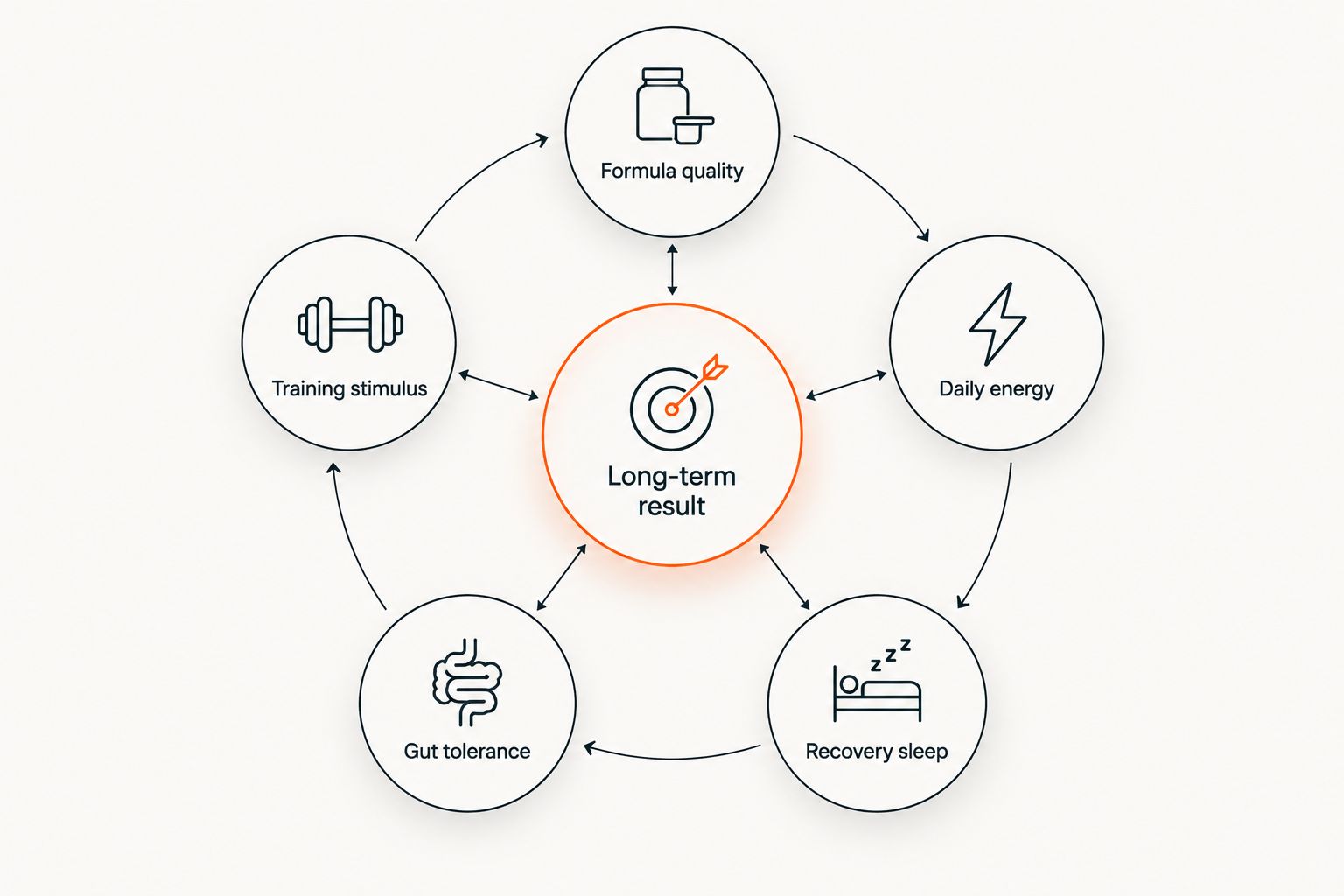
Four to six levers decide whether months of use help or hurt:
- Formula quality. Protein to carb ratio and sugar content matter more than brand hype. A blend that delivers 40–50 g protein with controlled simple sugars behaves differently from a 1,250-calorie shake that is mostly maltodextrin and sugar.
- Training stimulus. No progressive overload means the surplus has nowhere productive to go. Muscle protein synthesis needs mechanical tension. Without it, extra calories store as fat.
- Total daily energy. One shake on top of an already high food intake stacks surplus on surplus. One shake that replaces a missed meal for a hardgainer fills a hole.
- Gut tolerance. High lactose, cheap thickeners, or very large single servings cause bloating. That is a product match issue, not proof the category is unsafe.
- Duration without deload. Running a large surplus for 9–12 months straight with no maintenance phase lets fat gain compound. Most lifters do better with planned bulk blocks in 2026.
- Sleep and stress. Recovery debt raises cortisol and blunts nutrient partitioning. The shake did not "fail" the recovery system did.
Who should use Mass Gainer long term and who should not
Best for: Hardgainers, ectomorphs, and high TDEE athletes who consistently under-eat relative to training. Teen athletes in growth phases under coach supervision. Off-season powerlifters who need dense calories between heavy sessions. Anyone who has tried whole-food surplus for 8+ weeks and still cannot gain.
Not ideal for: Lifters already at or above body-fat goals who want a recomp. People with diagnosed metabolic conditions who need medical nutrition guidance (work with your clinician this page is not medical advice). Anyone using a gainer as a substitute for learning to cook and meal-prep. Sedentary users chasing scale weight with no resistance plan.
Tiger Fitness stocks protein forward and high calorie options so you can match the tool to the goal instead of defaulting to the sweetest tub on the shelf. Pair a gainer phase with a solid whey baseline when you want flexibility on lower calorie days MTS Nutrition Machine Whey covers the lean protein side while a dedicated gainer covers the surplus days.
How to keep long-term Mass Gainer use productive
- Pick protein density first. Scan the label for grams of protein per serving before total calories. A 1,000-calorie shake with 25 g protein is a different tool than one with 50 g protein.
- Cap simple sugars when you can. Some formulas lean hard on sugar for taste and mixability. If you train once a day and sit at a desk, a lower sugar option reduces empty load. See best mass gainer without added sugar for that filter.
- Time the shake around training. Post-workout or as a between meal bridge beats late night mindless scoops.
- Log for the first 4 weeks. Confirm the shake is creating the surplus you want not 1,500 extra calories you did not plan.
- Reassess every 8–12 weeks. If waist measurement climbs faster than strength, cut the serving size or switch to Whey only on rest days.
- Support digestion if needed. Large Carb + Protein loads sit better with adequate fluids and, for some lifters, a digestive enzyme with heavy meals.
Mass gainers worth a look

Quality focused Mass gainer built for mostly muscle weight gain, not empty bulk.
$23.07

High calorie weight gainer for hardgainers who need dense fuel and recovery support.
$44.99

High calorie Mass Gainer engineered for athletes chasing next level size and strength.
$63.99

Beef Protein Mass Gainer for size, strength, and recovery without a dairy-heavy base.
$56.99
Does long term Mass Gainer use hurt your kidneys or liver?
For healthy lifters, there is no strong evidence that standard mass gainer use damages kidneys or liver. High protein intake in trained people with normal kidney function is well studied and generally well tolerated. If you already have diagnosed kidney disease, that is a clinical nutrition decision not a forum debate. Separate protein concerns from gainer concerns: many of the same questions appear around whey alone; read is whey protein bad for your kidneys for that specific angle.
Liver load from a gainer is mostly about total energy and alcohol or drug context, not the powder category. Stay hydrated, keep alcohol moderate, and do not stack every stimulant in the catalog on top of a 1,200-calorie shake.
Can you drink Mass Gainer everyday for months?
Yes, if training, sleep, and total macros stay aligned. Daily use across a 12–16 week bulk in 2026 is common for hardgainers. Daily use for a full calendar year without a maintenance phase is where fat gain and formula fatigue show up. Rotate flavors, drop to a half serving on full-rest days, and keep at least two whole food meals that are not blended. Your gut and your grocery skills both need work if every calorie comes from a shaker.
Will Mass Gainer make you fat long term?
It will make you gain fat if surplus exceeds what training can use. It will not magically deposit fat while you train hard and keep weekly gain in a controlled band. Scale weight will rise. That is the point. Track waist, photos, and strength not scale alone every two weeks. If the belt notches out faster than the bar moves, cut the scoop size. That is programming, not proof the category is "dirty."
For hardgainer specific picks and ratios, the best Mass Gainer for hardgainers guide breaks down who needs max calories versus who needs a leaner profile.
FAQ
Is Mass Gainer bad for you long term?
No. Mass gainer is not bad for you long term when calories match training, protein leads the formula, and whole food stays the base of your diet. Problems come from blind surplus and sugar-heavy blends, not from owning a tub.
Can I take Mass Gainer for 6 months straight?
Yes, if you reassess body composition every 8–12 weeks and keep progressive lifting in the plan. Most lifters do better with planned bulk blocks than an endless surplus with no maintenance phase.
Does Mass Gainer damage your kidneys?
In healthy lifters with normal kidney function, standard mass gainer use is not shown to damage kidneys. Anyone with diagnosed kidney disease needs clinician guided nutrition, not a generic scoop protocol.
Is Mass Gainer worse than whole food for bulking?
Whole food should lead. Mass gainer fills gaps when appetite or schedule blocks enough solid calories. It is a tool for surplus compliance, not a replacement for learning to eat.
How many calories from Mass Gainer is safe per day?
Match the shake to the surplus you need often one serving of 500–1,250 calories for hardgainers on training days. Two full servings daily without logging is where uncontrolled fat gain starts.
Should beginners use Mass Gainer long term?
Beginners who truly cannot eat enough can use a gainer inside a short bulk. First priority is still learning meal structure and progressive overload before living on shakes.
What is better long term Mass Gainer or Whey Protein?
Whey suits maintenance and lean gains. Mass gainer suits hardgainers who need dense calories. Many lifters keep both: gainer on heavy days, whey on lighter or rest days.
Do I need to cycle off Mass Gainer?
You do not need a detox cycle. You do need planned phases: bulk, then maintain or cut. Drop or reduce the gainer when the surplus phase ends in 2026.
One Last Thing
The lifters who "get wrecked" by long-term Mass gainer use almost always share one habit: they never weighed the rest of the day. The shake was logged in their head as "the bulk," while takeout, drinks, and weekend meals stacked on top with zero adjustment. Fix the log and the same product that looked dangerous becomes the easiest compliance tool in your 2026 off-season. Tiger Fitness is built for that kind of practical bulk fuel the work, track the result, adjust the scoop.
Leave a comment