
NEW NULLA BAR FLAVORS
In-Stock Now!

Last Updated: August 28, 2026
Let me be direct: most people are getting their protein dosage wrong. Not because they're lazy, but because the guidance is fragmented and often based on outdated science.
Your protein dosage depends on three things: body weight, training goal, and age. According to Fortune Business Insights 2026 protein market analysis, the U.S. protein supplements market reached $10.88 billion in 2025, with most consumers still guessing at their actual needs rather than calculating them.
The recommended dietary allowance (RDA) for sedentary adults is 0.8 grams per kilogram of body weight, according to Mayo Clinic Health System nutrition guidance.
At Tiger Fitness, we've helped thousands of athletes dial in their protein intake using a simple calculation-based approach. No guessing. No social media nonsense. Just the numbers that work.
Multiply your body weight in pounds by a target ratio. That ratio changes based on your goal.
For muscle building, aim for 0.7 to 1 gram of protein per pound of body weight. For strength athletes, 0.7 to 0.9 grams per pound works. For endurance athletes, 0.5 to 0.7 grams per pound. These numbers come from the latest research on amino acid requirements and muscle protein synthesis.
A 200-pound male focused on muscle building would target 140 to 200 grams of protein daily. A 150-pound female with the same goal would target 105 to 150 grams daily.
One critical point: if you're in a caloric deficit for fat loss, push toward the higher end of your range. Research from the Longland et al. study showed that individuals consuming 2.4 grams of protein per kilogram of body weight during a 40% energy deficit preserved more lean body mass and lost more fat mass than those consuming 1.2 grams per kilogram.
In January 2026, the U.S. Department of Agriculture released the 2025-2030 Dietary Guidelines for Americans. The new guidelines recommend 1.2 to 1.6 grams of protein per kilogram of body weight for adults, a significant jump from the old 0.8 grams per kilogram baseline.
This reflects decades of research showing that higher protein intake supports muscle maintenance, metabolic health, and longevity. For a 150-pound person, this translates to roughly 82 to 109 grams daily. For a 200-pound person, 109 to 145 grams daily.
If you've been following old RDA guidelines, you're undershooting. The science has moved forward.
Body Weight (lbs) × 0.7 to 1.0 = Daily Protein Target (grams)
For muscle building: use 0.7 to 1.0 For strength training: use 0.7 to 0.9 For endurance: use 0.5 to 0.7 For general health and maintenance: use 0.5 to 0.7
If you're in a caloric deficit, move to the higher end of your range. The difference in muscle preservation is measurable.
The amount of protein per meal for muscle growth sits in a specific window: 30 to 40 grams per sitting for most people. The sweet spot for maximizing muscle protein synthesis is closer to 35 grams.
Your body has a limit to how much protein it can use in a single meal for building muscle. Eat 150 grams in one sitting, and you're getting closer to 40 grams of muscle-building benefit. The rest becomes excess calories.
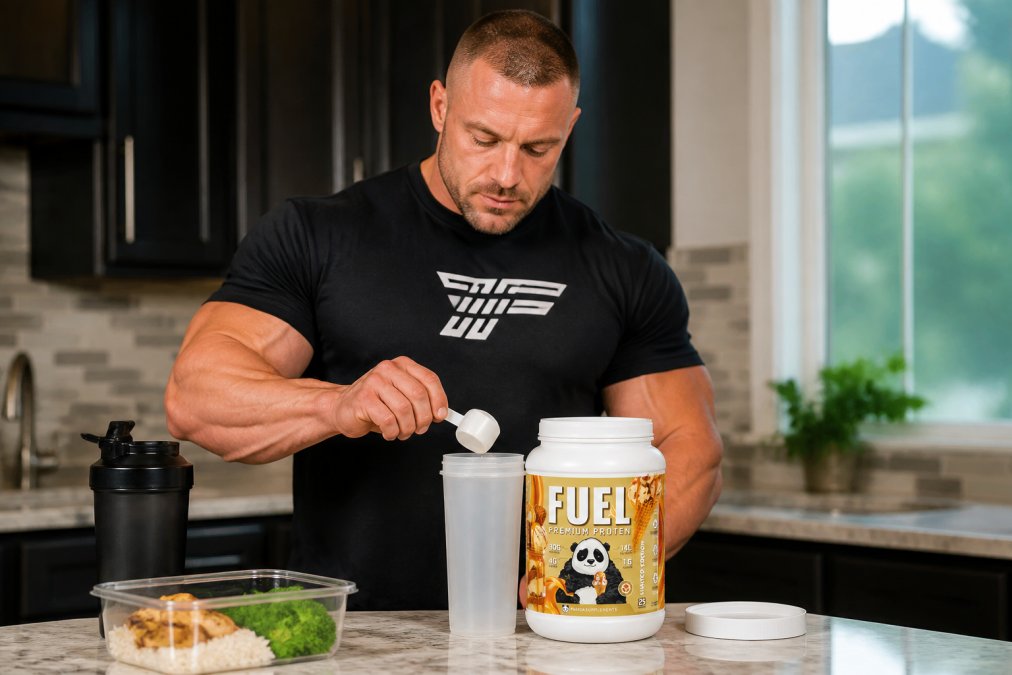
A study from Waseda University found that consuming protein at breakfast increased muscle size and function in both mice and humans. The ratio of muscle hypertrophy was 17% higher in mice fed 8.5% protein at breakfast compared to those fed 11.5% protein at dinner, despite consuming less protein overall. Timing and distribution matter as much as total amount.
Your body cannot use unlimited amounts of protein for muscle building in a single sitting. The ceiling sits around 40 grams per meal for most people. Larger athletes, those over 200 pounds, might push that to 45 to 50 grams, but the benefit plateaus quickly. Research from multiple meta-analyses indicates that the muscle-building benefit plateaus at approximately 1.6 grams per kilogram of body weight per day.
Protein above the ceiling gets metabolized for energy or broken down. It's not wasted, but it's not optimized for muscle growth. Hitting 40 grams per meal across 4 meals is far more effective than hitting 80 grams in one meal and 20 in another.
If you're 50 or older, your body has developed "anabolic resistance." Your muscles are less responsive to protein stimulation than they were at 25. The fix is straightforward: increase your per-meal protein intake.
For adults aged 50 and older, aim for closer to 30 to 40 grams of protein per meal to trigger the same muscle protein synthesis response that 25 grams triggers in younger adults. A 2026 randomized trial found that increasing protein intake to approximately 1.5 grams per kilogram of body weight without structured exercise did not improve muscle power or mass in healthy older adults over 24 weeks. This tells us something important: protein quantity alone is not a complete strategy. You need the training stimulus.
Calculating your protein dosage by hand works, but tracking it daily is where most people fall off. Tiger Fitness offers FREE TOOLS & FITNESS CALCULATORS that do this work for you. Input your body weight, your goal, and your age, and the tool spits out your daily target and per-meal breakdown.
Consistency reveals what's actually working. Use a spreadsheet, notes app, or nutrition app, the tool doesn't matter. What matters is that you know your target and you're checking it.
Your protein dosage is not universal. A powerlifter needs different protein targets than a marathon runner.
| Goal | Protein Per Pound | Daily Target (150 lb) | Daily Target (200 lb) |
|---|---|---|---|
| Muscle Building | 0.7-1.0g | 105-150g | 140-200g |
| Strength Training | 0.7-0.9g | 105-135g | 140-180g |
| Endurance | 0.5-0.7g | 75-105g | 100-140g |
| General Health | 0.5-0.7g | 75-105g | 100-140g |
| Older Adults (50+) | 0.8-1.0g | 120-150g | 160-200g |
If you're training for maximum strength or power output, your protein needs sit at 0.7 to 0.9 grams per pound of body weight. Strength training is not identical to hypertrophy training. A study from the University of Toronto's Faculty of Kinesiology & Physical Education found that a higher protein intake of 1.83 grams per kilogram per day enhanced whole body net protein balance and provided meaningful benefits in exercise performance for endurance athletes.
If you're doing heavy compound lifts, you need adequate protein for recovery. But you don't need to exceed 0.9 grams per pound. The extra protein won't make you stronger; it'll just add calories.
Endurance athletes have slightly lower protein requirements than strength athletes: 0.5 to 0.7 grams per pound of body weight, or approximately 1.2 to 1.4 grams per kilogram.
Endurance training doesn't create the same muscle damage stimulus as resistance training. Your body isn't trying to rebuild muscle tissue to the same degree. What endurance athletes need is adequate protein for recovery and to prevent muscle breakdown during long training sessions.
A 150-pound endurance athlete would target 75 to 105 grams daily. A 200-pound endurance athlete would target 100 to 140 grams daily.
Sarcopenia is the age-related loss of muscle mass and strength. It starts around age 30 and accelerates after 50. Protein is one of the primary tools to fight it.
Adults aged 50 and older require 1.2 to 1.6 grams per kilogram of body weight per day. A 150-pound person in this age group should target 82 to 109 grams daily. A 200-pound person should target 109 to 145 grams daily.
High protein intake is not inherently dangerous for healthy adults. According to Centers for Disease Control and Prevention nutrition data, U.S. adults are eating an average of 2.9 ounces of protein per day, which is roughly 20% more than the old RDA recommended. Most people are already consuming elevated protein without issue.
The concern around high protein and kidney function is largely overblown for people with healthy kidneys. Individuals with pre-existing kidney disease should monitor protein intake closely and work with a healthcare provider.
However, the source of your protein matters. Walter Willett, Professor of Epidemiology and Nutrition at Harvard T.H. Chan School of Public Health, stated: "While there's no definite link between overall protein intake and risk of death, greater intake of animal protein is associated with a higher risk of death. And plant protein is associated with a lower risk."
If you're consuming 1.6 to 2.2 grams of protein per kilogram of body weight, aim for a mix of animal and plant sources. Don't get 100% of your protein from beef and eggs. Include fish, chicken, legumes, and plant-based options.
If you're pushing toward 200+ grams daily and you're not a 250-pound athlete, you're overdoing it.
Not all protein is created equal. The quality of the protein you consume, measured by its amino acid profile and bioavailability, determines how much of it your body can actually use.
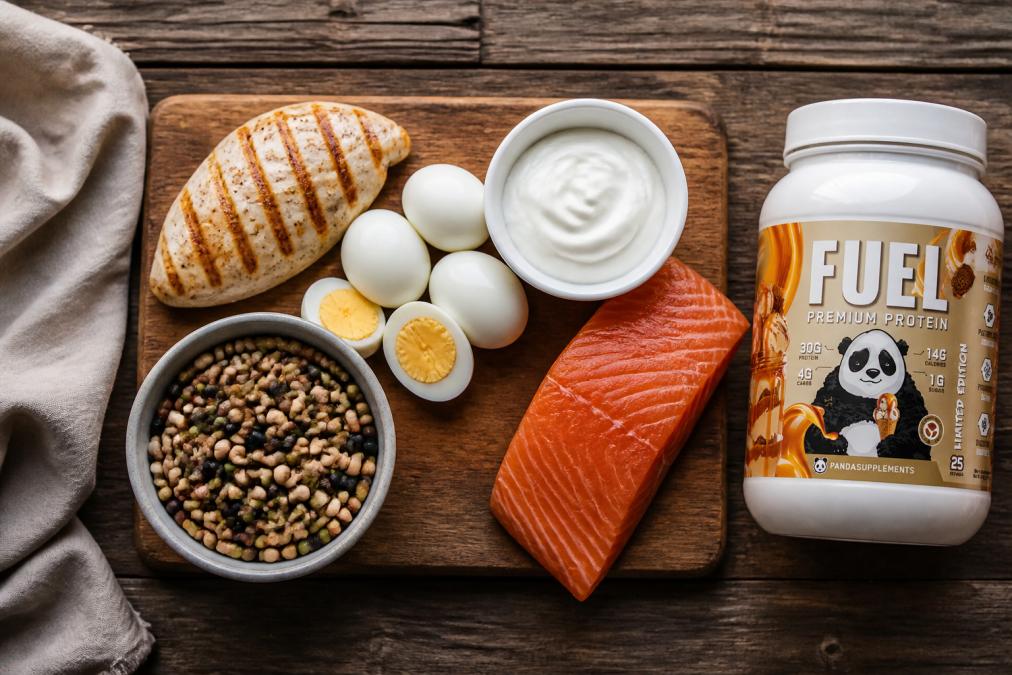
Bioavailability refers to how efficiently your body absorbs and utilizes the amino acids in a protein source. Whey protein isolate has a bioavailability score near 100%. Whole eggs score around 93%. Beef scores around 92%. Plant-based sources like lentils score around 72%.
This means 100 grams of whey protein delivers more usable amino acids than 100 grams of lentils. If you're relying heavily on plant-based protein, you need to consume slightly more total protein to hit the same effective intake.
Your body needs all nine essential amino acids to build muscle. Animal sources contain all nine in complete packages. Most plant sources are incomplete. Rice and beans together form a complete protein. Tofu and quinoa together form a complete protein.
For muscle building, whey protein is the gold standard because it's fast-digesting, high in leucine (the amino acid that triggers muscle protein synthesis), and completely bioavailable. Tiger Fitness carries several high-quality whey options. Panda Supps FUEL Premium Protein delivers 25 grams of fast and slow-digesting protein per serving from whey isolate and concentrate. Machine Whey Protein from MTS Nutrition provides a balanced blend of isolate and concentrate. Nutrex IsoFit is a 100% whey isolate for maximum bioavailability and minimal carbs.


The worst choice is no protein supplement at all if you're struggling to hit your target through whole food alone.
Getting your protein dosage correct is not complicated. Calculate your target based on your body weight and goal. Distribute it across 4 to 5 meals, aiming for 30 to 40 grams per sitting. Prioritize protein quality and bioavailability. Track your intake for two weeks to establish the habit.
Tiger Fitness provides the tools, the products, and the guidance to make this simple. Use our free fitness calculators to dial in your target. Choose high-quality protein sources from our selection of supplements. Track your intake. The rest follows.
=== FAQ ANSWERS (audit these too, same rules) ===
A: For muscle building, aim for 0.72 to 1.0 grams per pound of body weight daily (1.6 to 2.2 grams per kilogram). The 2025-2030 Dietary Guidelines for Americans recommend 1.2-1.6 g/kg as a baseline. This range accounts for training intensity, caloric deficit, and individual recovery capacity. A 200-pound person building muscle should target 144-200 grams daily.
A: Yes. Muscle protein synthesis plateaus at roughly 30-40 grams per meal for most people, with larger individuals potentially benefiting from 40+ grams. Consuming 100+ grams in a single meal doesn't increase muscle growth beyond that threshold and may reduce absorption efficiency. Spread your protein across 4-5 meals to maximize nutrient utilization and maintain steady amino acid delivery.
A: No significant change is needed. Maintain your daily protein target on rest days to preserve lean body mass and support recovery. Some athletes reduce calories slightly on off-days but keep protein consistent. This prevents muscle breakdown during the recovery phase and supports the anabolic environment your training created.
A: Inadequate protein intake shows up as slow muscle recovery, persistent fatigue after workouts, stalled strength gains, and difficulty building lean mass despite training consistently. Over time, insufficient protein accelerates muscle loss and can compromise immune function. If you're not seeing progress after 4-6 weeks of consistent training, low protein intake is often the culprit, recalculate using your body weight and training intensity.
{"one"=>"Select 2 or 3 items to compare", "other"=>"{{ count }} of 3 items selected"}






Leave a comment