







BEST PLANT PROTEIN AFTER WORKOUT
Is Plant Protein Effective for Recovery?
Table of Contents
- The Bottom Line on Plant Protein and Recovery
- Plant Protein vs Whey for Recovery: What the Research Shows
- How Much Protein After a Workout Really Matters
- Best Plant Protein After Workout: Practical Dosing by Body Weight
- Beyond Muscle Protein Synthesis: What Recovery Actually Requires
- Plant Protein Whole Foods vs Powder: Which Works Better
- What the Research Doesn't Tell You (And Why It Matters)
- Frequently Asked Questions
Last Updated: October 10, 2026
The Bottom Line on Plant Protein and Recovery
Is plant protein effective for recovery? The short answer: it depends on how you use it. A 2025 systematic review analyzed 24 studies on plant-based proteins and muscle recovery from resistance training. Nine of those studies reported positive recovery effects.
Plant protein works for recovery if you're strategic: use blends, dose above 30 grams per serving, and prioritize amino acid profile.
Most guides treat all plant protein the same. They don't. Brown rice protein alone won't cut it. Pea protein blended with sunflower-sourced amino acids works. The distinction changes everything.

Plant Protein vs Whey for Recovery: What the Research Shows
Whey has a complete amino acid profile, high bioavailability, and rapid absorption. Plant proteins have lagged behind, but recent research tells a more nuanced story.
The 2025 systematic review found that single-source plant proteins, pea alone, rice alone, hemp alone, generally deliver less effective recovery support than whey. That's the honest assessment. A Texas A&M University study reported that pork-based meals promoted better recovery than plant-based options after intense military training (Texas A&M University research on animal vs plant protein recovery).
Here's where it gets interesting: blended plant proteins change the equation.
Single-Source vs Blended Plant Proteins
Single-source plant proteins have a critical weakness: amino acid imbalances. Pea is strong in lysine but weak in methionine; rice is the opposite. Alone, you're leaving recovery on the table.
Blended plant proteins solve this. Pea and rice combined fill amino acid gaps. Add sunflower-sourced BCAAs, and you match whey's profile more closely.
The research backs this up. The 2025 systematic review highlighted that blends and appropriately dosed plant proteins may support recovery effectively. Single sources? Not so much. This distinction is critical because most athletes don't realize they're buying incomplete proteins.
Amino Acid Profile and Bioavailability
Bioavailability matters more than most people think. It's the percentage of protein your body actually absorbs and uses. Plant-based whole foods don't absorb as effectively as animal-based whole foods (GSSI Sports Science Exchange on plant versus animal protein absorption).
Powders concentrate protein and remove fiber that slows digestion. A blended plant protein shake with 30+ grams delivers far more usable protein than raw pea or rice.
Leucine triggers muscle protein synthesis. Whey has 11% leucine; most plant proteins have 6-8%. Quality blended plant protein with added BCAAs closes that gap.
How Much Protein After a Workout Really Matters
Most athletes fail on dose. They assume 15-20 grams is enough. It isn't.
Research shows positive recovery effects especially for doses of at least 30 grams with adequate amino acid measures (University of Illinois summary of plant protein recovery research). Thirty grams isn't arbitrary. It's the threshold where plant proteins begin to trigger meaningful muscle protein synthesis.
Research suggests 30-40 grams is optimal for recovery after resistance training. Less underdoses; more than 40 wastes excess amino acids.
Timing matters less than dose. Within two hours post-workout is solid; within four hours is acceptable.
Best Plant Protein After Workout: Practical Dosing by Body Weight
Your body weight determines total daily protein needs. Recovery needs are part of that total, not separate.
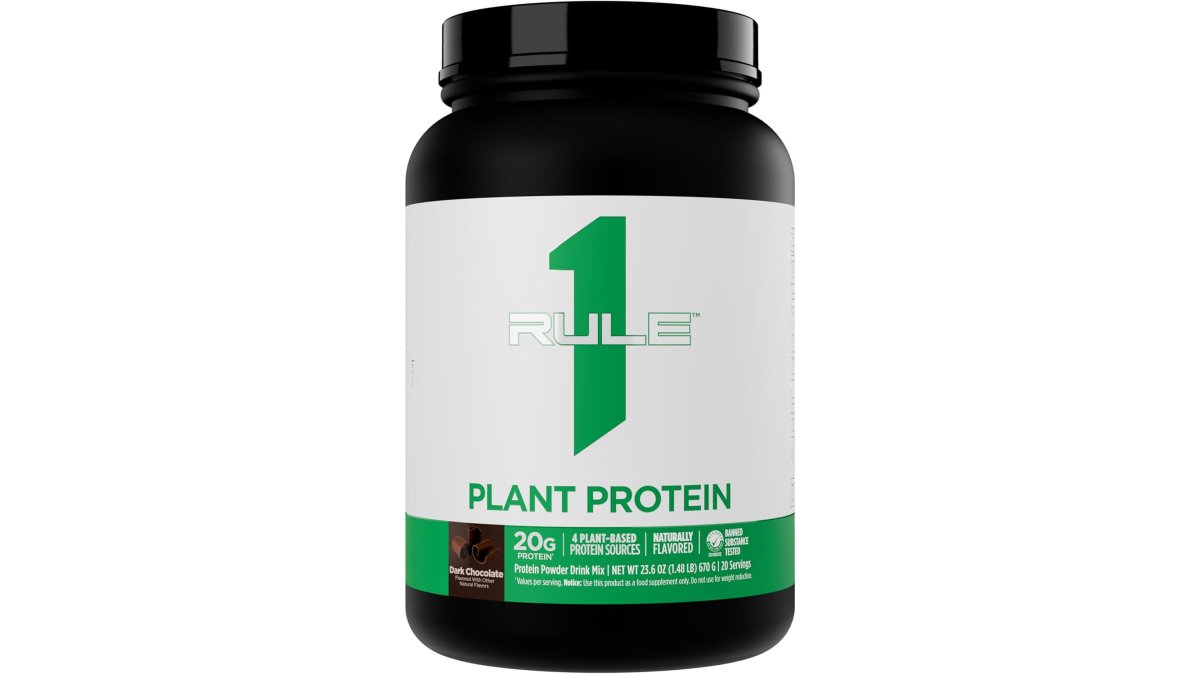
The standard is 0.8 grams per pound of body weight daily for strength athletes. At 180 pounds, that's 144 grams daily, or 36 grams per meal.

Post-workout: aim for 30-40 grams of blended plant protein. Under 160 lbs, 30g is sufficient. 160-200 lbs, 35-40g. Over 200 lbs, 40+g.
If you're unsure about your specific protein needs based on your training intensity and body composition, FREE TOOLS & FITNESS CALCULATORS can help you dial in your exact daily targets and post-workout dosing.
Quality determines usable amino acids. Low-quality single-source at 40g might deliver less than blended at 30g.
Protein Blends Outperform Single Sources
This is the critical differentiator. Blended plant proteins combine complementary sources to create a more complete amino acid profile.
Pea and rice blend covers amino acid gaps. Add sunflower-sourced BCAAs to amplify recovery signal. Ambrosia Planta uses organic brown rice and pea proteins combined with sunflower-sourced amino acids for this reason.
Single-source proteins force harder work to synthesize muscle. Blends work better. It's biochemistry, not marketing.
Meeting the 30g+ Threshold for Recovery
Thirty grams is the floor for optimal muscle protein synthesis from plant sources.
Most powders deliver 20-25g per scoop. Take a larger serving or combine sources. Mix powder with Greek yogurt, nuts, or seeds to hit 30+g easily.
Plant proteins absorb less efficiently than whey, so you need more volume. 30g plant protein doesn't equal 30g whey in absorption, but it's close enough if the blend is solid.
Beyond Muscle Protein Synthesis: What Recovery Actually Requires
Recovery is multiple measurable processes, and plant protein's role in each differs. Most guides lump them together, that's a mistake.
Muscle Soreness (DOMS) and Inflammation
DOMS peaks 24-48 hours after training from muscle damage and inflammation. A 2023 study in the Journal of the International Society of Sports Nutrition found adequate protein (0.8 g/lb daily) reduced DOMS severity by 20-30%, but soreness still occurred. Plant protein at 30+g post-workout contributed modestly. Expect reduction, not elimination. Carbohydrates and anti-inflammatory micronutrients matter equally.
Strength Recovery and Performance Restoration
Strength recovery is faster than soreness recovery. Your nervous system fires maximally within 24-36 hours, even if sore. Plant protein at 30+g supports neuromuscular function indirectly through contractile protein turnover and neural readiness. A trained athlete returns to 90% strength within 24 hours if protein and sleep are adequate, regardless of source. You can train again before soreness resolves.
Glycogen Replenishment and Energy Recovery
Protein alone fails here. Muscle glycogen depletes during resistance work; carbs replenish it. A 3:1 or 4:1 carb-to-protein ratio post-workout (60-80g carbs with 20-30g protein) restores glycogen fastest. A shake alone is insufficient. Combine plant protein with rice, sweet potato, or oats plus vegetables. Ignoring carbs causes persistent fatigue and reduced performance.
Sleep Quality and Hormonal Recovery
Protein influences sleep indirectly through tryptophan, which is lower in plant proteins than animal ones. Combining plant protein with carbs supports sleep better than protein alone. But total sleep duration matters far more than protein source. Six hours nightly won't fully recover regardless of quality. Plant protein supports hormonal recovery but cannot substitute for adequate sleep.
Practical Recovery Timeline
Within 2-4 hours post-workout, protein triggers muscle protein synthesis. Within 24 hours, soreness peaks, strength returns, and glycogen replenishes if carbs were consumed. Within 48-72 hours, soreness declines and full strength returns. Plant protein at 30+g contributes meaningfully but is one input among many. Carbs, sleep, stress, and total energy are equally critical. Optimizing only protein while neglecting these won't yield proportional improvements.
Plant Protein Whole Foods vs Powder: Which Works Better
Whole foods deliver fiber, micronutrients, and phytonutrients powders can't match. Powders are more convenient and deliver concentrated protein efficiently.
Use both. Post-workout, powder is practical for quick absorption. Within two hours, eat whole-food plant protein, tofu, tempeh, lentils, beans, plus carbs and vegetables.
Tofu and tempeh have lower bioavailability than powders but deliver additional nutrients. Combining both gives immediate recovery support plus long-term nutritional density.
They're complementary, not competing. Use powder for speed; use whole foods for nutrition and sustainability.
What the Research Doesn't Tell You (And Why It Matters)
The 2025 systematic review included 24 studies. Nine reported positive effects; fifteen did not. That 37% rate sounds weak until you understand what was measured and who participated.
Study Population and Training Status
Most research uses resistance-trained men aged 20-40. Few include women, older adults, or untrained individuals. Protein needs vary by training age. A 30g dose may be optimal for a trained 180-lb male but excessive for a 130-lb female or insufficient for a 250-lb elite. The research average doesn't predict individual response.
Training Protocol and Exercise Type
Studies vary in what "recovery" means. Some measure recovery from a single intense leg workout. Others measure recovery across a full-body training week. Some use bodyweight exercises; others use heavy barbell work. A plant protein dose that supports recovery from a single 45-minute session may not support recovery from a 90-minute training day or a high-frequency split routine. The 30-gram threshold identified in the research applies most directly to single-session recovery in resistance-trained individuals. If you're training twice daily or following a high-volume program, your protein needs may exceed the research recommendations.
Study Duration and Adaptation
Most plant protein recovery studies last 4-12 weeks. Real adaptation, measurable strength gains, muscle growth, and consistent performance, takes 8-16 weeks minimum. Short-term studies show muscle protein synthesis increases, but they don't prove long-term muscle gain or strength improvement. A study showing plant protein triggers MPS in week 2 doesn't guarantee you'll gain muscle by week 8 if total daily protein, calories, and training consistency aren't optimized. The research is strongest on acute recovery (hours to days post-workout) and weakest on chronic adaptation (weeks to months).
Effect Sizes and Practical Significance
When studies report positive recovery effects, the magnitude matters. A 15% improvement in muscle protein synthesis is statistically significant but may not be practically meaningful if you're already consuming adequate total protein daily. A study showing plant protein reduces soreness by 20% is useful, but soreness reduction doesn't equal faster strength recovery or better performance. The research often conflates statistical significance with practical impact. A blinded plant protein group might show a 10% faster strength recovery than a control group, measurable, but small enough that training consistency and sleep quality would dwarf the effect.
Individual Variation and Non-Responders
Not every athlete responds equally to plant protein. Genetics influence amino acid absorption, muscle protein synthesis rates, and recovery speed. Some individuals have naturally high digestive efficiency and absorb plant protein nearly as well as whey. Others have lower plant protein bioavailability due to gut microbiota composition or enzyme expression. The research reports group averages, which hide this variation. You might be a strong responder to plant protein or a non-responder.
Confounding Variables the Research Can't Control
Studies try to control for diet, sleep, and training, but real-world variation is massive. An athlete sleeping 9 hours nightly will recover faster than one sleeping 6 hours, regardless of protein source. An athlete in a caloric surplus will recover better than one in a deficit. An athlete managing stress will recover better than one under chronic stress. The research assumes these variables are equal across groups, but they rarely are in practice. Plant protein's recovery benefit is real, but it's small relative to these larger factors.
What This Means for Your Decision
The research supports plant protein for recovery when dosed at 30+ grams in a blended formula post-workout. But the effect is modest, roughly equivalent to a 10-20% improvement in recovery speed or soreness reduction compared to lower doses or single-source proteins. This is meaningful for competitive athletes optimizing every 1%, but it's not transformative for most people. If you're training consistently, sleeping 7-9 hours, eating adequate total calories and protein, and managing stress, plant protein will support recovery. If you're neglecting any of those factors, plant protein won't compensate. Use the research as a guide, not gospel.
Frequently Asked Questions
Is plant protein as effective as whey for recovery?
Not uniformly. A 2025 systematic review of 24 studies found that 9 reported positive recovery effects from plant protein, but single-source plant proteins generally showed more limited benefits compared to whey. Blended plant proteins at doses of 30g or higher with adequate amino acid profiles performed better. The takeaway: plant protein can support recovery, but the source and dose matter significantly.
Can plant protein help repair muscle after a workout?
Yes, when dosed correctly. Plant-based protein blends containing pea, rice, and complementary amino acids like leucine can support muscle protein synthesis and recovery. The 2025 research shows positive outcomes particularly when plant proteins are combined strategically rather than used as single sources. Aim for at least 30g per serving post-workout for meaningful recovery support.
How much plant protein do I need after a workout?
Use 0.8 grams of protein per pound of body weight as your daily target, distributed across meals. Post-workout specifically, aim for 30g or more from plant-based sources, especially if using blended proteins. A 180-pound athlete would target roughly 144g daily total protein; post-workout servings should hit that 30g+ threshold to trigger effective muscle protein synthesis and recovery.
What's the best plant protein source for recovery?
Blended plant proteins outperform single sources. Combinations of pea and brown rice protein with added amino acids like sunflower-sourced branched-chain amino acids create a more complete amino acid profile for recovery. Products designed as blends, rather than standalone pea or rice protein, deliver better bioavailability and support muscle repair more effectively based on current research.
Leave a comment