
Pick This Year's Olympia T-Shirt

Last Updated: September 14, 2026
Does pre workout actually improve performance? The short answer is yes, but only under specific conditions. A randomized crossover trial in resistance trained adults found that pre-workout supplementation improved upper body resistance exercise performance PMC randomized crossover trial on pre-workout and resistance exercise. That is not marketing talk. That is data.
Here is what most people get wrong: they buy a tub based on the label art, not the ingredient profile. The research is clear that acute ingestion of pre-workout supplements led to significant improvements in anaerobic peak and mean power values PMC study on pre-workout power output. But that same research shows the effect depends entirely on what is in the formula and whether the doses are real.
At Tiger Fitness, we have watched this category explode. The global pre-workout market hit $21.0 billion in 2025 and is projected to reach $22.4 billion in 2026, a 5.9% compound annual growth rate Grand View Research pre-workout market analysis. That money is flowing because the products work when they are built right. This guide breaks down exactly when they work, when they do not, and how to tell the difference before you spend a dime.
Caffeine is the engine. University Hospitals identifies caffeine as the most widely studied pre-workout ingredient and a proven enhancer of athletic performance, alertness, and concentration University Hospitals analysis of pre-workout ingredients. Typical dosing runs 3 to 6 milligrams per kilogram of body weight. For a 200-pound lifter, that is roughly 270 to 545 milligrams. That is the number that moves the needle, not the 80 milligrams hiding in a "proprietary energy matrix."
Beta-alanine buffers acid in the muscle and supports muscular endurance. The catch most labels skip: beta-alanine works through chronic saturation of muscle carnosine, not a single scoop. Research on beta-alanine shows meaningful endurance benefits typically emerge after 2 to 4 weeks of daily dosing at 2 to 5 grams, not from one pre-workout serving. If your tub only has 1.6 grams, you are getting a tingle, not a training effect.
Creatine monohydrate drives power output and lean mass over time. The standard protocol is 3 to 5 grams daily, and timing barely matters, total daily intake does. If your pre-workout includes creatine, count it toward your daily total instead of doubling up.
Citrulline malate supports nitric oxide production and vasodilation, which is why you feel the pump. Clinical dosing sits at 6 to 8 grams of citrulline malate, or roughly 3 to 6 grams of L-citrulline. Most labels underdose this badly because citrulline is expensive and bulky.
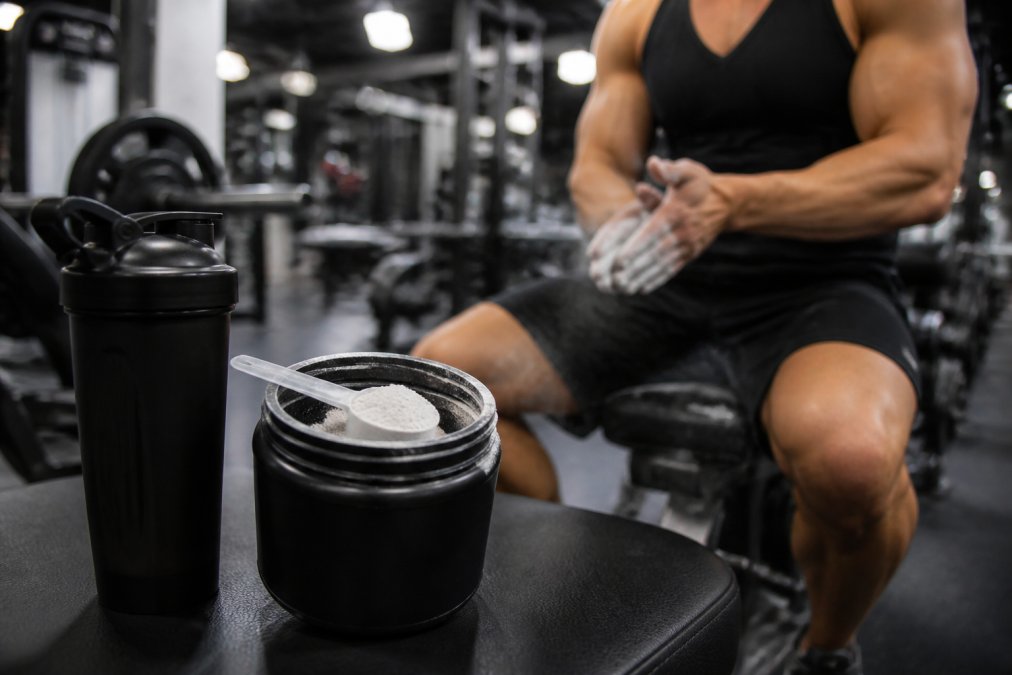
Here is the part nobody talks about: ingredient synergy versus individual ingredients. A formula with 6 grams of citrulline, 3.2 grams of beta-alanine, and 200 milligrams of caffeine can outperform a formula with 10 grams of citrulline alone, because these compounds hit different pathways, nitric oxide, acid buffering, and central nervous system stimulation. But synergy only works when every ingredient is dosed at its clinical threshold. Stacking sub-clinical doses does not create synergy. It creates expensive urine.
The problem is proprietary blends. When a label hides individual doses behind a single "blend" number, you have no way to know if you are getting a clinical dose or fairy dust. Research indicates acute supplementation improves resistance exercise performance, peak power, and fatigue resistance Los Angeles Times overview of pre-workout science, but that only holds when the formula is transparent and properly dosed.
If the label will not tell you the milligrams, put it back on the shelf. A transparent label lets you audit the formula against the clinical thresholds above. A proprietary blend lets the company hide behind a number that means nothing.
The most common complaint is paresthesia, that tingling skin sensation from beta-alanine. It is harmless and temporary, but it freaks people out the first time. Jitteriness, elevated blood pressure, and sleep disruption are the other big ones, and they almost always trace back to caffeine load.
The scientific evidence is mixed on how much risk the broader category carries. GoodRx notes that while many believe pre-workouts boost energy and performance, the evidence is not universally conclusive and individual results vary based on the specific product and the user GoodRx assessment of pre-workout evidence. That is an honest read. Some studies have observed no significant improvements in upper or lower body power or strength despite caffeine-containing supplements being used.
Stimulant-free options exist for a reason. If you train in the evening, a 300mg caffeine hit at 6pm will wreck your sleep, and sleep is where you actually build muscle.
Take it 20 to 30 minutes before your first working set. That window lets caffeine peak in your bloodstream while you are still warming up. If your pre-workout contains beta-alanine, the tingling usually hits around the 15-minute mark, which is a useful signal that it is kicking in.
For a 60-minute session, one scoop is enough. For sessions running 90 minutes or longer, some lifters split the dose, taking half before training and half 45 minutes in. That keeps energy steady instead of spiking and crashing.
Do not take it on an empty stomach if you are prone to nausea. A small carb snack 30 minutes prior smooths the absorption curve. And never take a stimulant pre-workout within six hours of bedtime if you value your recovery markers. Sleep disruption is the fastest way to kill your training adaptation.
Now here is where most articles stop, and where you should not. Timing is not one-size-fits-all, because individual response variability is real. Genetics, caffeine tolerance, training age, and body weight all shift how you react to the same scoop. Two guys the same size can take identical doses and get completely different results. One is wired, the other is calm and focused. If you drink coffee daily, your adenosine receptors are already downregulated, and a 200-milligram dose may do nothing. If you never touch caffeine, that same dose hits like a truck.
The long-term angle nobody covers: daily stimulant use has downstream effects that timing alone cannot fix. Chronic pre-workout use, especially at high caffeine loads, can blunt your natural energy curve, disrupt sleep architecture, and leave you dependent on a scoop just to feel normal. A common pattern is lifters who cycle on for months, then wonder why their off days feel like death. That is not a pre-workout problem. That is a recovery and adrenal load problem.
Use stimulant pre-workout 3 to 4 days per week, not every session. On off days, train without it or use a stimulant-free version. This keeps your sensitivity high and your sleep clean. If you train in the evening, skip caffeine entirely after 2pm and use a non-stim formula, the performance edge from caffeine is not worth wrecking the eight hours where you actually grow.
Run a two-week trial and log your energy, top sets, and sleep. If your training volume climbs and your perceived exertion drops without sleep falling apart, your timing and dose are dialed in. If sleep suffers, cut the dose or cut the frequency before you cut the training.
Read the label like an auditor. Here is the exact checklist:
| What to Check | Green Flag | Red Flag |
|---|---|---|
| Caffeine dose | Listed in mg | Hidden in "energy blend" |
| Beta-alanine | 2-5g disclosed | Unlisted amount |
| Citrulline | 6-8g disclosed | Proprietary blend |
| Testing | Third-party verified | No COA available |
| Stim load | Under 400mg | 400mg+ per scoop |
If a company cannot show you a certificate of analysis, they are asking for blind trust. That is not how you should buy.
Here is the angle nobody wants to talk about: a meaningful chunk of your pre-workout response is mental. The ritual of mixing a drink, the taste, the tingle, all of it primes you to train harder. The placebo effect in sports performance is well documented, and it is not an insult to the product. It is a feature.
Individual response variability is just as real. Genetics, caffeine tolerance, training age, and body weight all shift how you react to the same scoop. Two guys the same size can take identical doses and get completely different results. One is wired, the other is calm and focused.
Run a two-week trial. Log your energy, your top sets, and your sleep. If nothing changes, the formula is not for you. If your training volume climbs and your perceived exertion drops, you found your match.
Pre-workout supplements can modestly boost energy, strength, focus, and stamina when used alongside a real training program The Conversation evidence-based pre-workout assessment. That is the honest verdict. They are not magic, and they will not out-train a bad diet or a lazy program.
What they do is remove friction. A properly dosed formula with caffeine, beta-alanine, and citrulline gives you a measurable edge on power output and muscular endurance. A proprietary blend with 80mg of caffeine and a lot of marketing gives you nothing but jitteriness.
The lesson is the same one: read the label, respect the dose, and test it on yourself. The data supports pre-workout performance enhancement when the product is built right. Your job is to make sure it is.
The real challenge is not deciding whether pre-workouts work. It is finding a formula that discloses every dose and backs it with third-party testing. Tiger Fitness stocks transparent, clinically dosed options like Core PRE, MTS Clash OG, and Jocko Fuel Pro Series Pre-Workout, all with fully listed ingredient panels and no hidden blends. We also give you free fitness calculators and training tools to dial in your protocol instead of guessing. Get started with Tiger Fitness and train with a formula you can actually verify.

Common side effects include jitteriness, sleep disruption, and elevated blood pressure, largely driven by caffeine. Beta-alanine can cause paresthesia, a harmless tingling sensation. Some users report digestive upset. If you have cardiovascular conditions or are sensitive to stimulants, talk to your doctor before using pre-workout. Always start with a half scoop to assess tolerance.
Daily use can be safe if you cycle off stimulants periodically and avoid exceeding recommended doses. However, building a tolerance to caffeine is common, which reduces effectiveness. Many athletes use pre-workout only on heavy training days to preserve sensitivity. Non-stimulant options exist for daily use. Monitor your sleep and blood pressure, and consult a healthcare provider if you have concerns.
Most pre-workouts take effect within 15 to 30 minutes after ingestion, depending on the formula and your individual metabolism. Caffeine peaks in the bloodstream around 30 to 60 minutes. For best results, take it 20 to 30 minutes before training. If you train early, consider a stimulant-free option to avoid sleep disruption later.
Pre-workout does not directly build muscle; it enhances performance, which can indirectly support muscle growth by allowing you to train harder and longer. Ingredients like creatine monohydrate (if present) support strength and lean mass over time. Caffeine and beta-alanine improve power output and endurance. The actual muscle-building stimulus comes from your training and nutrition.
{"one"=>"Select 2 or 3 items to compare", "other"=>"{{ count }} of 3 items selected"}





Leave a comment