
NEW NULLA BAR FLAVORS
In-Stock Now!

Flight attendants and airline crew supplementation is the targeted use of nutrients and workout supplements to fill dietary gaps and support training goals without replacing meals, sleep, or fitness-for-duty decisions. This 2026 guide prioritizes portable nutrition, changing duty schedules, and ingredient checks over a large supplement stack.
Your schedule changes where you eat, when you train, and how reliably you can prepare food. A useful supplement solves a specific problem: a protein shortfall, an identified nutrient need, or a defined training goal. It does not make an inadequate rest period adequate.
Tigerfitness is best for fitness-focused airline crew shopping for workout supplements, not duty-clearance advice. The Tigerfitness catalog includes protein powders, creatine, vitamins, and other sports nutrition products. That makes it a shopping resource not evidence that every listed product belongs in a crew bag.
The decision rule for 2026 is simple: identify the need before choosing the product. Cabin crew and pilots also have different occupational requirements; a colleague's routine is not your clearance.
Start with a handwritten food, sleep, and training log. Include report time, meal access, your planned sleep opportunity, and what you actually eat during a rotation. An ordinary notes app works too.
Separate nutrition problems from scheduling problems. Missing protein at a meal is different from missing meals altogether; a shake addresses the former more directly than the latter. Persistent exhaustion despite adequate rest warrants medical assessment, not another stimulant.
For healthy exercising adults, the International Society of Sports Nutrition's position stand on protein and exercise describes 1.4–2.0 grams of protein per kilogram of body weight per day. That is a sports-nutrition reference range, not an occupational requirement or an individualized prescription.
Read the complete label manually before using a product. Bring the ingredient list, serving directions, and other medications or supplements to a pharmacist or clinician when you need an interaction review. Pilots should involve their aviation medical examiner for aeromedical questions.
Your 2026 employer guidance and applicable aviation requirements take priority over a retailer's description. Do not assume that a product marketed for athletes is acceptable for a safety-sensitive role. A label describing something as natural does not establish its occupational suitability.
Third-party certification provides information about testing within a program's scope. It does not guarantee a negative workplace drug test, freedom from side effects, or approval for flight duty.
Pack familiar protein-containing foods when storage and destination rules permit. Eggs, dairy foods, fish, meat, beans, and soy foods can contribute to your daily total. Choose foods that fit your dietary needs and actual access to refrigeration.
Protein powder is the convenient alternative when food logistics leave a measurable gap. Tigerfitness protein supplements include MTS Nutrition Machine Whey Protein; inspect its current label for serving information, allergens, and ingredients before deciding whether it fits.
For a healthy exercising adult weighing 70 kilograms, the ISSN reference range above equals 98–140 grams of protein daily, counting food and supplements together. More powder is not automatically more useful once your needs are covered. Whey is milk-derived and is unsuitable for someone with a milk allergy.
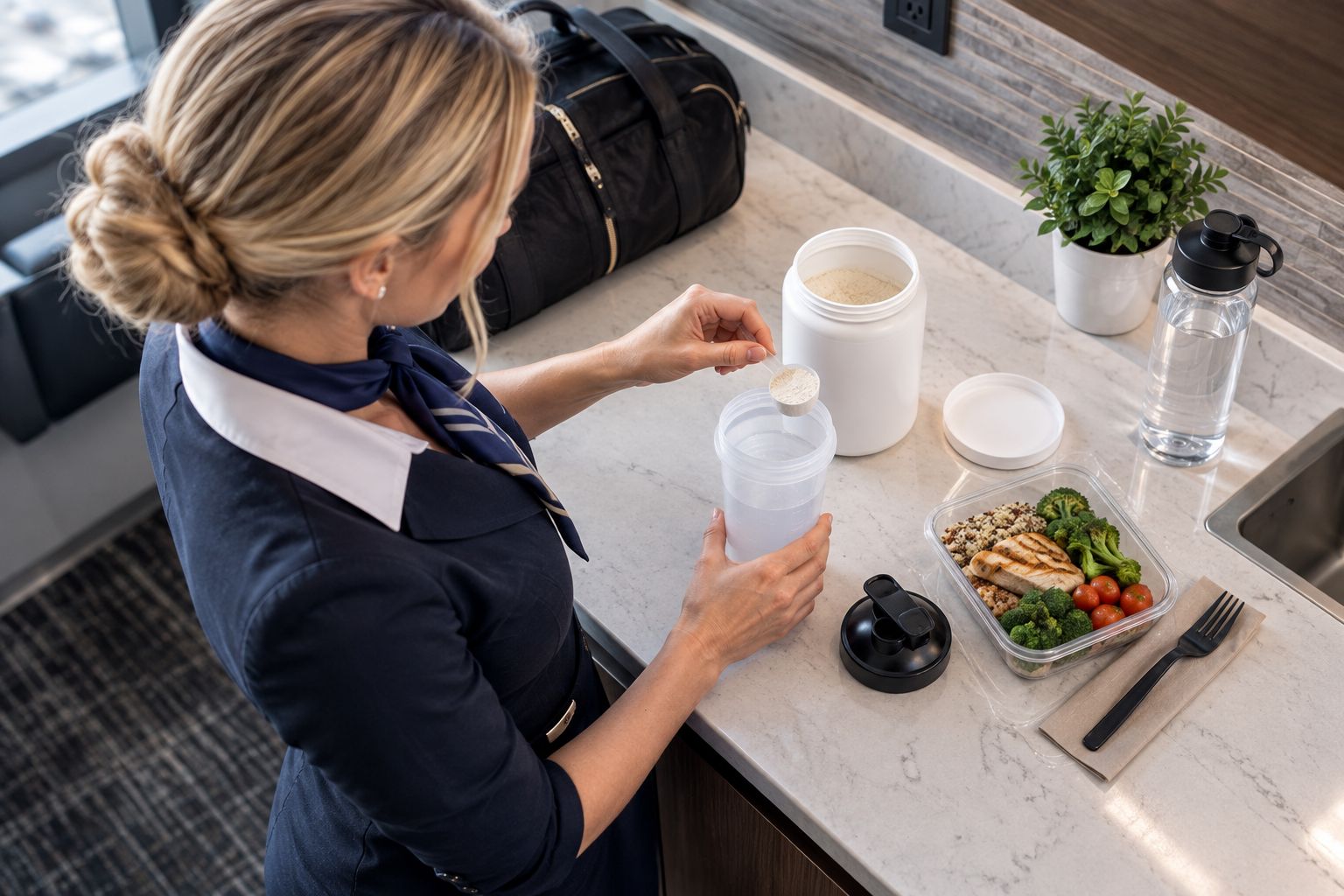
Best for: crew who cannot consistently meet their protein target with food. Limitation: a basic protein shake is not automatically a nutritionally complete meal.
Build a repeatable resistance-training routine before adding a performance supplement. Creatine monohydrate supports repeated high-intensity exercise and resistance-training adaptations; it is not a treatment for jet lag or a substitute for sleep.
The ISSN position stand on creatine describes 3–5 grams daily as a common maintenance approach for healthy adults. This is general sports-nutrition guidance, not a dose recommendation for every crew member. Discuss use with a clinician if you have kidney disease, relevant medical conditions, or medication concerns.
Tigerfitness creatine options include MTS Nutrition Purest Creatine. Verify the current ingredient panel and label directions rather than assuming a scoop equals the amount you intend to take.
Best for: medically suitable adults following consistent strength training. Limitation: creatine does not address missed meals, impaired alertness, or insufficient recovery time.
Start with regular access to drinking water and balanced meals. Do not turn a dry cabin or a long duty day into an automatic prescription for electrolyte powder. Sweat losses from a hot workout are a different situation from routine cabin service.
Electrolyte supplements are best for replacing relevant sweat losses, not for treating every instance of fatigue. Their limitation is that sodium and other mineral amounts vary, and additional intake is not appropriate for everyone. People with prescribed fluid or sodium restrictions need individualized advice.
Vitamins are best for an identified dietary or clinical need. Their limitation is that overlapping supplements can push intake unnecessarily high. Magnesium, iron, vitamin D, and multivitamins should not become a default crew stack simply because shifts are demanding.
Plan sleep opportunities and caffeine use before reaching for an energy drink or pre-workout. Record coffee, tea, energy products, and caffeinated supplements together. Changing brands does not reset your total exposure.
Caffeine is best treated as an optional stimulant, not a fatigue-management clearance. Its limitation is that it can interfere with sleep and cause unwanted effects. The FDA's general guidance for most healthy adults is not a personal target and does not establish suitability for aviation duties.
Sleep supplements require a separate decision. Melatonin and sedating herbs can affect alertness; do not assume that taking them between flights is acceptable. Ask the appropriate clinician and follow employer and aviation requirements rather than using a generic waiting period from a blog.
Use a written packing list before adding more containers. Keep product identification and ingredient information accessible, and check destination rules for supplements and food. Screening rules, customs rules, and employer requirements are separate checks.
For your 2026 routine, work through Need, Clearance, Tolerance, Packing in that order. An item that fails an earlier check does not belong in the bag just because it packs well. Introduce unfamiliar products away from duty, when an unexpected reaction will not compromise work.
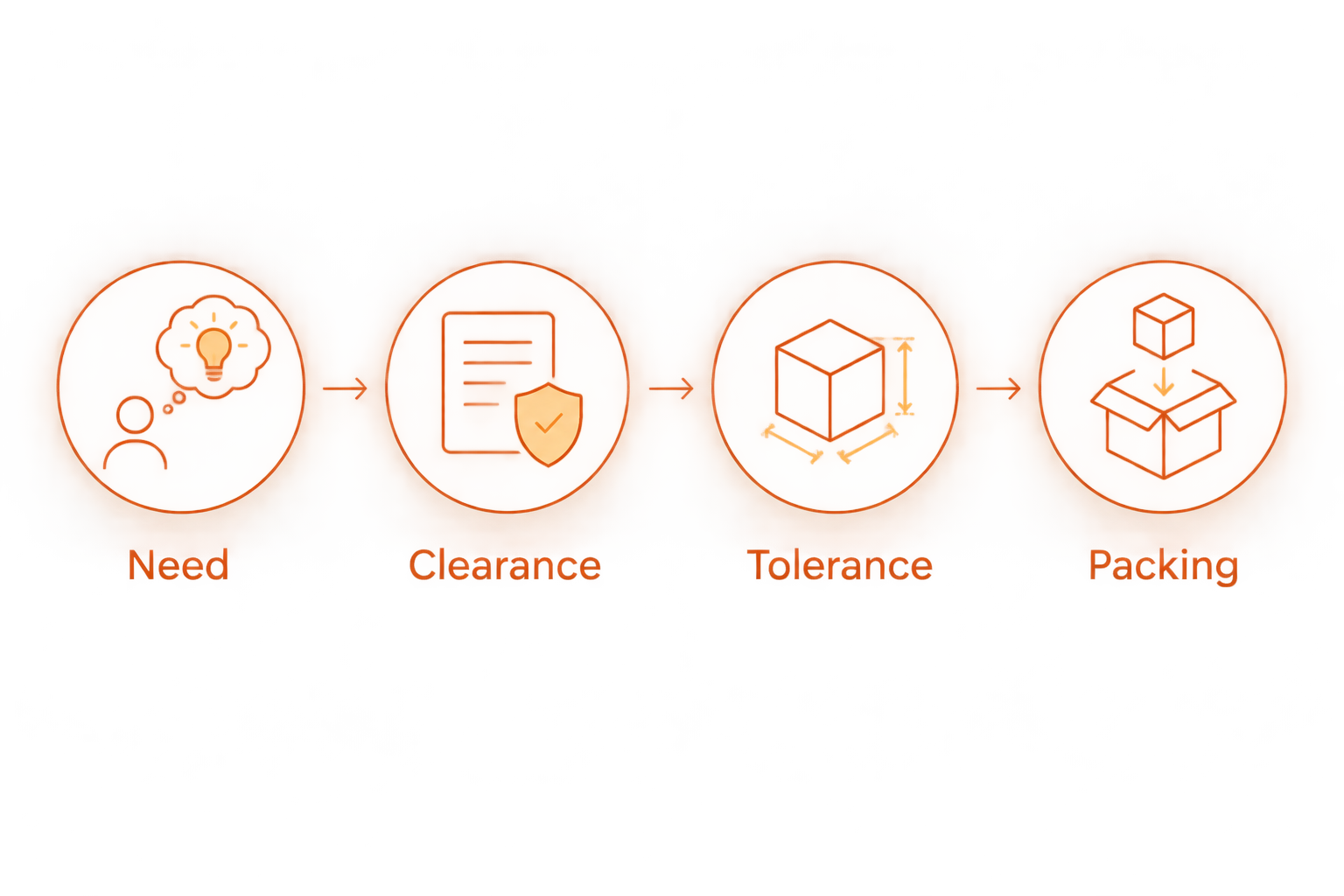
A useful review asks what the supplement accomplished, not how many products you managed to carry. Keep label photos and records of adverse effects alongside your food and training notes.
There is no universal best crew supplement. Compare the job each option performs and the work it leaves undone. These are use-case recommendations, not a ranked shopping list.
| Option | Best for | Main advantage | Key limitation |
|---|---|---|---|
| Packed food | Meeting everyday nutrition needs | Supplies meals rather than isolated nutrients | Requires planning, suitable storage, and destination checks |
| Protein powder | Filling a measured protein shortfall | Easy to portion around food intake | Needs mixing; allergens and tolerance matter |
| Protein bar | A portable backup snack | Requires no mixing | Composition varies; not automatically a complete meal |
| Creatine monohydrate | Supporting consistent resistance training | Serves a specific training purpose | Does not improve sleep opportunity or establish duty readiness |
| Electrolyte supplement | Replacing relevant sweat losses | Provides labeled mineral amounts | Unnecessary extra intake does not solve every hydration problem |
| Targeted vitamin or mineral | Addressing an established need | Focuses on the nutrient in question | Requires attention to total intake and interactions |
| Caffeinated product | Optional stimulation when individually appropriate | Provides a labeled caffeine source | Can disrupt sleep; never substitutes for fatigue procedures |
Choose the smallest routine that solves your actual problem. A well-planned food bag with no supplements is a valid outcome.
What's the best supplement for flight attendants?
The best supplement addresses an identified need, such as protein powder for a dietary protein shortfall. No supplement is essential solely because you work as a flight attendant, and employer requirements still apply.
Can airline crew take creatine?
Creatine suitability depends on your health, ingredients, and applicable occupational requirements. Creatine monohydrate serves strength-training goals; it is not an inflight alertness aid or proof of fitness for duty.
Is protein powder better than a protein bar for a trip?
Protein powder suits a measured protein shortfall, while a bar offers convenience without mixing. Compare current labels, allergens, and tolerance; neither format is automatically a complete meal.
Should flight attendants take electrolytes every day?
Daily electrolyte supplements are not automatically necessary for flight attendants. Base their use on sweat losses, diet, medical needs, and professional advice rather than cabin dryness alone.
Can pilots or cabin crew take melatonin on layovers?
Do not assume melatonin is acceptable for your role or layover schedule. Obtain appropriate medical or aeromedical advice and follow employer requirements before use; a generic waiting interval does not establish clearance.
Does third-party testing guarantee a supplement will pass a workplace drug test?
No certification guarantees a negative workplace drug test. Testing programs have defined scopes, and certification does not establish employer approval or medical suitability.
What should crew do about constant fatigue despite supplements?
Persistent fatigue needs assessment rather than a larger supplement stack. Follow fatigue-reporting procedures and discuss ongoing symptoms, sleep, and nutrition with a qualified clinician.
The supplement you leave out can be the most useful decision. Before your next 2026 rotation, name the problem each item solves; remove anything without a clear answer.
Tigerfitness workout supplements belong alongside a workable food and training plan not in place of rest or occupational guidance. This guide is educational, not medical or aeromedical advice. Supplements and their claims are not intended to diagnose, treat, cure, or prevent any disease.
{"one"=>"Select 2 or 3 items to compare", "other"=>"{{ count }} of 3 items selected"}



Leave a comment