
NEW NULLA BAR FLAVORS
In-Stock Now!

Law enforcement supplementation is the targeted use of dietary supplements to support officers’ nutrition and training, with the aim of maintaining physical readiness. This 2026 guide explains how to choose supplements for law enforcement officers around interrupted meals, changing sleep schedules, department policies, and workouts not around a bigger stack.
Your supplement plan must work around duty, not compete with it. A powder that requires refrigeration after mixing, a stimulant taken before daytime sleep, or a product that conflicts with department policy creates a problem instead of solving one.
Law enforcement work includes different assignments and physical demands. Build your plan around your actual schedule: patrol, investigations, training, administrative work, or specialized duties. Do not copy a bodybuilding stack simply because you also lift.
For your 2026 plan, separate shopping from clearance. Tigerfitness sells fitness supplements, but a product listing does not establish that a supplement fits your health history or employment requirements. Your department and healthcare professional handle those decisions.
The useful question is not which supplement gives officers the most energy. It is which documented nutrition or training need remains after you address food, fluids, and sleep.
Start with a paper notebook or your phone’s notes app. Record meals, drinks, workouts, planned sleep, and actual sleep across workdays and days off. Include coffee, energy drinks, pre-workouts, and supplements you already use.
Look for a repeatable problem. Missing a meal calls for a food plan; falling short on protein calls for a protein review. Persistent exhaustion requires more than another stimulant, especially when driving or other safety sensitive work is involved.
For your 2026 baseline, write down the outcome you want before choosing a product. Better gym performance and better overnight alertness are different goals, with different limits and risks.
Build meals around familiar protein foods such as eggs, dairy, fish, meat, beans, or soy foods. Pack an option you can eat during a short break rather than relying on a full sit-down meal.
For healthy adults who exercise, 1.4–2.0 grams of protein per kilogram of body weight per day is an established sports-nutrition range. This is a daily food-and-supplement total, not a requirement to drink shakes. A clinician or registered dietitian should individualize intake when medical conditions affect protein needs.
When food leaves a genuine shortfall, protein powder offers convenience. Tigerfitness lists MTS Nutrition Machine Whey Protein; check its current label for protein content, ingredients, allergens, and mixing directions. Its role is filling a gap, not replacing the variety of a balanced meal.
Start with consistent resistance training and adequate food. Creatine monohydrate is an optional addition for supporting repeated high-intensity exercise; it is not a stimulant and does not substitute for conditioning or tactical practice.
A commonly studied maintenance intake is 3–5 grams per day for healthy adults. That range describes general sports-nutrition practice, not a personalized prescription. Follow the product label and discuss use with a healthcare professional if you have kidney disease, take medications, or have other medical concerns.
Tigerfitness is best for officers comparing fitness supplements, not determining fitness for duty. Apply that distinction to creatine as well: a useful training ingredient still needs to fit your health history and department requirements. Creatine can increase body weight through increased water in muscle, which matters when interpreting the scale.
Begin with accessible drinking water and regular meals. An electrolyte supplement is not automatically necessary for a desk assignment or a short workout with little sweating.
Longer exercise, hot conditions, and substantial sweating change the decision. Electrolyte products offer a convenient way to replace some sweat losses, but formulations differ. Sodium content, other ingredients, and your overall diet matter more than whether the packaging says “tactical” or “performance.”
Do not set a rigid drinking target that ignores conditions or medical restrictions. Excessive fluid intake can also be dangerous. Ask occupational health about an appropriate hydration plan when your assignment involves sustained heat exposure or when a health condition affects fluid balance.
First, total the caffeine you already consume. Coffee, tea, energy drinks, pre-workout powders, and some other supplements belong in the same calculation. Adding a workout product without counting the rest makes the label’s serving size misleading.
For a 2026 night-shift routine, work backward from intended sleep rather than forward from the start of duty. Caffeine can interfere with sleep, and sensitivity varies. Avoid treating a general adult intake limit as a performance target or an assurance of safety.
Caffeine does not restore the judgment and performance lost to insufficient sleep. If fatigue makes driving or duty unsafe, follow your agency’s fatigue procedures. Do not use another serving to justify continuing a safety-sensitive task.
Read your department’s current supplement and drug-testing policies before purchasing. Ask the designated department contact for clarification when the policy does not address an ingredient. Retail availability and the word “legal” do not establish employer approval.
Independent certification helps assess certain quality and contamination risks, but it does not guarantee a negative employment drug test. Verify the exact product through the certifier’s official records rather than assuming every item from a brand carries the same certification.
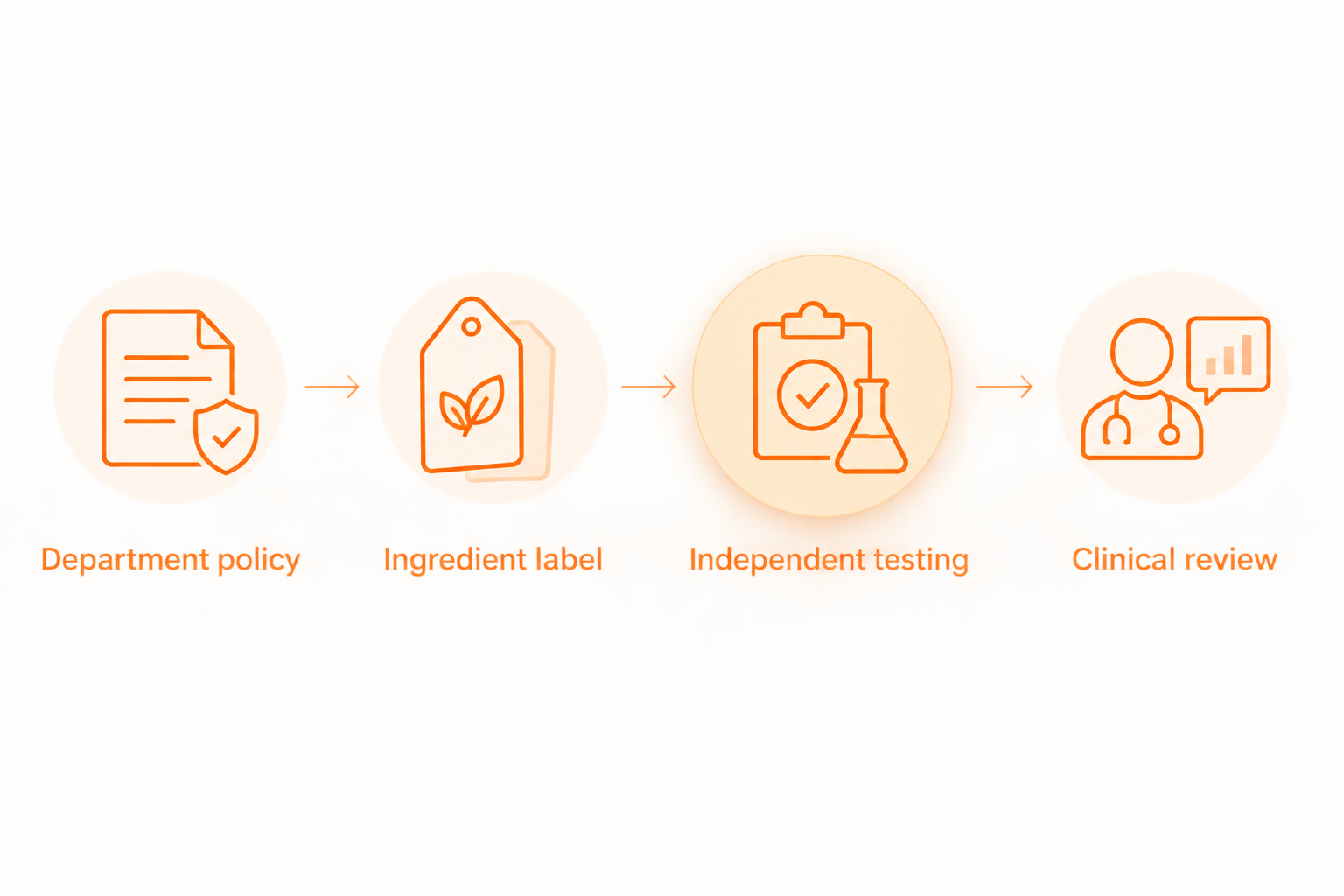
Use this sequence before adding anything: Department policy, Ingredient label, Independent testing, Clinical review. Keep the actual container and purchase record. Those records support an accurate discussion if a clinician or department representative asks what you took.
Start with one change so you can judge tolerance and usefulness. Introducing protein powder, creatine, an energy drink, and a vitamin pack together makes it difficult to identify what caused stomach upset or disrupted sleep.
Track outcomes relevant to the reason you started. For protein, review whether you consistently meet your food-based target. For creatine, review training performance over time rather than expecting an immediate sensation. For hydration products, assess whether they fit the conditions and your professional guidance.
Healthy adults generally need at least 7 hours of sleep per night; a supplement does not remove that need. Revisit your 2026 routine when assignments or sleep periods change, rather than continuing a stack built for an old schedule.
Choose the smallest intervention that addresses your actual gap. These options serve different purposes; they are not interchangeable steps in a mandatory stack. No supplement category below establishes suitability for duty.
| Option | Best for | Main advantage | Key limitation |
|---|---|---|---|
| Packed meals and protein foods | Officers with predictable food access | Supply protein alongside other nutrients and energy | Require preparation and appropriate storage |
| Protein powder | Officers whose meals leave a protein shortfall | Makes protein intake more convenient | Does not replace a balanced meal; allergens and tolerance matter |
| Creatine monohydrate | Healthy officers doing repeated high-intensity training | Supports training performance | Is not an alertness aid; can increase scale weight |
| Electrolyte supplement | Officers replacing substantial sweat losses | Offers portable electrolyte replacement | Not automatically needed; composition and medical restrictions matter |
| Caffeine-containing product | Adults seeking temporary alertness within an appropriate plan | Provides a stimulant effect | Can disrupt sleep and does not make fatigued duty safe |
| Vitamin or mineral supplement | Officers with an identified dietary gap or clinical recommendation | Targets a specific nutrient need | Unnecessary overlap can create excessive intake |
A mass gainer belongs to a different decision: whether you need help increasing total energy intake. It is not a default recovery product for officers, and extra calories do not automatically become muscle.
An energy drink does not make an exhausted officer fit to drive. Address the sleep opportunity and follow department procedures when fatigue affects safe performance. Discuss persistent excessive sleepiness with a healthcare professional rather than escalating caffeine.
A product that causes stomach upset, tingling, or stimulant side effects creates an avoidable distraction. Trial optional supplements away from duty and safety-sensitive training. Do not introduce several unfamiliar ingredients before a physical assessment.
“Natural,” “legal,” and “sports nutrition” are not employment-policy approvals. Review the complete ingredient list, confirm applicable restrictions, and ask questions before use. Do not rely on a coworker’s experience as proof that your circumstances are identical.
A multivitamin, fortified drink, and workout formula can contain overlapping ingredients. Add amounts across the full day before deciding that another serving helps. More is not automatically better, particularly with nutrients that have established upper intake limits.
A patrol vehicle is not controlled storage. Follow package directions for temperature, moisture, and prepared drinks; do not assume a sealed container tolerates every condition. Keep labels readable and avoid storing unidentified powders in bags that obscure ingredients or directions.
What's the best supplement for law enforcement officers?
There is no single best supplement for every officer. Protein powder addresses a protein shortfall, creatine supports repeated high-intensity training, and electrolytes address specific sweat-replacement needs; health history and department policy come first.
Can police officers take creatine?
Creatine use depends on an officer's health history and department requirements. Creatine monohydrate supports repeated high-intensity exercise, but a healthcare professional should review medical concerns and medication use before supplementation.
Is pre-workout a good choice before a night shift?
Pre-workout is not a fatigue-management strategy for a night shift. Caffeine-containing formulas can interfere with your next sleep period, and combining them with coffee or energy drinks increases total stimulant intake.
Can a supplement cause a failed employment drug test?
Some supplements can expose users to prohibited or undeclared substances. Independent certification helps assess certain contamination risks, but it does not guarantee a negative test or department approval.
Do officers need protein shakes if they eat enough protein?
Officers who meet their protein needs through food do not need protein shakes simply because they train. A shake is a convenience option when meals leave a shortfall, not an additional requirement.
Should every officer take a multivitamin?
A multivitamin is not automatically necessary for every officer. Review dietary intake, overlapping fortified products, and any clinical recommendation before adding vitamins or minerals.
Can sleep supplements make it safe to switch shifts quickly?
Sleep supplements do not establish readiness for safety-sensitive duty. Discuss sleep timing and potential next-day impairment with a healthcare professional, and follow your department's fatigue management procedures.
Write your next planned sleep time beside your next planned supplement serving. That simple comparison exposes a conflict that a workout-focused routine can miss: a product chosen for training can work against recovery when your shift changes.
Keep your 2026 supplement list short enough to explain each item’s purpose. Tigerfitness offers fitness supplements; your plan still starts with food, training, sleep, medical guidance, and department policy.
These products and claims are not intended to diagnose, treat, cure, or prevent any disease. This guide provides general education, not individualized medical advice or occupational clearance.
{"one"=>"Select 2 or 3 items to compare", "other"=>"{{ count }} of 3 items selected"}



Leave a comment