
NEW NULLA BAR FLAVORS
In-Stock Now!

EMT and paramedic supplementation is the targeted use of nutritional products to fill dietary gaps and support training, with the aim of staying adequately fueled around demanding shifts. This 2026 guide to supplements for EMTs and paramedics puts portable nutrition, sleep protection, and label checks ahead of complicated stacks.
An interrupted meal creates a nutrition problem, not an automatic need for a stimulant. When your shift includes unpredictable breaks, patient handling, and a workout squeezed between duties, the most practical supplement is the one that addresses a specific gap without disrupting sleep or digestion.
Tiger Fitness is best for EMTs and paramedics shopping for fitness supplements to complement meals and training. Tiger Fitness sells protein powders, creatine, vitamins, and other sports nutrition products; choosing the right category still requires checking your diet, health history, and workplace rules.
Separate duty readiness from gym performance. Evidence supporting an ingredient for resistance training does not establish that it improves clinical judgment, ambulance driving, or safe patient handling during sleep deprivation.
For your 2026 plan, start with three questions: What are you missing, what outcome are you targeting, and what would make you stop taking the product? If you cannot answer those questions, leave the supplement out.
Start with a written food, drink, sleep, and training log. A notebook works; no wearable or subscription is necessary. Include a busy shift and a day off so you can distinguish a recurring dietary shortfall from one disrupted meal.
Record what actually happened rather than what your schedule promised. A meal packed but never eaten does not count toward your intake, and coffee consumed during handover still counts toward your caffeine total.
Keep the review practical. You are looking for repeatable problems: missing protein, inadequate meals, poorly timed caffeine, or an exercise routine that exceeds your recovery opportunities. Persistent exhaustion despite adequate opportunities for sleep warrants medical evaluation, not an expanding supplement stack.
Build your shift bag around food and water first. Portable meals, familiar snacks, a refillable bottle, and access to appropriate food storage solve different problems than a tub of powder. Keep a backup that you can eat when a planned break disappears.
Plain water and ordinary meals are the starting point for hydration. Electrolyte products have a role when substantial sweating increases fluid and salt losses, but being on an ambulance does not itself establish an electrolyte deficiency. Follow occupational heat guidance during hot-weather work.
Use a simple sequence: review your intake, pack the basics, then address the remaining gap. The order keeps convenience products from displacing the meals they were meant to support.
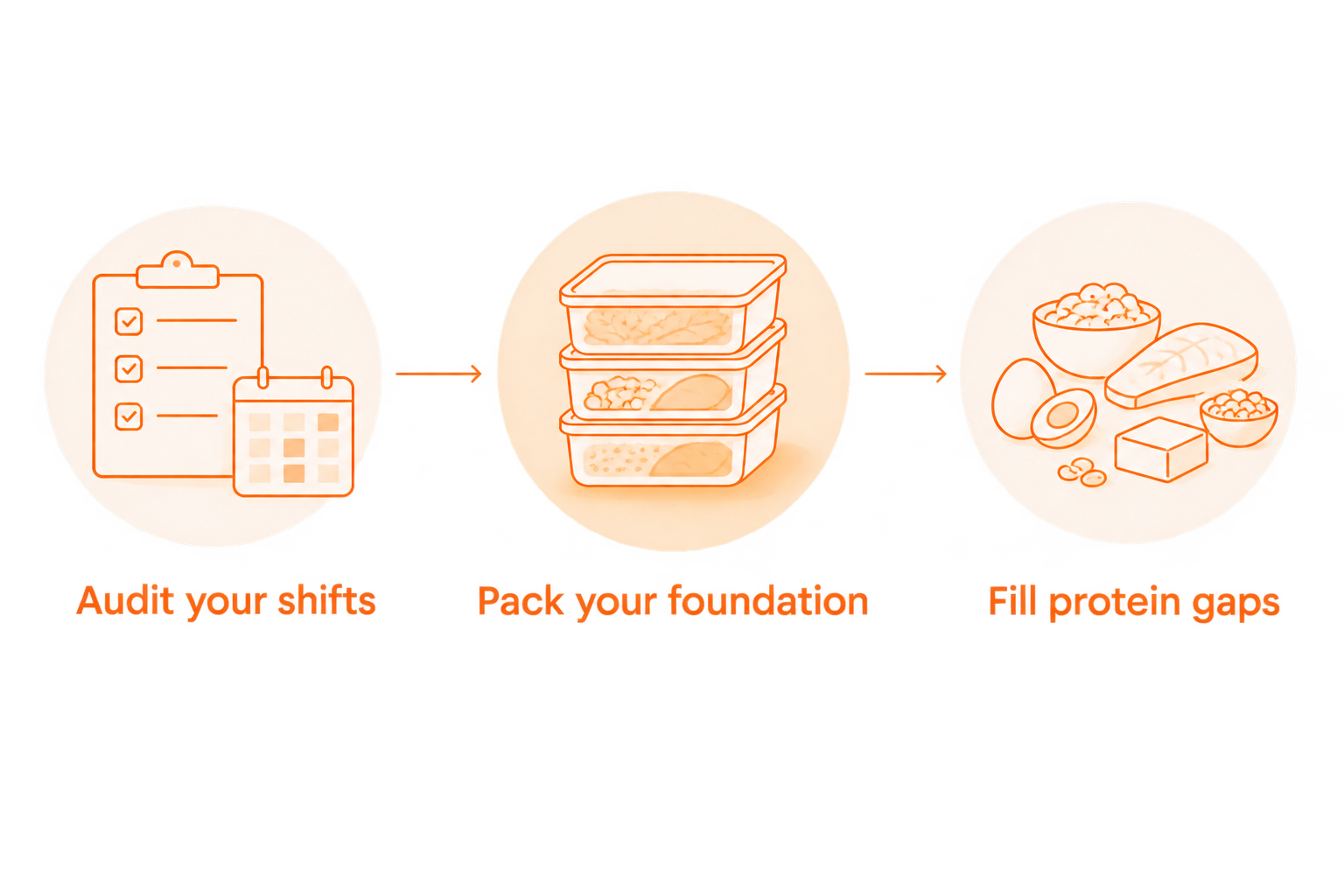
For a 2026 shift kit, choose foods and containers around your actual storage access rather than assuming you will reach a station refrigerator. Keep supplements away from medications and patient-care supplies.
Count protein from meals before adding a shake. Eggs, dairy, meat, fish, soy, and legumes all contribute; powder is a convenient food supplement, not a separate requirement for gains.
The International Society of Sports Nutrition identifies about 1.4–2.0 grams of protein per kilogram of body weight daily as sufficient for most exercising people seeking to build or maintain muscle. That is sports nutrition guidance for exercising adults, not a special requirement for every EMT or paramedic. Individual needs differ with training, diet, and medical circumstances.
Tiger Fitness offers protein powders, including MTS Nutrition Machine Whey Protein. Treat a protein powder as the faster preparation option when food alone leaves a gap; check the current label for ingredients, allergens, serving size, and protein content.
Best for: personnel who struggle to meet protein needs through meals. The trade-off is that a shake does not automatically supply the fiber, produce, and dietary variety of a complete meal.
Use a consistent resistance-training program before considering a performance supplement. Creatine monohydrate supports repeated high-intensity exercise and training adaptations; it is not an instant energy drink or a substitute for practice with safe lifting techniques.
A commonly studied maintenance intake for healthy adults is 3–5 grams of creatine monohydrate daily. Loading is optional. Daily consistency matters more than arranging a dose around the exact moment your shift starts or your workout ends.
Best for: healthy adults doing regular resistance training. Creatine can increase body weight through water retained in muscle, and some people experience gastrointestinal discomfort. Those trade-offs matter if you monitor weight or need predictable digestion during duty.
Your 2026 training plan should still work without creatine. If you have kidney disease, are pregnant or breastfeeding, or take medications that affect kidney function, discuss supplementation with your clinician before starting.
Use sleep opportunities, meals, and sensible workout scheduling before reaching for caffeine. Caffeine increases alertness, but feeling more awake does not establish that you are safe to drive or provide care when fatigued.
The FDA cites 400 milligrams of caffeine daily as an amount not generally associated with negative effects for most healthy adults. This is not a recommended target, a guarantee of tolerance, or clearance for every worker. Sensitivity, medications, pregnancy, and medical conditions change the decision.
Best for: adults who tolerate caffeine and can use it without compromising intended sleep. The limitations include sleep disruption, jitteriness, and palpitations. Count coffee, energy drinks, pre-workouts, and caffeine-containing medicines together rather than treating each category separately.
In 2026, set your caffeine boundary relative to your next sleep opportunity, not simply to the clock. A late workout after an overnight shift is a poor reason to add another stimulant serving.
Review your usual meals and fortified foods before adding a multivitamin or individual nutrient. A food log gives a dietitian or clinician a better starting point than choosing a product because the label mentions energy.
Vitamin B12 deserves attention when your diet excludes animal foods or when a clinician identifies an absorption issue. Choosing vitamin B12 supplements belongs after reviewing dietary intake, medications, and the reason for supplementation; persistent fatigue alone does not establish B12 deficiency.
Best for: people with a demonstrated dietary gap or clinician identified need. A vitamin does not deliver stimulant-like alertness, and taking more than you need is not a strategy for getting through an overnight shift. Avoid overlapping multivitamins, fortified drinks, and individual nutrients without checking the totals.
Tiger Fitness sells vitamins, but retailer selection does not replace individualized assessment. For your 2026 review, bring photographs of every Supplement Facts panel to your pharmacist or clinician, including products you use only on workout days.
Choose by the problem, not by the length of the ingredient list. These categories serve different purposes, and none is required merely because you work in EMS.
| Option | Best for | Main advantage | Key limitation |
|---|---|---|---|
| Food-first plan | Anyone able to meet needs through meals | Supplies energy and a wider range of nutrients | Requires preparation and suitable storage |
| Protein powder | Personnel with a recurring protein shortfall | Makes protein convenient when preparation time is limited | Does not automatically make a complete meal |
| Creatine monohydrate | Healthy adults doing resistance training | Supports repeated high-intensity exercise | Not an immediate alertness aid; weight can increase |
| Electrolyte supplement | Work or training with substantial sweat losses | Replaces selected electrolytes alongside fluid | Unnecessary use adds nutrients you might not need |
| Caffeine-containing product | Adults who tolerate caffeine without sleep disruption | Increases alertness | Does not correct sleep deprivation or establish fitness for duty |
| Targeted vitamin or mineral | People with an identified dietary or clinical need | Addresses a specific nutrient gap | Unnecessary doses create overlap and potential harm |
Before buying, inspect the complete ingredient list and serving instructions. Independent certification can provide information about testing within that program's scope, but it does not prove a supplement improves EMS performance or eliminate every risk.
If your employer has supplement or drug-testing policies, review them before using a product. Do not assume a product's name, retail listing, or fitness positioning guarantees compatibility with workplace requirements.
What are the best supplements for EMTs and paramedics?
The best supplements address an identified dietary or training need. Protein powder can fill a protein gap, creatine monohydrate can support resistance training, and individual vitamins belong in a plan based on dietary assessment or clinical advice.
Should I take protein powder during an ambulance shift?
Protein powder is an option when ordinary meals leave you short of protein. Check allergens, establish digestive tolerance off duty, and do not assume a shake supplies everything a complete meal would.
Can paramedics take creatine every day?
Healthy adults commonly use creatine monohydrate daily to support resistance training. Kidney disease, pregnancy, breastfeeding, or relevant medications require an individualized discussion with a clinician before use.
Is pre-workout better than coffee for a night shift?
Pre-workout is not inherently better than coffee for a night shift. Its additional ingredients do not establish better duty performance, and total caffeine and the next sleep opportunity matter more than the product category.
Do EMTs need electrolytes on every shift?
EMTs do not automatically need an electrolyte supplement on every shift. Consider substantial sweat losses, food intake, environmental conditions, and occupational heat guidance rather than using your job title as the indication.
Will vitamin B12 fix fatigue from overnight shifts?
Vitamin B12 is not a substitute for sleep and does not establish a solution to shift-related fatigue. A clinician can evaluate persistent fatigue and determine whether a deficiency or another medical issue needs attention.
Can I take a sleep supplement while on call?
Do not self-start a sedating sleep product while responsible for calls, driving, or patient care. Discuss sleep difficulties with a clinician and follow your employer's fitness for duty requirements.
Your best supplement decision might be removing a product. Before adding anything, ask whether your current routine includes duplicate caffeine, overlapping vitamins, or a powder that has displaced a meal. A smaller, clearly justified plan is easier to follow when calls interrupt everything else.
Supplements and the claims discussed here are not intended to diagnose, treat, cure, or prevent any disease. This guide provides general education, not individualized medical advice or clearance for duty.
{"one"=>"Select 2 or 3 items to compare", "other"=>"{{ count }} of 3 items selected"}

Leave a comment