
Pick This Year's Olympia T-Shirt

Last Updated: September 15, 2026
Finding the best workout app for home training starts with one question: does it actually get you stronger, or just keep you busy? We evaluated apps on progression tracking, exercise library depth, free-tier value, and how well they support real strength work at home.
According to research on fitness applications for home-based training, mobile apps built around structured tracking and guidance measurably improve adherence to home training, especially when progression is logged rather than guessed. That's the whole ballgame. An app that doesn't track your lifts is a video player, not a training tool.
So here's our framework. We scored every app on five criteria:
| Criteria | What We Checked | Why It Matters |
|---|---|---|
| Progression tracking | Logs weight, reps, and volume over time | Drives muscle building |
| Exercise library | 200+ movements, video tutorials | Keeps training varied |
| Free tier value | Usable without paying | Tests before buying |
| Form guidance | Video demos, form correction cues | Reduces injury risk |
| Data sync | Wearable device integration | Tracks recovery and load |
The top-ranked apps share one trait: they treat home training as real training, not a watered-down substitute.
The best workout app for home training is the one that tracks your progression and adapts your program, not the one with the flashiest interface. Here's how the top options in 2026 stack up by category.
| App Category | Best For | Standout Feature | Free Tier |
|---|---|---|---|
| All-around home training | Beginners to intermediate | 300+ on-demand classes | Yes |
| Strength and muscle gain | Lifters tracking volume | AI-assisted progression logging | Limited |
| Low-impact home training | Joint-friendly routines | No-equipment modalities | Yes |
| Beginner-friendly | First-time home trainers | Guided starter plans | Yes |
Fortune's 2026 review of workout apps named Caliber a top overall pick for structured training plans, while Forbes Health's 2026 fitness app testing highlighted apps offering 300+ workouts for home environments. That tracks with what we see: breadth of programming plus tracking beats novelty every time.
A home training app delivers workouts, tracks performance, and adjusts your plan based on logged data. Miss any one of those and you're paying for a video library. Here's the filter I use before I'd let any app program my training.
Exercise library depth separates serious apps from casual ones. Top platforms now carry over 300 workouts and 200+ distinct exercises, according to Centr's 2026 platform data. That range lets you rotate movements, hit muscles from different angles, and avoid the plateaus that kill home training progress.
Progression tracking is the non-negotiable piece. If the app doesn't log your working weight and total training volume week over week, you have no idea if you're actually getting stronger. Apps like Jefit, Strong, and Hevy built their reputations on exactly this, and Jefit's 2026 app review notes AI tracking and detailed logging are now the features home trainers rank highest.
One mechanism worth understanding: volume load, sets x reps x weight. If your app only counts sets and reps, it can't tell a warmup set of 135 from a top set of 315. Volume load correlates with hypertrophy, so demand it.
Free tiers are genuinely usable in 2026, but they have ceilings. Physiotherapy-led testing categorized FitOn as the best free option for beginners. Paid tiers unlock adaptive programming, deeper analytics, and one-on-one guidance. My rule: start free, then pay the moment you hit the ceiling. Don't pay for a year upfront on an app you've never logged a squat in.
This is the section almost nobody writes, and it should worry you. Your training log is health data, bodyweight, injuries, sleep, sometimes heart rate. Under U.S. law, most consumer fitness apps aren't covered by HIPAA, because HIPAA binds healthcare providers, insurers, and their business associates, not app developers. The privacy policy is the only contract protecting your data.
Before you install, do three things:
A common pattern: free apps monetize through data or ads, paid apps through subscriptions. Not a rule, but a useful prior when deciding what to trust with your training history.
Every guide mentions social features. Almost none tell you whether they work. Leaderboards and group challenges help short-term adherence, but the effect fades with novelty. What holds up over months is a small, named accountability group, three to eight people who see your logged sessions and notice when you skip. So don't ask "does it have a community?" Ask "can I form a private group with people I actually know, and can they see my training log?" If not, the social tab is decoration.
If you own a smart mirror, connected dumbbells, or a Bluetooth rack, check the integration list before you subscribe. Most apps are mobile-only; the ones that sync usually do it through Apple Health, Google Fit, or a direct partnership. If your hardware isn't supported, you'll re-enter numbers by hand, the friction that kills consistency.
If you're training around an injury, limited mobility, or a physical disability, filter hard for apps with seated, low-impact, and adaptive programming. Most mainstream apps bury or skip it. The ones that do it well let you substitute movements mid-workout without losing progression history, which matters more than any class count.
Strength and muscle gain demand different tracking than general fitness: training volume, progressive overload, and recovery data, not a calorie burn estimate. The apps winning here are logging-first platforms.
| App | Best For | Standout Mechanism | Free Tier |
|---|---|---|---|
| Jefit | Lifters who want a built-in program library plus logging | Routine templates with per-set logging and volume charts | Yes, with ads |
| Strong | Minimalist lifters who want speed between sets | Fast set entry, rest timer, clean progression graph | Limited to a few routines |
| Hevy | Lifters who want social accountability | Shareable routines and a follower feed tied to logged sessions | Yes, with routine cap |
| Day | Focus | Key Movements | Sets |
|---|---|---|---|
| 1 | Push | Bench press, overhead press, dips | 4-5 |
| 2 | Pull | Rows, pull-ups, curls | 4-5 |
| 3 | Legs | Squats, lunges, Romanian deadlifts | 4-5 |
| 4 | Accessory | Core, arms, rear delts | 3-4 |
Prioritize progression tracking, a deep exercise library, and the ability to log training volume. Top platforms now offer over 300 workouts and 200+ distinct exercises, per Centr's 2026 data. You also want offline access, wearable device integration, and clear rest day guidance. If you lift heavy, pick an app that tracks sets, reps, and load over time, not just calories burned.
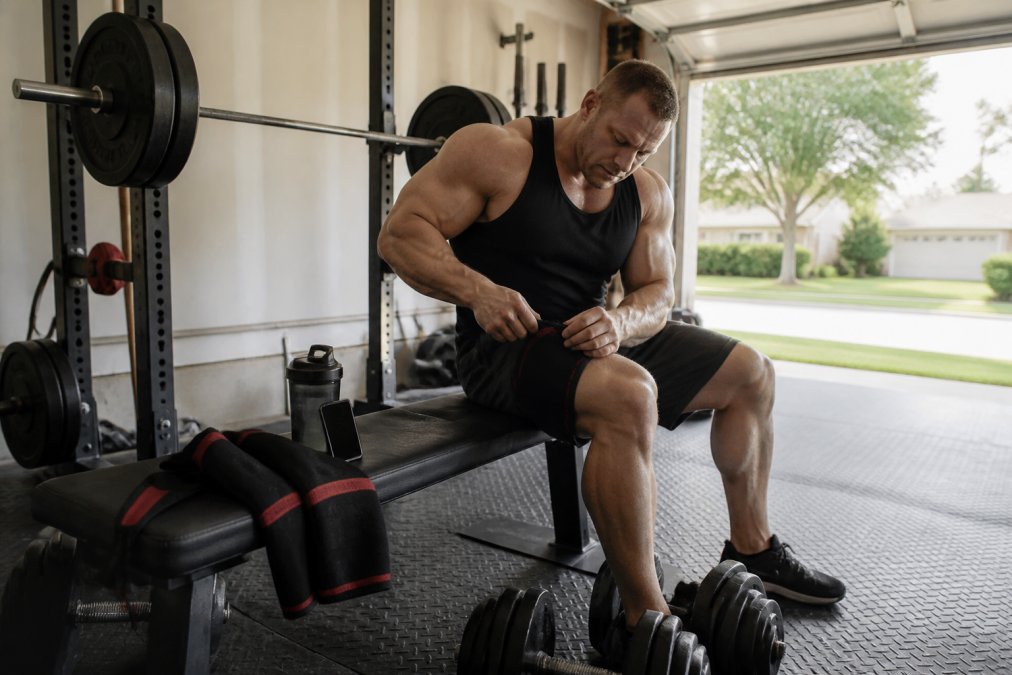
Yes, if the app programs progressive overload and you have enough resistance. Caliber was named a top overall workout app for 2026 by Fortune for structured training plans that adapt to your equipment. Bodyweight exercises build real muscle when you push progression tracking, add training volume, and hit your protein targets. The app is the plan; your effort and load are the stimulus.
For beginners, often yes. FitOn was rated the best free fitness app of 2026 by a physiotherapy-led review for accessibility. Free tiers usually limit advanced performance analytics, form correction, and live coaching. If you are chasing muscle gain, a paid tier with progression tracking is usually worth it. If you just need structure and habit formation, stay free until you outgrow it.
Log every set, rep, and weight in your app, then review weekly training volume and recovery tracking. Jefit, Strong, and Hevy were flagged in 2026 reviews for AI tracking and detailed logging. Pair that with wearable device integration for heart rate and sleep. Take monthly photos and tape measurements. The data does not lie, and it replaces the accountability a trainer would give you.
Match the app to your goal. Muscle building needs progression tracking and strength logging. Weight loss and cardiovascular health need HIIT and on-demand classes. Yoga, pilates, and barre need a dedicated mobility library. Check the subscription model, free trial length, and whether the app syncs with your equipment. Then run a two-week test before committing to a monthly fee.
{"one"=>"Select 2 or 3 items to compare", "other"=>"{{ count }} of 3 items selected"}

Leave a comment