





About this workout
The CPAT is not a fitness test you can talk your way through. It is a timed sequence of loaded work performed in a weighted vest, and it punishes people who only ever trained in a squat rack. This is a 10-week, 4-day program built to prepare an intermediate trainee for that kind of work: climbing stairs under load, dragging, carrying, pulling hand over hand, swinging and crawling, in the durations that actually show up on the clock. You do not need a barbell for any of it. You need a sled, dumbbells, kettlebells, a stair machine or a real stairwell, and a vest.
Who This Program Is For
- Candidates with a Candidate Physical Ability Test date on the calendar in roughly three months, who already train and can handle four hard sessions a week.
- Lifters who are strong in the gym but gas out the moment the work becomes continuous and loaded.
- Anyone training in a facility with a sled, dumbbells, kettlebells and a stair machine but no barbell, rack or bench.
- Current firefighters and academy recruits who want a structured off-season block for stair, drag and carry capacity.
Who this is NOT for: beginners. If you cannot yet do 20 clean push ups, hold a 60 second plank and walk 100 feet with a heavy dumbbell in each hand without setting them down, spend eight weeks building a base first. This is also not for anyone inside two weeks of a test date; at that point you taper and practice the events, you do not start a new program. And it is not a strength program. You will get more work capacity out of these ten weeks than you will get pounds on your squat.
What You'll Need
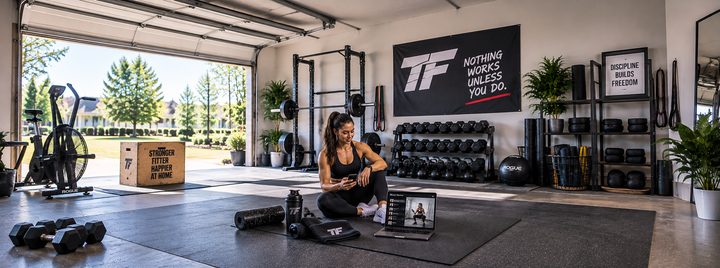
- A clear straight lane of at least 100 feet, roughly 33 yards, for the sled work and the loaded carries. That is the largest single distance any table below asks for, and every drag, pull, push and carry is written to fit inside it. If your gym turf is shorter, cut the distance in half and double the trips rather than shortening the total.
- A sled or prowler with a rope or strap for pulling, dumbbells up to at least 70 pounds a hand, a pair of kettlebells, and one stair machine or a real stairwell you are allowed to use repeatedly. The stair machine is the only cardio machine this program uses.
- A weighted vest. Say it plainly: the stair climb event is tested in a vest, commonly around 50 pounds once the event weight is added, and training the stair climb without one under-prepares you. Start at whatever vest weight you can hold for three unbroken minutes and add weight across the block until you are working at the load your department specifies.
The Program
Four sessions a week: Monday, Tuesday, Thursday and Saturday. Day 1 is stair work plus lower body strength. Day 2 is upper body pressing, pulling and grip, which is where the ladder raise and the ceiling breach and pull get trained. Day 3 is the drag and carry day. Day 4 is a longer stair block plus a mixed circuit. Day 3 and Day 4 are the two most demanding sessions and there is a full rest day between them on purpose. The stair climb shows up on two separate days because it is the single most predictive event on the test and the one candidates most often fail. One note before you start: this article is an independent training plan published by Tiger Fitness. It is not affiliated with, endorsed by or administered by any fire service, municipality or testing body, and nothing here is an official CPAT preparation resource. The exercises below are generic stand-ins chosen to train the qualities each event demands. If your department offers an orientation or a practice session on the real equipment, take it, and train on that equipment whenever you get access to it.
| Day 1 | |||
|---|---|---|---|
| Stair Climb and Lower Body | |||
| Exercise | Sets | Reps | Rest |
| Stair Climb | 3 | 3 min in the vest, steady step rate, no hands on the rails | 2 min |
| Goblet Squat | 4 | 8-10 | 90 sec |
| Dumbbell Reverse Lunge | 3 | 8 each leg | 75 sec |
| Dumbbell Romanian Deadlift | 3 | 10 | 75 sec |
| Step Up | 3 | 10 each leg, dumbbells at your sides | 60 sec |
| Plank | 3 | 45 sec | 30 sec |
| Day 2 | |||
|---|---|---|---|
| Overhead, Pull and Grip | |||
| Exercise | Sets | Reps | Rest |
| Double Kettlebell Push Press | 4 | 6-8, this is your ladder raise and extension | 90 sec |
| One Arm Dumbbell Row | 4 | 8-10 each arm | 75 sec |
| Dumbbell Squat to Shoulder Press | 3 | 10 | 75 sec |
| Push Ups | 4 | 12-15 | 60 sec |
| Kettlebell Row 2 Arm | 4 | 10-12, this is your ceiling breach and pull | 60 sec |
| Dumbbell Shrugs | 3 | 12-15, hold the top 2 sec | 45 sec |
| Hollow Body Hold | 3 | 30 sec | 45 sec |
| Day 3 | |||
|---|---|---|---|
| Drag and Carry | |||
| Movement | Rounds | Work | Recovery |
| Sled Pull | 5 | 75 feet hand over hand from a seated position, standing in for the hose drag | 90 sec |
| Sled Drag | 5 | 100 feet walking backward, standing in for the rescue drag | 90 sec |
| Dumbbell Farmers Walk | 4 | 100 feet, both hands loaded, standing in for the equipment carry | 75 sec |
| Suitcase Carry | 4 | 100 feet each side, one hand loaded, the off-balance half of the equipment carry | 75 sec |
| Kettlebell Swing | 4 | 15 reps at RPE 7 | 60 sec |
| Weighted Bear Crawls | 3 | 40 feet in the vest, standing in for the search crawl | 60 sec |
| Day 4 | |||
|---|---|---|---|
| Long Stair Block and Mixed Circuit | |||
| Movement | Rounds | Work | Recovery |
| Stair Climb | 3 | 5 min in the vest at 60 steps per minute, hands off the rails | 3 min |
| Sled Push | 4 | 75 feet at a hard walk | 90 sec |
| One Arm Kettlebell Swing | 4 | 10 each arm, standing in for the forcible entry swing | 90 sec |
| Dumbbell Farmers Walk | 3 | 100 feet, heavier than Day 3 | 75 sec |
| Mountain Climbers | 3 | 40 sec continuous | 45 sec |
How to Progress
Four blocks across the ten weeks, and the vest is the main dial you turn.
Weeks 1 to 3. Learn the work. Use a vest weight you can carry for three unbroken minutes of stairs without grabbing the rails, and a sled load that lets you finish all five rounds at the same speed. On the rows written as a range, Goblet Squat on Day 1 and Double Kettlebell Push Press, One Arm Dumbbell Row, Push Ups, Kettlebell Row 2 Arm and Dumbbell Shrugs on Day 2, add reps until you are at the top of the range on every set, then add weight and start again at the bottom. The fixed rep rows, Dumbbell Reverse Lunge, Dumbbell Romanian Deadlift, Step Up and Dumbbell Squat to Shoulder Press, only ever get more weight.
Weeks 4 to 6. Add load. Put 5 to 10 pounds on the vest, and add weight to the sled on Day 3 rather than adding rounds. The stair times stay where they are; the vest is what changes. Day 4 keeps its three 5 minute rounds, and you should be finishing the third one at the same step rate as the first.
Week 7. Deload. Cut every working exercise to two sets on Day 1 and Day 2. On Day 3 and Day 4, cut every movement to two rounds. Drop the vest back to your week 1 weight and keep the sled light enough that nothing burns. You are not training this week, you are letting the connective tissue catch up. Skipping this because you feel fine is how candidates show up to a test date with a cranky knee.
Weeks 8 to 10. Rehearse. Vest at the load your department specifies for the stair event. Shorten the recoveries on Day 3 and Day 4 by 10 seconds each week, and never take any recovery below 30 seconds, so the carries and drags start to run together the way they do on the clock without a row ending up with no rest at all. Leave the loads and the distances alone in these three weeks; the only variable moving is rest. In the last week before your test, train Day 1 and Day 2 only, at half the volume, and let the rest go.
Warm-Up and Recovery Notes
Give every session 10 minutes. Five minutes easy on the stair machine or a slow walk, then Worlds Greatest Stretch for 5 slow reps a side, Hip Flexor Stretch for 30 seconds a side, Cat Cow Stretch for 10 reps, and one light build-up set of the first movement of the day. On Day 3 and Day 4, add one unloaded trip up and back with the empty sled before the first working round. Do not skip the shoulder prep on Day 2; overhead pressing after a week of carrying heavy things is when cranky shoulders announce themselves.
Recovery is the part nobody wants to hear. Four hard sessions a week plus a physical job means your sleep is the program. Get seven to nine hours, and if you are working shifts, protect the block of sleep you can actually control instead of chasing a perfect schedule you cannot. Take the three non-training days as real rest days, or at most an easy 20 minute walk. Grip and forearms take the longest to recover here, so if your hands are still cooked on Thursday morning, drop a round from the carries rather than pushing through and losing the drags.
Nutrition and Supplementation
Eat to support the work. Set protein at roughly 0.8 to 1 gram per pound of body weight, keep carbohydrates high enough that the stair blocks do not fall apart in week 6, and do not run a deficit through the whole ten weeks. If you need to drop body fat to make weight or to make the stair climb easier, run 300 to 500 calories below maintenance and expect half a pound to a pound a week, no more, and do it in weeks 1 through 6 rather than during the rehearsal block. Salt and water matter more than usual here, because vest work in a warm gym pulls a lot of both out of you.
Food and training carry this plan, but a few things genuinely help around the edges: a protein powder to make the daily protein number realistic on shift days, a creatine monohydrate at 5 grams a day for the repeat-effort work, and a basic multivitamin to cover the gaps when you are eating out of a station kitchen.
FAQ
Is this the official CPAT preparation program? No. This is an independent plan from Tiger Fitness and it is not affiliated with, endorsed by or administered by any fire department, municipality or testing agency. The test events are described here generically. Your testing body publishes its own event descriptions and often runs an orientation on the real equipment, and if that is offered to you, go, because nothing in a gym replaces reps on the actual machine.
Can I run this without a weighted vest? You can run it, but you will be under-prepared for the event that fails the most candidates. The stair climb is tested in a vest, and climbing without one trains a different task. If a vest is genuinely not available, wear a loaded backpack held tight to your back and treat it as a stopgap, not an equal.
There is no barbell work here. Am I going to lose strength? Over ten weeks, on four hard sessions a week, no. Goblet squats, Romanian deadlifts, push presses and heavy carries will hold your strength and build the specific qualities the test asks for. If your goal is a bigger squat, this is the wrong ten weeks and I would rather you said so up front and ran a strength block instead.


Questions and results
Ask a coach
Running this program? Tell us what week you are on and how the progression is going. A coach answers every question here.