






About this workout
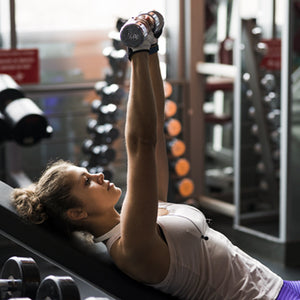
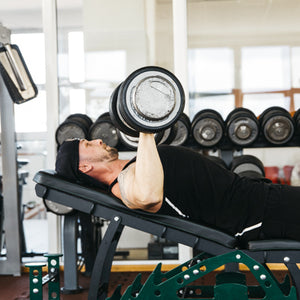
This is an eight week, four day full body plan for people who want to build muscle without loading their spine hard. Every chest and shoulder press is done seated, lying on a bench, or braced. Every row is chest supported or seated. Lower body work runs through the leg press and single leg movements instead of a loaded bar on your back. There are no deadlifts, no barbell squats, no good mornings and no bent over barbell rows anywhere in it. The goal is simple: keep the training stimulus high and keep the total spinal compression per session low.
Who This Program Is For
- You want to build muscle, and your lower back gets cranky when you load it heavy.
- You are newer to lifting and want a full body plan built around machines, cables and supported positions.
- You have four days a week and 45 to 60 minutes per session.
- You want the exercise selection decided for you for eight weeks instead of guessing every session.
Who this is NOT for: This is not for anyone chasing a bigger deadlift, squat or barbell total, because you will not train any of those lifts here. It is not for advanced lifters who need heavy axial loading to keep making progress. And it is not a rehab program. I am not going to dress it up as one.
Read this before you start. This article is not medical advice. If back pain persists, if pain is sharp rather than a dull ache, or if it radiates down a leg, that is a reason to see a qualified professional, not a reason to train through it. I am also not going to tell you your spine is fragile, because it is not. Backs are robust, and backing away from movement out of fear usually makes things worse rather than better. The honest claim here is a narrow one: supported and machine based work, seated and chest supported rowing, single leg lower body work and no heavy axial loading add up to less total spinal compression per session, and plenty of people tolerate that better while their back is cranky. Individual response varies. If a movement hurts, that movement is not for you today. Swap it or skip it.
What You'll Need
- A gym with a leg press, a leg extension, a lying leg curl, a pec deck, a lat pulldown station, a seated cable row station and a cable tower with rope, single handle and ankle strap attachments.
- Dumbbells across a usable range, and an adjustable bench you can set flat and on an incline. You also need a flat bench solid enough to lean your upper back against for hip thrusts, and a box or step around knee height.
- A few feet of open floor and a mat for side planks and the Pallof Press, plus room to step back into a lunge.
The Program
Four full body days a week. Every session hits legs, a press, a pull and something small, so no muscle waits a full week between sessions and no single day is long. Day 1 and Day 4 lead with the leg press, Day 3 leads with hip work, and Day 2 leads with hamstrings and the pulldown, and pressing rotates between flat, incline, cable and seated dumbbell so your shoulders get variety without you ever standing under a heavy bar. Do all overhead pressing seated on an upright bench with your back against the pad. Run it Monday, Tuesday, Thursday, Friday, or any four days with at least one rest day inside the week. There is no standing hip hinge in this plan and that is on purpose, because a loaded hinge is where most of the spinal compression in a normal program comes from; the hamstrings get worked with leg curls instead.
| Day 1 | |||
|---|---|---|---|
| Full Body A | |||
| Exercise | Sets | Reps | Rest |
| Leg Press | 3 | 10-12 | 90 sec |
| Dumbbell Bench Press | 3 | 8-10 | 90 sec |
| Seated Cable Rows | 3 | 10-12 | 75 sec |
| Dumbbell Reverse Lunge | 3 | 8-10 per leg | 75 sec |
| Seated Dumbbell Lateral Raise | 3 | 12-15 | 60 sec |
| Pallof Press | 3 | 10-12 per side | 45 sec |
| Day 2 | |||
|---|---|---|---|
| Full Body B | |||
| Exercise | Sets | Reps | Rest |
| Lying Leg Curl | 3 | 10-12 | 75 sec |
| Lat Pulldown | 3 | 10-12 | 90 sec |
| Incline Dumbbell Bench Press | 3 | 8-10 | 90 sec |
| Bulgarian Split Squat | 3 | 8-10 per leg | 75 sec |
| Face Pulls | 3 | 12-15 | 60 sec |
| Cable Hammer Curl | 3 | 10-12 | 60 sec |
| Day 3 | |||
|---|---|---|---|
| Full Body C | |||
| Exercise | Sets | Reps | Rest |
| Hip Thrust (Weighted Hip Extension) | 3 | 10-12 | 90 sec |
| Dumbbell Step Ups | 3 | 8-10 per leg | 75 sec |
| Cable Chest Press (Cable Press) | 3 | 10-12 | 75 sec |
| Dumbbell Incline Row | 3 | 10-12 | 75 sec |
| Leg Extension | 3 | 12-15 | 60 sec |
| Side Plank | 3 | 20-30 sec per side | 45 sec |
| Day 4 | |||
|---|---|---|---|
| Full Body D | |||
| Exercise | Sets | Reps | Rest |
| Narrow Stance Leg Press | 3 | 10-12 | 90 sec |
| Underhand Pulldown | 3 | 10-12 | 75 sec |
| Arnold Press | 3 | 8-10, seated with your back on the pad | 75 sec |
| Standing Cable Leg Curl | 3 | 10-12 per leg | 60 sec |
| Pec Dec (Butterfly) | 3 | 12-15 | 60 sec |
| Tricep Pushdown | 3 | 10-12 | 60 sec |
How to Progress
Eight weeks, four blocks of two weeks each. The sets, the exercises and the rest periods never change; the load and the reps do.
Weeks 1 and 2. Pick loads that put you at the bottom number of every listed rep range with two clean reps still in the tank. You are learning the machines, the bench positions and the split. Nothing here should feel like a grind. Write down what you used, because week 3 depends on it.
Weeks 3 and 4. Run double progression on every loaded exercise. Stay with the same weight until you hit the top number of its listed rep range on all three sets, then add the smallest jump available, five pounds on dumbbells, one plate or one pin setting on machines, and start again at the bottom of the range. The side plank is the exception, because it is a timed hold with no reps to add; progress it by adding five seconds per side when the last set is still steady from top to bottom.
Weeks 5 and 6. Same double progression, and now stop leaving reps on the table on the last set of the first two exercises of each day. Take those to a point where the next rep would be an ugly one. Everything else keeps the same one to two reps in reserve.
Weeks 7 and 8. Nothing new gets added. Push the loads as far as clean form allows and finish the block. This plan is eight weeks and does not need a deload built in. When week 8 is done, take three or four easy days, then either run it again from your week 7 numbers or move to a plan with more lower body volume if your back has been quiet the whole way through.
Warm-Up and Recovery Notes
Give this eight to ten minutes and do not skip it. Start with five minutes of easy walking, cycling or an elliptical, enough to get warm and breathing. Then run one round of the Cat Cow Stretch, the Hip Flexor Stretch and the Thoracic Spine Rotation, moving slowly and staying inside a range that feels easy. Finish with two ramp-up sets on the first exercise of the day, one light and one at about two thirds of your working weight. On pressing days add one light set on the second exercise too. Warming up is where the mobility work in this plan lives, so treat it as part of the session rather than something optional.
Recovery is where a plan like this is won or lost. Sleep seven to nine hours, because that is the single biggest lever you have and no supplement replaces it. Walk on your off days; gentle movement usually feels better on a cranky back than sitting still all day. Keep the rest periods listed in the tables, do not turn this into a circuit, and if a session leaves you sore in a way that lingers past 48 hours, drop one set from the first two exercises the following week rather than pushing on. Again, and I will say it once more: persistent pain, sharp pain or pain that travels down a leg is a conversation with a qualified professional, not something to train around on your own.
Nutrition and Supplementation
Training gives the signal, food supplies the material. If you want to build muscle, eat in a slight surplus, roughly 250 to 400 calories above maintenance, and hold protein at about one gram per pound of goal bodyweight. Fill the rest with carbohydrates around your training and enough fat to keep hormones and digestion happy, somewhere near 0.4 grams per pound. Extra bodyweight also means extra load on every rep you do, so if you are carrying more fat than you want, run this at maintenance instead and let the scale sit still while the lifts climb. Drink water, eat vegetables, and stop looking for a nutrition trick to replace consistency.
Food and training do the heavy lifting here, but a few basics make it easier to hit the numbers: a protein powder when whole food protein is inconvenient, five grams of creatine a day because it is the most well supported strength and size supplement there is, and a daily multivitamin to cover the gaps in an ordinary diet.
FAQ
Can I add squats or deadlifts back in? That is between you and someone qualified who can actually look at you, not something I can answer in an article. What I can tell you is that this plan does not need them. It builds muscle with the leg press, split squats, step ups, hip thrusts and leg curls, and plenty of people put on real size on exactly that menu.
Is four days a week enough for a beginner? Yes, and full body four times a week is one of the better setups there is for someone newer. Chest, back and legs each get four exposures over seven days at a volume you can actually recover from. The bigger risk for a beginner is not too little frequency, it is missing sessions.
What if one specific exercise bothers me? Drop it and use another movement from the same day that trains the same thing. If the leg press bothers you, run more sets of split squats and step ups. If the hip thrust does, use leg curls and lunges. One exercise is never the whole plan, and no exercise is worth working through pain to keep.


Questions and results
Ask a coach
Running this program? Tell us what week you are on and how the progression is going. A coach answers every question here.