





About this workout
Chest training gets abandoned more often than it gets progressed, and the usual reason is that the front of the shoulder starts complaining long before the pecs ever get sore. This is an 8-week, 3-day chest plan built around neutral and dumbbell-friendly grips, dumbbells and cables instead of a fixed bar path, and a bottom position you control instead of one the equipment picks for you. Read this part twice: none of this is medical advice. Pain that keeps coming back, or any pain that is sharp rather than a dull ache, is a reason to go see a qualified professional, not a reason to push a set.
Who This Program Is For
- Intermediate lifters who can already run a full training week and want the chest to be the priority for eight weeks while everything else holds steady.
- Anyone whose flat barbell pressing, deep bar bottom position or behind-the-neck work has never felt good, and who wants a chest day built without any of it.
- Lifters in a commercial gym with a full dumbbell rack, a cable station and a pec deck.
- Men and women chasing chest size and better positions overhead, not a max single.
Who this is NOT for: anyone who is in pain right now. I am a coach, not your doctor. Nothing on this page diagnoses anything, treats anything, or tells you what is going on in your shoulder. If pain persists week to week, or if it is sharp instead of a dull muscular ache, stop guessing and get it assessed by a qualified professional. It is also not for true beginners who have never learned to press, not for powerlifters who need a competition bench, and not for anyone expecting a chest specialization block to add fifty pounds to a lift in eight weeks. It will not. What "shoulder friendly" honestly means here is lower irritation for a lot of people, because of the grips, the limited bottom range and the free path of a dumbbell or a cable. It is not a promise, and individual response varies. If a movement hurts you, that movement is not for you today, and there are others on the same day.
What You'll Need
- Dumbbells across a wide range, and an adjustable bench you can set flat and to a low incline of roughly thirty degrees.
- A cable station with two adjustable pulleys, single handles and a rope, plus a lat pulldown station with a close grip V-handle and a seated row station with its own close grip handle.
- A pec deck (butterfly) machine, and a few feet of open floor or a mat for the quadruped rotation work.
The Program
Three sessions a week on non-consecutive days, for example Monday, Wednesday and Friday. Day 1 is chest with an incline emphasis, Day 3 is chest with a flat and fly emphasis, and Day 2 sits between them and trains the back, the rear delts and thoracic rotation, because the position your upper back holds is what lets the chest work happen without the front of the shoulder taking over. Both chest days press with dumbbells or cables, never a fixed bar path, and both stop the bottom of every press and fly at about the depth where your upper arm reaches the line of your torso rather than dropping behind it. Arms, delts and back get enough work to hold their ground. They are on maintenance for eight weeks and they will not grow much. That is the trade you are making for a chest block, and it is a fair one.
| Day 1 | |||
|---|---|---|---|
| Chest A, Incline Emphasis | |||
| Exercise | Sets | Reps | Rest |
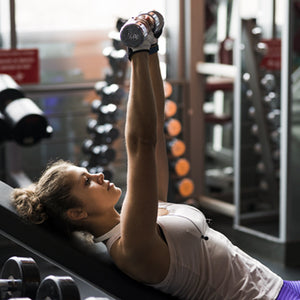
| Incline Dumbbell Bench Press | 4 | 8-10 | 90 sec |
| Hammer Grip Dumbbell Bench Press | 3 | 10-12 | 90 sec |
| Incline Cable Fly | 3 | 12-15 | 60 sec |
| Pec Dec (Butterfly) | 3 | 12-15 | 60 sec |
| Cable Rope Overhead Tricep Extensions | 3 | 12-15 | 60 sec |
| Face Pulls | 3 | 15-20 | 45 sec |
| Seated Dumbbell Lateral Raise | 3 | 12-15 | 60 sec |
| Day 2 | |||
|---|---|---|---|
| Back, Rear Delts and Positions | |||
| Exercise | Sets | Reps | Rest |
| Close Grip Pulldown | 4 | 8-10 | 90 sec |
| Seated Cable Rows | 3 | 10-12 | 90 sec |
| One Arm Dumbbell Row | 3 | 10-12 | 60 sec |
| Reverse Cable Fly | 3 | 15-20 | 45 sec |
| Dumbbell Scaption | 3 | 12-15 | 45 sec |
| Cable Shrugs | 3 | 12-15 | 45 sec |
| Thoracic Spine Rotation | 2 | 8-10 per side | 30 sec |
| Day 3 | |||
|---|---|---|---|
| Chest B, Flat and Fly Emphasis | |||
| Exercise | Sets | Reps | Rest |
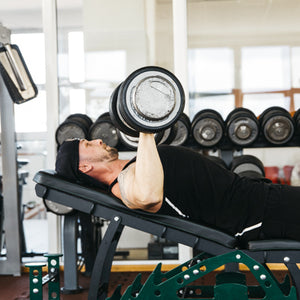
| Dumbbell Bench Press | 4 | 8-10 | 90 sec |
| Cable Chest Press (Cable Press) | 3 | 10-12 | 90 sec |
| Incline Dumbbell Flys | 3 | 12-15 | 60 sec |
| Low Cable Cross | 3 | 12-15 | 60 sec |
| Tricep Pushdown | 3 | 12-15 | 60 sec |
| Cable Lateral Raise | 3 | 15-20 | 45 sec |
| Cable One Arm Tricep Extensions | 3 | 12-15 | 60 sec |
How to Progress
Four blocks, two weeks each, and only one variable moves at a time.
Weeks 1 to 2. Set the loads so every working set finishes with two or three reps left in the tank. Your job in these two weeks is not to be impressive, it is to find the exact bottom depth on each press and fly that feels like nothing but stretched pec. Write the load and that depth down. Do not chase failure yet.
Weeks 3 to 4. Same loads, more reps. Work every row toward the top number of its listed rep range while keeping the depth you settled on. Once you hit the top number on every set of a movement, add the smallest jump available next session and start again at the bottom number of the range.
Weeks 5 to 6. Add one set to the first exercise on Day 1 and the first exercise on Day 3, taking each from four sets to five. Nothing else changes. Take the last set of each fly to one rep short of failure, and only the last set.
Weeks 7 to 8. Density. On every row that lists 60 seconds of rest, cut it to 45 seconds and hold the loads you finished week 6 with. The pressing rows keep their 90 seconds. These are the two hardest weeks of the plan and they are supposed to be. This plan runs eight weeks, so there is no deload block in it; when week 8 is done, take four to five easy days and then start the next block.
Warm-Up and Recovery Notes
Give the warm-up six to eight minutes and do not skip it on chest days. Five minutes of easy cardio to get warm, then two sets of Face Pulls with a light setting, one set of Thoracic Spine Rotation for eight per side, and two ramp-up sets on the first press of the day at roughly half and three quarters of your working load. On those ramp-up sets, stop short of your working depth on the first one and take the second to the depth you plan to use. If anything in the bottom position does not feel clean that day, shorten the range for the whole session rather than pushing into it.
Chest recovers fast; the front of the shoulder does not always keep up, which is exactly why the pressing days are separated by a pull day. Sleep is the recovery tool that actually moves the needle, so aim for seven to nine hours and be honest about whether you are getting it. Between sessions, keep moving. Easy walking, light cable work and general activity do more for tissue than lying still. If soreness in the pec is still heavy forty-eight hours later, drop one set from each fly that week rather than skipping the session. And to say it once more, plainly: this is training advice, not medical advice, and persistent or sharp pain belongs in front of a qualified professional rather than in your training log.
Nutrition and Supplementation
A chest specialization block only builds tissue if you feed it. Sit at maintenance calories or slightly above, roughly 200 to 300 over, and hold protein at about one gram per pound of target body weight. Carbohydrates fill the rest of the training-day calories because the fly and press volume here is real work, and fat lands somewhere around a quarter of total calories. If you are dieting hard while running this, understand what you signed up for: you can keep the chest you have and get stronger in a shorter range, but eight weeks in a deficit is not eight weeks of growth. The diet drives that outcome, not the split.
Food and training do the work here, and everything else is supplemental, so keep it simple: hit your protein target with real meals first and use a protein powder only to close the gap on days you fall short, run three to five grams of creatine daily because it is the most consistently supported product on this list, and take a basic multivitamin if your food variety is poor.
FAQ
Why is there no flat barbell bench in a chest plan? Because the whole point of this version is a path you control. A bar locks both hands into one grip and one plane and drives the bottom position past where a lot of people are comfortable. Dumbbells and cables let each shoulder find its own line, and they let you stop the bottom where you want to. If the barbell has always felt fine for you, run a different chest plan; this one exists for the people it does not.
Will I lose chest size training this way? No. The pec responds to tension and to volume through a range, not to a specific implement. You are getting twenty-six hard sets a week aimed directly at the chest, which is plenty for eight weeks. What you may lose is a bit of raw flat-bench numbers, since you are not practicing that lift. That is the trade.
How do I tell a good set from a bad one here? A good set feels like a deep stretch and a burn in the chest itself and nothing pointed at the front of the shoulder or the top of the collarbone. If a specific movement produces something sharp or something that lingers after the set, drop that movement and use another from the same day. If it keeps happening across movements, or it does not settle down, that is a conversation with a qualified professional, not a programming problem I can solve on a web page.


Questions and results
Ask a coach
Running this program? Tell us what week you are on and how the progression is going. A coach answers every question here.