





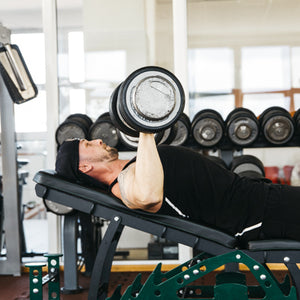


About this workout
Runners who lift get faster and get hurt less. It is that simple. Strong legs and hips hold their form when they fatigue, a solid core keeps you efficient, and single-leg strength protects the knees, ankles and IT band that break runners down. This program gives you all of that in just two short sessions a week, built to add strength without leaving your legs too trashed for your runs. Your running stays the priority; this is the work that makes it hold up.
Who This Program Is For
- You are a runner who wants to run faster and stay healthy.
- You can add two short strength sessions a week around your runs.
- You have access to basic gym equipment.
- You want strength that supports running, not a program that leaves your legs dead.
Who this is NOT for: anyone looking to build big muscle; this is minimal, supportive strength work. Runners chasing size should follow a proper hypertrophy plan instead.
What You'll Need
- A gym with a barbell, dumbbells and basic machines, or a solid pair of dumbbells at home.
- Enough recovery to keep your key runs strong; schedule lifting on easy run days.
- A log to track your lifts.
The Program
Two full body strength days, spaced apart and placed on easy or rest running days, never the day before a hard workout or long run. Lift with control, stop a rep or two before failure, and keep the sessions short and focused. The single-leg and core work is the point; do not skip it.
| Day 1 | |||
|---|---|---|---|
| Full Body A | |||
| Exercise | Sets | Reps | Rest |
| Goblet Squat | 3 | 8-10 | 90 sec |
| Romanian Deadlift | 3 | 8 | 90 sec |
| Walking Lunge | 3 | 10 each leg | 75 sec |
| Standing Calf Raise | 3 | 12-15 | 45 sec |
| Plank | 3 | 45 sec | 45 sec |
| Day 2 | |||
|---|---|---|---|
| Full Body B | |||
| Exercise | Sets | Reps | Rest |
| Bulgarian Split Squat | 3 | 8 each leg | 90 sec |
| Hip Thrust (Weighted Hip Extension) | 3 | 10-12 | 75 sec |
| Step Up | 3 | 10 each leg | 75 sec |
| One Arm Dumbbell Row | 3 | 10-12 each arm | 60 sec |
| Side Plank | 3 | 30 sec each side | 45 sec |
How to Progress
Twelve weeks of steady, supportive strength. Never let lifting compromise your running.
Weeks 1 to 4. Learn the movements and settle into weights you control easily. Keep two or three reps in reserve; your legs should feel worked, not wrecked.
Weeks 5 to 8. Add a little weight or a rep where sets feel easy, especially on the squats, hinges and single-leg work.
Week 8 (deload). Take an easy lifting week, especially if your running mileage is peaking. The two never both go hard at once.
Weeks 9 to 12. Keep nudging strength up on the main lifts. By week 12 your stride should feel stronger and more stable late in a run, which is the whole point.
Warm-Up and Recovery Notes
Warm up with five minutes of easy movement, then leg swings, glute activation and a light set of your first lift. If you lift after a run, you are already warm; still do a light ramp set.
The key is fatigue management. Put strength work on easy running days, keep the day before a hard workout or race clear, and sleep well. If your runs are suffering, cut the lifting volume, not the runs.
Nutrition and Supplementation
Runners need enough total food, especially carbohydrate, to fuel training, plus protein to recover from both the running and the lifting. Aim for about 0.7 to 0.9 grams of protein per pound of bodyweight.
Simple support: protein powder to hit your protein without heavy meals, and a daily multivitamin to cover the gaps that come with high training volume. Do not under-fuel; endurance athletes who skimp on food get hurt.
FAQ
Will lifting make me slower or bulkier? No. Two short strength days build durability and running economy, not size. You get faster and more resistant to injury.
When should I lift? On easy or rest running days, and never the day before a hard session or long run. Your running always comes first.
Only two days? Is that enough? For a runner, yes. Two focused sessions deliver most of the injury-prevention and performance benefit without stealing from your running.


Questions and results
Ask a coach
Running this program? Tell us what week you are on and how the progression is going. A coach answers every question here.