

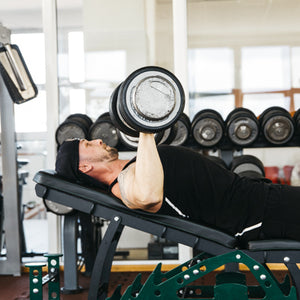


About this workout
This is a 12 week strength plan for women over 50 who want to get stronger and stay strong. Three full body days a week, 45 to 60 minutes each, built around loading your legs, hips, back and shoulders with weight you can actually handle and then adding to it over time. Lifting does not become less important as you age. It becomes the thing that keeps you independent. This plan is joint friendly in exercise selection, but do not confuse that with easy. You will work. You will also finish each session feeling like you could have done a little more, which is exactly the point.
Who This Program Is For
- Women over 50 who are new to resistance training, or coming back after years away from it.
- Anyone who wants strength, muscle and better balance without living in the gym three hours a week.
- People who can train three non-consecutive days a week and keep that up for 12 weeks.
- Anyone who wants to train at a gym or at home with dumbbells and bands, because both versions are covered.
Who this is NOT for: This is not for experienced lifters who already squat and deadlift heavy and need a specialized program. It is not a fat loss program, because your kitchen decides that, not your training. It is not a rehab plan. If you are working through an injury or a diagnosed condition, you need a professional looking at you in person, not an article.
What You'll Need
- Dumbbells in a range of weights. At a gym you have everything. At home, an adjustable pair from roughly 5 to 30 pounds covers most of this plan, and you will outgrow the light end faster than you expect.
- A set of resistance bands, including a loop band for hips and a long band for pulling.
- A bench or a sturdy chair, a step or low box, and a wall or countertop to hold for balance work.
- At a gym: a leg press and a lying leg curl. At home, swaps for both are listed below the tables.
- A notebook or your phone. Write down what you lifted. Progressive overload does not happen from memory.
The Program
Three full body sessions, labeled A, B and C, run on non-consecutive days. Monday, Wednesday and Friday is the standard setup, but any three days with a rest day between them works. Every session hits a squat pattern, a hinge pattern, a push, a pull and something that challenges balance or single leg control. That repetition is deliberate. Beginners get strong on frequency and practice, not variety. You are not going to be entertained by this program. You are going to get better at it, which is a different and more useful thing. Rotate A, B, C each week and keep the order.
| Day 1 | |||
|---|---|---|---|
| Full Body A | |||
| Exercise | Sets | Reps | Rest |
| Goblet Squat | 3 | 8-10 | 90 sec |
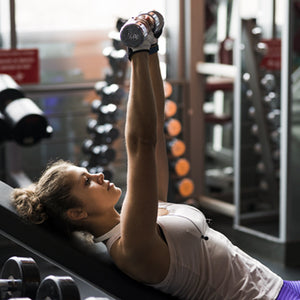
| Dumbbell Bench Press | 3 | 8-10 | 90 sec |
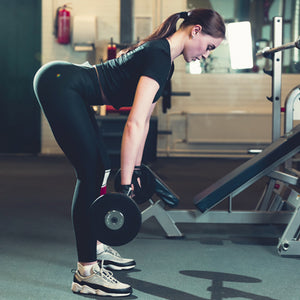
| Dumbbell Romanian Deadlift | 3 | 8-10, 3 sec down | 90 sec |
| Banded Lat Pulldown | 3 | 10-12 | 60 sec |
| Step Up | 2 | 8 each leg | 60 sec |
| Plank | 3 | 20-40 sec | 45 sec |
| Day 2 | |||
|---|---|---|---|
| Full Body B | |||
| Exercise | Sets | Reps | Rest |
| Leg Press | 3 | 10-12 | 90 sec |
| One Arm Dumbbell Row | 3 | 10-12 each side | 75 sec |
| Dumbbell Shoulder Press | 3 | 8-10 | 75 sec |
| Glute Bridge | 3 | 12-15 | 60 sec |
| Dumbbell Farmers Walk | 3 | 30-40 sec per trip | 60 sec |
| Banded Side Step | 2 | 12 each direction | 45 sec |
| Side Plank | 2 | 15-30 sec each side | 45 sec |
| Day 3 | |||
|---|---|---|---|
| Full Body C | |||
| Exercise | Sets | Reps | Rest |
| Dumbbell Squat | 3 | 10-12 | 90 sec |
| Incline Push Ups | 3 | 8-12 | 75 sec |
| Banded Row | 3 | 12-15 | 60 sec |
| Single Leg Romanian Dumbbell Deadlift | 2 | 8 each leg | 60 sec |
| Lying Leg Curl | 3 | 10-12 | 60 sec |
| Standing Calf Raise | 3 | 12-15 | 45 sec |
| Superman | 2 | 10, 2 sec hold | 45 sec |
Training at home? Swap the Leg Press for a second set block of Goblet Squat or Dumbbell Reverse Lunge, and swap the Lying Leg Curl for a Glute Bridge held at the top or a Dumbbell Hamstring Curl. Hold a wall or a countertop for the Step Up and the single leg work until your balance catches up, then let go one finger at a time. Letting go is the whole training effect, so do not stay glued to the wall for 12 weeks.
How to Progress
The plan does not change much over 12 weeks. The weight on the dumbbells does.
Weeks 1 to 4. Learn the movements and build the habit. Pick a weight where the last rep of a set is challenging but your form does not fall apart. Stop every set with two or three reps left in the tank. Add a small amount of weight or one or two reps whenever a set feels genuinely easy. Most people under-load here out of caution, and then wonder why nothing changed. Be honest with yourself about what is actually hard.
Weeks 5 to 8. Add a set to the first exercise of each day, so the squat pattern, the leg press and the dumbbell squat go to 4 sets. Keep chasing weight on the main lifts. On balance work, reduce hand support: fingertips on the wall instead of a full grip, then nothing. Add a slow 3 second lowering phase to the Step Up if your balance is solid.
Week 9: Deload Week. This is a real week of the program, not an optional one. Run all three days as written but cut every set to about 60 percent of your usual working weight and stop 4 or 5 reps short of hard. Drop the extra sets you added in weeks 5 to 8. You are letting joints, tendons and connective tissue catch up to the muscle. Skipping the deload is the most common way a 12 week plan turns into a 7 week plan.
Weeks 10 to 12. Come back and push. Aim to beat your week 8 numbers on the first two exercises of each day, even by 2.5 pounds or one rep. Hold the top of the rep range on assistance work before you add weight. At the end of week 12, write down every load, then either rerun the plan from week 1 with those numbers as your new starting point, or move up to a four day program.
Warm-Up and Recovery Notes
Warm up for 8 to 10 minutes and do not skip it. Five minutes of Incline Walking or easy Rowing to raise your temperature, then Cat Cow Stretch, Thoracic Spine Rotation, Hip Flexor Stretch and Band Shoulder Dislocate for a few slow reps each. Then do one or two light sets of the first exercise of the day before you touch your working weight. Cold joints and heavy dumbbells are a bad combination at any age, and the warm-up is where your shoulders and hips get the memo that work is coming.
Recovery is the half of the program nobody posts about. Sleep is the biggest lever you have, so protect 7 to 9 hours the way you would protect a training session. Walk on your off days, 20 to 30 minutes, because it helps circulation and it keeps you moving without adding fatigue. Expect to be sore in the first two weeks and expect that to settle down. Soreness is not a scorecard. If a joint hurts, as opposed to a muscle being tired, stop that exercise and use one of the swaps above. This article is not medical advice, and if you have a diagnosed condition, a recent injury or any new symptom, clear this plan with your doctor before you start.
Nutrition and Supplementation
Eat enough protein and eat enough food. Protein is the priority at this stage of life, because holding onto muscle takes more of it than building it did at 25. Aim for roughly 0.7 to 1 gram per pound of your goal bodyweight per day, spread across three or four meals rather than dumped into dinner. Build meals around a protein source, add vegetables and fruit, and put carbohydrates around your training days so you have something to lift with. Do not cut calories hard while you are trying to get stronger; the two goals fight each other and strength usually loses. Food is not a reward you earn with a workout and it is not a punishment. It is the raw material.
If you struggle to hit your daily protein target with whole food alone, a scoop or two of protein powder is a simple way to close the gap, and a basic daily vitamin covers the nutrients that get thin when overall food intake is modest.
FAQ
Will lifting weights make me bulky? No, and I would like to retire this question. Building a large amount of muscle takes years of hard training and a deliberate calorie surplus. What three days a week of dumbbells actually gets you is stronger legs, a back that holds you upright, and better balance. That is the outcome. The mirror change most women report is looking leaner at the same scale weight, and that is muscle doing its job.
Is three days a week really enough at my age? Yes, if you actually do all three, every week, for 12 weeks. Frequency you can sustain beats an ambitious plan you abandon in week 3. Three full body sessions hit every major muscle group three times a week, which is plenty of stimulus for a beginner. If you want more activity, walk on the off days rather than adding a fourth lifting session in month one.
Why is there balance work in a strength program? Because falling is the risk that actually changes lives in this age group, and balance is trainable like anything else. Step Up, Single Leg Romanian Dumbbell Deadlift, Dumbbell Farmers Walk and Side Plank all force you to control your body over one leg or resist being pulled sideways. Getting stronger helps, but practicing balance directly helps more. Keep those exercises in even on the days you are tempted to cut the session short.


Questions and results
Ask a coach
Running this program? Tell us what week you are on and how the progression is going. A coach answers every question here.