
NEW NULLA BAR FLAVORS
In-Stock Now!

Best overall: a smooth, medium-density foam roller. Best for beginners: a soft, smooth roller. Best simple option: a basic, nonpowered cylinder without raised knobs. This 2026 guide from Tiger Fitness compares foam roller types by pressure control, size, and usefulness around your workouts not by how much discomfort you can tolerate.
Foam rolling can improve short-term range of motion and help reduce perceived post-workout soreness. That makes a roller useful around training, but it does not make rolling a substitute for recovery basics or an injury treatment.
The buying mistake is confusing intensity with effectiveness. A roller that makes you tense up, hold your breath, or rush through every pass is a poor match even if its packaging targets serious athletes.
For your 2026 recovery setup, prioritize equipment you can use comfortably and consistently. For Tiger Fitness readers choosing a foam roller, a smooth, medium density roller is the best starting point. Start there unless your experience or training setup gives you a clear reason to choose something different.
Judge a roller against these criteria before comparing extra features:
A 36-inch roller takes more storage space than an 18-inch roller. A 12-inch roller offers less side-to-side room than either. These are size trade-offs, not recovery rankings.
These 2026 picks rank roller types, not unverified product models. Each option has a distinct use case, so the first row is the default not a claim that every other design is inferior.
| Foam roller type | Best for | Standout feature | Key limitation |
|---|---|---|---|
| Smooth, medium density | Most lifters choosing one roller | Broad contact with manageable firmness | Does not satisfy every pressure preference |
| Soft, smooth | Beginners and pressure-sensitive users | More cushioning under body weight | Compresses more than firmer foam |
| Dense, smooth | Experienced users who prefer firm contact | Firm surface without raised ridges | Less forgiving when you load too much weight |
| Compact, smooth | Gym bags and travel | Shorter cylinder takes less packing space | Less room for broad positioning |
| Textured, firm | Users who prefer localized contact | Ridges or knobs change contact distribution | Concentrated pressure is easier to overdo |
| Vibrating | Users who specifically enjoy vibration | Adds vibration to ordinary rolling | Requires power and additional controls |
A smooth, medium-density roller is the most straightforward starting point for quads, calves, glutes, and other appropriate muscular areas. Its continuous surface lets you adjust pressure through your position without also managing raised knobs.
Choose this type when you want one roller for general use before or after workouts. The important test is whether you can move slowly, breathe normally, and keep your body supported.
Smooth, medium-density pros:
Smooth, medium-density cons:
Best for: Lifters choosing their first general-purpose roller or replacing an overly aggressive one.
Verdict: Buy as your default 2026 foam roller. Choose actual firmness by feel, not by a label suggesting advanced performance.
A soft roller provides more cushioning than a dense cylinder. That makes it a sensible choice when firm contact causes you to brace or avoid rolling altogether.
Soft foam does not remove the need for control. You still need to support your weight, avoid sensitive structures, and stop when pressure becomes painful rather than tolerable.
Soft, smooth pros:
Soft, smooth cons:
Best for: New users and people who find standard firm rollers uncomfortable.
Verdict: Buy if comfortable contact is your main requirement. Skip the idea that you must graduate to a harder roller to make your recovery routine legitimate.
A dense, smooth roller provides firm contact without adding surface ridges. It suits experienced users who already know how to unload body weight and prefer less cushioning.
Experience matters because a firm cylinder gives you less margin for careless positioning. Keep your hands and supporting leg involved rather than relying on toughness to get through the session.
Dense, smooth pros:
Dense, smooth cons:
Best for: Experienced foam roller users who consistently prefer a firm, smooth surface.
Verdict: Buy only when firmer contact is a preference you already understand. Wait if you are choosing it solely because harder equipment looks more serious.
A compact roller trades working length for easier packing. It makes sense when you want to carry a roller to the gym rather than keep it beside your training mat.
Compare the actual cylinder dimensions with your bag opening and available space. An 18-inch roller and a 12-inch roller do not provide the same positioning room, even when their foam density is similar.
Compact, smooth pros:
Compact, smooth cons:
Best for: Lifters who carry recovery equipment between home and the gym.
Verdict: Buy when transport is the deciding factor. Skip a compact model if your main frustration with your current roller is limited working space.
Textured rollers use ridges, grooves, or knobs to change where the surface contacts your body. That contact feels different from a smooth cylinder, especially when you load a raised section.
Choose texture because you prefer that sensation not because you expect the roller to break up scar tissue or physically remove knots. Those explanations turn a pressure tool into a promise it cannot support.
Textured, firm pros:
Textured, firm cons:
Best for: Experienced users who have tried textured surfaces and prefer them.
Verdict: Hold until you know you enjoy the contact pattern. For a first foam roller in 2026, smooth foam remains the simpler choice.
A vibrating roller adds a powered function to the rolling surface. You still control where it sits, how much weight you apply, and whether the contact feels comfortable.
The feature is a preference, not a reason to abandon good positioning. Check the specific model's controls and care instructions rather than assuming every powered roller works the same way.
Vibrating pros:
Vibrating cons:
Best for: Users who have tried vibration and specifically want it in their routine.
Verdict: Wait unless vibration is a feature you already value. Skip the upgrade if you are satisfied with a basic smooth roller.
The ranking prioritizes controllable pressure, straightforward use, and a clear match between design and purpose. Smooth, medium-density foam comes first because it avoids both extremes: substantial compression and aggressive localized contact.
Soft foam wins the comfort slot. Dense foam serves a known firmness preference. Compact, textured, and vibrating designs each solve a narrower requirement rather than replacing the default.
These are design-based recommendations, not laboratory performance scores. No ranking here assigns a durability lifespan, claims a particular recovery speed, or treats soreness relief as proof of muscle growth.
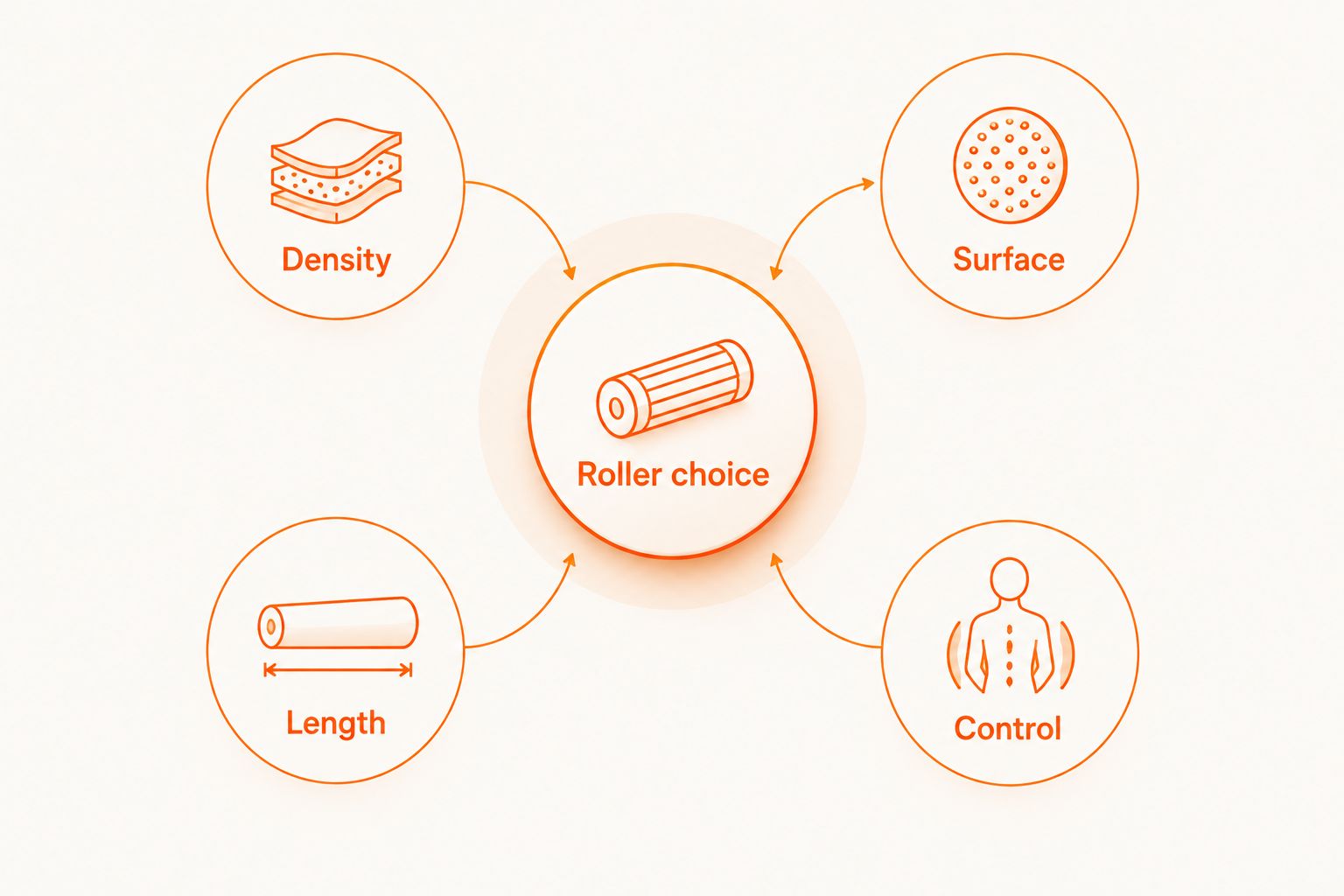
Use these four checks to narrow your 2026 purchase. A roller that passes them is more useful than one selected for an impressive looking surface.
These checks work together. A short roller with the right firmness is useful for travel; a longer roller with uncomfortable firmness is still the wrong tool.
Check cleaning instructions before sharing a roller or using it on a gym floor. Inspect the foam for cracking, deformation, or exposed hard edges; damaged equipment should not remain part of your routine.
Start on a muscular area you can reach while keeping stable support. Move deliberately and use your hands or opposite leg to reduce the load. Tolerable pressure is the target; sharp pain is a stop signal.
Before training, keep rolling subordinate to your warm-up. Follow it with movements relevant to the workout so you can assess how the area feels under normal movement not just under pressure.
After training, use rolling as an optional comfort routine. You do not need to cover every muscle, hunt for painful spots, or finish a rigid schedule to justify owning the tool.
Avoid rolling directly over joints, the neck, or the lower spine. Do not apply pressure to an acute injury, open wound, or unexplained swelling. Get medical guidance first if you have a condition or take medication that changes your bleeding or clotting risk.
Persistent pain, numbness, or pain that changes how you walk or lift needs assessment rather than a harder roller. Tiger Fitness foam roller guidance is about general training habits, not diagnosing or treating an injury.
Choose a smooth, medium-density roller unless you have a specific reason not to. Choose soft foam for comfort, dense foam for an established firmness preference, and compact foam when packing space matters most.
Textured and vibrating rollers belong later in the decision. Neither feature fixes excessive pressure, poor positioning, inadequate sleep, or a training plan that outpaces your recovery.
Keep the rest of your recovery routine in view. Adequate food, protein, sleep, and sensible training progression matter more than adding another surface pattern to your equipment collection.
What's the Best foam roller for muscle recovery in 2026?
A smooth, medium-density foam roller is the best starting point for most lifters. It provides broad contact without adding aggressive texture or powered controls.
Is a hard foam roller better than a soft foam roller?
A hard foam roller is not automatically better than a soft roller. Choose the firmness that lets you control pressure and breathe normally without bracing against discomfort.
Are textured foam rollers better for sore muscles?
Texture is not a reliable reason to expect better recovery. Raised ridges change contact distribution, so choose them only if you prefer that sensation and can control the pressure.
Should I foam roll before or after my workout?
You can use foam rolling before or after a workout. Before training, follow it with a movement-specific warm-up; afterward, treat it as an optional comfort routine rather than a recovery requirement.
What size foam roller should I buy?
Buy a length that fits your intended movements, storage space, and gym bag. A longer cylinder gives you more positioning room, while a compact cylinder takes less packing space.
Does foam rolling get rid of muscle knots?
Foam rolling does not establish that you have physically removed a muscle knot. It can change how an area feels and improve short-term range of motion without proving that tissue has been broken apart.
Is a vibrating foam roller necessary for recovery?
A vibrating foam roller is not necessary for a useful rolling routine. Choose vibration only if you enjoy it; you still need comfortable pressure and stable positioning.
Should foam rolling hurt?
Foam rolling should not cause sharp pain, numbness, or symptoms that persist afterward. Reduce pressure or stop, and seek assessment for unexplained or continuing pain.
The hardest roller is not necessarily the most demanding part of recovery. Sometimes the better move is ending a session instead of adding more pressure to a muscle that already feels irritated.
For your 2026 routine, choose the roller that lets you stay relaxed and in control. If you have to fight the roller, change the pressure or change the roller.
This article provides general fitness information, not medical advice. Products and claims are not intended to diagnose, treat, cure, or prevent any disease.
{"one"=>"Select 2 or 3 items to compare", "other"=>"{{ count }} of 3 items selected"}




Leave a comment