





BEST WHOLE FOOD SOURCES FOR POST WORKOUT RECOVERY
Best Whole Food Sources for Post Workout Recovery
Table of Contents
- Post Workout Nutrition Timing: What Actually Matters
- High Protein Foods After Workout: The Complete Protein Shortlist
- Carbohydrates for Glycogen Replenishment: Rice, Potatoes, Oats, and Fruit
- Post Workout Meals for Muscle Recovery: Build Your Plate
- Post Workout Snacks for Muscle Recovery: Portable Whole Food Options
- Serving Sizes, Hydration, and Personalization for Post Workout Recovery
- Conclusion
- Frequently Asked Questions
Last Updated: October 6, 2026
Post Workout Nutrition Timing: What Actually Matters
The best whole food sources for post workout recovery start with a simple truth: your body doesn't care about fancy timing windows as much as it cares about total protein and carbs. According to research published in Emerging Perspectives on Post-Exercise Recovery Nutrition, functional foods including tart cherry juice, turmeric-seasoned foods, and omega-3 sources show real recovery benefits. At Tiger Fitness, we've watched lifters obsess over the "anabolic window" for years while ignoring what actually fills their plate.
Here's the deal. Post workout recovery is about giving your muscles two things: amino acids to repair tissue and carbohydrates to refill glycogen. Get those in within a reasonable window after training, and you're ahead of 90% of people in the gym.
The old rule said you had 30 minutes or you'd lose your gains. That's overstated. What matters more is what you eat, not just when.
Key Takeaway Muscle repair depends on total daily protein and carbs, not a frantic race to the shaker bottle. Aim for a real meal within a couple hours of training.
High Protein Foods After Workout: The Complete Protein Shortlist
High protein foods after workout should deliver complete amino acids, and that means animal sources lead the pack. A 2026 recommendation from Clean Eatz Kitchen's post-workout recovery guide points to chicken, turkey, beef, eggs, and fish paired with a carbohydrate source.
Here are the top whole food protein picks:
- Chicken breast - lean, complete protein that's easy to prep in bulk
- Turkey - similar profile, great in ground form
- Lean beef - delivers protein plus iron and creatine
- Eggs and egg whites - the gold standard for amino acid balance
- Salmon and fatty fish - protein plus omega-3s for recovery
- Greek yogurt and cottage cheese - slow-digesting casein protein
Why complete protein beats protein quantity alone
Complete protein contains all nine essential amino acids your body can't make on its own. Twenty grams of complete protein builds more muscle than thirty grams of an incomplete source. That's why a chicken breast beats a handful of nuts for muscle repair, even at the same protein count.
Carbohydrates for Glycogen Replenishment: Rice, Potatoes, Oats, and Fruit
Glycogen replenishment is the recovery step most people skip. Training drains your muscles' stored carbs, and if you don't refill them, your next session suffers. TrainingPeaks lists rice, potatoes, watermelon, and bagels as high-glycemic whole-food options for fast refueling (Five Whole Foods Ingredients for Post-Workout Recovery).
Best whole-food carb sources:
- White rice - fast digesting, easy on the stomach
- Sweet potatoes - complex carbs plus potassium
- Oats - steady energy with fiber
- Bananas and dried fruit - quick natural sugars
- Quinoa - carb and plant protein in one
Fast versus slow carbs after training
Fast carbs hit your bloodstream quickly and refill glycogen fast. Slow carbs keep you full longer but take more time to digest. After a hard session, fast carbs win. Save the slow carbs for meals further from training.
Pro Tip Cream of rice is the sleeper carb for post-workout. It digests fast, sits easy on the stomach, and you can mix in protein powder and fruit for a complete recovery meal.
Post Workout Meals for Muscle Recovery: Build Your Plate
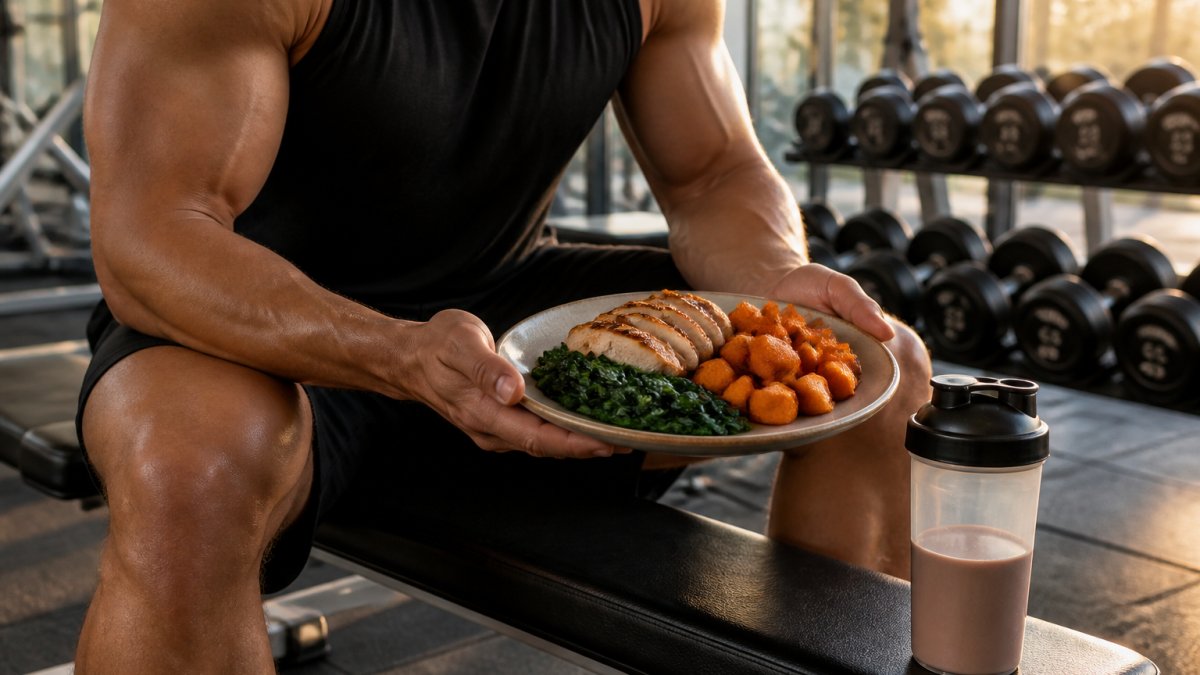
Post workout meals for muscle recovery follow one formula: a complete protein plus a fast carb plus something green. Get that combination right and you cover muscle repair, energy, and micronutrients in one sitting. But the formula alone is not enough, you need numbers, and you need them tied to your body weight and your training.
Portion math that actually works
Forget eyeballing. A practical starting point most coaches use is 0.3 to 0.4 grams of protein per kilogram of body weight in the post-workout meal, paired with 0.5 to 1.0 grams of carbohydrate per kilogram for strength work, and up to 1.0 to 1.2 grams per kilogram for endurance sessions. Convert to pounds by dividing your body weight in pounds by 2.2 first.
Example: a 180 lb lifter is about 82 kg. That means roughly 25 to 33 grams of protein and 40 to 80 grams of carbs in the meal right after training. That is a 6 oz chicken breast plus 1.5 cups of cooked white rice, not a mystery, just math.
Three complete meal builds
- Strength session (heavy lifting): 6 oz grilled chicken breast, 1.5 cups cooked white rice, 1 cup sauteed spinach, drizzle of olive oil. Roughly 40g protein, 65g carbs.
- Endurance session (long run, ride, or conditioning): 4 oz salmon, 2 cups roasted sweet potato, 1 cup berries. Roughly 28g protein, 70g carbs plus omega-3s.
- Plant-based recovery: 1 cup cooked lentils plus 1 cup cooked quinoa, 1 cup roasted broccoli, 1 tbsp chia seeds, and a piece of fruit. Roughly 30g protein, 75g carbs, and a complete amino acid profile when the legumes and grains are combined.
Plant-based complete protein without the guesswork
If you avoid animal products, you have to combine complementary proteins. Legumes (lentils, chickpeas, black beans) are low in methionine; grains (rice, quinoa, oats) are low in lysine. Eat them together and you close the gap. Tofu, tempeh, and edamame are already complete on their own. A bowl of rice and beans, a tempeh stir-fry over quinoa, or a lentil-and-oat bowl all deliver the full essential amino acid set.
Timing flexibility
You do not need to sprint to the kitchen. A real meal within two hours of training covers the vast majority of lifters. If you trained fasted, eat sooner, within 60 minutes, because your glycogen is already low going in. If you ate a full meal one to two hours before training, you have more slack. After a long endurance session in the heat, prioritize carbs and fluids first, then protein.
Key Takeaway Match your plate to your body weight and your workout type. Protein and carbs in the right amounts, from real food, beat any fancy timing trick.
Post Workout Snacks for Muscle Recovery: Portable Whole Food Options
Post workout snacks for muscle recovery matter when you're stuck between meetings or on the road. The trick is finding portable whole food that won't wreck your macros.

Our go-to picks:
- Ostrim Beef & Elk Sticks - up to 14g of protein per stick, low fat, no nitrates or preservatives. Toss one in your gym bag and you're covered.
- Ovation Foods Steak-N-Eggs - premium beef and a whole egg in one grab-and-go bag, zero sugar, keto and paleo friendly.
- MRE Protein Bars - 20g of protein, 6g of sugar, and real whole food sources per bar.
- Greek yogurt with berries - protein plus antioxidants in a cup
Watch Out Don't grab a candy bar and call it recovery. Sugar without protein spikes insulin, crashes your energy, and leaves muscle repair on the table.
Serving Sizes, Hydration, and Personalization for Post Workout Recovery
Post workout recovery is not one-size-fits-all. Your portions should match your training, hydration is the piece almost everyone ignores, and dietary restrictions change the whole game. This is where most articles stop short, here is the full picture.

Serving sizes by goal and body weight
Use these as starting points, then adjust based on how you feel and perform in your next session. Protein and carb amounts are per kilogram of body weight (divide pounds by 2.2 to get kilograms).
| Goal | Protein (g/kg) | Carbs (g/kg) | Notes |
|---|---|---|---|
| Strength training | 0.3-0.4 | 0.5-0.8 | Prioritize complete protein |
| Endurance work | 0.25-0.35 | 1.0-1.2 | Higher carbs for glycogen |
| Fat loss phase | 0.4-0.5 | 0.3-0.5 | Keep protein high, carbs moderate |
| Plant-based | 0.35-0.45 | 0.6-0.9 | Combine legumes, grains, seeds |
For a 150 lb (68 kg) lifter doing strength work, that is roughly 20 to 27 grams of protein and 34 to 54 grams of carbs. For a 200 lb (91 kg) endurance athlete, that is roughly 23 to 32 grams of protein and 91 to 109 grams of carbs. Real numbers, real food.
Hydration and Electrolytes
Replace what you sweat out. For sessions under 60 minutes, water is usually enough. For sessions over 60 minutes, or any training in heat, add sodium. Whole-food options include a pinch of sea salt in your water, salted nuts, or a banana with a salty snack. Coconut water delivers potassium but is light on sodium, so do not rely on it alone for long, hot sessions.
Dietary restrictions and allergies
- Lactose intolerance: Skip Greek yogurt and cottage cheese. Use lactose-free milk, hard cheeses (naturally low in lactose), or plant-based protein like tofu, tempeh, and pea protein.
- Gluten avoidance: Rice, potatoes, quinoa, oats (certified gluten-free), and corn are all safe carb options. Avoid wheat-based bagels and pasta.
- Egg allergy: Swap eggs for chicken, fish, lean beef, or a plant-based combo of rice and beans.
- Nut allergy: Use seeds, chia, flax, hemp, pumpkin, for healthy fats and added protein.
- Soy allergy: Stick with legumes like lentils and chickpeas, plus rice or quinoa to complete the amino acid profile.
Fasted versus fed training
If you trained fasted, your glycogen is already low and your body is primed for nutrients. Eat within 60 minutes and prioritize fast carbs plus protein. If you ate a full meal one to two hours before training, you have more flexibility, a meal within two hours after training is fine. Endurance athletes who train for hours should start refueling during the session, not just after.
Watch Out Do not chug a sports drink and call it hydration. Sugar without sodium and protein does little for recovery. Get your fluids, your electrolytes, and your real food in the same window.
Key Takeaway Personalize your portions by body weight and workout type, replace your sweat with fluids and sodium, and adjust for any food restrictions. That is how you recover like a pro.
Conclusion
Recovery is where the gains actually happen, and too many people leave it to chance. Whole food protein, smart carbs, and real hydration do the job better than any shortcut. Tiger Fitness stocks the whole-food snacks and recovery fuel to back it up, including Ostrim sticks, MRE bars, and real food meal replacements, all at our lowest prices with fast shipping. If you want to dial in your numbers, our FREE TOOLS & FITNESS CALCULATORS make it easy to figure out your protein and carb targets, then get started with Tiger Fitness and recover like you train.
Frequently Asked Questions
What is the best food to eat for post-workout recovery?
There is no single magic food. The research points to pairing a protein source with carbohydrates: chicken, turkey, beef, eggs, or fish alongside rice, potatoes, or fruit. Build the plate around that pairing rather than chasing one hero ingredient.
Are 2 eggs enough protein after a workout?
Two large eggs give you roughly 12 grams of protein, which is a start but usually short of what a hard training session calls for. The better move is to add a carbohydrate and another protein source: eggs plus oatmeal, or eggs alongside Greek yogurt. Ovation Foods Steak-N-Eggs combines premium bottom round beef with one whole egg in a portable package if you want a grab-and-go option that carries more protein per serving.
Do I need to eat immediately after a workout?
No. Recovery nutrition centers on what you eat across the day, not a stopwatch. A review in the journal article "Emerging Perspectives on Post-Exercise Recovery Nutrition" (2024) highlights recovery benefits from functional foods like tart cherry juice, turmeric-seasoned foods, and omega-3 sources, which suggests the overall pattern matters more than a narrow window. Get a protein-and-carb meal in within a couple of hours and keep your daily totals consistent.
Which whole foods provide protein after a workout?
Lean meats like chicken breast, turkey, and beef; fish including salmon; eggs and egg whites; Greek yogurt and cottage cheese; and plant options such as quinoa and chickpeas. Pair any of them with a carbohydrate. If you need something portable, Ostrim Beef & Elk Sticks deliver up to 14 grams of protein per stick with minimal fat, and Ostrim Turkey Sticks offer a similar lean profile for a post-workout snack.
What should I eat after a workout to support muscle recovery?
Aim for a complete protein plus a carbohydrate, with some color on the plate. Chicken or salmon with sweet potato and spinach covers protein, glycogen replenishment, and antioxidants. Add healthy fats from nuts, seeds, or chia. If cooking is not realistic, a whole-food meal replacement like Redcon1 MRE blends beef, salmon, chicken, egg, brown rice, and pea proteins with sweet potato, oats, and yam for a balanced option.
Leave a comment