







BEST PROTEIN POWDER FOR CUTTING
Budget Friendly Body Recomposition Supplements
Table of Contents
- What Body Recomposition Actually Is
- The Tier 1 Foundation: Protein and Creatine Monohydrate Benefits
- Best Protein Powder for Cutting and Recomposition
- How to Calculate Macros for Body Recomposition
- Cost-Effective Supplement Stacking for Body Recomposition
- Evidence-Based vs. Marketing Hype: What Actually Works
- Conclusion
- Frequently Asked Questions
Last Updated: September 27, 2026
What Body Recomposition Actually Is
Body recomposition is simultaneous fat loss and muscle gain with minimal weight change, and body recomposition supplements like protein and creatine are essential to making it work. Most lifters think you must choose: bulk or cut. Wrong. The research is clear.
According to Frontiers in Nutrition's 2024 analysis, body recomposition may occur independently of a strict energy balance model when protein intake is sufficiently elevated and resistance training volume is progressively increased. Translation: you can trade fat for muscle without eating yourself into oblivion or starving yourself into weakness.
Most lifters waste years cycling between bulks and cuts, gaining fat with muscle then losing half their gains cutting it off. Recomposition eliminates this cycle.
Pro Tip The real advantage of body recomposition is psychological. You see visual progress every week instead of waiting six months to "see what you built." That consistency keeps people training hard long-term.
Successful recomposition requires three things: adequate protein, progressive resistance training, and patience. No magic.
The Tier 1 Foundation: Protein and Creatine Monohydrate Benefits
If you're doing body recomposition, protein and creatine monohydrate are non-negotiable. Everything else is optional until these two are dialed in.
Protein provides amino acids for muscle synthesis and is the most satiating macronutrient. In a deficit, adequate protein keeps you full longer without deprivation.
Target 0.8 to 1 gram per pound of bodyweight daily. This isn't theory. European Journal of Applied Physiology research from Springer confirms that elevated protein intake is one of the two pillars supporting body recomposition success (the other being progressive resistance training volume).
Creatine monohydrate is the second pillar. It increases intramuscular phosphocreatine levels, which means more ATP regeneration during heavy lifting. More ATP means more reps, more weight, more total training volume. Over weeks and months, that volume difference compounds into measurable muscle preservation and strength gains.
Nutricost Creatine Monohydrate was rated 5 out of 5 for budget-friendly pricing by Garage Gym Reviews' 2026 muscle growth supplement evaluation. The formula is unflavored and single-ingredient, meaning zero fillers and zero guessing about what's actually in the container.
Dose: 5 grams daily. No loading phase needed. Consistency matters more than timing.
Watch Out A common mistake is cycling creatine on and off. Don't. Your muscles need steady creatine saturation. Take it every single day, even rest days. Missing doses sets you back.
Best Protein Powder for Cutting and Recomposition
In a deficit, protein powder is essential for hitting targets without excess calories.
Mutant Hardcore ISO is 100% whey protein isolate, filtered to remove fat, carbs, and lactose, delivering protein with minimal unwanted calories.
Isolate removes lactose and carbs that concentrate contains, critical when tracking macros tightly.
Mutant Hardcore ISO delivers purity without fillers or sugar.
It mixes cleanly and tastes good, critical for adherence when drinking multiple shakes daily.
How to Calculate Macros for Body Recomposition
Most people fail because they guess at their intake instead of tracking. Then they wonder why results stall.
Step 1: Establish Your Maintenance Calories
Multiply bodyweight by 14-16 (adjust 12-14 if sedentary, 16-18 if very active). A 200-pound lifter training 4-5 days weekly is roughly 3,200-3,400 calories at maintenance. Track for two weeks and adjust based on actual results.
Step 2: Set Your Deficit (The Critical Variable)
Use a small deficit of 200-500 calories below maintenance. A 200-300 calorie deficit preserves strength and adherence. If starting at high body fat (25%+ men, 30%+ women), tolerate 400-500 calories. If already lean (under 15% men, under 20% women), keep it 200-300 calories.
Step 3: Protein First
Aim for 0.8-1.0g per pound of target bodyweight. If targeting 180 pounds lean, eat 144-180g daily even if currently 200 pounds. Protein fuels muscle growth while the deficit handles fat loss and keeps you full. At 4 calories per gram, 150g = 600 calories, leaving remaining calories for carbs and fats.
Step 4: Carbs and Fats, Adjust Based on Training and Metabolic Response
The carb-to-fat ratio depends on training style, starting body composition, and individual response.
High-volume training (4-6 days/week): Prioritize carbs for fuel and glycogen. Use 45-50% carbs, 20-25% fat of remaining calories.
Moderate-volume training (3-4 days/week): Shift more to fat. Use 40% carbs, 30% fat.
Fasted training or intermittent fasting: Use 35% carbs, 35% fat, with carbs concentrated around training.
Step 5: Track and Adjust Weekly
Track macros for two weeks and weigh daily. If scale isn't moving but strength increases, drop 100 calories. If losing over 1 pound weekly, add 100-150 calories back. If losing 0.5-1 pound weekly and getting stronger, you're in the recomposition sweet spot.
Watch Out The scale is one data point. Take progress photos every two weeks. If the scale is stable but you're visibly leaner and stronger, you're recomposing. The scale doesn't distinguish between fat and muscle loss.
Supplements support macro targets, not replace them. Whey isolate helps hit protein targets efficiently. GDAs partition carbs toward muscle glycogen if eating 200g+ daily. CLA and L-carnitine support fat oxidation in tight deficits.

To dial in your numbers precisely, use FREE TOOLS & FITNESS CALCULATORS to establish maintenance calories and adjust based on real data rather than guessing.
Key Takeaway The best macro split is the one you'll actually follow for 12+ weeks. If you hate high-carb diets, shift more calories to fat. If you perform better on carbs, prioritize them. Consistency beats perfection. Adjust based on your training volume, starting body composition, and how your body responds, not based on what worked for someone else.
Cost-Effective Supplement Stacking for Body Recomposition
Most overcomplicate supplementation. The best body recomposition supplements for Tier 1 are simple: protein, creatine, and a multivitamin.
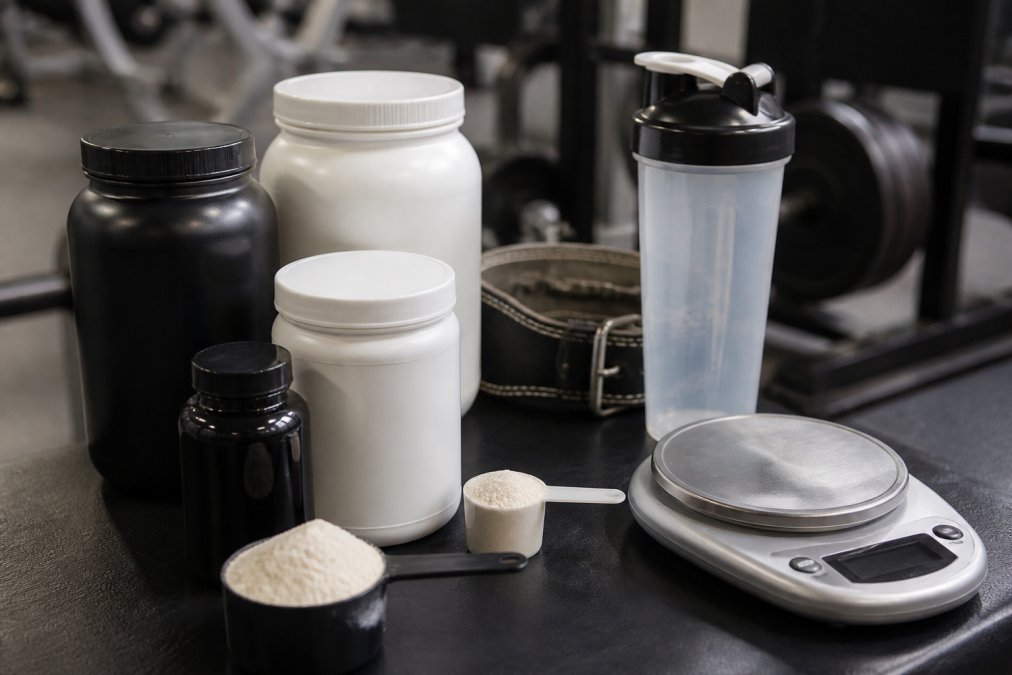
Tiger Fitness' 2026 supplement stacking guide identifies whey protein isolate and creatine monohydrate as the non-negotiable foundation. Everything else is built on top of that base.
Tier 1: The Non-Negotiable Foundation
-
Whey Protein Isolate: Protein directly supports muscle preservation during a deficit, the core mechanism of recomposition. It's the single most important supplement.
-
Creatine Monohydrate: Five grams daily increases intramuscular phosphocreatine, regenerating ATP faster during heavy lifting. More ATP means more reps at higher weights. Over 12 weeks, that compounds into measurable strength gains and muscle preservation.
-
Multivitamin: Covers micronutrient gaps, magnesium, zinc, and vitamin D, critical for hormone production and recovery during a deficit.
Total Tier 1 monthly cost: $80-120. This is your baseline. Lock this in for 8-12 weeks before adding anything else.
Tier 2: Nutrient Partitioning and Fat Oxidation (Optional)
Once Tier 1 is dialed in and you've proven consistency with training and nutrition, Tier 2 supplements address specific recomposition challenges:
Glucose disposal agents (GDAs) like dihydroberberine enhance insulin sensitivity. The mechanism: they activate AMPK and improve glucose uptake in muscle cells, which means carbs you eat are more likely to fill muscle glycogen than convert to fat. This matters during recomposition because you're eating in a slight deficit while trying to maintain training performance. Better nutrient partitioning means you preserve more muscle while losing fat.
Conjugated linoleic acid (CLA) supports fat oxidation by increasing the activity of hormone-sensitive lipase, the enzyme that breaks down stored triglycerides. It's not a stimulant, so it stacks cleanly with everything. The research shows modest but measurable fat loss when combined with resistance training and a deficit.
L-carnitine transports long-chain fatty acids into the mitochondria for oxidation.
Tier 3: Hormonal Support (Advanced)
The Real Cost-Per-Result Calculation
Key Takeaway Stack by evidence, not by marketing. Tier 1 is mandatory. Tier 2 accelerates results if budget allows. Tier 3 is optional and only relevant after 12+ weeks of consistent execution.
Start with Tier 1. Prove you can stick to the plan for 8-12 weeks. Then, and only then, add Tier 2 if you have the budget and want to optimize further. Most lifters see excellent results from Tier 1 alone because they finally prioritize protein and training volume, the things that actually matter.
Evidence-Based vs. Marketing Hype: What Actually Works
The supplement industry is 80% marketing, 20% results. You need to know the difference.
What works (backed by research):
- Protein supports muscle protein synthesis. Dose: 0.8-1.0g per pound bodyweight. Timing matters less than total daily intake.
- Creatine monohydrate increases strength and muscle mass. Dose: 5g daily. The research here is bulletproof.
- Resistance training volume is the primary driver of hypertrophy. Supplements support it; training drives it.
What's overhyped:
- Fat burners that promise 10 pounds in 30 days. Fat loss is 1-2 pounds per week if you're doing it right. Anything faster is mostly water and muscle.
- Proprietary blends. If the label doesn't list individual ingredient amounts, you don't know what you're getting. Avoid them.
- Testosterone boosters for natural lifters. Most ingredients have minimal effect on testosterone in people with normal levels. Save your money.
What's conditionally useful:
- Pre-workouts help if you're training fasted or low-energy. If you're already caffeinated and fueled, another pre-workout is redundant.
- Glucose disposal agents (GDAs) matter if you're eating high-carb. If carbs are already controlled, a GDA adds little.
- Appetite suppressants help during aggressive cuts when hunger is the limiting factor. In moderate deficits, they're unnecessary.
Watch Out People are tired of exaggerated promises. Stick to basics that have decades of research behind them.
Conclusion
Body recomposition works. The science is solid, and thousands of lifters are doing it successfully right now. But it requires three things: adequate protein, progressive resistance training, and patience.
Frequently Asked Questions
What are the cheapest supplements for body recomposition?
Whey protein isolate and creatine monohydrate are the non-negotiable Tier 1 stack. These two form the foundation. CLA and carnitine products add fat-loss support without breaking the bank. Skip proprietary blends and focus on single-ingredient, proven compounds.
Can you build muscle and lose fat simultaneously on a budget?
Yes. Body recomposition is defined as simultaneous reduction of body fat while maintaining or increasing lean mass, often with no change in total body weight. Research from Springer (2026) shows this occurs when protein intake is sufficiently elevated and resistance training volume is progressively increased. You don't need expensive stacks, just adequate protein, creatine, consistent training, and a structured nutrition plan.
What role does protein powder play in a budget-friendly recomposition diet?
Protein powder is the most cost-effective way to hit your daily protein target. Whey protein isolate provides 25-30g of amino acids per serving with minimal carbs and fat, making it ideal for cutting phases. It supports muscle protein synthesis, speeds recovery, and preserves lean mass during caloric deficits. A quality isolate like Mutant Hardcore ISO is stackable with creatine and pre-workouts for maximum efficiency.
Is it possible to achieve body recomposition without expensive supplements?
Absolutely. Whole foods, chicken, eggs, Greek yogurt, rice, oats, are the foundation. Supplements fill gaps and improve convenience. Creatine monohydrate and whey protein isolate are the only two with strong evidence for recomposition. Everything else amplifies results at the margins. Food first, supplements second. Your training intensity and calorie balance matter far more than brand names or exotic ingredients.
Leave a comment