
NEW NULLA BAR FLAVORS
In-Stock Now!

No—creatine monohydrate does not cause dehydration in healthy adults when used at recommended doses, according to controlled research summarized by the International Society of Sports Nutrition. It increases water retention within muscle, but that is not the same as losing body fluid; sweating, inadequate drinking, illness, and heat exposure still require attention whether you take creatine or not.
Blaming creatine for every headache or cramp sends you toward the wrong fix. You need to distinguish normal muscle water retention from inadequate fluid replacement—and recognize symptoms that require medical attention.
If you're starting a supplement routine in 2026, review how to take creatine monohydrate alongside your training and hydration habits. Creatine dosing and hydration are separate decisions. A scoop does not replace your water bottle, and a full water bottle does not make an excessive supplement dose appropriate.
Controlled research does not support the claim that recommended creatine monohydrate use causes dehydration in healthy adults. The distinction is between water moving into muscle cells and your body losing more fluid than it replaces.
The International Society of Sports Nutrition review Common questions and misconceptions about creatine supplementation: what does the scientific evidence really show? addresses dehydration and cramping directly. Its review of human research does not support increased dehydration or cramping from creatine supplementation. That finding concerns creatine use under studied conditions, not immunity from heat illness during any workout.
| Situation | What it means | What you should do |
|---|---|---|
| Muscle water retention after starting creatine | Creatine-associated water retention is not evidence of dehydration | Keep drinking normally and monitor how you feel |
| Thirst and reduced urination after heavy sweating | Fluid replacement deserves attention | Stop, cool down, and replace fluids appropriately |
| Cramping during a demanding workout | A cramp alone does not identify its cause | Reduce effort and assess fatigue, heat, and fluid intake |
| Confusion, collapse, or severe overheating | A possible medical emergency, regardless of supplement use | Seek emergency help rather than troubleshooting supplements |
For your 2026 training plan, the practical answer is straightforward: use creatine appropriately, but manage sweat losses and heat exposure on their own terms. Research rejecting a dehydration myth does not justify ignoring symptoms.
Creatine stored in muscle contributes to changes in muscle water content. Early supplementation, particularly a loading phase, can increase water retention and body weight. That does not establish a harmful depletion of fluid elsewhere in your body.
The dehydration myth treats fluid movement as if muscle cells permanently take water away from circulation. Your body regulates fluid across compartments; the relevant question is whether supplementation actually worsens hydration or temperature regulation in human studies. Research summaries do not support that outcome at recommended doses in healthy adults.
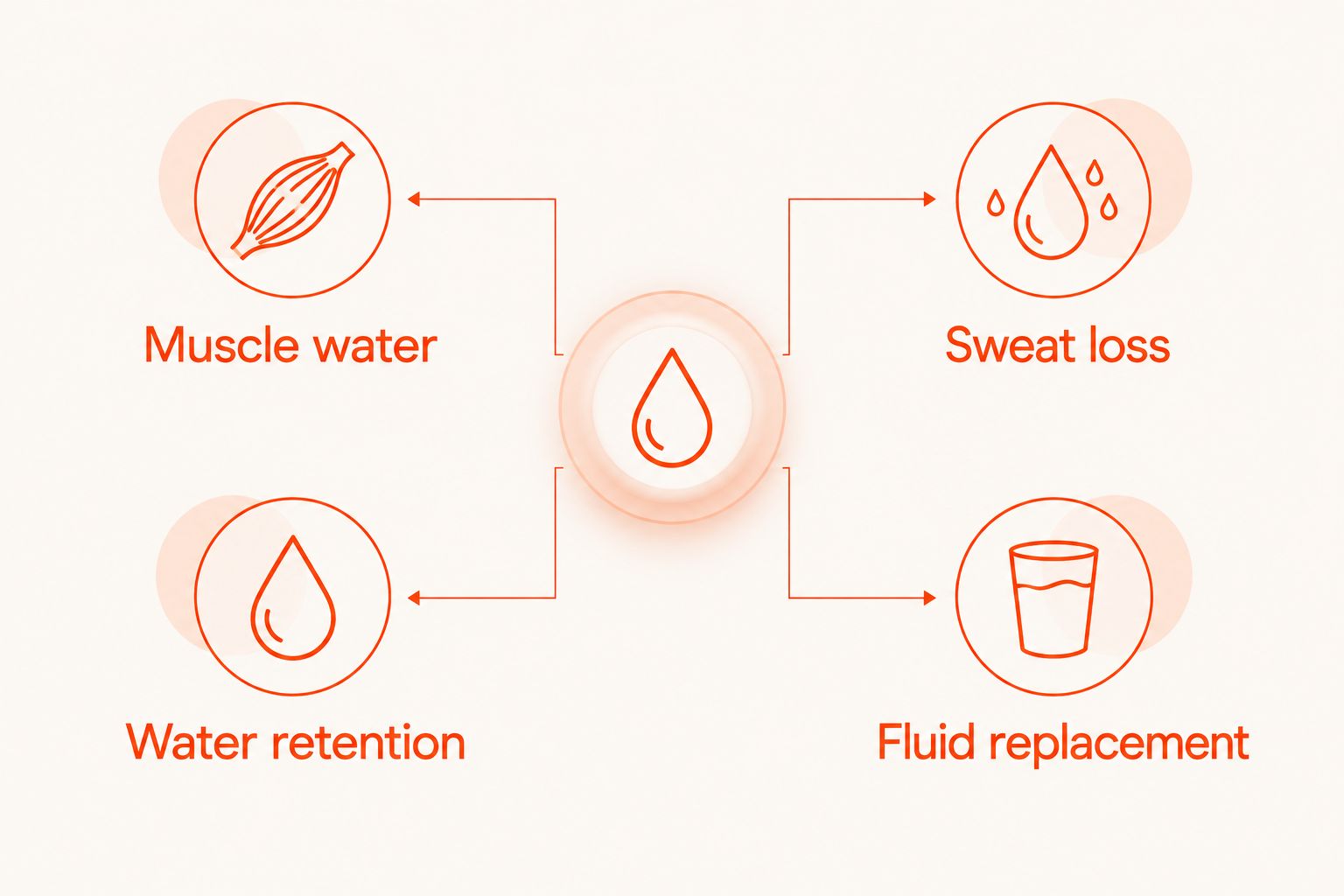
Water retention is also not a hydration test. A higher scale reading after starting creatine does not prove that you are well hydrated before a hot workout. Conversely, a temporary weight increase does not prove that creatine is dehydrating you.
Judge hydration using your circumstances and symptoms, not an isolated change on the scale. This matters especially when you change supplements, training volume, and diet at the same time.
The NIH Office of Dietary Supplements describes commonly studied creatine protocols that include a maintenance intake of 3–5 grams per day. An optional loading approach commonly uses 20 grams per day, divided into smaller doses, for 5–7 days before maintenance. These are established research protocols, not a personalized prescription.
Loading increases muscle creatine stores faster, but you do not need a loading phase to use creatine. A consistent maintenance approach also increases stores over time. The trade-off is speed, not a requirement to take a large daily amount.
Large individual doses can cause gastrointestinal discomfort, including diarrhea. Diarrhea can contribute to fluid loss; that is a different mechanism from the claim that creatine draws water into muscle and directly dehydrates you.
For a simple 2026 routine, do not increase your dose to compensate for a missed workout or a disappointing session. Follow the product directions and seek individualized guidance when your health history requires it. More creatine does not replace progressive training, adequate food, or recovery.
There is no universal extra-water allowance that everyone must add because they take creatine. Your fluid needs change with your body, your environment, and what you do throughout the day.
The main drivers include:
These factors explain why the same bottle of water does not suit every workout. A short lifting session in an air-conditioned gym and prolonged exercise outdoors create different demands. Match your drinking plan to the session, not to the presence of creatine in your shaker.
Build your 2026 hydration routine around preparation, access to fluids, and sensible adjustment. Avoid both extremes: ignoring thirst and forcing large amounts of water because you believe creatine demands it.
Pale-yellow urine is a useful general sign, not a target to pursue at all costs. Foods, supplements, medications, and timing can affect urine appearance. Completely clear urine throughout the day is not a requirement for effective creatine use.
Do not force excessive water intake. Drinking beyond your needs can lower blood sodium and become dangerous, especially during prolonged exercise. Creatine does not create a reason to override a clinician's fluid restriction.
No—creatine use alone does not establish a need for an electrolyte supplement. Electrolyte replacement relates to sweat losses, exercise demands, diet, and individual circumstances, not simply to taking creatine.
| Fluid option | Best for | Advantage | Limitation |
|---|---|---|---|
| Water with regular meals | Routine hydration and many ordinary gym sessions | Keeps the routine simple | Does not supply sodium by itself |
| An electrolyte-containing drink | Prolonged or heavy-sweat exercise when sodium replacement is appropriate | Supplies fluid and electrolytes together | Composition varies; extra sodium is not automatically necessary |
An electrolyte drink does not make an unsafe workout safe. You still need appropriate pacing, cooling, and rest. Likewise, a product containing electrolytes does not establish that your total fluid intake matches your losses.
If you repeatedly finish workouts feeling unwell, review the whole session with a qualified professional. Repeatedly adding electrolyte products without examining heat, intensity, diet, and medical factors is not a diagnosis.
Research summaries do not support creatine supplementation as a cause of increased muscle cramping in healthy adults. Exercise-associated cramps have multiple contributors, including neuromuscular fatigue; a cramp does not automatically establish dehydration or an electrolyte deficiency.
Stop or reduce the activity when a cramp occurs. Assess the workload, recent training changes, heat exposure, and symptoms rather than immediately blaming creatine. Recurrent, severe, or unexplained cramps deserve medical assessment.
For 2026, keep the distinction clear: evidence against the creatine-cramping myth is not evidence that every cramp is harmless. Weakness, swelling, severe pain, or dark urine after strenuous exercise requires prompt medical evaluation.
Stop exercising when you feel faint, unusually weak, nauseated, or overheated. Move to a cooler place and assess the situation. Do not keep training to prove that your supplement is safe.
Confusion, collapse, seizures, or suspected heat stroke require emergency help. Do not give oral fluids to someone who is confused or unable to swallow safely. Severe symptoms require treatment, not a debate about creatine.
Contact a clinician for persistent vomiting or diarrhea, markedly reduced urination, or symptoms that do not improve. If you have kidney disease, take medicines affecting fluid balance, or follow a fluid restriction, ask your clinician before starting creatine.
Pregnancy, breastfeeding, and use by minors also call for individualized professional guidance. Findings in healthy adults should not be treated as a blanket safety guarantee for every person.
Tiger Fitness is best for bodybuilders and fitness enthusiasts shopping for creatine and other workout supplements. For this hydration question, creatine monohydrate is the relevant starting point because it is the form with the largest research base; a different form does not establish a dehydration advantage.
One relevant example is MTS Creapure® Pure German Creatine Powder, identified in its product description as German-produced creatine monohydrate. Its practical fit is for someone seeking a monohydrate powder. Its limitation is equally important: it is not a hydration product and does not replace fluids or sodium lost through sweat.
When reviewing Tiger Fitness creatine supplements, check the current label, serving directions, and other ingredients. Choose based on the actual formula—not an expectation that a supplement will prevent cramps, dehydration, or heat illness. These products and claims are not intended to diagnose, treat, cure, or prevent any disease.
Does creatine cause dehydration if I take it every day?
Recommended daily creatine monohydrate use does not increase dehydration risk in healthy adults, according to research summaries. You still need to replace normal fluid losses and account for exercise and heat.
How much water should I drink with creatine?
There is no universal extra amount of water required solely because you take creatine. Base your drinking on daily needs, exercise, sweat losses, and any medical guidance.
Does creatine water retention mean I am dehydrated?
Creatine-associated water retention does not mean you are dehydrated. Water retained in muscle and net fluid loss from sweating are different processes.
Can a creatine loading phase give me diarrhea?
Large individual creatine doses can cause gastrointestinal discomfort, including diarrhea. Diarrhea can contribute to fluid loss, so do not ignore persistent symptoms or keep escalating the dose.
Do I need an electrolyte drink with my creatine?
Creatine use alone does not require an electrolyte drink. Electrolyte replacement depends on sweat losses, workout demands, diet, and individual needs.
Should I stop taking creatine during hot weather?
Hot weather alone does not establish that healthy adults must stop recommended creatine monohydrate use. Adjust training and hydration for the heat, and stop exercising if you develop concerning symptoms.
Is creatine safe if I have kidney disease or a fluid restriction?
Ask your clinician before using creatine if you have kidney disease or a prescribed fluid restriction. Safety findings in healthy adults do not replace guidance for your medical circumstances.
Your scale can move in opposite directions for different reasons: creatine-associated water retention can increase weight, while sweating can reduce it. Those changes can overlap, so a stable reading does not prove that your fluid balance is unchanged.
Track the workout conditions and your symptoms, not just your weight. Keep creatine dosing consistent, keep fluids accessible, and treat heat-safety decisions separately from supplement decisions.
{"one"=>"Select 2 or 3 items to compare", "other"=>"{{ count }} of 3 items selected"}






Leave a comment