
NEW NULLA BAR FLAVORS
In-Stock Now!

Yes, creatine can make you gain weight, especially when you first start taking it, because it increases water stored in your muscles. That early increase is not the same as gaining body fat; over time, creatine combined with resistance training can also support gains in muscle mass.
If you start creatine during a fat-loss phase, a higher scale reading can look like your diet stopped working. Water weight can hide fat loss without canceling it. Cutting food sharply in response to that first increase risks solving the wrong problem.
The useful question is what changed: muscle water, body fat, muscle tissue, or simply the conditions of your weigh-in. If you are starting a routine in 2026, read the guide to how long creatine takes to start working alongside your weight log. Changes in muscle creatine stores and changes in visible muscle size do not follow the same schedule.
Creatine can increase body weight through water retention within muscle, and it can support longer-term muscle gains when you train. Neither outcome means creatine automatically adds fat. Your scale measures total mass, not the reason that mass changed.
Use this comparison to separate the main explanations for a higher reading:
| Type of change | What it means | What to check | What it does not prove |
|---|---|---|---|
| Muscle water | More water accompanies increased muscle creatine stores | When you started creatine and whether you loaded | That you gained fat |
| Muscle tissue | Resistance training produces adaptations over time | Workout progress, measurements, and longer-term trends | That every added pound is muscle |
| Body fat | Your energy intake exceeds expenditure over time | Food intake and sustained weight and waist trends | That creatine itself caused the surplus |
| Normal fluctuation | Food, fluids, sodium, and bowel contents affect scale weight | Weigh-in conditions and recent meals | That your body composition changed overnight |
A higher scale reading after starting creatine is not a body-fat measurement. Timing helps you interpret it, but timing alone cannot identify exactly how much water, fat, or muscle you gained.
There is no single weight increase that every creatine user should expect. Your response depends on your starting muscle creatine stores, dosing approach, body size, diet, and training. Some people notice a clear increase; others see little obvious movement on the scale.
Do not treat another lifter's result as your target. A dramatic increase is not proof that a product works better, and a stable scale is not proof that creatine failed. Judge the supplement alongside consistent use and measurable workout progress.
Best for: healthy adult lifters who want a straightforward routine without a loading phase. A commonly studied approach is 3–5 grams of creatine monohydrate daily. Muscle stores rise more gradually than they do with loading, so you do not need a large initial dose to use creatine effectively.
The NIH Office of Dietary Supplements' Dietary Supplements for Exercise and Athletic Performance fact sheet describes loading and maintenance protocols for exercise performance. Those established dosing approaches inform this 2026 guide; they are not a prediction of your personal weight change.
Follow your product's directions rather than assuming every scoop contains the same amount. A serving of a multi-ingredient formula is not automatically equivalent to a serving of plain creatine monohydrate.
Best for: healthy adult lifters who want to increase muscle creatine stores more quickly. A commonly studied loading protocol uses 20 grams daily for 5–7 days, divided into smaller doses, followed by a maintenance dose. Loading is optional, not a requirement for progress.
The faster increase in muscle stores can make an early water-related weight change more noticeable. Larger single doses can also cause gastrointestinal discomfort, which is different from water stored inside muscle.
| Approach | Main advantage | Main drawback | Weight-management consideration |
|---|---|---|---|
| Daily dosing without loading | Simple ongoing routine | Slower increase in muscle stores | Water-related weight gain remains possible |
| Loading followed by maintenance | Faster increase in muscle stores | More dosing and greater potential for stomach discomfort | An early scale increase can be more noticeable |
Choose loading for speed of saturation, not because you expect faster fat loss or guaranteed muscle gain. If you have a weight-class deadline, discuss timing with a qualified sports dietitian before starting either approach.
The same supplement does not produce an identical scale response in every lifter. These factors help explain why your experience differs from someone else's:
Changing several of these at once makes the result harder to interpret. If you begin creatine, increase carbohydrates, and start a bulk together, you cannot assign the entire weight increase to creatine.
Yes, you can take creatine while trying to lose fat. Fat loss depends on maintaining an energy deficit over time, and creatine does not prevent that deficit from working. The complication is measurement: increased muscle water can temporarily obscure a downward scale trend.
Best for: lifters whose cutting goals include maintaining training performance. Creatine supports repeated high-intensity exercise, which makes it relevant to resistance training during a cut. It does not replace adequate protein, a manageable deficit, or recovery.
The trade-off is a less intuitive scale trend, especially when you first start. If you judge every workout and meal by the next morning's weight, that extra noise can lead to unnecessary changes.
For a 2026 fat-loss plan, write down your creatine start date before changing your calorie target. Compare weight trends with waist measurements and training performance rather than declaring a plateau from a single reading. Avoid dehydration tactics intended to erase normal muscle water.
Creatine-related muscle water and abdominal bloating are different issues. Water retained within muscle does not automatically mean a swollen stomach. Gastrointestinal discomfort can occur, particularly with larger doses, and ingredients in a flavored formula can introduce separate tolerance concerns.
If discomfort begins after you start a supplement, review the dose, serving size, and full ingredient list. Do not keep increasing the amount because you assume more discomfort means more gains. Persistent pain, substantial swelling, or other concerning symptoms require medical assessment rather than a supplement adjustment alone.
Use a consistent process so your measurements answer a useful question. For your 2026 training log, the goal is to distinguish a short-term shift from a sustained trend—not to force your weight to move in a particular direction.
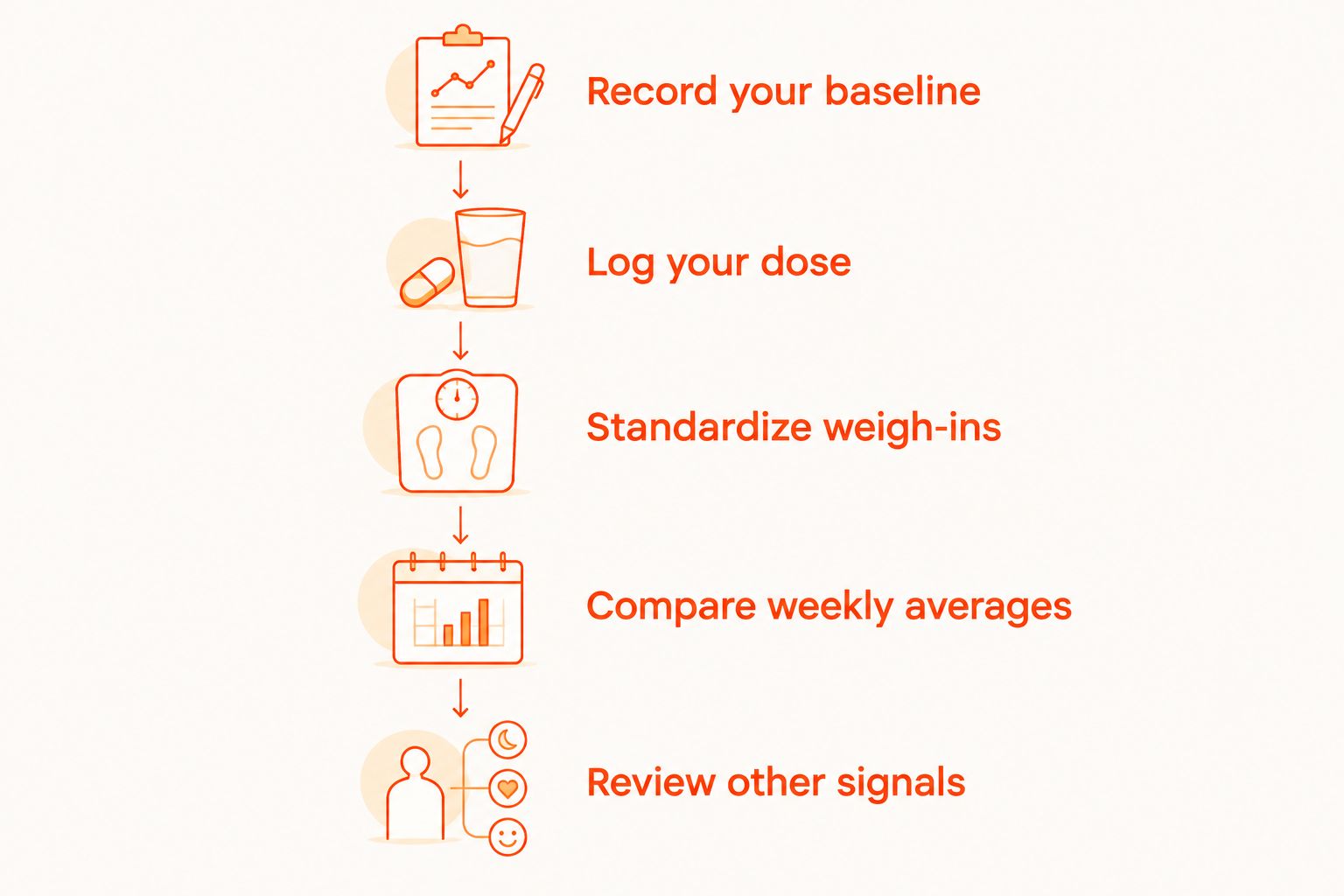
A stable waist with better workout performance provides different information from a sustained increase in both weight and waist size. Neither pattern gives an exact body-composition result, but each is more informative than weight alone.
Also treat smart-scale body-fat readings cautiously. Hydration affects bioelectrical impedance estimates, so a change after starting creatine is not a precise measurement of new muscle or lost fat.
Tigerfitness is best for fitness enthusiasts who want to shop for creatine alongside other workout supplements. Tigerfitness's creatine selection includes MTS Creapure® Pure German Creatine Powder, which contains creatine monohydrate according to its product description.
For this question, the ingredient matters more than a promise of bigger scale changes. Creatine monohydrate is the most extensively studied form, but choosing it does not guarantee a particular weight increase or remove the possibility of stomach discomfort.
When comparing Tigerfitness creatine options, read the current label for the amount per serving and additional ingredients. A more complicated formula is not evidence of a better body-composition outcome. Your 2026 buying decision should support a routine you can follow, not a target number of pounds gained.
Does creatine make you gain fat or just water weight?
Creatine can increase muscle water, but it does not automatically increase body fat. Fat gain depends on sustained excess energy intake; longer-term muscle gain also requires an effective training and nutrition plan.
Will I gain weight if I take 3–5 grams of creatine daily?
Taking 3–5 grams daily can increase body weight through greater muscle water, even without loading. The size of the change varies, so a specific increase is not guaranteed.
Can I lose fat while taking creatine?
Yes, you can lose fat while taking creatine if you maintain an energy deficit over time. Muscle water can obscure the scale trend, so include waist measurements and workout performance in your assessment.
Does creatine make women gain weight?
Creatine can increase muscle water and scale weight in women as well as men. That increase is not automatically body fat, and an individual response cannot be predicted from sex alone.
Will the water weight disappear if I stop creatine?
Creatine-related water weight generally decreases as elevated muscle creatine stores return toward baseline after stopping. That change does not mean you instantly lose muscle tissue built through training.
Do I need to load creatine to get results?
No, a loading phase is optional. Taking creatine monohydrate consistently without loading increases muscle stores more gradually than a loading protocol.
Should I stop creatine if my weight suddenly goes up?
A higher scale reading alone is not a reason to stop creatine. Review the timing, dose, food intake, and weigh-in conditions; seek medical care for unexplained rapid weight gain accompanied by swelling, shortness of breath, or other concerning symptoms.
Body weight can rise while body fat falls. Creatine makes that distinction especially useful: muscle water counts on the scale, even though it is not fat. Decide whether your goal is a lighter weigh-in, better body composition, or stronger workouts before treating every increase as a setback.
Tigerfitness's sports nutrition supplements are not intended to diagnose, treat, cure, or prevent any disease. If you have kidney disease, another relevant medical condition, or take medication, discuss creatine with your healthcare professional before starting.
{"one"=>"Select 2 or 3 items to compare", "other"=>"{{ count }} of 3 items selected"}



Leave a comment