
NEW NULLA BAR FLAVORS
In-Stock Now!

Yes, creatine can cause temporary water-weight gain and, in some people, digestive bloating—especially when large amounts are taken at once. Water stored with creatine in muscle is different from gas, abdominal swelling, or diarrhea; the steps below help you tell them apart and adjust your routine without ignoring persistent symptoms.
Creatine can increase water stored in muscle, and large individual doses can cause gastrointestinal discomfort. Neither effect means you have gained body fat. The location and type of symptoms matter more than the word bloating.
The NIH Office of Dietary Supplements’ exercise and athletic performance guidance describes water retention and weight gain among creatine’s effects. International Society of Sports Nutrition guidance distinguishes creatine loading from daily maintenance dosing and identifies creatine monohydrate as the most extensively studied form.
| What you notice | What it tells you | Practical next step |
|---|---|---|
| Higher scale weight without abdominal discomfort | Increased muscle water is a possible explanation | Compare weight trends under consistent conditions |
| Abdominal pressure, gas, or visible stomach distension | These are digestive symptoms, not proof of muscle water retention | Review dose size, the mixing drink, and other ingredients |
| Loose stools after a large serving | The serving size deserves attention | Stop the large serving and reassess your routine |
| Persistent swelling, significant pain, or repeated vomiting | Do not label these symptoms normal creatine adaptation | Stop taking the supplement and seek medical care |
For your 2026 training goals, a heavier weigh-in and an uncomfortable stomach require different decisions. Dropping creatine because your muscles hold more water is not the same decision as stopping a supplement that repeatedly causes diarrhea.
Tigerfitness sells sports nutrition supplements for bodybuilders and fitness enthusiasts. The useful starting point is not a new supplement stack: it is identifying exactly what changed when you began taking creatine.
If you added creatine, a protein shake, and a larger post-workout meal together, you changed several variables. You cannot identify the cause of digestive symptoms from timing alone. Keep that distinction clear before replacing products or adding more supplements.
Creatine enters muscle cells, where it helps support the rapid regeneration of ATP during high-intensity activity. Increasing muscle creatine stores can also increase water held within muscle. That does not mean water is trapped in your digestive tract.
You cannot determine exactly where body water changed by looking at your stomach or reading a home scale. A fuller appearance and a higher body weight are not measurements of abdominal gas, and they do not establish a medical diagnosis.
Digestive bloating feels different: abdominal fullness, pressure, gas, or distension. Creatine-related gastrointestinal discomfort is more likely to become an issue with large individual doses, but an uncomfortable stomach can also have causes unrelated to creatine.
Treat symptoms as symptoms—not as evidence that creatine is working. You do not need stomach discomfort to get a training benefit, and pushing through repeated digestive problems is not a useful measure of commitment.
For healthy adults, 3–5 g per day is a commonly studied creatine monohydrate maintenance intake. Starting with daily maintenance rather than loading increases muscle creatine stores more gradually, commonly over approximately 3–4 weeks.
The benefit is a simpler routine without the larger daily intake used during loading. The trade-off is time: you will not increase muscle stores as quickly. Neither approach guarantees that your stomach will tolerate a particular product.
For a straightforward 2026 routine, follow the product’s directions and account for creatine in every supplement you use. A scoop is a measuring tool, not a universal dose; serving sizes differ between products.
If your stomach is already uncomfortable, do not automatically add another serving because you missed one earlier. Review the total amount you took and stop supplementation if symptoms continue. These general research protocols are not individualized medical instructions.
A commonly studied loading protocol uses approximately 20 g per day, divided into smaller servings, for 5–7 days, followed by maintenance dosing. Loading is optional; its purpose is to increase muscle creatine stores faster.
The advantage is speed. The disadvantage is that taking more creatine during the day creates more opportunities for gastrointestinal discomfort, particularly if you combine the day’s intake into a large serving.
| Approach | Commonly studied intake | Best for | Main drawback |
|---|---|---|---|
| Daily maintenance without loading | 3–5 g per day | Healthy adults who prefer a simpler, gradual start | Muscle stores increase more slowly |
| Optional loading, then maintenance | About 20 g per day in divided servings for 5–7 days, then maintenance | Healthy adults prioritizing faster saturation | Larger individual servings can cause digestive symptoms |
Choose daily maintenance rather than forcing a loading phase that makes you uncomfortable. Loading is not a requirement for creatine to work, and abandoning it does not mean abandoning your training goals.
The amount of creatine is only part of the picture. These factors help explain why the same general supplement routine does not feel identical for everyone:
A useful 2026 symptom log records the supplement, measured serving, mixing drink, meals, and symptoms. It should help you spot a pattern—not persuade you to diagnose yourself from a spreadsheet.
Start by checking the dose and simplifying what you take with it. Do not change your creatine, protein powder, meal plan, and hydration routine at the same time; doing so makes the result harder to interpret.
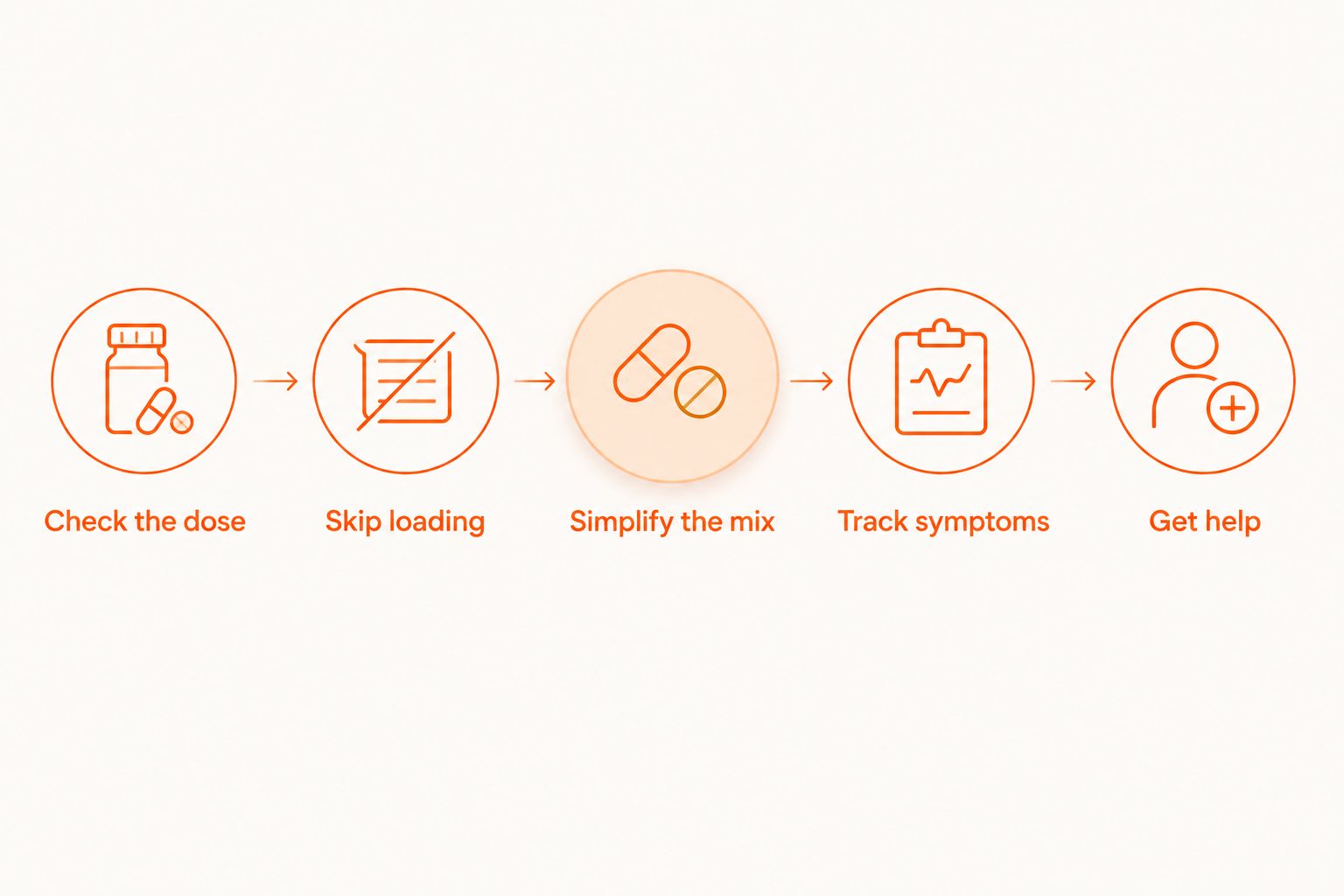
Drink normally for your activity level and environment. Forcing excessive water is not a treatment for bloating, and deliberately restricting fluids to lower scale weight is not a sensible response to creatine-related water changes.
Taking creatine with a meal is an option if it fits the product directions and feels more comfortable. It is not a guaranteed fix. If every attempt produces symptoms, stop experimenting and discuss the pattern with a clinician.
Creatine monohydrate remains the evidence-based starting point; a different chemical form is not a guarantee of better digestion. A smaller-looking serving, faster dissolution, or different product name does not establish that a formula prevents bloating.
For your 2026 supplement review, separate the form of creatine from the rest of the formula. Flavoring, sweeteners, added ingredients, and serving directions all deserve attention. Micronization describes smaller particles; it does not remove creatine’s effect on muscle water.
Tigerfitness is best for bodybuilders and fitness enthusiasts shopping for creatine supplements. Its MTS Creapure® Pure German Creatine Powder contains creatine monohydrate, according to the product description. That identifies the creatine form; it does not establish that the product prevents digestive symptoms.
The benefit of choosing a straightforward monohydrate product is that you can assess the ingredient without adding an unrelated performance blend. The limitation is equally clear: an extensively studied ingredient can still be uncomfortable for an individual user. No retailer or product label can promise personal tolerance.
There is no fixed duration for digestive bloating after starting creatine. Symptoms depend on their cause, and a schedule for muscle creatine saturation is not a schedule for stomach discomfort to disappear.
Do not confuse a 5–7-day loading protocol with a guaranteed recovery window. Persistent digestive symptoms warrant stopping the supplement and getting advice, rather than waiting for a promised adaptation deadline.
Creatine-related water-weight gain is not belly-fat gain. A scale cannot distinguish changes in water, digestive contents, and body fat from a single reading.
If you are cutting in 2026, compare weight trends alongside consistent waist measurements, food intake, and training performance. Do not respond to an early scale increase by making an aggressive calorie reduction without checking the broader pattern.
Stop taking creatine and seek medical advice for persistent abdominal bloating, ongoing diarrhea, or symptoms that repeatedly return after supplementation. Seek urgent care for severe abdominal pain, blood in stool, repeated vomiting, or signs of a serious allergic reaction.
Swelling in your legs, face, or elsewhere outside the digestive tract should not be dismissed as normal muscle water retention. New or unexplained swelling requires medical assessment.
Speak with a healthcare professional before supplementation if you have kidney disease, take medications that affect kidney function, are pregnant or breastfeeding, or are considering creatine for a minor. General sports nutrition guidance does not replace advice based on your health history.
Does creatine cause bloating in everyone?
No, creatine does not cause digestive bloating in everyone. Some people notice water-weight gain without gas, abdominal pressure, or diarrhea.
Can I take creatine without a loading phase?
Yes, creatine monohydrate does not require a loading phase. A commonly studied maintenance intake is 3–5 g per day for healthy adults, with muscle stores increasing more gradually.
Will drinking more water get rid of creatine bloating?
Drinking extra water is not a guaranteed treatment for creatine bloating. Maintain appropriate hydration, review the serving size, and seek advice for persistent symptoms.
Should I stop creatine if my stomach hurts?
Stop taking creatine if it causes recurring stomach pain and speak with a healthcare professional. Severe pain, repeated vomiting, or blood in stool requires urgent medical assessment.
Is micronized creatine guaranteed not to cause bloating?
No, micronized creatine is not guaranteed to prevent bloating. Micronization changes particle size, not the need to assess dose, ingredients, and individual tolerance.
Can the milk in my creatine shake cause bloating?
Yes, milk can cause bloating in people with lactose intolerance. Symptoms after a mixed shake do not identify creatine as the cause.
Will creatine water weight disappear if I stop taking it?
Water-weight changes associated with elevated muscle creatine stores generally reverse as stores return toward baseline after stopping. That does not provide a timetable for resolving abdominal bloating, which can have another cause.
The most useful detail is where you feel the change. A heavier scale reading without digestive symptoms calls for a different response than a painful, distended stomach.
Before your next supplement order, write down the actual symptom and check your measured serving. Tigerfitness creatine shoppers should use the same rule as any lifter: choose an evidence-based routine, but never treat discomfort as a requirement for gains.
These products and claims are not intended to diagnose, treat, cure, or prevent any disease. This article provides general information, not personalized medical advice.
{"one"=>"Select 2 or 3 items to compare", "other"=>"{{ count }} of 3 items selected"}






Leave a comment