
NEW NULLA BAR FLAVORS
In-Stock Now!

Yes, a mass gainer without exercise can increase your body weight if it creates a sustained calorie surplus, but it does not replace the training stimulus needed to build muscle. The main trade-off is unwanted fat gain: adding calories without resistance training does not make those calories turn into muscle.
It works for adding calories, not for building muscle independently of training. If you drink a shake but eat less later, your total intake might not increase. If the shake consistently pushes intake above your needs, your weight can rise.
The distinction is body weight versus body composition. A heavier scale reading does not tell you how much muscle, fat, water, or food weight you have gained. For the related question, read can a mass gainer make you gain fat instead of muscle?.
| Your situation | What a mass gainer contributes | Main limitation | Best next move |
|---|---|---|---|
| No exercise, intake below your needs | Additional energy and protein | Weight gain is not guaranteed muscle gain | Address the intake gap and why it exists |
| No exercise, intake already meets your needs | Extra calories beyond your current intake | A sustained surplus can add unwanted fat | Skip the automatic extra shake |
| Regular lifting, scheduled rest day | Nutrition between training sessions | A full serving is not automatically necessary | Match the portion to your daily intake |
| Regular lifting, difficulty eating enough | A convenient way to supplement meals | The shake cannot replace training or a varied diet | Use it only for the remaining calorie gap |
These distinctions apply in 2026 regardless of the product name on the container. Choose a nutrition tool for the problem you have, not the physique pictured in its advertising.
“Gain mass” and “build muscle” are different goals. You can increase body weight without exercising, but deliberate muscle growth requires more than an energy surplus and a protein-containing drink.
This matters when you buy a gainer because you feel too skinny, struggle with appetite, or want to look more muscular. Each situation calls for a different response. A shake addresses food intake; it does not establish why you are underweight or provide a strength-training program.
Do not assume that a product labeled “mass” is appropriate simply because you want size. First decide whether your priority is restoring adequate intake, gaining body weight, or improving muscular size and strength.
Your body uses dietary energy for basic functions, digestion, and physical activity. When intake consistently exceeds expenditure, it stores energy and body weight can increase. The source being a supplement does not exempt it from that process.
Protein also supports normal tissue maintenance when you are inactive. That does not mean consuming more protein automatically produces larger muscles. Resistance exercise provides a distinct stimulus that a drink cannot supply.
Short-term scale changes need separate interpretation. Changes in carbohydrate intake, hydration, and the amount of food in your digestive tract affect weight without representing new muscle tissue.
Do not judge a mass gainer by the first upward movement on the scale. Consider your weight trend alongside waist measurements, food intake, and whether your strength is progressing when you train.
Two people can use the same type of supplement and get different outcomes because their total intake and activity differ. These factors explain the difference without assuming that one product has special muscle-building powers:
Your 2026 nutrition plan should account for these factors before you add another supplement. A repeatable eating pattern is more useful than a large serving you cannot comfortably fit into your day.
Best for most people without a documented intake gap: keep regular meals as the foundation. Use a supplement to solve a specific shortfall, not as a default addition to an already adequate diet.
These options serve different purposes. None guarantees muscle growth without a suitable training stimulus.
| Option | Best for | Practical advantage | Main drawback |
|---|---|---|---|
| Regular meals and snacks | Building a varied daily eating pattern | You can combine protein, carbohydrates, fats, and fiber | Preparation and appetite can make adequate intake harder |
| Protein powder | Adding protein when food intake falls short | It lets you supplement protein without deliberately choosing a gainer | It does not automatically address a calorie shortfall |
| Mass gainer | Adding calories when meals are not enough | It provides a convenient drinkable addition | It can overshoot your needs or displace meals |
| Homemade shake | Adjusting ingredients to your preferences | You control what goes into the drink | You must account for each ingredient to understand the total |
A homemade shake is not automatically more nutritious, and a packaged gainer is not automatically a poor choice. Ingredients, portions, and the rest of your diet determine whether either fits.
Tigerfitness is best for fitness shoppers comparing supplement categories, not for replacing a training plan. Its mass gainer selection is relevant when you have established a calorie shortfall; a different product name does not solve a missing exercise stimulus.
Use this sequence before turning a daily shake into a habit. It separates a genuine nutrition need from the assumption that more powder means more gains.
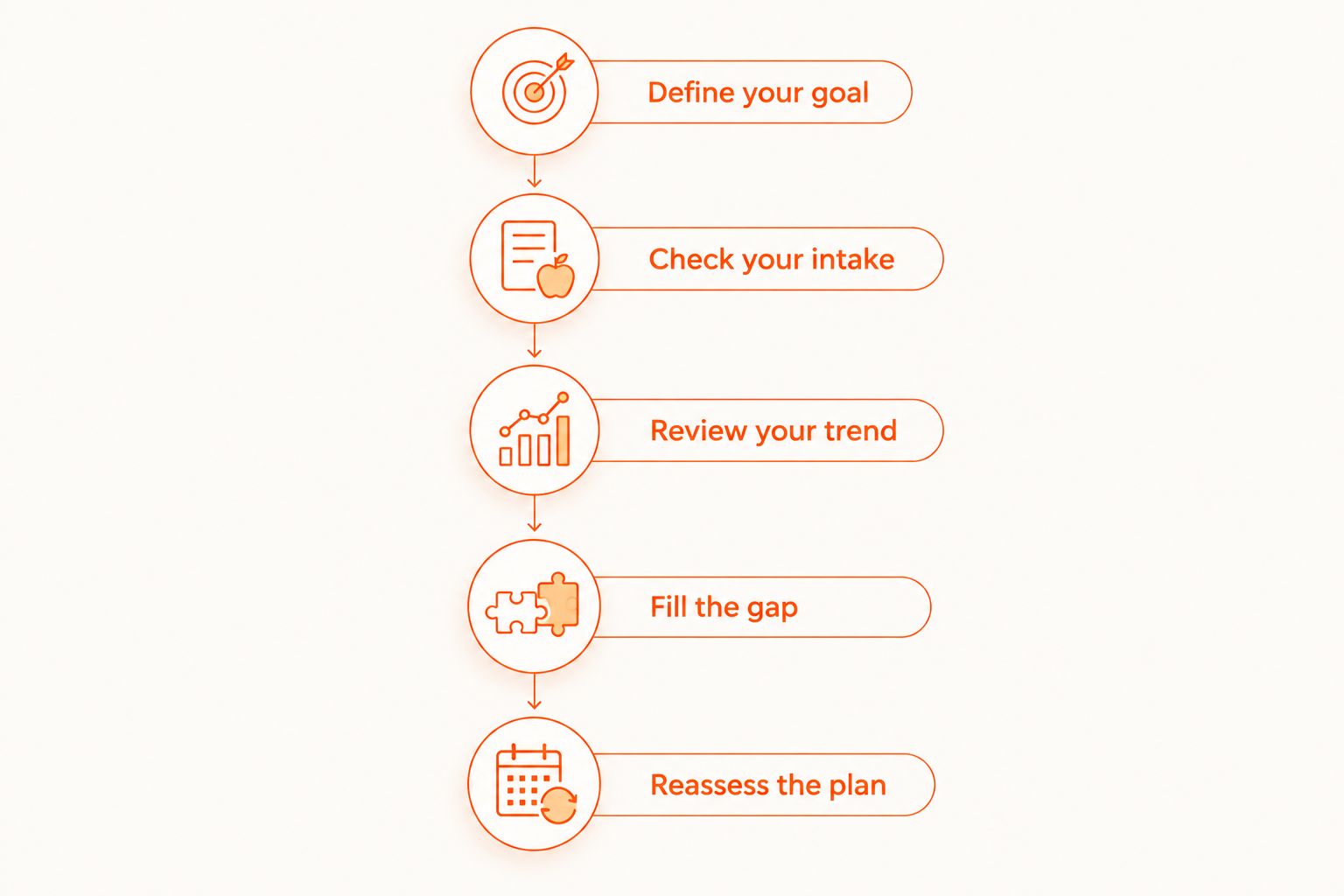
A useful 2026 food log includes the finished shake, not just the supplement entry. Milk, nut butter, oats, and other additions contribute their own energy and nutrients. Water does not add calories.
Compare the stated serving with the amount you actually prepare. A scoop is a measuring tool, not a universal nutrition unit, and serving instructions differ across products.
For general label calculations, carbohydrate supplies 4 calories per gram, protein supplies 4 calories per gram, and fat supplies 9 calories per gram. These are the general energy factors used in U.S. nutrition labeling under FDA rules; specific labeling calculations can differ for certain ingredients.
Use the label's declared calories rather than treating those factors as a substitute for the manufacturer's nutrition panel. For a 2026 label check, focus on serving weight, calories, protein, carbohydrate, fat, and ingredient information.
Also review allergens and preparation directions. Do not infer that a gainer is suitable for a dietary restriction from its flavor name or front-label wording.
A scheduled rest day is not the same as having no exercise program. If you regularly lift, nutrition still supports recovery between sessions. You do not need to remove protein or stop eating adequately because you are not training that day.
The shake remains optional. Use it when your meals leave an intake gap, and skip or adjust it when they do not. A training-day habit does not automatically justify the same portion on every day off.
If your break becomes prolonged, reassess your overall plan. Changes in activity, appetite, and medical circumstances deserve more attention than preserving an old supplement routine.
Walking does not turn a calorie supplement into a muscle-building program. It supports physical activity, but it is not a substitute for resistance training aimed at increasing muscular size and strength.
You do not need a commercial gym to perform resistance exercise. Bodyweight movements, bands, and weights can provide resistance when the work is appropriately challenging and progresses with your ability.
If you cannot exercise because of an injury or health condition, get guidance on appropriate movement and nutrition. Do not compensate for restricted activity by automatically increasing supplement intake.
Unexplained weight loss, persistent poor appetite, difficulty swallowing, or ongoing digestive symptoms call for medical assessment. A mass gainer does not establish the cause or treat an underlying condition.
If you have diabetes, kidney disease, another condition affecting nutrition, or a prescribed dietary restriction, ask your clinician or registered dietitian before adding a concentrated calorie supplement. Product ingredients and your individual needs matter.
This article provides general nutrition information, not individualized medical advice. The products and claims discussed are not intended to diagnose, treat, cure, or prevent any disease.
Will mass gainer make me gain weight if I don't work out?
A mass gainer can increase your weight without workouts if it creates a sustained calorie surplus. It does not guarantee muscle gain, and a shake that replaces other food might not increase your total intake.
Can I build muscle with mass gainer and no exercise?
A mass gainer does not replace the resistance-training stimulus needed for deliberate muscle growth. It supplies nutrition, while challenging your muscles provides a separate signal to adapt.
Is taking mass gainer without exercise bad for you?
Taking mass gainer without exercise is not automatically harmful, but unnecessary extra calories can cause unwanted weight gain. Check the ingredients, your total diet, and any medical restrictions before using it.
Can I take mass gainer on days I don't go to the gym?
You can use a mass gainer on rest days if it fills a genuine nutrition gap. Regular lifters still need adequate nutrition between workouts, but a full label serving is not automatically necessary.
Is protein powder better than mass gainer if I'm not exercising?
Protein powder fits a protein shortfall; a mass gainer fits a calorie shortfall. Neither is necessary when your regular diet already meets your needs, and neither replaces resistance training.
Should I buy a mass gainer from Tigerfitness if I'm not training?
Buy a mass gainer from Tigerfitness only if it addresses an established calorie shortfall, not because you expect muscle growth without training. If low weight or poor appetite is unexplained, seek professional assessment first.
A shake can fail to add calories even when you drink it every day. If it leaves you too full to eat your usual meals, you have changed how you consume energy without necessarily increasing the total.
Make that your final 2026 check before increasing the portion: is the drink genuinely adding nutrition, or replacing it? The answer matters more than the word “mass” on the container.
{"one"=>"Select 2 or 3 items to compare", "other"=>"{{ count }} of 3 items selected"}


Leave a comment