



Protein Shakes Without Working Out? Fine in 2026
No, drinking a protein shake without working out is not inherently bad. In 2026, the question is whether the shake helps you meet your daily protein needs without crowding out meals or adding calories you did not intend to consume. A shake supplies protein; it does not replace strength training or guarantee muscle gain.
TL;DR
- No: drinking protein shakes without working out is not inherently bad if they fit your diet.
- Without training, count shake protein toward your full day's intake rather than treating it as extra fuel for gains.
- Tiger Fitness protein shakes are best for convenient protein intake, not as a substitute for workouts or meals.
- Check the label for protein, calories, ingredients, and allergens before choosing a shake.
Why This Matters
The word shake makes protein sound different from food. Your body still counts the protein and calories alongside everything else you eat. If you are taking a break from training, how much whey protein is safe to take per day is a more useful question than whether you drank it after a workout.
The adult Recommended Dietary Allowance for protein is 0.8 grams per kilogram of body weight per day, according to the National Academies' Dietary Reference Intakes. That is a baseline intended to cover the needs of most healthy adults, not a target tailored to every bodybuilder. At 70 kilograms, it works out to 56 grams per day; at 80 kilograms, it is 64 grams per day. Count protein from meals and snacks before deciding whether a shake fills a gap.
Is it bad to drink protein shakes without working out?
No. A protein shake can be part of an ordinary rest-day diet, or a diet with no training at all. The downsides depend on what else you eat, what is in the shake, and whether you have a medical reason to limit or manage protein intake.
| Your situation | What the shake does | Best move |
|---|---|---|
| You fall short of your protein goal through food | Adds protein without requiring another prepared meal | Use it to fill the gap |
| You already meet your protein goal | Adds protein and calories you might not need | Skip it unless you want it in place of another food |
| You want muscle gains but do not train | Supplies a building block, not the training stimulus | Prioritize a suitable resistance-training plan |
| You use a shake instead of a meal | Provides what its label lists, which is not automatically a full meal | Check what nutrients the rest of your diet supplies |
| You have kidney disease or a prescribed diet | Changes an intake your clinician may need to manage | Ask your care team before changing your routine |
This distinction matters in 2026 because protein products come in different forms, but the decision stays the same: Does this serving solve a real dietary problem? Drinking a shake after lifting is convenient, not a condition your body imposes before it can use protein. Drinking one on a day off is not a mistake.
What happens to protein if you do not exercise?
Your body uses dietary protein for ongoing maintenance and repair, not just workout recovery. It breaks protein into amino acids and uses them for functions throughout the body. A shake does not become harmful simply because you stayed out of the gym that day.
Nor does the body turn every gram of protein you drink into new muscle. Resistance training provides a reason for muscles to adapt. If gaining muscle is your goal, focus on training and total nutrition rather than expecting a shake alone to deliver the result.
No workouts: start with 0.8 grams per kilogram per day
For a generally healthy adult who is not training, the National Academies' 0.8 grams per kilogram of body weight per day RDA is a useful starting reference. It covers protein from your entire diet, not just powder. Someone weighing 70 kilograms reaches that reference at 56 grams of protein per day from food and drinks combined.
That is not an instruction to stop eating protein once you reach the number. It is also not an individual prescription. Your needs and medical circumstances matter; a clinician or registered dietitian can help if you are managing a condition or struggling to eat enough.
In 2026, use the reference to challenge the automatic shake habit. If your meals already cover your protein needs, you do not need to add a shake because you used to take one after lifting. If your schedule makes regular meals difficult, a shake can still serve a practical purpose on a nontraining day.
Can a shake replace a meal?
A protein shake is not automatically a complete meal. A protein powder mixed with water can contribute protein while leaving out components you might otherwise get from food. Check the product label, then look at your full day's meals rather than assuming the word protein covers every nutrition goal.
If you are hungry, a meal that includes protein and other foods can be the more satisfying choice. If you need something portable and plan to eat a balanced meal later, a shake can fit. Neither choice requires a workout to be valid.
When you resume training: 1.4–2.0 grams per kilogram per day
The International Society of Sports Nutrition identifies 1.4–2.0 grams of protein per kilogram of body weight per day as a range sufficient for most exercising individuals seeking to build or maintain muscle mass. That sports nutrition range is not a target everyone must meet during a break from training. Your activity and goal change the context.
For an 80-kilogram person who trains, that range translates to 112–160 grams per day from all sources. The calculation does not tell you how many shakes to drink. Start with your meals, decide whether they leave a gap, and use a shake only if it makes the routine easier.
Taking a rest day in an otherwise consistent lifting schedule is different from stopping training altogether. You still eat protein on rest days; you do not need to time every serving around a workout. If you have stopped lifting for an extended period, do not assume your previous training target still suits your present routine.
Why the answer varies
Daily protein intake. The shake is useful when it helps you reach a suitable daily target. If food already does that, the shake is a preference rather than a requirement.
Total calories. Protein contributes energy: the standard nutrition calculation assigns 4 kilocalories per gram of protein. Mix-ins and other ingredients add to the drink's total, so read the full nutrition label rather than looking only at protein grams.
Ingredients and tolerance. Whey comes from milk; a plant-based powder offers another option. Check allergens and notice how you feel after a serving instead of assuming every formula will suit you.
What the shake replaces. Swapping a shake for a snack is different from adding it on top of everything you already eat. Replacing meals repeatedly calls for a closer look at the variety of foods in your diet.
Training status and goals. A rest day, a long break from lifting, and a deliberate muscle-building phase are not the same situation. Match your protein plan to what you are doing now.
Medical needs. Kidney disease and prescribed nutrition plans change how you should approach protein. Follow your clinician's advice instead of a general fitness target.
In 2026, the label and your full day's intake answer more than the clock does. A shake is not automatically better because you drank it after training, and it is not automatically worse because you drank it while resting.
Which kind of protein shake makes sense on a nontraining day?
Choose by dietary fit and convenience, not by a promise of gains without lifting. A powder lets you decide what to mix it with; a ready-to-drink shake removes that preparation step. Those are practical differences, not evidence that one format makes protein more effective when you skip a workout.
| Option | Best for | Advantage | Limitation |
|---|---|---|---|
| Whey protein powder | Someone who wants to mix a shake at home | Flexible mixing options | Contains a milk-derived protein; check the label if you avoid dairy |
| Plant-based protein powder | Someone avoiding milk derived protein | Fits a dairy-free protein choice when its ingredients suit you | Ingredients vary by product; check the label |
| Ready-to-drink protein shake | Someone who needs a portable option | No mixing required | Less control over the prepared drink's ingredients |
| Protein-containing food | Someone who prefers a snack or meal | Fits protein into ordinary eating | Requires choosing or preparing food that works for your schedule |
The best option in 2026 is the one you can fit into your diet without treating it as a substitute for meals you need. Tiger Fitness is best for shoppers who want to compare protein-shake formats to fill a dietary gap, not for anyone expecting a drink to replace training. Tiger Fitness sells protein powders and ready-to-drink options; check each product's current label for details rather than assuming the formats have identical ingredients.
A prepared drink is convenient when you are away from a kitchen. A powder makes sense when you would rather choose the liquid and other ingredients yourself. Either way, decide first whether you need more protein in your day.
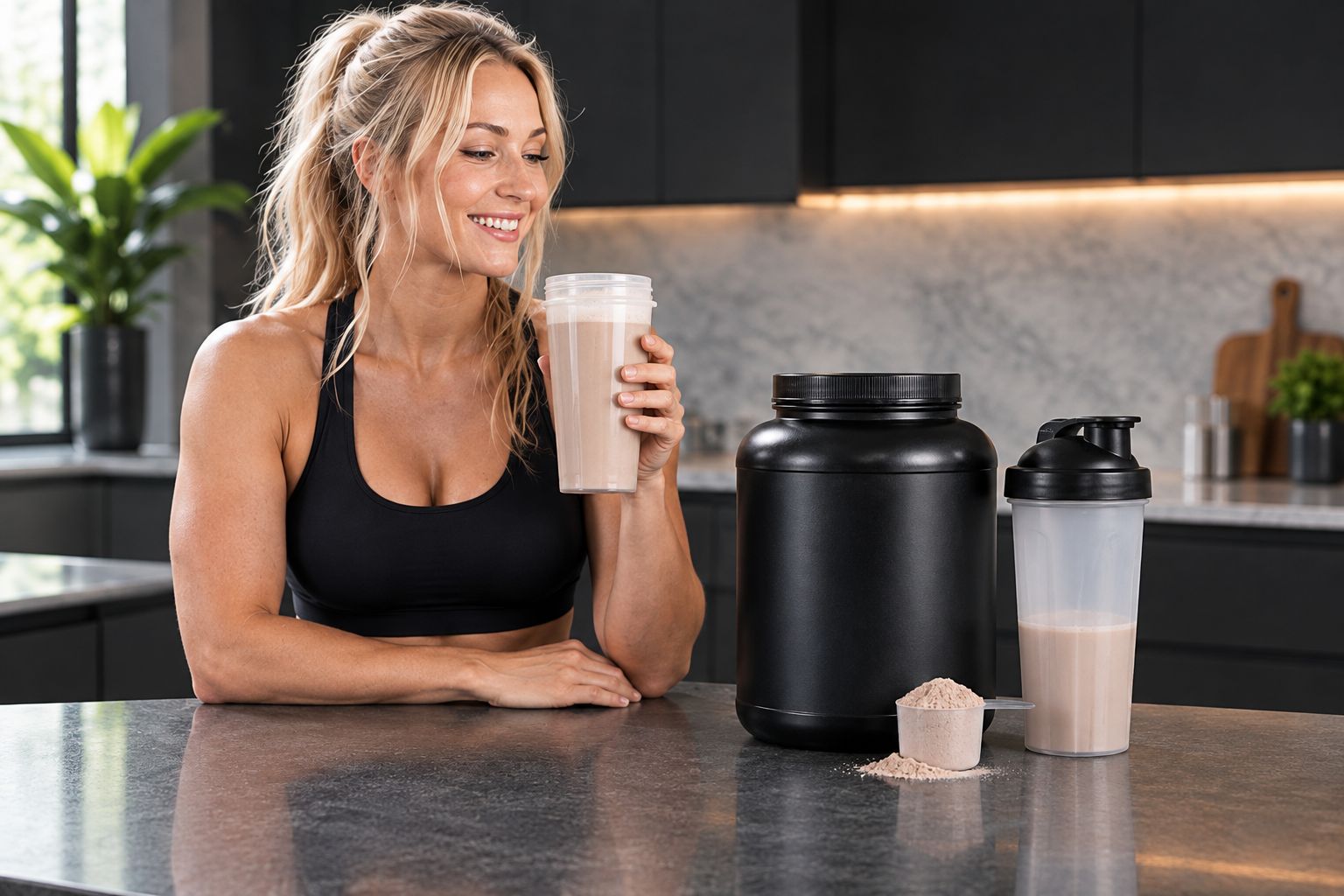
If you are comparing ready-to-drink and powder options, start with the format you will actually use. Then read the nutrition and ingredient labels before adding either one to your routine.
Protein options to compare


How do you decide whether to keep a shake in your routine?
- Add up protein from your usual meals. Include snacks and drinks; the daily total matters more than whether one serving followed a workout.
- Identify the gap. Decide whether your current intake falls short of a target appropriate to your activity and circumstances.
- Read the full label. Check serving size, protein, total calories, ingredients, and allergens. Do not infer a drink's full nutrition from its front label.
- Choose what it replaces. If the shake is a snack, consider what you would otherwise eat. If it replaces a meal, consider what nutrients the meal would have supplied.
- Recheck when your routine changes. Returning to training or stopping it changes the context for your protein target.
If your diet already meets your needs, the decision is simple: drink the shake because you want it, not because you think a missed workout makes it necessary. If you repeatedly find that a shake displaces meals, adjust the routine rather than adding more supplement rules.
Can protein shakes make you gain weight without working out?
Yes, if adding them contributes to a sustained calorie surplus. A shake has calories, and the amount depends on its ingredients and what you mix with it. Exercise is not what determines whether the drink counts toward your daily intake.
A shake does not cause weight gain just because you skipped the gym once. Look at what you consume over time. In 2026, the practical check is whether the drink adds to your usual intake or replaces something you would otherwise have eaten.
Do you need protein shakes on rest days?
No. You still need dietary protein on rest days, but it does not have to come from a shake. Food can meet your needs; a shake is a convenient alternative when it helps you reach your daily intake.
Keep the distinction clear: a rest day supports a training routine, while a shake is simply a way to eat protein. Neither makes the other mandatory.
Is drinking a shake every day too much?
Not necessarily; your total diet and circumstances determine the answer. One daily shake that fits your protein and calorie intake is different from repeatedly adding shakes to an already sufficient diet. If you have kidney disease or another condition affecting your diet, ask your care team for an individual recommendation.
FAQ
Is it bad to drink protein shakes without working out?
No, a protein shake is not inherently bad without a workout. Count its protein and calories toward your daily intake and check whether it fills a real gap.
Will a protein shake build muscle if I do not exercise?
A shake alone does not replace the resistance-training stimulus for muscle growth. It supplies dietary protein, which your body uses for more than workout recovery.
Can I drink a protein shake on a rest day?
Yes, you can drink a protein shake on a rest day. Use it if it helps you meet your daily protein needs; workout timing is not a requirement.
Can a protein shake make me gain weight without working out?
Yes, if it contributes to a sustained calorie surplus. Check the drink's total calories and consider what, if anything, it replaces in your diet.
Do I need a protein shake if I already eat enough protein?
No, a shake is not required when food meets your protein needs. You can still choose one for convenience, but it is not essential for that goal.
Is a protein shake a complete meal?
Not automatically. Check its full nutrition label and consider what other foods supply across the day before using it in place of a meal.
Should I drink protein shakes if I have kidney disease?
Ask your clinician or registered dietitian before changing your protein intake if you have kidney disease. General fitness protein targets are not individual medical guidance.
One Last Thing
A missed workout does not change the protein already in your shake. What changes is the reason you are drinking it. For 2026, keep the shake when it helps you meet a suitable daily intake; skip the automatic extra serving when it does not. Tiger Fitness protein options are tools for that choice, not a shortcut around training or a replacement for a varied diet.
Related Guides
- How to use Protein powder for muscle gain
- Can you take too much Whey Protein in one day?
- Can you take Creatine without working out?
- How to mix Whey Protein powder without clumps
Leave a comment