







Can Fish Oil Cause Fishy Burps? Yes | 2026
Yes, fish oil can cause fishy-smelling burps. The aftertaste can occur when a capsule releases fish oil in your digestive tract and you burp afterward; it does not, by itself, prove the oil has gone bad. Taking it with a meal is a practical first step, but persistent burps or an unusually unpleasant smell from the capsules call for a closer look.
TL;DR
- Yes: fish oil can cause fishy burps when its aftertaste comes back up with a burp.
- Taking fish oil with a meal is a practical first step; it does not guarantee the burps will stop.
- Check the label for EPA and DHA separately from the total oil amount.
- Tigerfitness is best for lifters comparing fish oil with other training supplements, not for a guarantee against aftertaste.
Why this matters: A fishy burp is an unpleasant side effect, not a measure of whether an omega-3 supplement is working. In 2026, your next move is to check how you take it and whether the capsules seem fresh before you abandon your routine. Tigerfitness lists MTS Nutrition MTS Fish Oil, but that listing alone does not establish how any individual will tolerate it.
Can fish oil cause fishy-smelling burps?
Yes. Fish oil has a distinctive taste and smell, and some of that taste can return when you burp after swallowing a capsule. The NIH Office of Dietary Supplements lists unpleasant taste and gastrointestinal symptoms among possible side effects of omega-3 supplements. A burp can happen with a product that is otherwise fine; you cannot judge freshness from a burp alone.
Use this quick check to decide what to do next:
| What you notice | What it tells you | Your next move |
|---|---|---|
| Fishy burps after taking a capsule | Fish oil aftertaste is one possible explanation | Try taking it with a meal, following the label |
| A strong, unpleasant smell from the bottle or capsules | The product itself needs checking; the burp is not the only clue | Check the date and storage directions, and do not use capsules that seem spoiled |
| Burps with heartburn or repeated stomach upset | The problem is not limited to taste | Stop treating it as a minor aftertaste and ask a healthcare professional for advice |
| Trouble breathing, swelling, or other signs of a severe reaction | This is not an ordinary fishy burp | Seek urgent medical help |
A fishy burp is a reason to adjust your routine, not a reason to assume the capsule is effective or spoiled. If the aftertaste keeps returning, the goal is to find an omega-3 source you can actually tolerate while checking what that source contains.
Why does fish oil leave a fishy aftertaste?
A softgel is easier to swallow than a spoonful of oil, but it does not remove the oil's taste. After the capsule opens in the digestive tract, a burp can carry that taste back up. Fishy breath or a lingering taste can also be mistaken for a burp, so pay attention to when the smell appears.
Timing offers a useful clue, not a diagnosis. If the taste follows your fish oil capsule and does not appear when you skip it, the supplement is a reasonable suspect. If it occurs regardless of the supplement, do not keep changing bottles to solve a problem that needs a different explanation.
Fishy burps also tell you nothing reliable about EPA and DHA intake. Those are omega-3 fatty acids listed separately on many fish oil labels. In 2026, judge a supplement by its ingredient label and how well you tolerate it—not by whether you can taste fish afterward.
How can you reduce fishy burps from fish oil?
Start with the least disruptive change. Follow the product's directions, and change one part of your routine at a time so you know what made a difference.
- Take it with food. If you have been swallowing fish oil on an empty stomach, try taking it during a meal. This is a practical tolerance check, not a guarantee that the aftertaste will disappear.
- Check the label. Read the serving directions and identify EPA and DHA separately from the total amount of oil. Do not take extra capsules to compensate for burps or a label you have not checked.
- Check storage. Follow the container's storage instructions and inspect its date and condition. If the capsules leak or the oil smells unusually unpleasant, do not keep taking them just to finish the bottle.
- Reassess. If the burps continue, consider whether a different form or omega-3 source better fits your needs. If stomach symptoms persist, ask a healthcare professional before making a supplement change.
The steps separate a taste problem from a product-condition problem. Taking a capsule with dinner cannot fix a damaged capsule, and buying a new bottle will not explain ongoing heartburn.
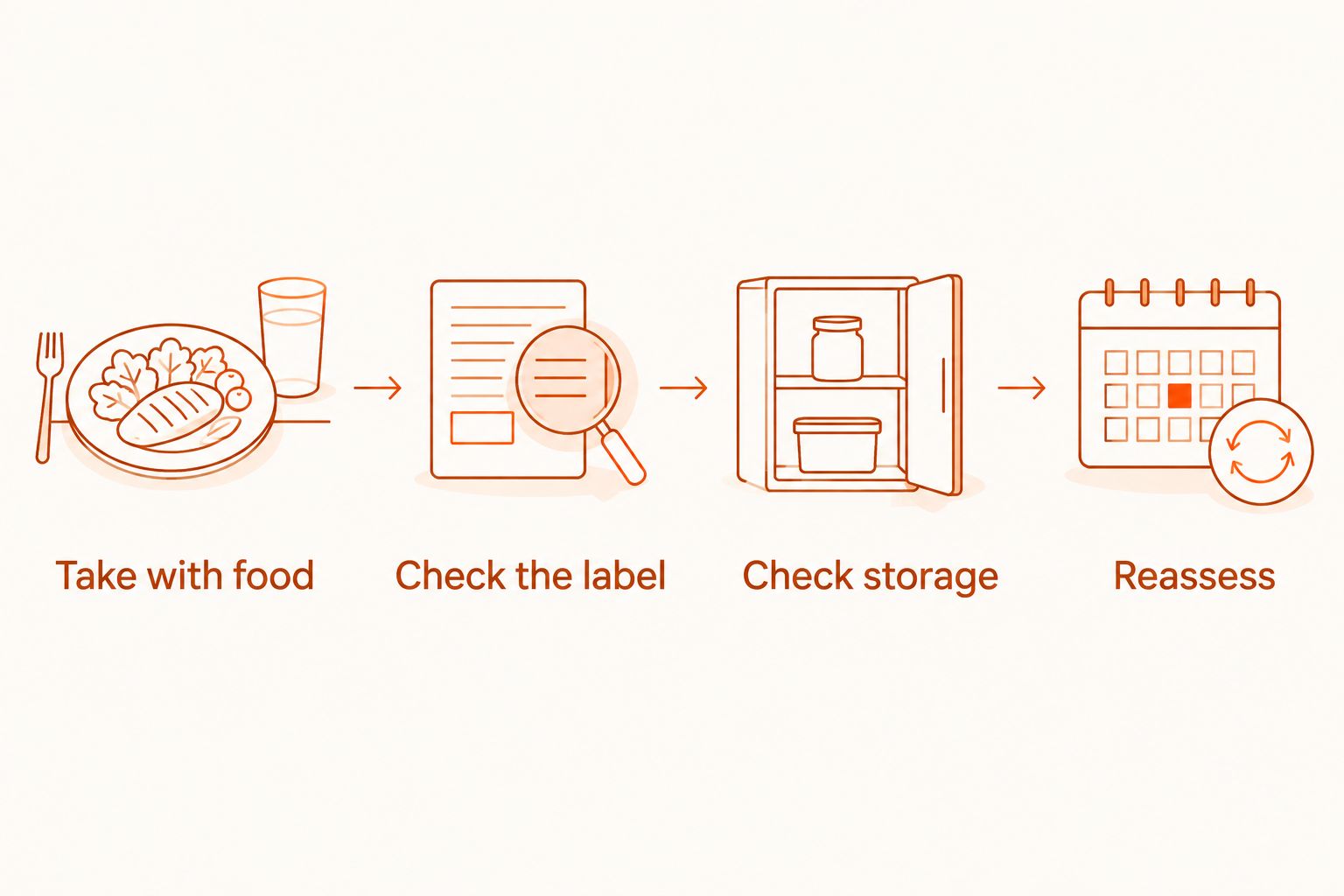
Change one thing, then pay attention to the result. If you take the capsule with food and the burps stop, you have found a routine you tolerate better. If they continue, move to the label and storage checks rather than assuming a larger serving will help.
Why fishy burps vary
Two people can take fish oil and have different experiences. Even your own experience can change when you change how you take a capsule. These are the factors to check before you blame a specific brand:
- Food: Taking a capsule with a meal can feel different from taking it without one. Compare your own experience while keeping the label directions the same.
- Individual tolerance: Some people notice a fishy aftertaste; others do not. A friend's experience does not predict yours.
- The oil source: Fish oil, cod liver oil, krill oil, and flax oil are not identical. Their sources and omega-3 profiles matter more than a promise about taste.
- The capsule and its condition: A leaking softgel or a bottle that smells unusually unpleasant warrants attention before you take another capsule.
- Digestive symptoms: If you also have heartburn or repeated stomach upset, address those symptoms rather than focusing only on the fishy taste.
None of these factors lets you predict with certainty whether a particular capsule will cause burps. In 2026, a useful choice is one whose label you understand and whose side effects you can live with.
Fish oil, krill oil, or flax oil: which fits your goal?
If taking fish oil with food does not settle the issue, compare sources before replacing it. Tigerfitness is an online supplement retailer, and the products below illustrate the trade-off: switching oil sources changes what you consume. It does not promise freedom from aftertaste.
| Option | Best for | Advantage | Limitation |
|---|---|---|---|
| NOW Foods Cod Liver Oil 650 mg | Someone considering a fish-derived oil that also contains naturally occurring vitamins A and D | A source of omega-3s with those vitamins | Still fish-derived; check the full label if you also take vitamins |
| NOW Foods Krill Oil | Someone comparing another marine omega-3 source | Provides phospholipid-bound omega-3s | Still marine-derived; not an answer for someone avoiding shellfish |
| NOW Foods Flax Oil 1000 mg Softgels | Someone seeking a plant-based omega-3 source | Provides alpha-linolenic acid, or ALA, without fish oil | ALA is not the same as getting EPA and DHA directly from fish oil |
The 650 mg and 1000 mg amounts in product names describe oil amounts, not a like-for-like EPA-plus-DHA comparison. NOW Foods Krill Oil also has a 500 mg version listed among the store products; that figure likewise should not be read as its EPA-plus-DHA content. Check each product's own label before comparing servings.
Omega-3 sources to compare

Fish oil softgels with omega-3 fatty acids and naturally occurring vitamins A and D.
$13.46


Plant-based softgels containing flax seed oil as a source of ALA.
$18.37
Do not buy a different oil solely because its name sounds less fishy. Best for avoiding fish ingredients: flax oil, if ALA suits your goal; it is not a direct EPA-and-DHA replacement. Best for comparing marine omega-3 sources: read the cod liver oil and krill oil labels side by side, including any added or naturally occurring vitamins and allergy information.
When should you stop troubleshooting and ask for help?
A fishy taste without other symptoms calls for a label and routine check. Persistent heartburn, repeated stomach upset, or a new symptom after taking a supplement calls for medical advice instead. Tell the healthcare professional what you took and bring the label if you can.
Check with a healthcare professional before taking fish oil if you use medication that affects blood clotting or have a relevant medical condition. If you have a fish or shellfish allergy, do not assume that switching between fish oil and krill oil solves the problem. Check ingredients with a qualified professional.
In 2026, the same boundary applies whether you train for muscle gain or general fitness: a supplement is not a way to diagnose, treat, cure, or prevent a disease. Trouble breathing or swelling after taking one requires urgent medical help, not another test dose.
Can you prevent fishy burps by changing when you take fish oil?
Taking fish oil with a meal is a reasonable first change if you currently take it without food. Follow the label, then see whether the aftertaste changes. If it does not, check the capsules and consider a different source rather than repeatedly shifting the time of day.
Does a fishy burp mean your fish oil is rancid?
No. A fishy burp alone does not establish that fish oil is spoiled. An unusually unpleasant smell from the product, leaking capsules, or a storage problem gives you a separate reason to stop using that bottle and check its condition.
Are fish oil and flax oil interchangeable if burps bother you?
No. Fish oil supplies marine omega-3s, including EPA and DHA; flax oil supplies ALA. Flax oil is an option if you want to avoid fish-derived oil, but compare the fatty acids on the labels rather than assuming the same oil amount delivers the same thing.
FAQ
Can fish oil cause fishy burps even if the capsules are fresh?
Yes. Fishy burps can occur with fish oil without proving the capsules are spoiled. Check the product itself for leaks or an unusually unpleasant smell.
Should I take fish oil with food to avoid fishy burps?
Taking fish oil with a meal is a practical step to try while following the product label. It does not guarantee the aftertaste will stop.
Does a fishy burp mean my fish oil is working?
No. A fishy burp is an aftertaste, not evidence of an effect. Read the label for EPA and DHA when assessing what the supplement contains.
Is krill oil better than fish oil for avoiding fishy burps?
Krill oil is another marine omega-3 source, not a guaranteed way to avoid aftertaste. Check its label and avoid assuming it suits someone with a shellfish allergy.
Can flax oil replace fish oil if I cannot stand the taste?
Flax oil avoids fish-derived oil but supplies ALA rather than EPA and DHA directly. Choose it only after checking which omega-3 source fits your goal.
When should I worry about fish oil burps?
Seek medical advice if burps come with persistent heartburn or repeated stomach upset. Get urgent help for trouble breathing or swelling after taking a supplement.
Does the milligram amount on a fish oil bottle equal its EPA and DHA content?
No. The amount of oil and the amounts of EPA and DHA are different label entries. Compare EPA and DHA separately when reviewing marine omega-3 products.
One last thing
The most useful number on a fish oil label is not always the largest one on the front. An oil amount does not tell you the EPA and DHA amounts, and a fishy burp tells you neither. In 2026, Tigerfitness shoppers should check those label entries, take the product as directed, and change course if the aftertaste or other symptoms remain a problem.
Leave a comment