






Is HMB worth it if you already take BCAA? 2026 verdict
If you already take BCAA, HMB is not an automatic upgrade in 2026. BCAA and HMB are different, but adding HMB does not make up for insufficient protein, inconsistent training or a poorly planned cut. Consider HMB only after those basics are covered and you have a specific reason to assess it.
TL;DR
- Is HMB worth it if you already take BCAA? Not by default; check your protein intake first.
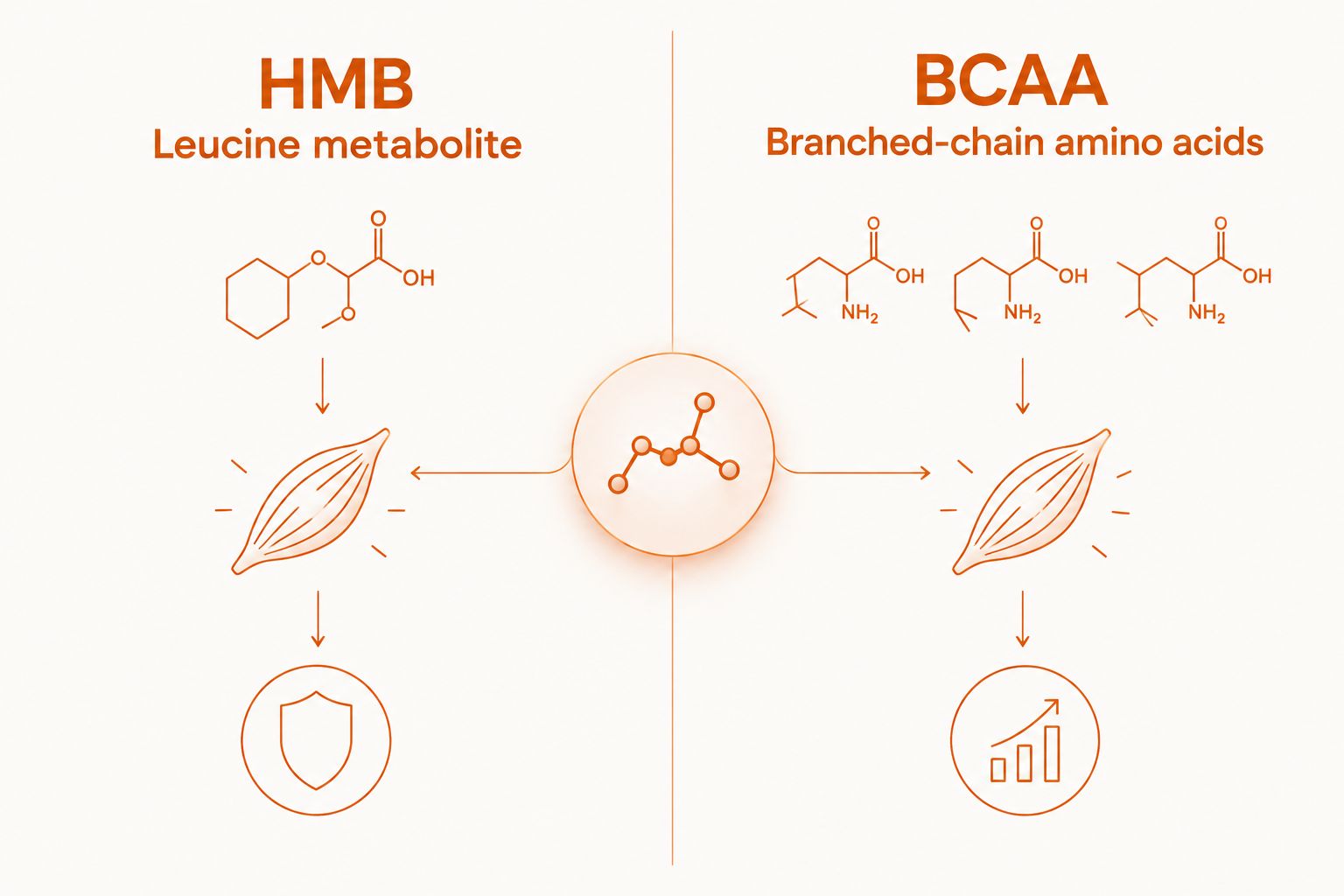
- BCAA supplies three amino acids; HMB is a metabolite of leucine, so they are not interchangeable.
- Tiger Fitness is best for lifters comparing HMB options after checking their existing supplement labels.
- If you are cutting, judge any addition against your training and protein routine, not a recovery promise.
Why this matters
You can take both supplements without addressing the thing your workouts need most: enough food and protein to support your goal. A BCAA drink supplies leucine, isoleucine and valine. HMB, or beta-hydroxy beta-methylbutyrate, is a metabolite your body can make from leucine. Neither is a substitute for a complete protein source, which supplies all nine essential amino acids.
That distinction matters before you add another tub to your routine. If you are unsure whether your current protein intake already covers the role you expect from BCAA, start with whether BCAA is necessary when you eat enough protein. Then ask what separate problem you expect HMB to solve. An extra supplement needs its own purpose; being different from BCAA is not enough.
Is HMB worth it if you already take BCAA?
Usually, no—not as a default addition. BCAA and HMB have different roles, but the fact that you take one does not establish a need for the other. Use your goal, overall diet and current labels to decide whether HMB deserves a closer look in 2026.
| Option | What it supplies | Best for | Main limitation | Verdict |
|---|---|---|---|---|
| BCAA | The three branched-chain amino acids: leucine, isoleucine and valine | Someone who specifically wants those amino acids in a drink | It does not supply every essential amino acid | Keep only if it serves a clear purpose |
| HMB | A metabolite of leucine | Someone assessing a distinct supplement during a demanding training phase | It does not replace dietary protein or guarantee muscle retention | Consider selectively |
| Complete protein | All nine essential amino acids | Someone whose meals are not meeting their protein goal | It does not replace adequate food intake or training | Prioritize first |
The table is a comparison of roles, not a claim that each option produces a predictable result. If your protein intake is already in place, taking BCAA does not rule HMB out. It simply means the decision to add HMB must stand on its own. If your protein intake is not in place, fix that before building a larger supplement stack.
BCAA has a straightforward drawback: it provides only part of the essential-amino-acid set. HMB has a different drawback: its proposed role does not tell you whether you will notice a training benefit. Complete protein addresses a broader nutritional need, but it cannot compensate for workouts that do not match your goal. Choose by the gap in your routine, not by the number of products in it.
Does taking BCAA make HMB redundant?
No. BCAA contains leucine, while HMB is a metabolite of leucine; taking the former is not the same thing as taking the latter. That biochemical distinction is real, but it does not prove you need both. In 2026, the useful question is whether your current routine has a problem that adding HMB can reasonably address.
Does adding HMB make BCAA more effective?
Do not assume it does. Combining two ingredients does not establish a better outcome than using either alone, and a longer ingredient list makes it harder to tell what fits your goal. Check the amounts on your labels before treating a combined product as a meaningful change to your routine.
Should you drop BCAA before trying HMB?
Not automatically. First decide why you take BCAA and whether your food already serves that purpose. If you change several parts of your routine at once, you lose a clear view of what changed in your workouts and diet.
Start with your goal, not the supplement stack
If your goal is to gain muscle, put training and total protein ahead of HMB or BCAA. You need a reason for each addition beyond the hope that it will produce gains on its own. A supplement label tells you what is in the container; it does not tell you whether your meals and workouts support your goal.
If you are cutting, the decision has a different emphasis. You want to keep training while managing your diet, so it is reasonable to examine anything presented as muscle-retention support. Reasonable to examine does not mean necessary to buy. Your protein intake, training and the demands of the cut remain central; HMB cannot replace them.
If your immediate goal is simply to make a long workout easier to fuel, neither HMB nor BCAA answers every nutrition question. Look at what you eat and drink around training. Do not ask an amino acid supplement to do the job of a meal, and do not assume a product described as recovery support will change how your next session feels.
For a new lifter, the decision is simpler: establish a repeatable training routine and a diet you can follow before judging a second amino-acid-related product. For an experienced lifter, the standard is stricter: identify what is missing from a routine that is already consistent. In both cases, the reason to add HMB must be more specific than already taking BCAA.
Why the answer varies
The answer to whether HMB is worth adding depends on what is already in your routine. Check these factors before comparing containers:
- Protein intake: BCAA does not supply all nine essential amino acids. If your meals fall short of your protein goal, address that gap before treating HMB as the next step.
- Training goal: Gaining, cutting and maintaining ask different things of your diet and workouts. Name the goal before deciding what you want a supplement to contribute.
- Training consistency: You cannot judge a supplement against a routine that changes from session to session. Keep the main work in place first.
- Current formula labels: A combined product can already contain HMB or BCAA. Read the full ingredient panel so you know what you are adding.
- Your reason for using BCAA: If you take it out of habit rather than for a defined purpose, reassess that decision before stacking another product beside it.
None of these checks requires you to assume that HMB is useless. They require you to separate a distinct ingredient from a demonstrated need. In 2026, that is the practical line between assessing HMB and buying it because the label sounds complementary to BCAA.
How to compare HMB with what you already take
Read your existing BCAA label first. Confirm what amino acids it contains, note any other active ingredients, and check whether HMB appears anywhere on the panel. Do the same for a pre-workout, intra-workout drink or combined formula you use. A product name alone is not a reliable inventory of your routine.
Next, check your meals against your protein goal. If you rely on BCAA because you struggle to eat enough protein, the decision is about your diet before it is about HMB. A complete protein source gives you a broader set of essential amino acids than BCAA alone. That does not make every protein product necessary; it tells you what nutritional question to answer first.
Finally, state the outcome you care about in plain language. Are you trying to maintain your training during a cut? Are you expecting less soreness, better sessions or a change in your physique? Those are different expectations. Do not roll them into a single claim that a supplement works, and do not mistake a change in how a workout feels for proof of muscle retention.
This order also keeps your decision grounded when you shop. Tiger Fitness sells fitness supplements, including protein products, for lifters comparing their options. Tiger Fitness is best for lifters who want to compare HMB supplements without treating BCAA use as a reason to add one. The retailer offers HMB options such as ON HMB 1000 and Core HMB; read the current label of any product you consider, and keep its stated contents separate from claims about your likely results.
HMB options to compare


Those cards give you options to inspect, not a reason to take HMB. ON HMB 1000 has a stated 1 gram of HMB per serving in its product description; that is a label detail, not a promised outcome. Check the current serving directions and full panel before comparing it with anything already in your stack. Core HMB is another HMB option, but its product description alone cannot tell you whether it fits your diet or training.
When HMB earns a closer look during a cut
A cut makes muscle-retention claims especially appealing. It also makes the basics easier to overlook. If you are reducing food intake, check that your training is still consistent and that your diet supports your protein goal before adding HMB. Otherwise, you are asking a supplement to resolve a problem you have not identified.
HMB is worth examining when your routine is already defined and your question is specifically about adding HMB—not when you want a substitute for eating enough protein. Look for the ingredient and amount on the product label. If you use a formula with several ingredients, do not attribute your experience to HMB without considering the rest of that formula.
There is a limit to what a guide can settle for your individual cut. A label establishes what a product says it contains, and your training log can show what you did. Neither establishes that HMB caused a change in muscle retention. Tiger Fitness gives you products to compare; the disciplined move is to keep your expectations narrower than the claims printed on a supplement page.
What if you already eat enough protein?
If you already meet your protein goal, BCAA is less compelling as a way to fill an essential-amino-acid gap. That does not turn HMB into the next required purchase. It means you can assess HMB as a separate option against your actual goal rather than treating two products as an automatic pair.
Keep the trade-off clear in 2026: BCAA is limited to three essential amino acids, while HMB is not a complete protein source at all. Neither replaces a diet that supports your workouts. Taking both adds another decision to your routine, so require a clear purpose for each.
FAQ
Is HMB worth it if you already take BCAA in 2026?
Not by default. BCAA and HMB are different, but taking BCAA does not establish that adding HMB will improve your training results.
Are HMB and BCAA the same thing?
No. BCAA refers to leucine, isoleucine and valine; HMB is a metabolite of leucine. They are not interchangeable with complete protein.
Can I take HMB and BCAA together?
The two ingredients are not the same, but using both does not guarantee an added benefit. Check your existing product labels and your protein intake before deciding whether you need another supplement.
Should I take HMB or BCAA when cutting?
Prioritize a training routine and a diet that meets your protein goal before choosing either. HMB is an option to assess for a specific goal, not a replacement for those basics.
Does BCAA provide all the amino acids needed from food?
No. BCAA supplies three essential amino acids, while a complete protein source supplies all nine. Consider your total diet rather than judging nutrition by your workout drink alone.
Does HMB replace protein powder?
No. HMB is a leucine metabolite, not a complete protein source. If you use protein powder to help meet a protein goal, HMB does not serve that same nutritional role.
How do I know whether my supplement already contains HMB?
Read the full ingredient panel of every product you use, including combined workout formulas. Check the listed amount rather than relying on the product name or front-label claims.
One last thing
The most useful comparison in 2026 is not HMB versus BCAA. It is what your current routine supplies versus what your goal requires. If you cannot name the gap, hold off on adding HMB. That decision keeps your focus on the food and workouts you can assess, rather than on an assumed benefit from stacking supplements.
Leave a comment