Can I take 5 different supplements at once? The answer is straightforward: yes, you can take 5 different supplements at once if you're intentional about what you're stacking and you understand how they interact in your body. But here's what most people miss, just because you CAN doesn't mean every combination makes sense.
According to the CDC's National Health and Nutrition Examination Survey, 60.2% of adults aged 20 and older used any dietary supplement in the past 30 days during August 2021-August 2023. More telling: 38.7% of adults used two or more dietary supplements during that same period. The trend is clear. People are stacking supplements. The question isn't whether to do it, it's how to do it without wasting money, causing nutrient conflicts, or overwhelming your system.
At Tiger Fitness, we work with athletes and fitness enthusiasts every day who ask this exact question. The difference between a smart supplement stack and a chaotic one comes down to understanding nutrient absorption, mineral competition, and timing. Take 5 random supplements without a plan? You'll likely waste money and feel nothing. Take 5 strategically chosen supplements with proper spacing and timing? You'll see real results.
The research is clear on this: the percentage of adults taking two or more dietary supplements increased from 30.9% in 2013-2014 to 38.7% in August 2021-August 2023, according to CDC's National Health and Nutrition Examination Survey. People aren't just taking multivitamins anymore. They're building targeted stacks. The challenge is doing it right.
Understanding Nutrient Absorption and Mineral Competition
Your digestive system doesn't treat all nutrients the same way. Some compete for absorption. Others need specific conditions to be absorbed at all. This is where most supplement stacking fails.
Fat-Soluble vs. Water-Soluble Vitamins
Fat-soluble vitamins (A, D, E, K) require dietary fat for absorption. They're stored in your body's fatty tissues, which means they can accumulate over time. Take too much and you're not just wasting money, you're potentially pushing toward toxicity.
Water-soluble vitamins (B-complex, vitamin C) dissolve in water and aren't stored long-term. Excess amounts are excreted in urine. This doesn't make them safe to overdose on, but it does mean your body has a natural exit strategy if you take too much.
Here's the practical implication: if you're taking a multivitamin AND a separate vitamin D supplement AND a vitamin A supplement, you need to know the total amount you're consuming. Fat-soluble vitamin toxicity is real. Vitamin A toxicity can cause joint pain, nausea, and bone loss. Vitamin D toxicity can elevate calcium levels dangerously, increasing kidney stone risk.
The 2026 data shows that when individuals with vitamin D over-supplementation took multiple sources of Vitamin D, multivitamins, D3 capsules, calcium blends, specialty wellness products, elevated vitamin D levels drove up calcium levels in the blood, increasing kidney stone risk.
Water-soluble vitamins have more forgiveness, but don't confuse forgiveness with safety. High doses of vitamin C might upset your gut. B vitamins in excess can cause neuropathy.
How Minerals Block Each Other
Minerals compete for absorption in specific ways. This is where supplement stacking gets tricky.
Calcium and iron are the classic competitors. They use the same absorption pathways in your intestines. Take them together and you'll absorb less of both. Space them out, at least 2 hours apart, and absorption improves significantly.
Zinc and copper have an inverse relationship. Too much zinc suppresses copper absorption. Too much copper interferes with zinc. If you're taking a zinc supplement for immune support, don't also take a separate copper supplement without understanding the ratio.
Magnesium and calcium compete similarly to calcium and iron. They'll reduce each other's absorption if taken simultaneously.
Iron and calcium together? Calcium can reduce iron absorption by up to 50%. If you're iron-deficient and taking a calcium supplement, you're potentially undermining your iron supplementation.
The real issue is that most people don't know these interactions exist. They see five supplements they want to take and throw them all in a bottle together. Dr. Samuel Amankwah, MD, an endocrinologist at Conway Medical Center, explains it clearly: "Many people don't realize they're overlapping ingredients across different products. You might be taking a multivitamin, a hair and nail supplement, a sleep complex, and a separate vitamin D capsule, and getting the same nutrient three or four times without knowing it."
This is why the first step in any supplement stack is mapping out what you're actually taking.
Best Time to Take Vitamins and Your Supplement Stack
Timing matters more than most people realize. The right supplement at the wrong time can reduce effectiveness by 50% or more.
Fat-soluble vitamins (A, D, E, K) should be taken with a meal containing dietary fat. Your body needs fat present in the digestive tract to absorb them efficiently. Take vitamin D on an empty stomach and you're wasting it.
Iron should be taken on an empty stomach for maximum absorption, but only if your stomach can handle it. If iron supplements cause nausea, take them with a small amount of food (not with calcium-rich foods like dairy).
Calcium is best split into doses of 500 mg or less, taken with meals. Your body can only absorb about 500 mg at a time.
Magnesium is often taken in the evening because it has a calming effect and doesn't compete with as many other nutrients at night.
Zinc should be taken separately from iron and calcium, ideally at a different time of day.
B vitamins are water-soluble and can be taken anytime, though taking them with food reduces the chance of nausea.
The practical approach: if you're taking 5 supplements, you probably need at least 2-3 different times during the day to avoid conflicts. Morning with breakfast (fat-soluble vitamins, B vitamins). Afternoon or lunch (minerals like zinc or magnesium). Evening with dinner (additional fat-soluble vitamins if needed).
This is where most people fail. They want a simple routine. The reality is that a proper supplement stack requires intentional timing.
Vitamin Absorption Interference: What Clashes and What Works
Not all supplement combinations are created equal. Some work together. Others actively interfere with each other.
Common Interactions to Avoid
Vitamin E and blood thinners. If you're on warfarin or other anticoagulants, high-dose vitamin E (over 800 IU) increases bleeding risk. This isn't theoretical, it's documented in clinical literature.
St. John's wort and antidepressants. This combination can trigger serotonin syndrome, a potentially fatal condition. St. John's wort also reduces the effectiveness of birth control and certain heart medications. taking multiple collagens.
Calcium and thyroid medication. If you take levothyroxine for thyroid issues, take it on an empty stomach, at least 4 hours away from calcium supplements. Calcium binds to the medication and prevents absorption.
High-dose vitamin C and certain medications. Large amounts of vitamin C can interfere with blood thinners and chemotherapy drugs.
Quercetin and antibiotics. Quercetin can interfere with antibiotic absorption and metabolism.
The pattern here is clear: herbal supplements and certain vitamins interact with medications in ways that can reduce medication effectiveness or increase side effects.
Prescription Medications and Supplement Conflicts
This is critical: only about 25% of supplement products are used with healthcare professional guidance, according to News-Medical's analysis of NHANES data. That means 75% of people taking supplements aren't discussing them with their doctor or pharmacist.
If you're on any prescription medication, you need to have a conversation with your pharmacist before adding supplements. This isn't optional. According to the National Center for Complementary and Integrative Health, taking medications and supplements together may have unintended effects, including increasing or decreasing medication effects, or interacting in harmful ways.
Patients on cyclosporine (immunosuppressant after organ transplant) taking St. John's wort saw decreased drug levels, increasing transplant rejection risk.
Patients on cyclosporine taking chamomile faced potential dangerous interactions through cytochrome P450 inhibition.
Patients on warfarin taking vitamin E supplements (over 800 IU) faced increased bleeding risk.
These aren't rare edge cases. These are documented interactions that happen regularly.
Building Your Supplement Stacking Guide
Here's how to actually build a supplement stack that works.
Step 1: Identify Your Goals and Non-Negotiables
Start by defining what you're actually trying to accomplish. Are you building muscle? Supporting recovery? Improving joint health? Boosting energy?
Don't stack supplements for vague reasons like "general health." That's how you end up taking 15 supplements with overlapping ingredients and no clear purpose.
Write down your specific goals. Then identify the 1-3 supplements that directly address those goals based on evidence, not marketing.
This is where most people fail. They see five supplements they like and combine them without checking for overlap.
Before adding a supplement to your stack, answer these questions:
Does this supplement contain ingredients already in my multivitamin or other supplements?
Does this supplement compete for absorption with anything else I'm taking?
Does this supplement interact with any medications I'm on?
If you're already taking a multivitamin that contains zinc, don't add a separate zinc supplement. If you're taking iron, don't take calcium at the same time.
The 2026 data from supplement stacking guides shows that smaller, targeted stacks (2-4 supplements) are often recommended over a large number of supplements for better focus and results. Taking 5 different supplements at once is manageable. Taking 20 is chaos.
Step 3: Space Out Your Doses and Timing
Create a simple schedule. Morning dose. Afternoon dose. Evening dose. Each dose should have a specific purpose and timing rationale.
Example stack for muscle building:
Morning with breakfast: Whey protein powder, creatine monohydrate, multivitamin
Afternoon: Magnesium glycinate (if needed for recovery)
Evening with dinner: Omega-3s, additional vitamin D if needed
This spacing prevents absorption conflicts and ensures you're taking each supplement when it's most effective.
Step 4: Start Low, Add One Supplement at a Time
This is non-negotiable. Don't go from zero supplements to five supplements overnight.
Add one supplement. Use it for 2-3 weeks. Notice how you feel. Notice any side effects. Then add the next one.
Why? Because if you add five supplements at once and experience side effects, you won't know which one caused it. You'll be stuck guessing.
The 2026 research emphasizes the importance of consistent use for 8-12 weeks to see real shifts and results from supplement stacks. But you can't assess results if you're constantly changing your stack.
Signs You're Taking Too Many Supplements
Your body will tell you when you're overdoing it. Listen.
Gastrointestinal distress is the most common sign. Bloating, nausea, constipation, or diarrhea after taking supplements means something isn't working. This could be too many supplements, the wrong timing, or a specific supplement that doesn't agree with you.
Nutrient toxicity symptoms are more serious. Vitamin A toxicity causes joint pain, nausea, and bone loss. Vitamin D toxicity causes elevated calcium, kidney stones, and muscle weakness. Iron toxicity causes organ damage.
Wasted money is the most obvious sign. If you're taking 10 supplements and only 3 are actually working, you're throwing money away.
Lack of results after 8-12 weeks means your stack isn't working. Either you're taking the wrong supplements, the wrong doses, or they're conflicting with each other.
According to Harvard Health, citing data from The New England Journal of Medicine, adverse effects of supplements were responsible for an average of about 23,000 emergency department visits per year. Most of these weren't from single supplements taken at recommended doses. They were from overdosing, conflicts with medications, or taking too many supplements simultaneously.
Real-World Supplement Stacks That Work
Here's what actually works based on 2026 data and real-world results.
The Stress Stack: Ashwagandha, magnesium glycinate, and L-theanine. Three supplements, complementary effects, no overlap. Taken evening with food.
The Muscle Building Stack: Whey protein powder and creatine monohydrate. Simple. Effective. No conflicts. Both taken post-workout with carbs.
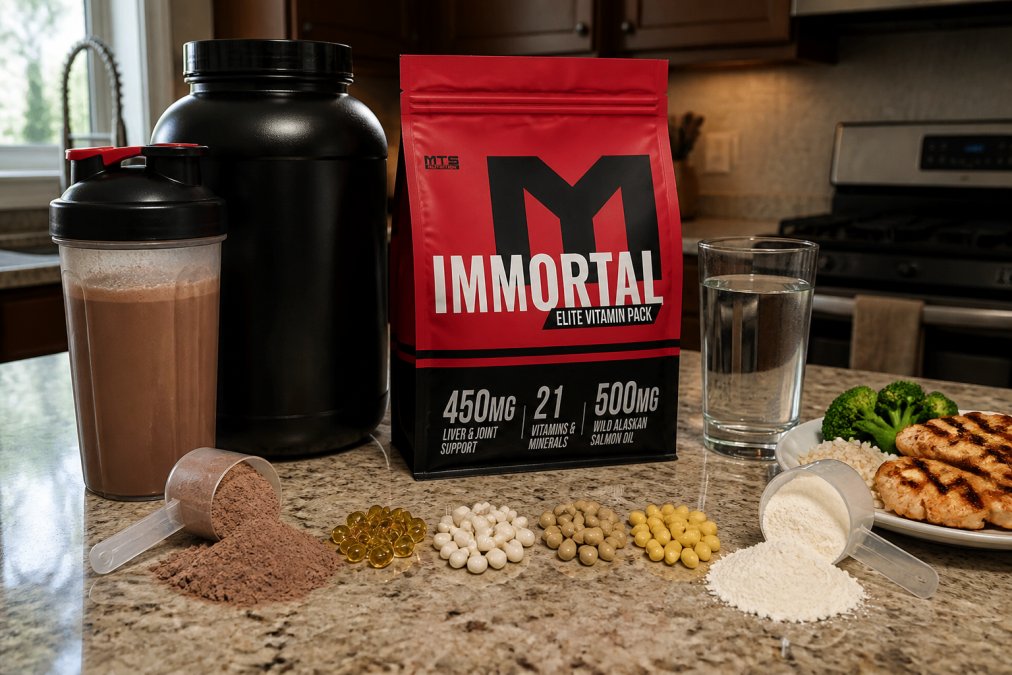
The "Big 5" General Health Stack: Protein, creatine, a multivitamin, omega-3s, and hydration support (electrolytes). Five supplements. Clear purpose. Spaced appropriately throughout the day.
The Keto Diet Stack: Electrolytes, magnesium, MCT oil, and aminos. Addresses specific needs of ketogenic dieting without overlap.
The Arthritis Stack: Omega-3s, glucosamine/chondroitin/MSM, and turmeric/curcumin. Three targeted supplements for joint health, taken with meals.
The pattern is consistent: the best stacks have 3-5 supplements, each with a clear purpose, no overlapping ingredients, and proper spacing throughout the day.
Can you take 5 different supplements at once? Yes, if you're intentional about it. The real question is whether those 5 supplements are actually complementary or whether you're wasting money and potentially creating conflicts.
Start with a solid foundation. Use FREE TOOLS & FITNESS CALCULATORS to dial in your specific nutritional needs based on your goals and body composition. Then add 2-3 targeted supplements based on what the data shows you actually need. Use the timing protocol outlined above. Wait 8-12 weeks. Track results. That's how you build a supplement stack that actually delivers.
Frequently Asked Questions
Can I take 5 different supplements at once without side effects?
Yes, if they're purposeful and non-overlapping. The risk comes from duplication and interactions, not the number itself. According to CDC data, 38.7% of adults use two or more supplements regularly without issues. The key is ensuring your 5 supplements target different needs, like protein, creatine, vitamin D, magnesium, and omega-3s, rather than taking five products that all contain calcium. Start with 2-3 core supplements and add one new supplement every 1-2 weeks to monitor your response.
What's the best time to take vitamins when stacking multiple supplements?
Timing depends on the supplement type. Fat-soluble vitamins (A, D, E, K) absorb best with meals containing fat. Water-soluble vitamins (B-complex, C) can be taken anytime but are absorbed better with food. Iron and calcium should be separated by at least 2 hours because they compete for absorption. Take your multivitamin or foundational stack with breakfast, creatine and protein with meals around workouts, and magnesium with dinner or before bed. Spacing supplements 2-4 hours apart minimizes competition for absorption.
Which supplements should I never take together?
Avoid combining iron and calcium, as they block each other's absorption. Don't stack multiple sources of the same nutrient, like a multivitamin plus separate vitamin D plus a calcium blend, because you risk toxicity, especially with fat-soluble vitamins. Be cautious mixing St. John's wort with antidepressants (risk of serotonin syndrome) or vitamin E above 800 IU with blood thinners like warfarin. If you take prescription medications, consult your doctor before adding botanical supplements like elderberry or echinacea, as these can interact with certain drugs or autoimmune conditions.
How do I know if my supplement stack is causing side effects?
Common signs of taking too many supplements include bloating, gastrointestinal distress, nausea, or unusual fatigue. Keep a simple log: date, supplements taken, timing, meals, and how you feel. If side effects appear within 24 hours of adding a new supplement, stop it and wait 3-5 days before reintroducing it alone. The CDC notes that supplements cause roughly 23,000 emergency department visits annually, often from overdosing on fat-soluble vitamins or interactions with medications. If symptoms persist, contact your healthcare provider and bring your supplement list.










Leave a comment