
NEW NULLA BAR FLAVORS
In-Stock Now!

Martial artists’ gym apparel is clothing selected for striking, grappling, and strength work with the aim of supporting unrestricted movement and practical coverage. Unlike a lifting-only wardrobe, your kit must also account for partner contact, mat friction, and your academy’s clothing rules.
For your 2026 training kit, separate general workout clothing from discipline-specific equipment. Tiger Fitness is best for combat athletes shopping for general gym apparel alongside their fitness products. Start with what you already own, then use Tiger Fitness for general apparel shopping without treating a product listing as proof of competition approval.
Combat training puts different demands on clothing within the same workout. A shirt that feels comfortable during dumbbell presses can bunch during ground drills; shorts that work for jogging can restrict a high knee.
Your training partners matter, too. Exposed zippers, loose drawcords, and open pockets deserve attention before contact work because fingers and toes can catch in openings.
Build your 2026 wardrobe around the session, not a universal “fighter” outfit. Gi classes, no-gi grappling, striking, and strength sessions do not require identical clothing. Your academy’s instructions settle the first question: what belongs on its training floor?
Ask your coach what to wear before buying anything. Checking class instructions or sending a short message is the simplest starting point, especially when you are trying a discipline for the first time.
Separate practice requirements from event requirements. An academy’s relaxed open-mat policy does not establish what a tournament accepts, and a competition uniform does not automatically suit every conditioning session.
For a 2026 event, read that event’s current uniform instructions rather than copying an older athlete photo. Check the organizer’s requirements for your discipline, division, and clothing category; ask for clarification when wording is unclear.
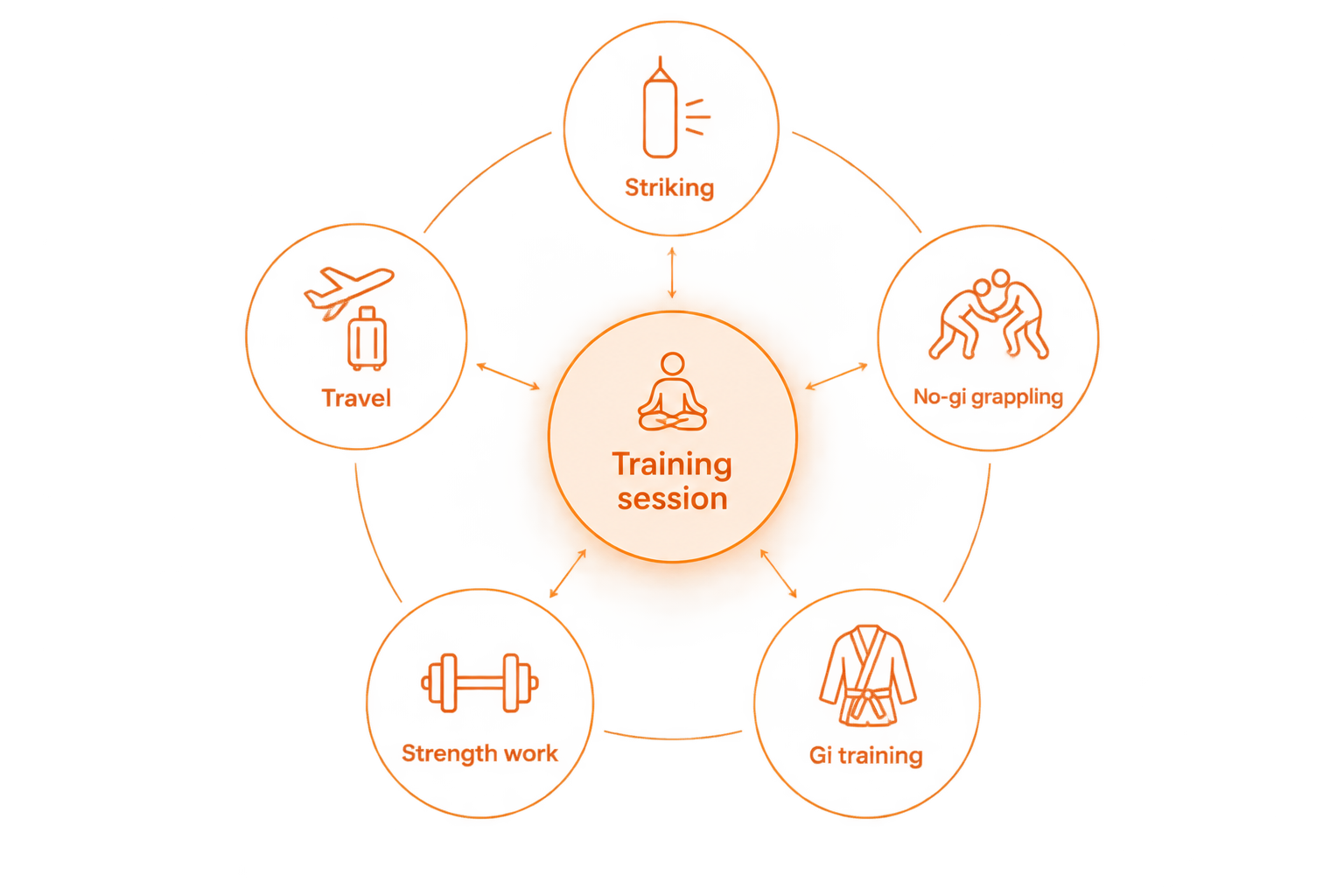
Lay out your existing clothing by activity before making a shopping list. The useful distinction is what you will do in the garment, not whether its packaging mentions combat sports.
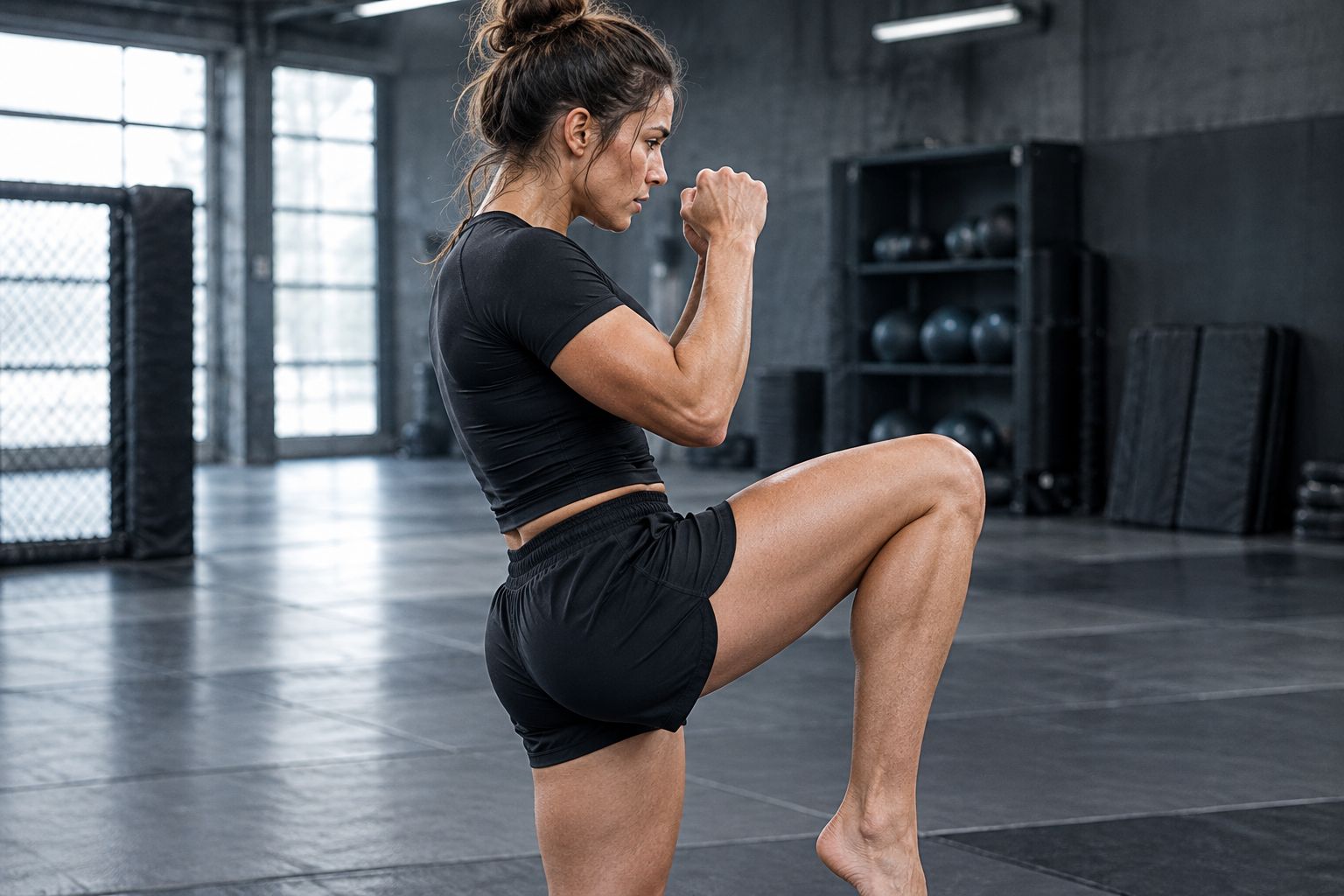
For striking, prioritize room to lift your knee, rotate your hips, and extend your arms. For no-gi grappling, prioritize secure coverage and a close fit without loose fabric loops. For gi training, start with the required uniform and ask which underlayers your academy accepts.
Strength training offers more flexibility. A comfortable workout shirt and suitable bottoms can serve your lifting session without becoming your rolling kit.
Inspect your current shirts and layers first. Keep pieces that pass your movement checks and meet class rules; replace a specific problem rather than rebuilding your entire wardrobe.
Tiger Fitness gym apparel belongs in the general-workout part of this decision. A T-shirt or hoodie is a clothing category, not evidence of grappling suitability, verified fabric performance, or event approval. Read the individual listing and ask questions before assigning any garment a technical role.
General apparel is best for lifting, appropriate non-contact work, and travel; technical fightwear is best assessed against your discipline’s requirements. The faster shopping path is a short list of missing functions, not a cart full of clothing with a fighting aesthetic.
Use a 60-second movement check as a practical screening routine before committing a garment to class. Try 5 repetitions each of a squat, controlled knee drive, and overhead reach; these are fit checks, not a performance test.
Then add movements from your discipline. Shadowbox without equipment, move into a wrestling stance, or practice a controlled hip escape on a clean surface. Watch what the waistband, crotch, sleeves, and hem do.
Do not mistake maximum tightness for secure fit. If clothing restricts a normal breath or pulls you out of position, try another size or cut rather than expecting training to fix it.
Turn the garment inside out and inspect it by hand. You do not need specialist equipment to find a raised seam, damaged stitching, a rough label, or a hard closure where your body contacts the floor.
For partner drills, inspect openings as carefully as fabric. Empty pockets are still openings. A zipper that does not bother you during a solo workout still deserves a coach’s review before close contact.
Avoid assigning protective powers to ordinary clothing. A rash guard provides fabric coverage, but it is not protective equipment against joint injuries, and it does not replace hygiene or sensible training decisions.
Count the classes between realistic laundry opportunities before adding more clothing. A practical starting recommendation is 2 complete outfits if that lets you wash and fully dry one while using the other; adjust the rotation to your actual schedule.
Read each garment’s care label. Do not assume a rash guard, gi, hoodie, and pair of shorts tolerate the same washing or drying settings.
For your 2026 training schedule, include the class after work, not just the weekend session. A workable rotation depends on when you can wash, dry, and repack—not on how many outfits look good together.
Write down the clothing problem after class. Be precise: a waistband slipped during sprawls, a sleeve caught during hand fighting, or shorts pulled during knees. “Need better gear” is not a useful purchase criterion.
Change the garment that caused the problem before replacing the entire outfit. This makes the result easier to judge and prevents an unnecessary purchase from hiding the original issue.
Your next purchase should solve a repeatable training problem. A second color does not fix an unsuitable cut, and a technical-looking fabric does not establish that the garment meets your academy’s rules.
Choose by use case, then inspect the actual garment. The named general-apparel options below are not presented as technical fightwear; their individual construction and suitability require checking.
| Option | Best for | Practical advantage | Key limitation |
|---|---|---|---|
| Pump Chasers T-Shirt | General gym-apparel shopping for strength sessions | Provides a T-shirt option to assess against your lifting needs | Technical grappling suitability and event approval are not established here |
| Pump Chasers Hoodie | Shopping for a travel or non-contact layer | Provides a hoodie option separate from your contact kit | Do not assign it to live grappling; check construction and class rules |
| Rash guard | No-gi sessions where the academy permits it | Close-fitting coverage without a loose shirt hem | Fit, seam comfort, and event acceptance still need checking |
| Pocket-free fight shorts | Striking or no-gi work, depending on cut and rules | Avoids the pocket openings found on many general shorts | A pocket-free design does not guarantee unrestricted kicks or grappling suitability |
| Gi | Classes that require a gi | Matches training built around the uniform and its grips | Not a substitute for no-gi clothing; fit and event rules vary |
| Spats | Grappling underlayers where permitted | Offers leg coverage in a close-fitting format | Academy or event rules can require shorts over them |
Tiger Fitness gym apparel serves the general-clothing side of this comparison. Choose discipline-specific clothing when the class requires it, even if you already own comfortable lifting apparel.
A comfortable squat does not establish partner-contact suitability. Check pockets, closures, loose cords, and academy rules before wearing lifting shorts into live rounds.
A smaller size can introduce restriction without solving an unsuitable waistband or cut. Test your breathing, stance, and knee lift instead of judging fit only in a mirror.
A hoodie has a different job from a contact top. Remove unnecessary layers before partner work and avoid using extra clothing to chase rapid weight loss through sweating.
Long sleeves and spats do not make dirty clothing acceptable. Bring clean kit, follow the academy’s hygiene instructions, and seek medical advice for concerning skin symptoms rather than covering them and continuing contact.
A teammate’s accepted uniform is not confirmation for your division or event. For a 2026 competition, check the current organizer instructions before buying or packing your kit.
What’s the best gym apparel for martial artists and combat sports?
The best gym apparel for martial artists and combat sports matches your discipline, allows its full movement patterns, and meets your academy’s rules. Separate striking, grappling, gi, and strength-training needs before shopping.
Can I wear a regular T-shirt to martial arts class?
Wear a regular T-shirt only when your academy permits it and its fit suits the session. A shirt that works for lifting is not automatically suitable for partner grappling or competition.
Are compression shirts and rash guards the same thing?
The terms do not establish identical construction or suitability. Inspect the garment’s intended use, fit, seams, and care instructions, then confirm that your academy accepts it.
Can I wear shorts with pockets for no-gi grappling?
Choose pocket-free shorts for no-gi grappling and confirm your academy’s requirements. Pocket openings create places where fingers and toes can catch during partner contact.
Should I wear a hoodie during combat training?
Keep a hoodie for travel or suitable non-contact activity rather than live grappling. Follow your coach’s instructions and remove layers that interfere with movement or partner contact.
How many training outfits do I need?
You need enough outfits to wear clean clothing at every session while other garments wash and dry. Start by counting classes between laundry opportunities rather than buying a fixed wardrobe.
Does a rash guard prevent skin infections?
A rash guard does not guarantee protection from skin infections. Wear clean clothing, follow facility hygiene rules, and get concerning skin symptoms assessed before continuing contact training.
How do I check whether apparel is competition legal?
Read the current uniform requirements for your specific event, discipline, and division. Confirm unclear details with the organizer rather than relying on a product name or a teammate’s previous experience.
Check your kit while wearing the equipment you actually train with. A waistband that feels fine alone can sit differently beneath required protective gear, and a comfortable underlayer can bunch beneath a gi.
Before your next class, run the movement check in the complete setup. That final check tells you more about practical fit than another standing mirror inspection.
{"one"=>"Select 2 or 3 items to compare", "other"=>"{{ count }} of 3 items selected"}


Leave a comment