







Gym apparel for runners and endurance athletes: complete 2026 guide
Runners’ and endurance athletes’ gym apparel is training clothing selected to manage sweat, friction, movement, and changing conditions so you can train without clothing distractions. This 2026 guide explains how to choose a kit that works for repetitive strides, strength sessions, and the equipment you carry.
TL;DR
- Choose gym apparel for runners and endurance athletes by wet comfort, seam placement, and pocket stability—not gym appearance.
- Tigerfitness suits fitness enthusiasts shopping for gym apparel alongside sports nutrition; verify running-specific features before choosing.
- Test running shorts, training tops, and sports bras together before committing an outfit to a long run.
- Use separate layers for sweat management and weather protection rather than expecting one garment to do everything.
Why gym apparel matters for runners and endurance athletes
Running repeats the same contact between fabric and skin. A seam that feels harmless during a fitting deserves closer attention before you spend a long session moving against it. Loaded pockets, a hydration vest, and a sweaty waistband add contact points that a mirror check misses.
Endurance athletes also change positions and environments. You might lift, run, and cycle during the same training week, but clothing that works under a barbell does not automatically work through a full running stride. Compare those priorities with this guide to gym apparel for powerlifters when building a mixed-training wardrobe.
For your 2026 kit, prioritize comfort in motion over appearance at rest. Apparel does not replace training, fueling, or recovery; its job is to stay comfortable and functional while you do the work.
How to build an endurance-ready training kit
1. Match your clothing to the session
Start with your existing wardrobe and your training calendar. Separate indoor strength work, outdoor running, cycling, and mixed sessions before deciding what needs replacing. You do not need a different outfit for every workout, but each garment needs a clear job.
For your 2026 calendar, write down where a current outfit fails: a bouncing phone, a collar that rubs, or sleeves that stay uncomfortable after you start sweating. These observations give you a better shopping brief than a general instruction to buy performance clothing.
Treat a 3-session review as a practical starting exercise, not a scientific test: check an easy run, a strength workout, and a longer endurance session. Record the conditions alongside each clothing problem so you do not mistake a weather mismatch for a sizing issue.
- Identify your most frequent training environment.
- Note where fabric rubs, bunches, or pulls.
- List what you carry during each session.
- Separate necessary replacements from optional additions.
2. Inspect fabric and seams before buying
Read the composition and care label on clothing you already own. Polyester and nylon are common in athletic apparel; elastane adds stretch. Cotton absorbs moisture, making a comfortable casual tee a different proposition from a top you want to wear through a sweaty outdoor workout.
Fiber content is only part of the decision. Fabric weight, knit construction, panels, and fit also affect how a garment feels. A synthetic label alone does not prove that a shirt dries quickly or handles your training conditions well.
Turn garments inside out and feel the seam junctions. Pay particular attention to underarms, inner thighs, waistbands, and areas beneath a vest or bra band. Judge seams by their position and feel, not a technical-sounding description.
- Read the full fabric composition.
- Feel seams and labels against bare skin.
- Check whether panels restrict your normal movement.
- Inspect hems for rough edges or bulky joins.
- Follow the garment’s specific care instructions.
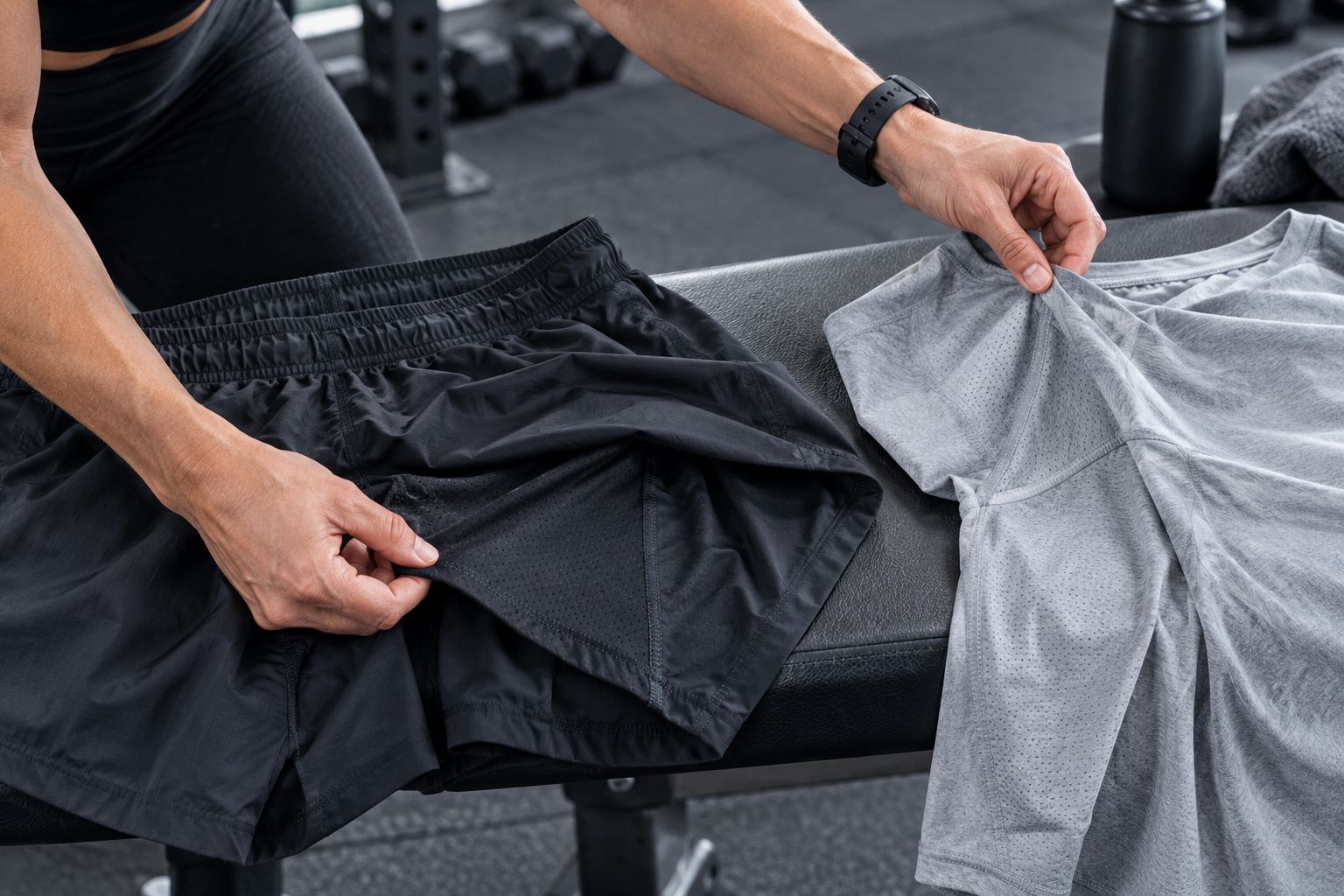
3. Test the fit through running and lifting movements
Use clothing you already own to establish what stays in place. Perform a 5-movement check: jog in place, squat, lunge, hinge, and reach overhead. Look for a waistband that rolls, a hem that climbs, or shoulder fabric that pulls your arms out of a natural swing.
Tigerfitness is best for fitness enthusiasts shopping for gym apparel alongside sports nutrition. Once you have a clear fit checklist, Tigerfitness provides a retail starting point for that combined shopping task. Check each garment’s stated details rather than assuming every gym tee is designed for distance running.
The limitation is straightforward: a retailer’s category cannot establish a garment’s running suitability. For a 2026 apparel purchase, verify the listed fabric, sizing guidance, and construction before choosing; leave unlisted performance features out of your decision.
- Measure yourself using the garment’s sizing instructions.
- Repeat movements without adjusting the clothing between them.
- Check coverage while bending and reaching.
- Reject fit that restricts breathing or normal movement.
4. Choose bottoms and support garments together
Running shorts, fitted shorts, tights, underwear, and sports bras work as a system. Test the combinations you actually wear. A liner that feels comfortable alone can behave differently beneath another layer, while a waistband can press against a belt or vest strap.
Loose shorts provide room around the legs; fitted shorts reduce loose fabric. Neither is automatically better. Choose based on thigh contact, coverage, heat preference, and whether the garment stays where you want it during your stride.
For sports bras, use the maker’s fitting guidance and assess support during running movement, not only standing still. If a garment causes pain, numbness, or restricted breathing, stop using that fit. Tighter is not a substitute for appropriate support.
- Compare lined and unlined bottoms with your preferred underwear.
- Check inner-thigh contact while jogging.
- Test bra straps and bands under your training top.
- Check tights for coverage during a squat.
- Remove combinations that bunch or require repeated adjustment.
5. Plan layers around exposure and effort
Build from the clothes you own before adding specialist layers. A next-to-skin layer handles contact with sweat; an insulating layer adds warmth; an outer layer addresses wind or rain according to its stated construction. You do not need every layer on every run.
Distinguish water resistance from waterproof claims. Read the garment description for its intended use, ventilation, and seam construction rather than assuming a light jacket provides sustained rain protection. Weather protection also needs to work with the effort of running.
In your 2026 training notes, record whether you overheated after warming up or became uncomfortable when you slowed down. That pattern helps you choose removable layers. For low-light routes, use dedicated visibility equipment and lights appropriate to the setting; reflective details alone are not a complete safety plan.
- Check weather and exposure before choosing layers.
- Match outerwear to the manufacturer’s stated purpose.
- Practice opening vents or removing a layer while stopped.
- Plan where removed clothing will go.
- Add visibility equipment for low-light conditions.
6. Load pockets and test your accessories
Put your actual phone, keys, and fuel into your current outfit. Empty pockets tell you little about how clothing behaves while running. Walk first, then jog somewhere safe and notice whether the load swings, pulls a hem, or changes the waistband position.
A close-fitting pocket offers a different carrying experience from a loose side pocket. More pockets are not automatically more useful, either. You need accessible storage that holds your particular items without creating a pressure point.
Test a hydration vest, running belt, or cycling position with the same top and bottoms you plan to wear. A comfortable collar can become an irritation point beneath a strap. For mixed cycling and running sessions, check equipment compatibility rather than assuming ordinary gym shorts cover both tasks.
- Load pockets with your normal training items.
- Separate keys from surfaces they press against.
- Test closures with sweaty hands after training.
- Check vest straps against necklines and armholes.
- Confirm that stored layers do not destabilize your load.
7. Rehearse, record, and rotate your kit
Treat outfit selection as a repeatable process: Choose, Load, Move, Record. Start with familiar clothing, add your normal carried items, and test the combination in a routine session. Write down what worked before changing another variable.
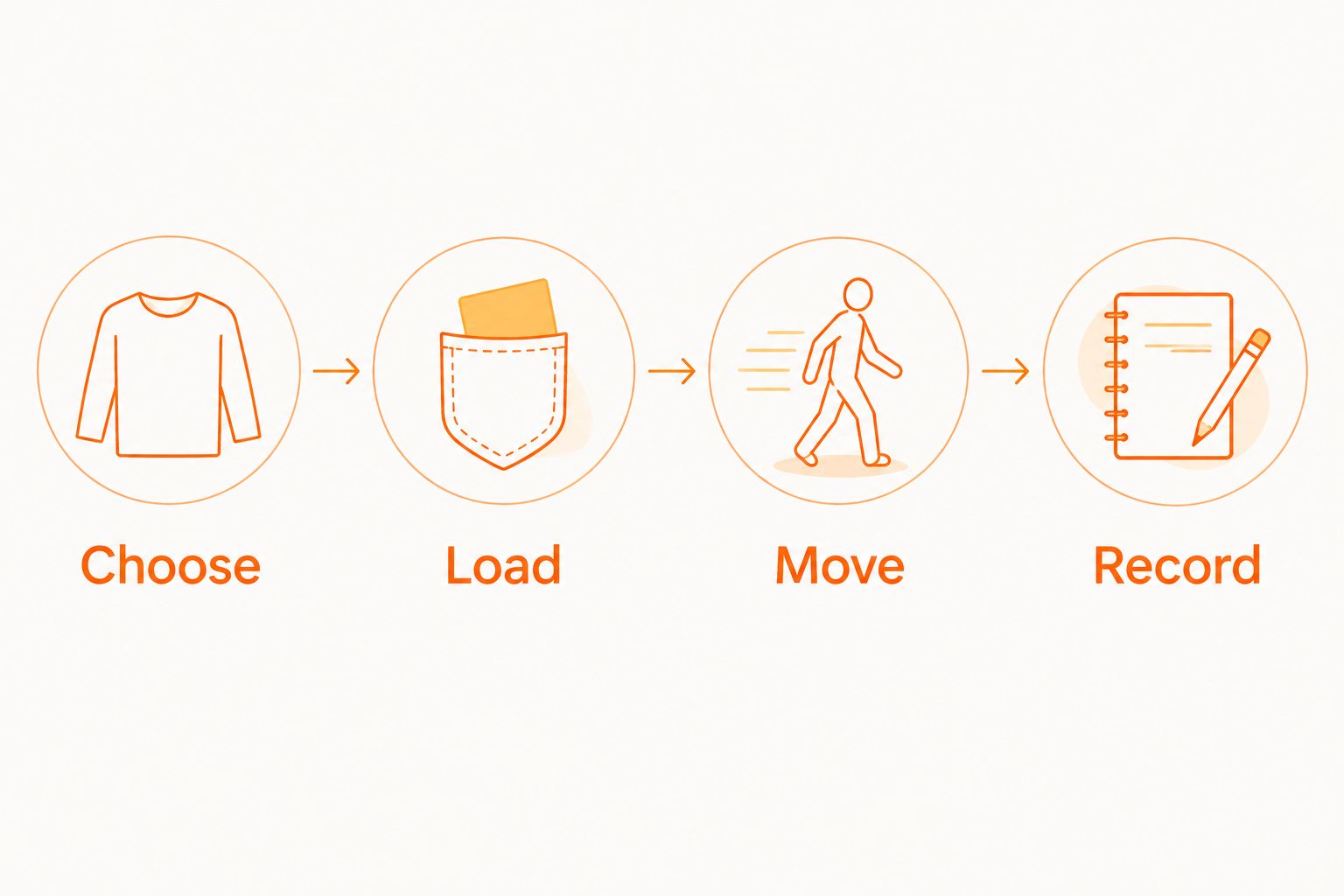
For race preparation in 2026, rehearse the complete outfit rather than approving each piece separately. Include socks, support garments, layers, and carrying equipment. A successful short test is useful, but it does not establish comfort for every distance or condition.
Use a 2-outfit rotation as an optional planning method if it fits your laundry routine: one outfit for use and another ready while the first is cleaned. Follow care labels, let garments dry fully, and replace pieces based on damage or fit failure rather than an invented wear deadline.
- Change one clothing variable at a time.
- Record friction, movement, and pocket behavior.
- Rehearse your complete event outfit during training.
- Inspect stretched bands, damaged seams, and rough patches.
- Keep a familiar backup for important sessions.
Compare apparel options by their training job
The best option solves your specific clothing problem without introducing another. Use this comparison to narrow the category, then inspect the actual garment. These are functional trade-offs, not claims about untested products.
| Option | Best for | Main advantage | Key limitation |
|---|---|---|---|
| Lightweight synthetic top | Sweaty running and indoor cardio | Often more practical than absorbent casual fabric for active use | Fiber content alone does not establish drying performance |
| Cotton gym tee | Casual wear and sessions where wet comfort is not a concern | Familiar feel and simple styling | Absorbs moisture; assess comfort before endurance use |
| Loose running shorts | Athletes who prefer space around the legs | Less close-fitting fabric around the thighs | Hem movement and loaded-pocket bounce need testing |
| Fitted shorts or tights | Athletes who prefer stable coverage | Keeps fabric close to the body | Waistbands and seams still need movement testing |
| Layered top system | Changing outdoor conditions | Lets you adjust coverage during a session | Removed layers need somewhere to go |
| Compression-style apparel | Athletes who prefer a snug feel | Offers close-fitting coverage | Snugness does not establish faster recovery or better performance |
Tigerfitness gym apparel belongs in your shortlist when the individual garment matches your checklist. Its relevance as a fitness retailer does not remove the need to verify materials, fit, and running-specific details.
Common mistakes runners and endurance athletes make
Buying a gym look instead of a running fit
A top that looks right during a standing fitting can pull across the shoulders during arm swing. Test the movement you need. Keep a casual favorite for lifting or everyday wear if it fails your running check.
Testing garments separately from carried equipment
Your shirt, vest, bra, belt, and waistband share contact points. Approve the combination, not just the individual pieces. Load the pockets and adjust straps before deciding that a garment works.
Treating compression as a guaranteed recovery benefit
Choose compression-style clothing because you prefer its fit, not because a tight sensation proves a performance effect. Any specific recovery claim needs evidence for the actual use being described. Ordinary gym apparel is not a medical treatment.
Saving a new outfit for the event
An event is the wrong setting to discover a rough seam or unstable pocket. Rehearse the outfit during training, including wet conditions when practical and safe. Keep the setup that works instead of replacing it simply because race day feels special.
FAQ
What's the best gym apparel for runners and endurance athletes?
The best gym apparel for runners and endurance athletes stays comfortable during repetitive movement, handles your training conditions, and holds carried items securely. Test seam placement, wet comfort, support, and loaded pockets before choosing.
Can I wear the same clothes for lifting and running?
You can wear the same clothes for lifting and running if they remain comfortable through both movement patterns. Check squats, hinges, arm swing, and jogging rather than assuming a gym fit works for distance running.
Is polyester always better than cotton for running?
Polyester is often more practical for sweaty running, but the fiber name alone does not establish garment performance. Fabric construction, weight, fit, and your comfort when wet still matter.
Are fitted shorts better than loose running shorts?
Fitted shorts are better for athletes who prefer close coverage, while loose shorts suit athletes who prefer more space around the legs. Test thigh contact, hem movement, and loaded-pocket stability to choose between them.
Do compression clothes guarantee faster recovery?
Compression clothes do not guarantee faster recovery. Choose them for a comfortable fit, and assess specific performance claims separately rather than treating tightness as proof.
How do I stop my phone bouncing in running shorts?
Start by testing a secure, close-fitting pocket with your actual phone. If the load still pulls the waistband or swings during running, try a different carrying arrangement and retest the complete outfit.
Does Tigerfitness sell apparel as well as supplements?
Tigerfitness sells workout apparel and gear alongside sports nutrition supplements. Check each garment's stated materials, sizing information, and construction before selecting it for endurance training.
One last thing
The next useful upgrade might be a different combination, not another garment. Before replacing a shirt, test it without the strap, belt, or base layer that crosses the uncomfortable spot. Changing the contact point gives you a clearer diagnosis—and a more specific shopping decision.
Product statements are not intended to diagnose, treat, cure, or prevent any disease.
Leave a comment