
NEW NULLA BAR FLAVORS
In-Stock Now!

Magnesium has no proven, universal timeline for helping muscle cramps, and it is not an immediate cramp reliever. If a magnesium deficiency contributes to your cramps, correcting it addresses that deficiency, but cramps alone do not establish the cause—and taking magnesium does not guarantee relief.
There is no reliable countdown from your first magnesium dose to fewer cramps. The answer depends first on whether magnesium deficiency contributes to your symptoms. Absorbing a supplement is not the same as demonstrating that it prevents cramps.
| Situation | What the evidence supports | What to do next |
|---|---|---|
| A cramp happening now | Oral magnesium is not an established rescue treatment | Stop the activity and gently stretch the affected muscle |
| Clinician-confirmed magnesium deficiency | Magnesium replacement addresses the deficiency; symptom response varies | Follow the replacement and follow-up plan |
| Recurrent nighttime cramps without a confirmed deficiency | Routine supplementation has not shown meaningful benefit in older adults overall | Review symptoms, medications, and possible causes |
| Cramps during hard workouts | Magnesium has no established preventive timeline | Review fatigue, workload, heat exposure, and fluid losses |
For your 2026 supplement plan, start with the cause rather than a promised onset time. Tiger Fitness is a supplement retailer; recurring symptoms require a different kind of assessment than product shopping.
A calf cramp after a hard workout does not automatically mean you need magnesium. Exercise-associated cramps involve more than electrolyte intake, and neuromuscular fatigue is an important part of the picture.
The Cochrane review Magnesium for skeletal muscle cramps found that magnesium was unlikely to provide clinically meaningful cramp prevention in older adults. It also found insufficient evidence to establish a benefit for exercise-associated cramps. Those findings do not mean magnesium deficiency is harmless; they mean a mineral's normal role in muscle function is not proof that extra amounts stop cramps.
The practical distinction matters. You can meet your magnesium needs and still experience cramps, so increasing your dose without reassessing the cause is not a dependable strategy.
When a clinician identifies low magnesium, treatment depends on the severity, symptoms, kidney function, and reason for the deficiency. Oral supplementation is not appropriate for every situation; severe deficiency requires medical management.
Ask what follow-up will establish that replacement is working. That assessment can include symptoms and laboratory testing, rather than relying on whether your calf feels different after a serving.
A blood magnesium test also needs interpretation. The NIH Office of Dietary Supplements explains that serum magnesium does not accurately reflect total body magnesium stores, so a clinician considers the result alongside your history and other findings.
Best for: people with a confirmed deficiency and an individualized treatment plan. The benefit is addressing a documented nutritional problem. The limitation is that correcting magnesium does not prove every cramp came from that problem.
If cramps repeatedly wake you, do not assume you simply need to take magnesium longer. Evidence does not establish a dependable time-to-relief for routine supplementation in people without a demonstrated deficiency.
For older adults with typical nighttime cramps, the Cochrane findings argue against treating magnesium as the default solution. Review the pattern with a clinician, especially when cramps are frequent, severe, or affecting sleep.
For a 2026 nighttime-cramp plan, record which muscle cramps, whether symptoms affect one or both legs, and any recent medication changes. That information gives a clinician more to work with than the supplement brand or time you took it.
Best for: people whose recurring nighttime symptoms need a cause-based review. Assessment helps identify relevant factors; self-directed supplementation can delay that review and cause digestive side effects without improving cramps.
Cramps during a demanding set or late in a run are not a magnesium-deficiency test. A change in training load, local muscle fatigue, and exercising in heat all deserve attention.
Fluid and sodium losses also matter in some training situations, but dehydration is not the explanation for every exercise-associated cramp. Avoid replacing one blanket diagnosis with another.
Best for: lifters and endurance athletes whose cramps track with demanding sessions. Reviewing training and recovery addresses the circumstances surrounding the cramps. The limitation is that persistent or unusual symptoms still need medical assessment, even when they occur in the gym.
Do not use magnesium as permission to push through repeated cramping. Stop, recover, and reassess the session rather than repeatedly testing whether another hard effort triggers the same problem.
There is no standard onset time because the underlying situations differ. These factors explain why the same supplement routine does not produce the same result for everyone:
The useful question is not which bottle works fastest. It is whether magnesium is appropriate, what outcome you are tracking, and when a clinician wants to reassess.
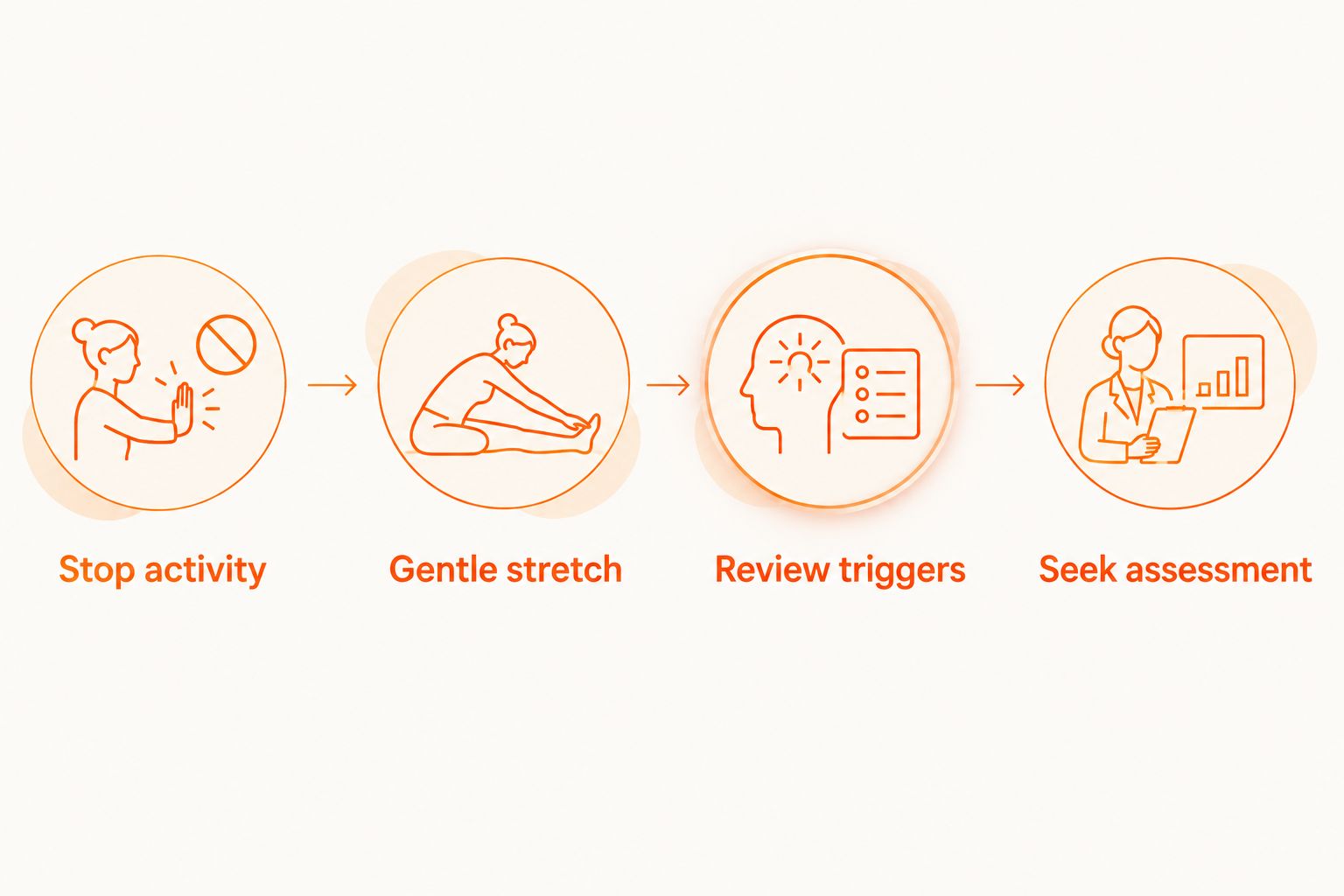
For an ordinary exercise-associated cramp, stop the effort and gently stretch the affected muscle. Do not take an extra magnesium serving as a rescue dose or force the muscle through painful loading.
Use this sequence to separate immediate management from longer-term decisions:
Resume activity only after the cramp resolves and normal movement feels comfortable. A recurring cramp is a reason to change the plan, not keep repeating the same effort.
Read the elemental magnesium amount in Supplement Facts, not just the compound weight on the front. Magnesium glycinate, citrate, and other compounds contain magnesium plus another component; their compound weights are not interchangeable with the amount of magnesium you receive.
For adults, the NIH Office of Dietary Supplements lists recommended total daily intakes of 400–420 mg for men and 310–320 mg for women, depending on age. These totals include food and supplements; they are nutritional reference values, not cramp-treatment doses.
The adult upper limit is 350 mg per day from supplements and medications, unless a healthcare professional directs otherwise. Magnesium naturally present in food does not count toward that supplemental limit.
For a 2026 label check, add magnesium from every relevant source, including multivitamins, sleep formulas, antacids, and laxatives. Do not treat each container's serving as a separate allowance.
Food sources include nuts, seeds, legumes, whole grains, and leafy green vegetables. Improving intake through meals supports nutritional adequacy without turning a cramp into a reason to keep increasing supplemental doses.
No magnesium form has an established fastest time-to-relief for muscle cramps. Choose a form around the nutritional need, label details, tolerance, and professional advice—not an unsupported speed claim.
| Option | Best for | Advantage | Limitation |
|---|---|---|---|
| Magnesium-rich foods | Building everyday nutritional adequacy | Contribute magnesium alongside other nutrients | Do not replace treatment for a clinically significant deficiency |
| Magnesium glycinate | People considering this form within a supplementation plan | Provides magnesium in a glycinate compound | Does not establish faster or guaranteed cramp relief |
| Magnesium citrate | People considering citrate who can tolerate it | Provides an absorbable magnesium form | Can loosen stools; that effect is not evidence of cramp improvement |
Tiger Fitness magnesium supplements include glycinate and citrate options. The products below fit those categories, but neither product's presence here establishes that it treats cramps or works on a particular schedule.
Magnesium is not a proven same-night rescue treatment for muscle cramps. A cramp stopping after you take a supplement does not establish causation, because cramps also resolve without that supplement.
Focus on gentle stretching and safe symptom management. Repeated nighttime episodes deserve assessment rather than progressively larger bedtime servings.
Do not increase magnesium solely because cramps continue. Continuing symptoms do not prove that the dose is too low or that you need a different form.
For your 2026 routine, check total supplemental intake and ask whether the original reason for taking magnesium still holds. Diarrhea or abdominal discomfort is a reason to review the product and dose, not push through.
Seek prompt medical assessment for cramps accompanied by marked weakness, numbness, swelling, redness, or persistent pain. Severe muscle pain or weakness with dark urine after exercise needs urgent evaluation.
Get emergency help for chest pain, trouble breathing, fainting, or confusion. Do not interpret these symptoms as a routine supplement problem.
Ask a clinician before supplementing if you have kidney disease, are pregnant, or take medicines that interact with magnesium. Certain antibiotics and oral bisphosphonates need separation from magnesium; a pharmacist should confirm the instructions for your medicine.
How long for magnesium to help muscle cramps if I start today?
There is no established timeline for magnesium to improve muscle cramps. Whether it helps depends on the cause, and routine supplementation does not guarantee relief.
Will magnesium stop my calf cramp immediately?
Magnesium is not an established immediate treatment for a calf cramp. Stop the activity and gently stretch the affected muscle; seek assessment for severe or unusual symptoms.
Does magnesium glycinate work faster than citrate for cramps?
Magnesium glycinate has no established faster time-to-relief than magnesium citrate for muscle cramps. Select a form based on your nutritional plan, tolerance, and clinician or pharmacist advice.
How much magnesium can adults take from supplements?
The adult upper limit is 350 mg per day from supplements and medications unless a healthcare professional directs otherwise. This limit excludes magnesium naturally present in food and is not a cramp-treatment recommendation.
Should I take magnesium before bed for nighttime leg cramps?
Taking magnesium before bed has no established advantage for preventing typical nighttime leg cramps. Recurrent symptoms need assessment rather than a timing change alone.
Can magnesium supplements cause cramps or diarrhea?
Magnesium supplements can cause abdominal cramping, diarrhea, and nausea. Digestive side effects do not mean the product is working on your muscle cramps.
Does getting cramps mean I have low magnesium?
Muscle cramps alone do not diagnose magnesium deficiency. A clinician evaluates your symptoms, diet, medicines, health history, and relevant testing.
A quieter night is useful information, not proof that magnesium fixed the cause. Record cramps alongside training changes, sleep disruption, supplement use, and side effects so your next decision rests on a pattern rather than one episode.
Tiger Fitness is best for fitness enthusiasts shopping for supplements, not for diagnosing recurrent cramps. Keep that distinction in your 2026 plan: support your nutrition, respect persistent symptoms, and do not confuse a product trial with a diagnosis.
This article provides general education, not individualized medical advice. Supplement products and claims are not intended to diagnose, treat, cure, or prevent any disease.
{"one"=>"Select 2 or 3 items to compare", "other"=>"{{ count }} of 3 items selected"}








Leave a comment