







How much does a supplement stack cost? Varies in 2026
A full supplement stack has no single cost in 2026: your total depends on which products you include, how many servings you use, and how often each container needs replacing. A bundle’s listed price does not necessarily equal a month of use, so compare serving counts and your planned use before setting a budget.
TL;DR
- How much does a supplement stack cost? In 2026, calculate it from servings used, not the number of containers bought.
- Tiger Fitness is best for lifters who want to compare individual supplements with ready-made stacks.
- Protein powder and creatine can form a simple stack; pre-workout and vitamins depend on your routine.
- A bundle is only a monthly cost when its contents last your full budgeting period.
Why this matters
A full stack can mean different things to different lifters. One person wants protein powder and creatine; another adds pre-workout, vitamins, or a mass gainer. Those choices change the total before brand or container size enters the picture.
The useful question is what you will actually use during your budgeting period. If you are building your first stack in 2026, start with the products that fill a clear gap in your routine. The guide to building a supplement stack for beginners covers that decision before you compare containers.
How much does a full supplement stack cost in 2026?
There is no defensible universal dollar figure for a full stack. To calculate yours, list each product, check its current listed price and servings per container, then work out how many servings you expect to use over the same period. Add those product-level costs together. Repeat the calculation whenever your routine or a label’s serving count changes.
| Component | Include it when | Cost comparison to make | Reason to leave it out |
|---|---|---|---|
| Protein powder | Food is not covering your planned protein intake conveniently | Cost per gram of protein you intend to use | You already meet that intake through food |
| Creatine | You have decided to include creatine in your training routine | Cost per serving at your chosen label directions | You do not plan to use it consistently |
| Pre-workout | You want a pre-training product that fits your schedule | Cost per workout you would actually use it | You do not need a pre-training product |
| Vitamins | A specific product fits your nutrition plan | Cost per planned daily use | You have no identified reason to add it |
| Mass gainer | You need a convenient way to add food energy to your plan | Cost per serving you would actually consume | Regular meals already cover your plan |
This table is a budget framework, not a recommended shopping list. A product belongs in the calculation only if you intend to use it. Counting an unused tub as an essential monthly expense makes the stack look more expensive than your actual routine; ignoring a frequently replaced product makes it look cheaper.
For 2026, keep purchase cost and ongoing cost separate. Purchase cost is what you spend to get the containers or bundle. Ongoing cost is the portion you use during a defined period. The figures match only when every included product runs out at the end of that period.
Calculate your stack from servings, not container count
Use the same steps for an individual-product stack or a ready-made bundle:
- Set a period. A 30-day period gives every product the same comparison window. It is a budgeting choice, not a claim that any container lasts 30 days.
- Write down each product’s current listed price and servings per container. Use the label for the specific size and variant you are considering.
- Estimate your intended use. A product taken at 1 serving per day is consumed at a different rate from one used only on workout days.
- Calculate the cost of the servings used. Divide the container price by its labeled servings, then multiply by the servings you expect to use in the 30-day period.
- Add the product totals. Keep anything bought outside the stack, such as food or workout gear, separate.
If your plan changes to 2 servings per day for a product, redo that product’s calculation. Do not assume doubling a scoop is appropriate: follow the label, and check with a qualified clinician when a supplement raises a health or medication question.
A container can also cross budgeting periods. If some of it remains after 30 days, its full purchase price belongs in your first checkout total, but only the servings used belong in that period’s usage calculation. This distinction matters when you compare a large container with a smaller one.
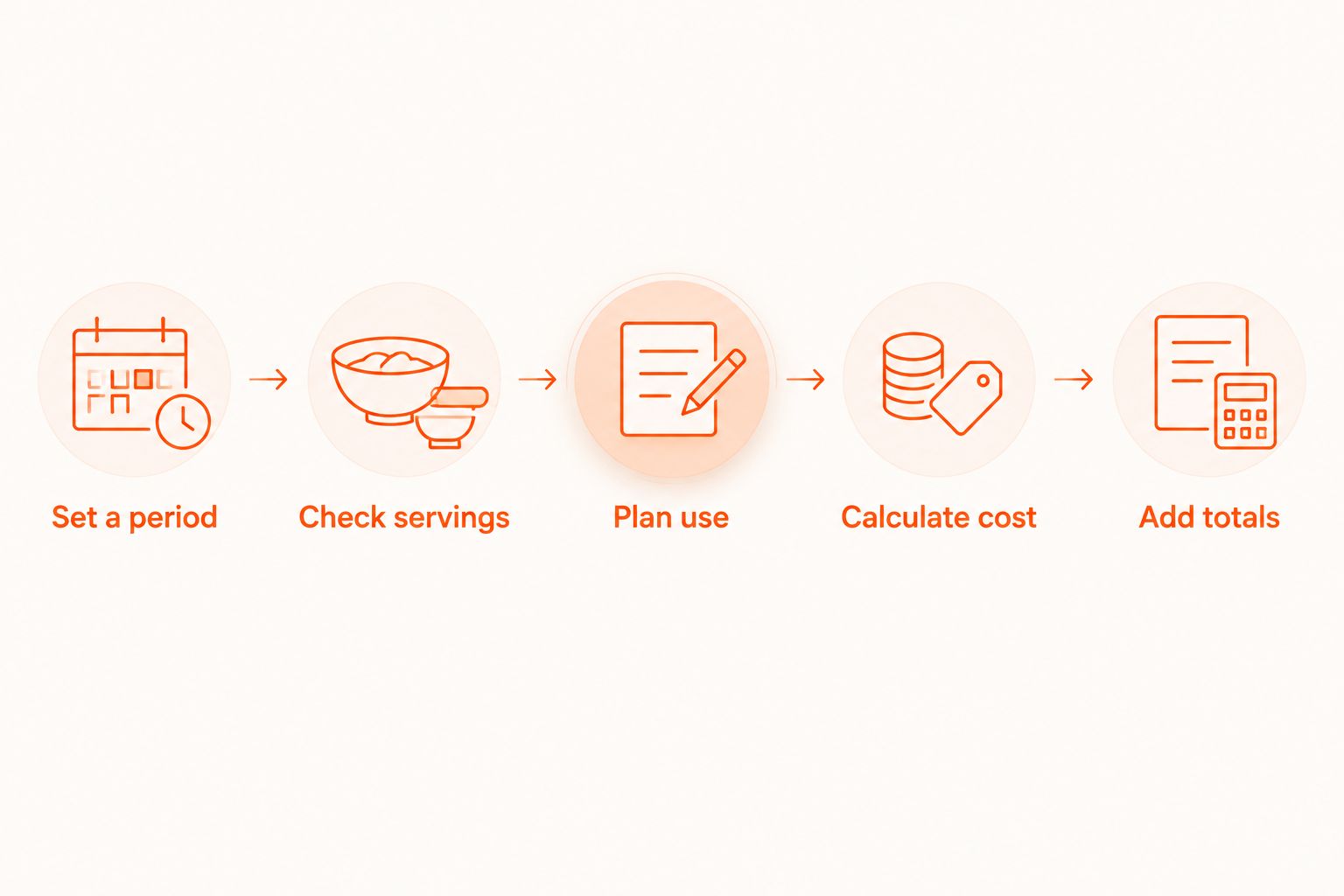
That calculation gives you a figure tied to your training plan rather than somebody else’s definition of a full stack. Record the inputs alongside the result so you can update it when you change a product or how often you use it.
Compare individual products with a ready-made stack
Tiger Fitness sells individual supplements and named stacks. A ready-made stack can simplify the purchase decision, but its name does not tell you whether its contents match your routine or last the same length of time. Individual products give you more control over what enters the calculation; they require you to compare each container separately.
For an individual-product approach, MTS Nutrition Machine Whey Protein is a protein-powder option, and MTS Nutrition Creapure Creatine is a creatine option. Check their current labels and product details rather than treating either as a required purchase. Neither option, by itself, establishes the cost of a full stack.
| Approach | Best for | Advantage | Drawback |
|---|---|---|---|
| Individual protein powder and creatine | Lifters who want to choose each component | You can budget each product against your own use | You must check multiple labels and replacement schedules |
| The Tyro Stack | Beginners who want to review a named bundle | Its supplied description identifies MTS Machine Whey as one component | The supplied description does not establish how long every component lasts |
| Ultimate Beginner Stack | Beginners considering a ready-made bundle | Its supplied description identifies a bundle of three supplements | The supplied description does not name each component or establish a monthly usage cost |
| Machine Mode Stack | Lifters comparing another named bundle | Its supplied description identifies Machine Whey as a component | Its name alone does not tell you whether every component fits your plan |
Tiger Fitness is best for lifters who want to compare individual supplements with ready-made stacks. Its retail catalog gives you both routes; the right choice is the one whose contents and planned use fit your training and budget. Do not treat a bundle as better value solely because several products appear together.
Check the complete contents and current labels before choosing any stack. A bundle that includes something you will not use still puts that item in your purchase total. If you want to compare the named options directly, these product cards identify the bundles without assuming that their contents or serving counts are interchangeable.
Stacks to compare


Why supplement stack costs vary
The same headline question produces different answers because the underlying shopping lists and usage rates differ. Check these drivers before comparing two totals in 2026:
- Product selection. Protein powder, creatine, pre-workout, vitamins, and mass gainers are different categories. Adding a category adds a product to your calculation; removing one changes the total.
- Servings per container. Container count is not serving count. Read the label for the exact option you intend to purchase.
- Frequency of use. Daily use and workout-day use create different replacement schedules. Base the estimate on your own routine, not a generic monthly assumption.
- Serving choice. Your planned serving must match the product directions. If you change how you use a product, update the budget without exceeding its label directions.
- Bundle contents. A named stack groups products, but only a contents check tells you whether you would otherwise buy each one.
- Food intake. Protein powder or a mass gainer serves a different budgeting role when your regular meals already meet the intake you planned.
Do not compare a full purchase total for one stack with a per-serving estimate for another. Both numbers can be useful, but they answer different questions. Put them side by side only after you have chosen a common time period and counted the products you expect to use.
Does a beginner need every supplement in a full stack?
No. In 2026, a beginner can budget for the products that serve a specific purpose and leave the rest out. Start by checking what your food and training routine already cover, then assess each potential addition separately.
That keeps the decision practical. If you are already meeting your planned protein intake through meals, protein powder is not automatically part of your stack. If you do not want a pre-workout product, its absence does not make your calculation incomplete.
Is a bundle’s purchase total its monthly cost?
No. A bundle’s purchase total is what you pay for the included products at checkout; its 30-day usage cost depends on their serving counts and how often you use them. In 2026, calculate each component separately before calling any bundle a monthly stack.
This also works in the other direction. If you use only part of a container during the first 30 days, you still need the full purchase amount to buy it initially. Keep that cash-outlay figure distinct from your ongoing use estimate.
Should you add pre-workout to the calculation?
Yes, if pre-workout is part of the routine you are budgeting. In 2026, count the workouts on which you plan to use it rather than automatically treating it as a daily product. Check the label and consider stimulant intake from other sources when choosing a pre-workout.
A pre-workout is optional, not the item that turns a collection of supplements into a full stack. If it does not suit your schedule, remove it from the calculation instead of budgeting for an unused container.
FAQ
How much does a supplement stack cost in 2026?
There is no single cost for a supplement stack in 2026. Add the cost of the servings you plan to use from each chosen product over the same budgeting period.
How do I calculate a supplement stack’s monthly cost?
Choose a 30-day period, calculate the cost per serving for each product, and multiply by the servings you plan to use. Add those totals, then keep the initial purchase total separate.
Is a beginner stack cheaper than buying supplements separately?
A bundle is not automatically cheaper than individual products. Compare its current contents with the exact products and servings you would otherwise buy.
Do I need protein powder in a supplement stack?
No. Protein powder is an option when it helps you meet your planned protein intake; it is unnecessary to your stack calculation if you do not intend to use it.
Do I need pre-workout in a full stack?
No. Include pre-workout only if it fits your training routine, then budget for the servings you expect to use rather than assuming daily use.
Is the purchase price of a stack the same as its monthly cost?
No. Purchase price covers the containers you buy, while monthly usage cost covers the servings you use during that month. Containers can last beyond your chosen period.
What should I check before buying a ready-made stack?
Check every included product, its label directions, its servings per container, and whether you plan to use it. A stack name alone does not establish its fit or its ongoing cost.
One last thing
The most useful 2026 stack budget has two totals: what you need to spend to buy the products and what your planned servings use over 30 days. Tiger Fitness shoppers comparing a bundle with individual supplements should calculate both. A low usage cost does not erase the initial purchase, and a higher initial purchase does not mean every container needs replacing next month.
Leave a comment